2,000-year-old experiment tests virtual reality’s surgical training ability
A Galen dissection experiment shows why digital simulations still cannot replace mentored hands-on medical training.

 Edited By: Joseph Shavit

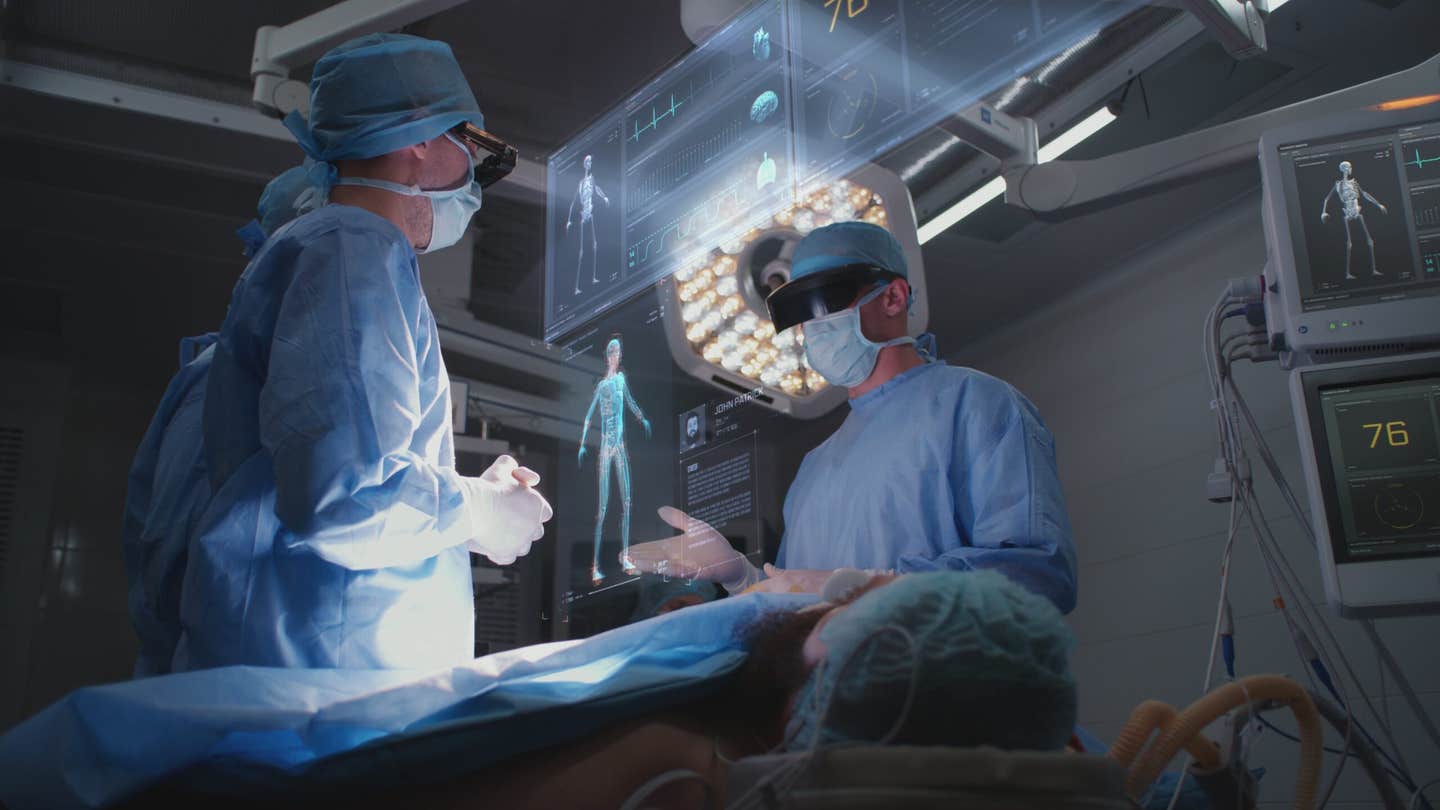
A Nature Medicine correspondence warns digital medical training misses tacit learning needed for safe clinical skills. (CREDIT: Shutterstock)
A scalpel can follow instructions, but a hand still has to decide what “superficially” means.
That is the stubborn problem at the center of a new correspondence in Nature Medicine, which argues that modern medical education is struggling to teach one of its most important ingredients: tacit learning, the embodied, hard-to-describe knowledge physicians gain through supervised practice.
Digital simulations, virtual reality, and 3D models can teach anatomy and the visible steps of a procedure. However, what they still cannot reliably pass on, the authors argue, is the physical judgment that makes those steps safe and competent in the real world.
The point came into focus through an unusual reconstruction. A multidisciplinary team in Jerusalem, led by Prof. Orly Lewis of the Hebrew University of Jerusalem, attempted to recreate a dissection of the abdominal wall and peritoneum of a female pig specimen. They used the second book of Galen’s Anatomical Procedures, a rare surviving surgical handbook from the second century CE.
The instructions were detailed, even precise. They were also not enough.
Where explicit instruction runs out
Galen directs the reader to begin at the xiphoid cartilage and cut around the umbilicus “superficially,” until the tissue below appears “whiter” than the surrounding structures. He suggests stretching the rectus muscle with a fish-hook or pulling it aside with the left hand before cutting. On paper, the sequence sounds clear, almost familiar, not so different from modern step-by-step clinical teaching.
But once the team tried to perform the dissection, the missing layer became obvious. What counts as superficial under a scalpel? How much pressure reveals tissue without damaging it? How far can muscle be stretched before the anatomy is distorted? What should the hand do when resistance changes?
Those are not small details. They are the skill.
“Even Galen’s highly detailed written instructions weren’t enough to guide us and today’s augmented reality simulations face the same challenge,” Lewis said. “We can program the visible steps of a procedure, but simulations still struggle to transmit the physical intuition of an experienced physician.”
The correspondence uses that failed translation from words to action to make a broader point about the present. As medical schools lean more heavily on digital resources, and as dissection time and clinical hours decline in some curricula, students may be losing chances to build the manual and clinical judgment. This judgment develops through repetition, correction, and close supervision.
The knowledge doctors use but rarely say aloud
The argument draws on philosopher Michael Polanyi’s idea of tacit learning, the kind of knowledge people use without fully being able to explain it. In medicine, that can mean knowing how much force to apply during an incision, sensing when tissue feels abnormal, judging when to advance or stop, or reading the interpersonal tone of a room during a clinical procedure.
The authors argue that this kind of learning matters at every stage of medical training because becoming a physician involves more than absorbing information. Moreover, it means mastering a cluster of skills that are practical, relational, communicative, and manual all at once.
That is where current digital tools, however advanced, run into a limit. Simulations can show the sequence of actions and recreate a visually convincing case. They can help learners rehearse decisions and psychomotor steps. But the correspondence argues they often fail to convey touch, pressure, resistance, timing, uncertainty, and the subtle social judgments that accompany real clinical work.
In that sense, the problem is not simply technical. It is educational. Modern competency-based training often breaks procedures into discrete, teachable parts that can be measured and assessed. The authors note that this works well for many explicit aspects of training. Still, it can leave out the less visible elements of expertise. These are the ones traditionally passed from teacher to student through imitation and correction rather than through checklists alone.
An old text, a modern warning
The Galen reconstruction sharpened that concern because it made experienced scholars and practitioners feel like novices again. They had detailed written directions in front of them, but not the tacit knowledge Galen likely assumed his readers would already possess or acquire through guided practice.
That experience, the authors argue, mirrors what happens when students first place a catheter, palpate tissue, or make an incision. They may know the formal steps, yet remain unsure about hand position, force, tactile feedback, and when to stop. A manual can name the task. A digital model can display it. Neither automatically transfers the judgment that makes the action competent.
The correspondence extends the same logic to soft skills. Even if digital tools move beyond text and offer near-real clinical scenarios, the authors say they still struggle to teach judgment under uncertainty, communication with patients or peers, and the ability to read a clinical setting as it changes.
That matters because the shift toward online and technology-driven education has accelerated, especially since the pandemic. The convenience is real, and so are the gains. But the authors argue that convenience can create a false expectation that hands-on experience is replaceable. In fact, some core parts of medicine remain stubbornly apprenticeship-based.
They do not reject digital innovation. Rather, they argue that medical education needs a more rigorous way to think about what technology can and cannot teach.
Designing for what usually stays unspoken
Their proposed solution is practical. Instead of assuming tacit learning will somehow come along for the ride, educators and developers should identify the specific tacit elements embedded in each procedure or practical skill. That means asking, in concrete terms, what parts of a task depend on touch, pressure, timing, resistance, embodied judgment, uncertainty, or social awareness.
Once those elements are named, future digital teaching tools could be built to better reflect them.
The authors point to a similar approach in construction training, where a mixed-reality system centered on tacit learning reportedly produced strong results. They suggest medicine could benefit from the same design logic, even if not every tacit element can be fully translated into software. In fact, some learned attitudes and practical tricks, they note, are copied almost intuitively from good teachers.
That is part of the lesson carried across two millennia. Galen’s written word represented an advanced educational technology in its own time, yet it still left crucial knowledge unstated. Today’s digital tools are more sophisticated, but the gap remains recognizable. Clinical skill is not just a sequence of visible moves. It is also an accumulation of felt judgments, small calibrations, and embodied decisions that take shape in practice.
Practical implications of the research
The correspondence suggests that medical schools should be cautious about treating digital simulations as full substitutes for bedside teaching, supervised procedures, or anatomical dissection. These tools remain useful, but they may work best as supplements rather than replacements. This is especially true when the goal is to build safe clinical judgment.
For developers, the message is more specific: future training platforms should be designed around the tacit parts of clinical work, not just the visible ones. That could mean building lessons and simulations that explicitly address pressure, resistance, timing, uncertainty, and the relational side of care.
For educators, it reinforces the value of mentorship, observation, imitation, and repeated hands-on practice, especially in the early stages of training.
Research findings are available online in the journal Nature Medicine.
The original story "2,000-year-old experiment tests virtual reality’s surgical training ability" is published in The Brighter Side of News.
Related Stories
- AI is transforming pediatric surgery, but with strong ethical concerns
- New AI model can detect advanced heart failure before it's too late
- AI-built 'digital twin' helps doctors precisely target glioma cancer
Like these kind of feel good stories? Get The Brighter Side of News' newsletter.
Shy Cohen
Writer