A shared ancestor may have led to two independent origins of life
Metals, phosphite and unfinished enzymes point to two separate transitions from shared ancestry to cellular life.
 Heinrich-Heine University Duesseldorf Writer: Arne Claussen

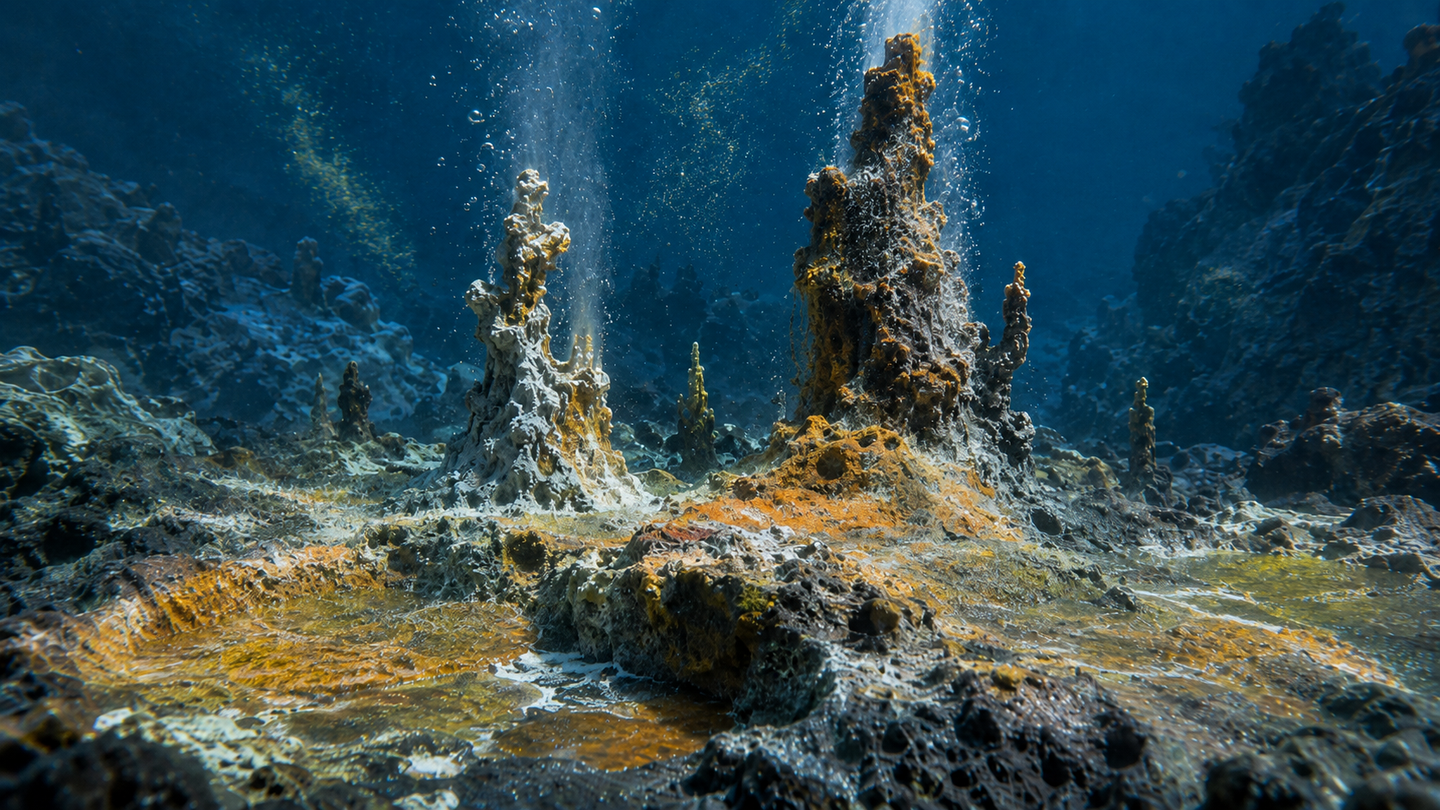
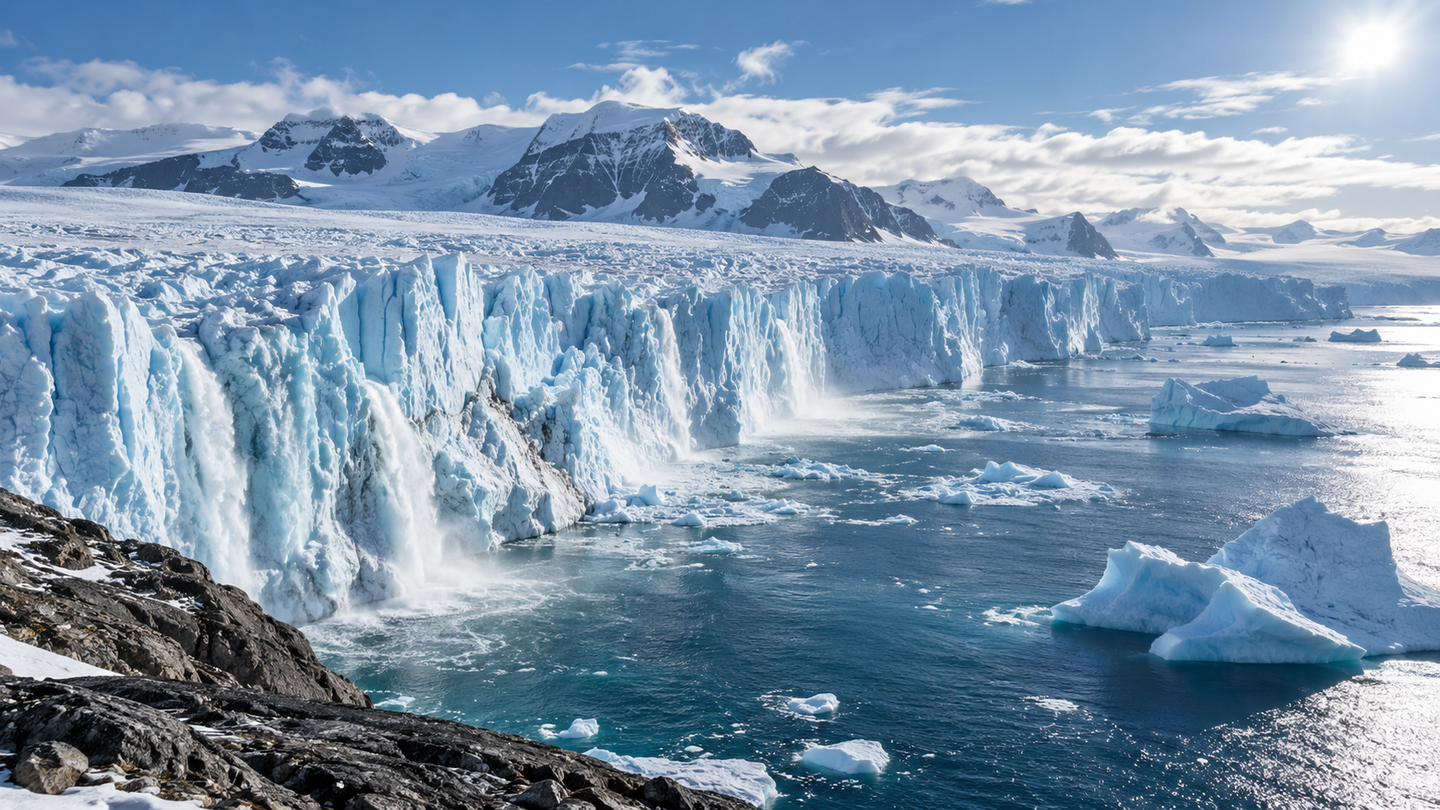
Hydrothermal vent chemistry may explain how bacteria and archaea independently became the first free-living cells. (CREDIT: Wikimedia / AI-Generated / CC BY-SA 4.0)
- The earliest free-living bacteria and archaea may have emerged separately, even though both inherited the same genetic code from a shared ancestor.
- Metals inside hydrothermal vents may have powered and catalyzed many early metabolic reactions before enzymes and modern energy molecules existed.
- The findings support vents as a possible birthplace of metabolism, but gaps in archaeal data and laboratory evidence still limit the conclusion.
Four billion years ago, the first cells may not have crossed into independent life together. Instead, bacteria and archaea appear to have completed that transition along separate paths, using different enzymes to finish the same essential chemical work.
An international team led by biologists at Heinrich Heine University Düsseldorf traced the deep history of metabolism, the reaction network cells use to build amino acids, RNA bases and vitamins. Published in Science Advances, the analysis points to a shared chemical beginning followed by two routes toward free-living cells.
“We would see two very different kinds of cells emerging, pioneer bacteria and pioneer archaea, making their first attempts at life outside the confines of a hydrothermal vent,” said Natalia Mrnjavac, a Düsseldorf biologist and lead author.
The team examined genomes, protein structures and metabolic reactions from 552 bacterial and 401 archaeal isolates. It focused on 361 reactions needed to make cellular building blocks from hydrogen, carbon dioxide, ammonia, hydrogen sulfide and mineral salts.
A shared ancestor with unfinished chemistry
The researchers reconstructed the metabolic capabilities of LUCA, the last universal common ancestor of all cells. LUCA possessed the genetic code, ribosomes and protein-making machinery, but its enzyme system remained incomplete.
The analysis assigned 166 core metabolic enzymes to LUCA. Another 89 appeared later along the bacterial lineage, while 38 arose along the archaeal lineage. A further 37 could not be assigned confidently because they were too sparsely distributed.
That gap raised a basic problem. If LUCA lacked many enzymes needed to make amino acids, cofactors and other compounds, how did metabolism support evolving proteins?
The answer may lie in the surrounding geology. Native metals in hydrothermal systems, including iron, nickel, cobalt and palladium, can drive reactions performed by enzymes in modern cells. Early metabolism may have relied on both biological catalysts and minerals.
“The closer we look, the more clearly we can see that early biochemical evolution was a hybrid of enzymatic and metal catalysts,” said Joseph Moran of the University of Ottawa.
Metals filled the missing roles
The team identified four broad stages in the rise of catalysis. The earliest chemistry relied on metals alone. LUCA then used a hybrid system. Bacterial and archaeal ancestors later developed additional enzymes, replacing environmental catalysts in different ways.
Five reactions offered clear evidence of independent enzyme origins. In each case, bacteria and archaea evolved structurally unrelated proteins that carried out the same essential reaction.
Those examples included enzymes involved in alanine production, the shikimate pathway and riboflavin synthesis. The parallel solutions suggest that the two lineages completed their metabolic systems separately after diverging from LUCA.
“We can see cases where the ancestors of bacteria and archaea independently evolved structurally distinct enzymes to catalyse the same essential metabolic reaction,” Mrnjavac said. “Such parallel inventions could have paved the way to the independent emergence of free-living bacteria and archaea.”
The chemistry also points toward serpentinizing hydrothermal vents. These systems form when water reacts with certain rocks, producing hydrogen and depositing native metals.
Under vent-like laboratory conditions, metals can convert hydrogen and carbon dioxide into formate, acetate and pyruvate. These compounds sit within the acetyl-coenzyme A pathway, an ancient carbon-fixing route used by bacteria and archaea.
Among the reactions examined, 37, or about 10 percent, have been reproduced exactly under hydrothermal conditions with metals or without enzymes. Including related reaction types and alternative sequences raised the share with nonenzymatic parallels to 46 percent.
An energy source before ATP
Early metabolism also needed energy. Modern cells often use ATP, but ATP is a complex molecule made by enzymes. It could not have served as the starting fuel before those systems existed.
The researchers tested phosphite, a form of phosphorus found in serpentinizing environments. Nickel converted phosphite to phosphate and hydrogen in water, reaching roughly 75 percent yields overnight at 100 degrees Celsius.
Palladium proved more effective at attaching phosphate groups to organic molecules. At pH 9 and 50 degrees Celsius, phosphite and palladium converted AMP into ADP with about an 8 percent yield after 72 hours. The same system converted serine into phosphoserine with a 42 percent yield after 18 hours.
“Phosphite and palladium replace ATP and enzymes; it’s amazing, and it makes early evolution a lot easier to grasp,” said Manon Schlikker of the Düsseldorf team.
The experiments used phosphite concentrations higher than those measured in modern serpentinized rocks. However, ancient vents operated over geological timescales, while the laboratory reactions lasted hours or days.
The study also found that cofactors, small molecules that help enzymes, appeared late in the reconstructed sequence. Many were required for reactions that came before the pathways capable of producing them.
That contradiction supports the metal-first explanation. Metals may initially have transferred hydrogen, electrons, amino groups and phosphate. Enzymatically produced cofactors later replaced those broad mineral catalysts, allowing metabolism to move away from rock surfaces.
Practical implications of the research
The work offers a testable framework for studying how chemistry became biology. It links the order of enzyme evolution with reactions that can occur in water under vent-like conditions.
It also separates a single origin of core biological information from two transitions to cellular independence. The authors argue that LUCA shared one genetic code, while bacteria and archaea independently completed the metabolic machinery needed to live apart from their geological setting.
“The new data leave only one conclusion,” said senior author William Martin. “The bacteria and archaeal lineages made the transition to the free-living state independently. Only free-living cells are alive. Let’s call it by name: we are looking at one origin of the genetic code, but two origins of life.”
Important uncertainties remain. Archaeal enzymes are less thoroughly characterized and sampled than bacterial ones, which may exaggerate bacterial innovations. Many proposed metal-driven reactions also lack direct experimental confirmation.
Even so, the findings give origin-of-life researchers a defined reaction network, a possible energy source and a specific environment to test. Future experiments can examine whether nickel-palladium-iron alloys reproduce more metabolic steps and whether vent chemistry can sustain connected reaction networks over long periods.
Research findings are available online in the journal Science Advances.
The original story "A shared ancestor may have led to two independent origins of life" is published in The Brighter Side of News.
Related Stories
- Rare meteorite crashes into New Jersey home revealing clues to the origin of life
- Asteroid Bennu samples reveal ancient water offering new clues about the origin of life on Earth
- Scientists propose incredible new theories for the origin of life in the universe
Like these kind of feel good stories? Get The Brighter Side of News' newsletter.
Mac Oliveau
Writer
Mac Oliveau is a Los Angeles–based science and technology journalist for The Brighter Side of News, an online publication focused on uplifting, transformative stories from around the globe. Having published articles on MSN, and Yahoo News, Mac covers a broad spectrum of topics including medical breakthroughs, health and green tech. With a talent for making complex science clear and compelling, they connect readers to the advancements shaping a brighter, more hopeful future.