Amazonian dark earth increases tree diameter by up to 88%
Small amounts of Amazonian dark earth sharply improved early tree growth on degraded land in Amazonas.

 Edited By: Joseph Shavit

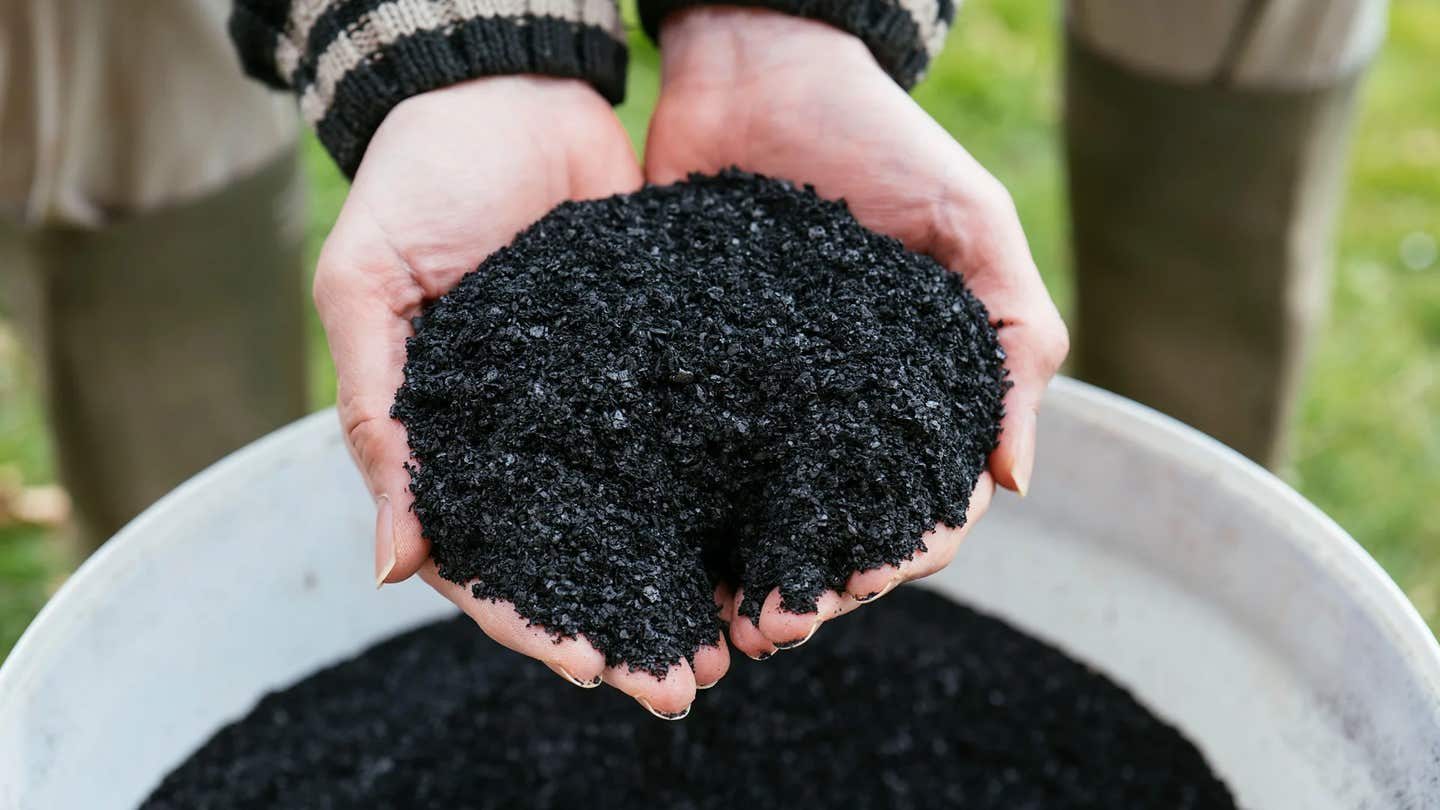
Ancient Amazonian dark earth boosted young tree growth and reshaped root microbes in a Brazil field study. (CREDIT: Shutterstock)
A patch of poor soil on a former cassava field in Amazonas turned into a small test of an old Amazonian secret.
Researchers in Brazil found that tiny amounts of Amazonian dark earth, a human-made soil built up over centuries by pre-Columbian peoples, gave two native tree species a clear early advantage in degraded land. In the first 180 days after planting, pink trumpet tree seedlings grew up to 55% taller and developed stems 88% thicker than untreated plants. Brazilian firetree seedlings also grew faster, gaining 20% in height and 15% in stem diameter.
That kind of jump matters in places where forests have been cleared, soils compacted, and recovery slowed by years of agricultural use. It also hints that the power of Amazonian dark earth, often called ADE or terra preta, may lie in more than fertility alone.
“The key factor was not the amount of nutrients per se, which doesn’t vary much, but rather the microorganisms, which were quite different, especially the fungi. In plants treated with dark earth, the microbiota around the roots reorganizes, with more efficient recruitment of beneficial microorganisms and a reduction in pathogens,” said Anderson Santos de Freitas, first author of the study.
The work was carried out by researchers from the Center for Nuclear Energy in Agriculture at the University of São Paulo, Embrapa Eastern Amazon, and the National Institute for Amazonian Research. It was published in BMC Ecology and Evolution and supported by FAPESP.
A living legacy in the soil
Amazonian dark earth is not just ordinary dirt with extra nutrients mixed in. It formed through long human occupation, with organic residues and the controlled use of fire helping create unusually fertile pockets of soil in a region better known for heavily weathered, low-fertility ground.
Those dark soils are protected by law, and the team stresses that the goal is not to mine them for direct use in restoration. Instead, the point is to understand what makes them work.
“We’ve been studying dark earths for over 20 years and have tested various ways of using them. The idea is to understand what makes them best suited for helping trees grow faster and stronger in degraded areas,” said Tsai Siu Mui, a professor at CENA-USP and coordinator of the broader project behind the study.
That project focuses on soil-plant feedbacks in Amazonian agricultural systems. Its wider aim is practical: find ways to restore microbial life and ecological function in land that has been worn down by deforestation, pasture use, and poor soil management.
“When land is deforested, especially for pasture, the soil tends to be poorly managed, leading to a rapid loss of microorganisms and nutrients. The goal is to restore the forest and ecosystem services in these areas,” Tsai said.
Brazil has millions of hectares of degraded tropical land, much of it compacted and low in organic matter. Such soil limits productive use, weakens carbon storage, and can push land users toward clearing more forest. That gives the search for low-input restoration tools extra urgency.
Two species, one field, no fertilizer
The field trial took place in Itacoatiara, Amazonas, on a 1.2-hectare former cassava area surrounded by native forest. The researchers chose two tree species with different ecological roles.
One was Schizolobium amazonicum, known as Brazilian firetree, a fast-growing pioneer species that can colonize degraded areas quickly. The other was Handroanthus avellanedae, the pink trumpet tree, a secondary succession species valued for timber and also found in the Atlantic Forest.
Seeds were germinated in pots containing either 290 cubic centimeters of Amazonian dark earth or coconut fiber, which served as the conventional control. Fifteen days later, uniform seedlings were transferred to the field. They were planted without fertilizer or herbicide, received only rainwater, and were maintained with manual weed control. The idea was to mimic restoration conditions rather than intensive commercial production.
After six months, every plant was still alive.
The biggest gains showed up in the pink trumpet tree. Compared with controls, ADE-treated plants were about 55% taller and had stems about 88% thicker. The firetree responded too, though less dramatically. Its treated seedlings grew roughly 20% more in height and 15% more in stem size. Even so, the firetrees reached about 1.5 meters in height 180 days after transfer to the field.
The soil did more than feed the plants
The team argues that the results cannot be explained by a simple nutrient dump.
Each seedling pot held only a small amount of dark earth, and the seedlings were normalized for size before transplanting. Once in the ground, any nutrients from the inoculum would also be diluted in the surrounding Oxisol, a highly weathered tropical soil. The nutrient content of the ADE was also far below what would be delivered by commercial fertilizer.
So the researchers looked closely at the rhizosphere, the narrow zone of soil around the roots where plants and microbes interact.
They extracted DNA from soil samples, sequenced bacterial, archaeal, and fungal markers, and compared diversity, abundance, and microbial network patterns between ADE-treated and control plants. What stood out most was fungi.
For the pink trumpet tree, ADE strongly increased fungal diversity and shifted the overall microbial community more than it did in the firetree. Beta diversity analysis also showed that the microbial communities around ADE-treated H. avellanedae were the most distinct of all the groups examined.
Freitas said fungi likely respond quickly because they are more complex organisms and because the added dark earth brings in organic matter that favors decomposers and nutrient cycling. “Fungi respond more quickly because they’re more complex microorganisms. With the addition of dark earth, there’s an immediate increase in organic matter and, therefore, decomposing fungi, which cycle nutrients more efficiently and make them more available to plants,” he said.
That faster fungal response may help explain why the pink trumpet tree, a species that faces more difficulty establishing in degraded conditions, benefited so strongly.
Fewer likely pathogens, more helpful partners
The reshuffling was not random.
In the firetree, ADE changed the fungal community more than the prokaryotic one. The treated plants recruited more Mortierellomycota, a fungal group often linked to nutrient-rich soils and early plant establishment, while reducing some groups associated with more stressed or nutrient-poor conditions.
For the pink trumpet tree, the pattern was broader. The ADE treatment depleted several fungal genera described in the analysis as opportunistic or pathogenic, including Lasiodiplodia and Diaporthe, while increasing genera tied to plant growth promotion, biocontrol, or nutrient cycling, such as Metarhizium, Nectriella, Tomentella, and Humicola.
The bacterial story was more complicated. In H. avellanedae, the treatment reduced a long list of bacterial genera, including some with potentially useful functions such as nitrogen fixation. The authors suggest that the richer environment created by ADE may make certain microbial partnerships less necessary, at least early on. In other words, the soil may be creating trade-offs as it boosts growth.
That point matters because the findings do not support a simple miracle-soil narrative. The dark earth behaved like a suppressive soil, pushing back against some harmful organisms and favoring a different root-zone community, but some beneficial groups also declined.
The network analysis added another layer. In the pink trumpet tree, ADE increased positive microbial interactions and greatly altered the structure of the underground community. In the firetree, those network properties changed much less, suggesting that its rhizosphere was already robust and less easily reshaped.
What the study does, and does not, settle
The work offers one of the first field tests of Amazonian dark earth as a soil inoculum for forest restoration, moving beyond greenhouse conditions. That alone makes it notable.
It also has clear limits.
The growth results highlighted here cover only the first 180 days, even though the experiment lasted three years. The team says it is still analyzing the full dataset. The study was also conducted at one experimental site, with 72 plants total and two species, so it does not answer how universal the effect might be across many forest types, climates, or restoration settings.
The microbial results raise open questions too. The authors note that ADE’s high nutrient content may suppress some functions, including nitrogen fixation, because plants can access nutrients more directly. That could matter for long-term soil self-sufficiency, but the study did not measure total nitrogen in this field trial. Nor did it settle the relative weight of nutrients versus microbes in driving the response.
Still, the early performance was striking.
Over more than two decades of work on dark earth, Tsai’s laboratory has isolated over 200 microorganisms from these soils, and those organisms are still being analyzed for their functions. The broader hope is not to spread protected ADE itself, but to reproduce what makes it effective, whether by isolating useful microbes, copying the soil-forming process, or developing new bio-based restoration tools.
Practical implications of the research
The clearest takeaway is that a small-volume inoculum may help native trees establish faster on degraded tropical land without relying on fertilizers or herbicides.
That matters for reforestation, especially in regions where poor soils slow early seedling survival and growth. Faster growth can help young trees compete with weeds, stabilize recovering land, and begin rebuilding ecosystem services sooner. Because both species studied have restoration value, and the pink trumpet tree also has timber potential, the findings point to uses that combine ecological recovery with longer-term economic value.
The work also shifts attention belowground. Instead of treating damaged soil as a chemistry problem alone, it suggests that restoration may depend just as much on rebuilding microbial relationships around roots. If researchers can identify the organisms or processes that give ADE its effects, they may be able to create legal, scalable alternatives based on the same biological logic.
For now, the message is modest but important: an ancient Amazonian soil still has lessons for modern forest recovery, and some of those lessons appear to be alive.
Research findings are available online in the journal BMC Ecology and Evolution.
The original story "Amazonian dark earth increases tree diameter by up to 88%" is published in The Brighter Side of News.
Related Stories
- Scientists use AI to sustainably transform livestock waste into fertilizer
- Plant genetics discovery could revolutionize fertilizer use in farming
- Scientists use recycled glass to grow plants without fertilizers, pesticides or fungicides
Like these kind of feel good stories? Get The Brighter Side of News' newsletter.
Rebecca Shavit
Writer
Based in Los Angeles, Rebecca Shavit is a dedicated science and technology journalist who writes for The Brighter Side of News, an online publication committed to highlighting positive and transformative stories from around the world. Having published articles on MSN, AOL News, and Yahoo News, Rebecca's reporting spans a wide range of topics, from cutting-edge medical breakthroughs to historical discoveries and innovations. With a keen ability to translate complex concepts into engaging and accessible stories, she makes science and innovation relatable to a broad audience.