Black sea microbes stop potent nitrous oxide gas from escaping into the air we breathe
Scientists find Black Sea microbes that rapidly remove nitrous oxide in low oxygen waters, revealing a hidden climate safety filter.

 Edited By: Joseph Shavit
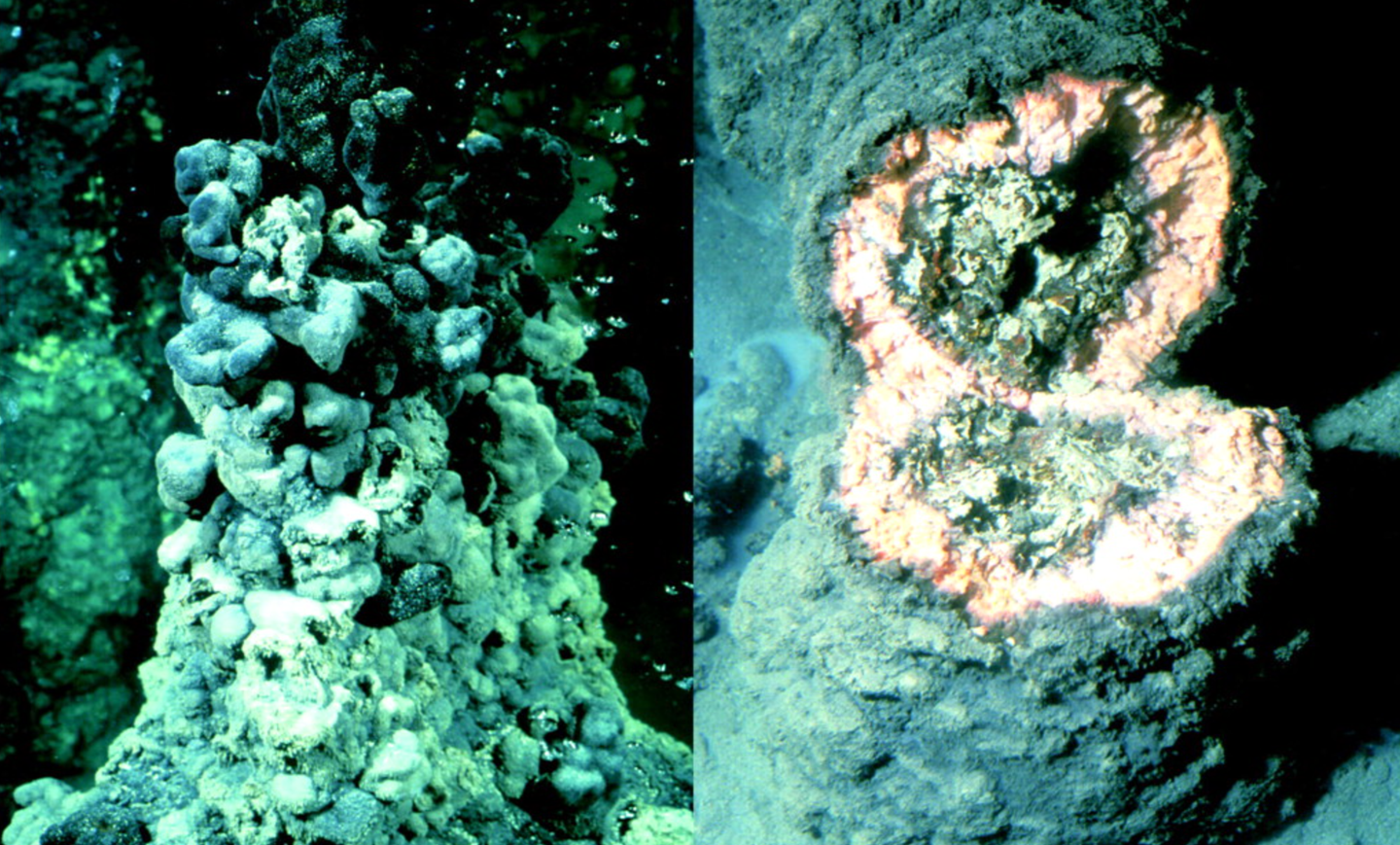
Image of microbial reef structures. A new study of the Black Sea shows that microbes in a thin, oxygen poor layer act like a biological filter, converting most nitrous oxide to harmless nitrogen gas before it can reach the surface. The work reveals a missing sink in the global N₂O budget and highlights how expanding low oxygen waters may reshape greenhouse gas emissions from the ocean. (CREDIT: Science)
Far below the surface of the Black Sea, in water that never sees daylight and holds almost no oxygen, a quiet climate drama plays out. There, tiny microbes decide how much of a powerful greenhouse gas escapes into the air you breathe.
That gas is nitrous oxide, or N₂O, sometimes called laughing gas. It does anything but make the planet laugh. It is the third most abundant greenhouse gas, it damages the ozone layer, and it can linger in the atmosphere for about 120 years. The oceans release a large share of it, especially in waters that lack oxygen. Yet, strangely, the Black Sea, the world’s largest anoxic basin, emits only small amounts.
A team led by the Max Planck Institute for Marine Microbiology in Bremen, Germany, has now solved this puzzle, often called the “Black Sea nitrous oxide conundrum.” Their study, published in the journal Limnology and Oceanography, shows that the sea holds an unexpected kind of biological safety filter that keeps much of this dangerous gas from reaching the atmosphere.
A Giant Oxygen Free Basin With Surprisingly Little N₂O
In most oceans, microorganisms produce large amounts of nitrous oxide where oxygen is scarce. Those deoxygenated zones, called oxygen minimum zones, stretch like invisible deserts through tropical and subtropical waters. The Black Sea takes that idea to an extreme.
Below about 150 meters, its water column turns oxygen poor, then fully anoxic. This anoxic layer extends down to more than 2,000 meters. It makes the Black Sea the largest anoxic basin on Earth, a place where you might expect huge N₂O buildup and strong emissions.
But measurements have long told a different story. Nitrous oxide levels at the surface are low, and little escapes into the air. For Jan von Arx, the first author of the new study, that raised a basic question: “Either there is little production of N₂O, or the produced N₂O is removed before it reaches the surface.”
To find out which answer was true, the team had to go offshore and into the layers where oxygen fades and microbes rule.
Chasing Invisible Gas Aboard a Research Vessel
The scientists boarded the research vessel Poseidon and sailed into the western Black Sea. There, they collected water from many depths, measured oxygen, nutrients and gases, and set up a series of shipboard experiments that let them watch N₂O production and loss in real time.
Their focus was not the completely anoxic deep water, but the suboxic zone above it. This layer, squeezed between the well oxygenated surface and the suffocating deep, contains very little oxygen. It is also where many nitrogen related reactions take place.
When the researchers looked closely, they found that this zone was anything but quiet. “Various microorganisms produced lots of nitrous oxide through different processes,” von Arx explained. Microbes used different nitrogen compounds and pathways to generate N₂O, just as they do in other oxygen poor seas.
Yet the gas did not build up. Instead, another group of microbes stayed one step ahead.
Microbes That Act As a Climate Filter
In the same suboxic layer, the team discovered very active nitrous oxide reduction. In simple terms, some microbes were taking N₂O and converting it to harmless nitrogen gas, N₂, before it could escape upward.
This reduction outpaced production. The result was a kind of biological filter. Nitrous oxide formed, but another set of organisms removed it so efficiently that very little survived to reach the surface.
“The microorganisms reducing N₂O act as an efficient filter, keeping this potent greenhouse gas from reaching the atmosphere,” von Arx said. Using genetic tools and activity measurements, the researchers also identified the main microbial players responsible for this sink.
That does not mean the Black Sea emits nothing. The study suggests that the small amount of N₂O that does reach the air comes from the fully oxygenated surface layer. There, low but steady production takes place in water that lies above the main reduction zone, so the gas can avoid being consumed.
A Missing Piece In the Global Nitrous Oxide Budget
From a climate perspective, this hidden filter is good news. From a scientific standpoint, it exposes a serious blind spot. “On a global perspective, we unfortunately know very little about the N₂O reduction rates in the world’s oceans,” von Arx said.
Most studies and models focus on how much nitrous oxide is produced, not how much is removed by microbes before it can escape. That means your current view of the ocean’s N₂O budget is incomplete. Important sinks may sit in dim, poorly sampled layers.
The Black Sea shows that oxygen poor waters do not always behave as simple sources. Under the right balance of microbes, chemistry and circulation, they can also act as strong filters.
Climate Change And Growing Oxygen Poor Waters
This work arrives at a worrying time for the ocean. As the climate warms, seawater holds less oxygen. Human driven changes in circulation and nutrient inputs also help expand oxygen-depleted zones. Models predict that these low oxygen volumes will continue to spread.
Under such conditions, nitrous oxide emissions could rise. More deoxygenated water often means more N₂O production. Whether the world’s oceans develop strong biological filters like the one in the Black Sea will shape how large that increase becomes.
“Nitrous oxide is the third most abundant greenhouse gas and a strong ozone depleting substance that persists in the atmosphere for about 120 years,” von Arx noted. “Hence, we should aim to understand the dynamics of its sources and sinks there.”
To help fill those gaps, the Bremen team is already studying similar questions in other oxygen limited settings. By comparing many contrasting environments, they hope to build a more complete picture of nitrous oxide dynamics in the sea you depend on.
Practical Implications of the Research
This study matters for more than one corner of the Black Sea. It shows that natural microbial communities can act as a powerful barrier against nitrous oxide release, even in large oxygen-deprived basins. For climate science, that means models need to account not only for where N₂O is produced, but also where it is rapidly reduced to nitrogen gas.
As oxygen poor zones expand with climate change, understanding when they behave like the Black Sea, with strong nitrous oxide filters, and when they act as major sources will be crucial. That knowledge can refine global greenhouse gas budgets and help you better predict future warming.
For ocean science, the work highlights the importance of the thin suboxic layers that ring many basins. These narrow zones can control the fate of nitrogen compounds and determine whether dangerous gases leak out or stay locked below.
Future research guided by this study may identify other hidden sinks, point to sensitive regions at risk of tipping from sink to source, and support smarter climate and ocean policies.
Research findings are available online in the journal Limnology and Oceanography.
Related Stories
- Contrary to popular belief, AI has a minimal effect on greenhouse gas emissions
- Scientists use sunlight to transform greenhouse gases into valuable chemicals
- Replacing fossil fuels with hydrogen and electricity won’t fully eliminate greenhouse gases, study finds
Like these kind of feel good stories? Get The Brighter Side of News' newsletter.
Joshua Shavit
Writer and Editor
Joshua Shavit is a Nor Cal-based science and technology writer with a passion for exploring the breakthroughs shaping the future. As a co-founder of The Brighter Side of News, he focuses on positive and transformative advancements in technology, physics, engineering, robotics and astronomy. Joshua's work highlights the innovators behind the ideas, bringing readers closer to the people driving progress.