Archeologists discover the largest dinosaur ever to roam Southeast Asia
Thailand’s giant sauropod could be Southeast Asia’s last undiscovered long-necked dinosaur.

 Edited By: Joseph Shavit

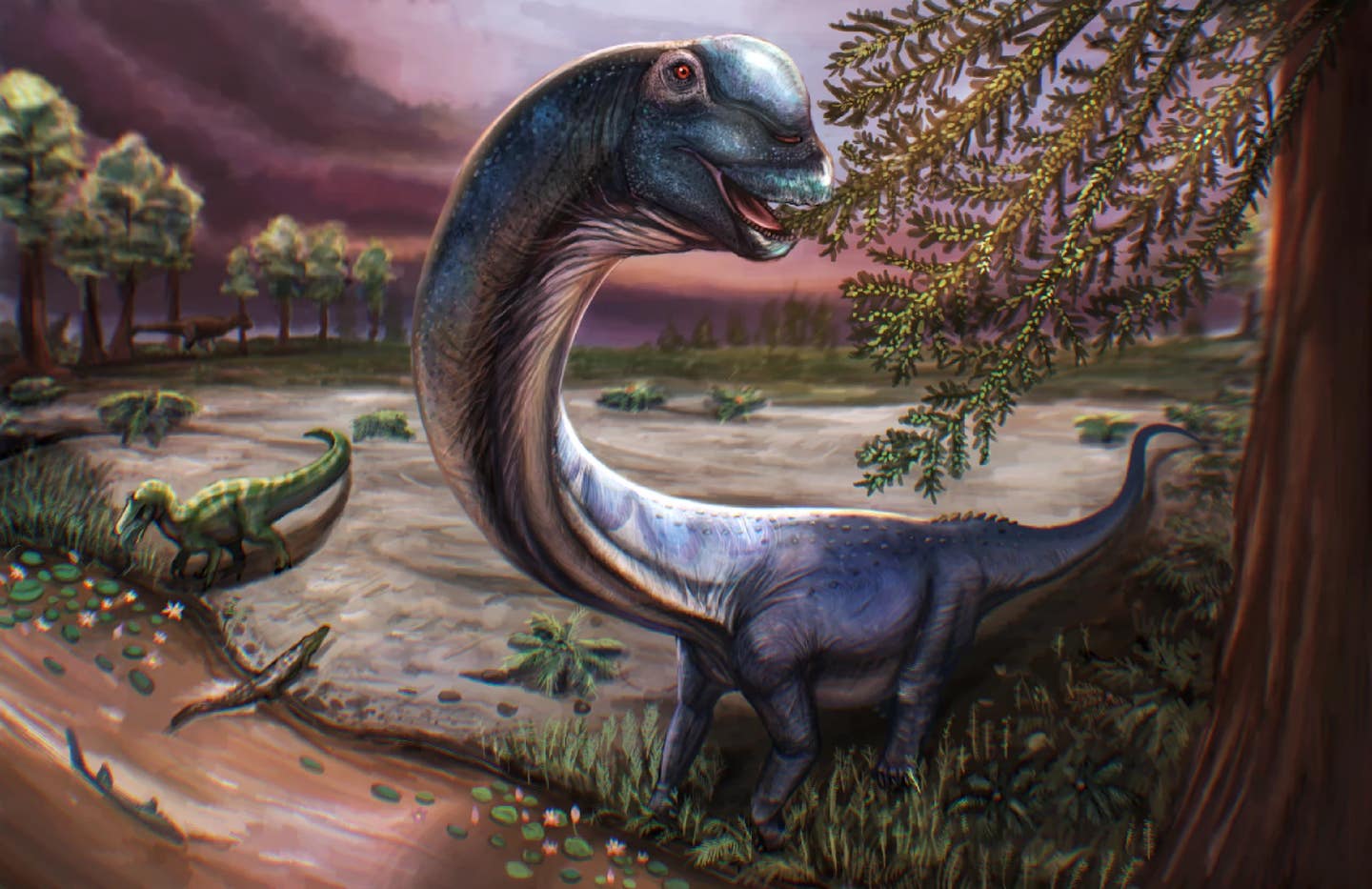
Stylized life reconstruction of Nagatitan chaiyaphumensis gen. et. sp. nov. within the arid floodplains of late Early Cretaceous Aptian–Albian Thailand illustrated by Patchanop Boonsai. (CREDIT: Scientific Reports)
Summary: The bone looked enormous from the start, but the full picture was bigger than expected. Fossils from northeastern Thailand have now been tied to the largest dinosaur yet found in Southeast Asia, a 27-meter giant that may reshape how the region’s dinosaur record is viewed.
A front leg bone nearly as tall as a human emerged from the mud beside a pond in northeastern Thailand. It belonged to a giant dinosaur stretching about 27 meters long and weighing an estimated 27 tonnes.
Scientists have now named the massive animal Nagatitan chaiyaphumensis, a newly identified long-necked herbivore from the Early Cretaceous. Discovered in Thailand’s Chaiyaphum Province, it is the largest dinosaur ever identified in Southeast Asia. The fossils came from the Khok Kruat Formation, Thailand’s youngest dinosaur-bearing rock layer.
Nagatitan belonged to the sauropods, the colossal plant-eaters that include giants like Diplodocus and Brontosaurus. Researchers say it was part of the Asian group Euhelopodidae, a lineage whose evolutionary history remains contested.
The discovery marks Thailand’s 14th officially named dinosaur species and adds to a fossil record that has expanded steadily over the past 40 years.
A giant from the dinosaurs’ final days
A local villager first spotted the bones in 2016 after drought conditions exposed a fossil bed beside a communal pond in Ban Pha Nang Sua. Excavations ran through 2019, with more digs in 2024.
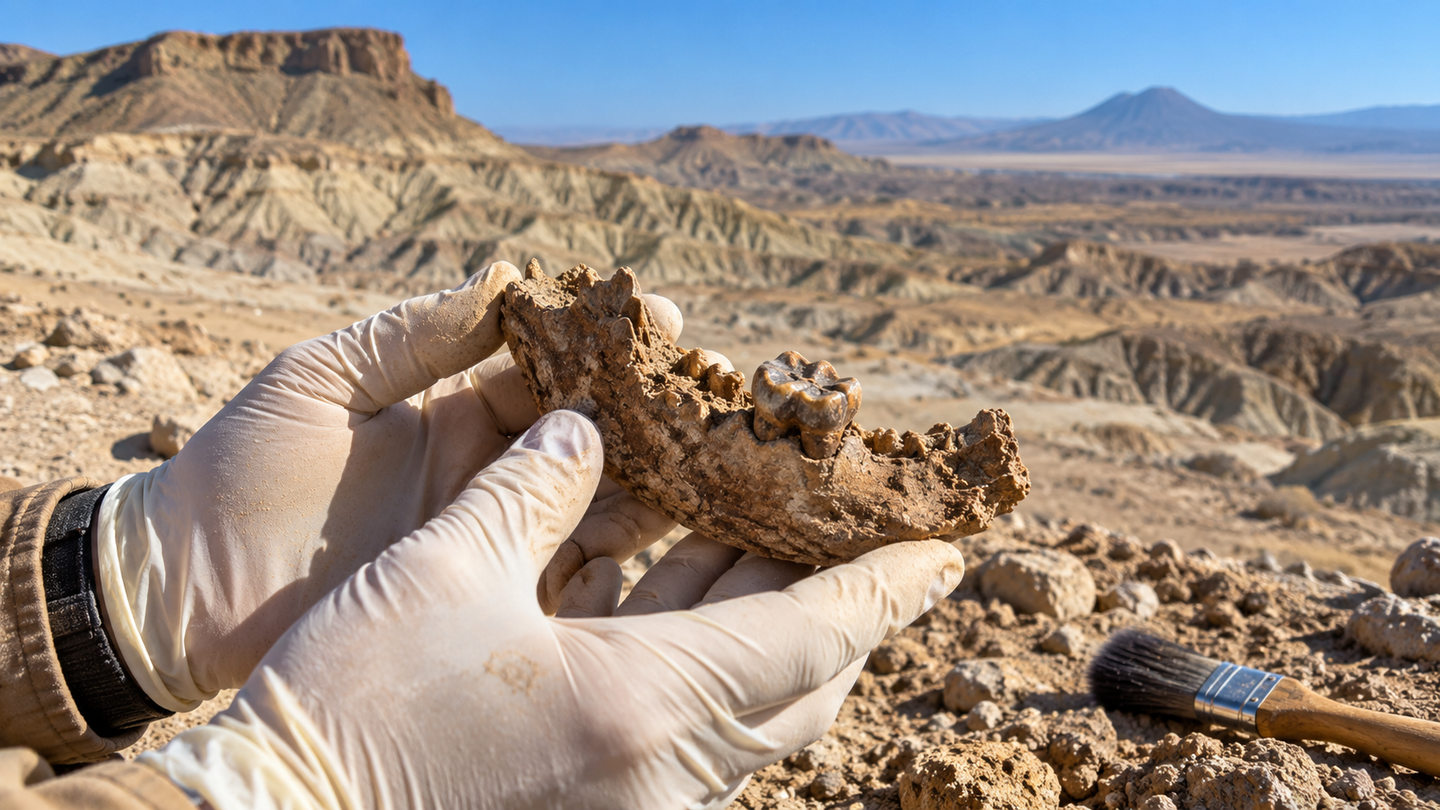
Researchers uncovered vertebrae, ribs, part of the pelvis, a right arm bone and most of a femur. Because the fossils matched in size, sat close together and showed no duplicate bones, the team believes they came from a single massive dinosaur.
The find is especially important because it comes from Thailand’s youngest dinosaur-bearing rock formation. Lead author Thitiwoot Sethapanichsakul, from UCL Earth Sciences, described Nagatitan as “Thailand’s last titan.”
“That is because it was discovered in Thailand’s youngest dinosaur-bearing rock formation,” he said. “Younger rocks laid down towards the end of the time of the dinosaurs are unlikely to contain dinosaur remains because the region by then had become a shallow sea. So this may be the last or most recent large sauropod we will find in Southeast Asia.”
The dinosaur’s name blends myth and geography. “Naga” comes from the serpent-like water beings of Southeast Asian folklore, while “titan” nods to the giants of Greek mythology. Its species name honors Chaiyaphum, where the fossils were found.
Built like a sauropod, but not like any known one
The team identified the animal as a new genus and species from a specific mix of skeletal traits in the spine, pelvis and limbs.
Some of the most distinctive features came from the back bones. The dorsal vertebrae preserved unusual combinations of ridges, hollows and spine shapes, including triangular projections on the upper part of the neural spines that the researchers said have not been seen in any other sauropod. The humerus also stood out. It was complete, 1.78 meters long, and had a rounded upper outer corner unlike the squarer form seen in many related species.
The femur, though incomplete, was estimated to have measured about 1.9 to 2 meters in life.
Those measurements helped the authors estimate the dinosaur’s overall size at around 27 meters in length and about 27 tonnes in body mass. That would make it substantially larger than Phuwiangosaurus, another Thai sauropod. However, it was close in size to Tangvayosaurus from Laos. It still fell well short of true giants such as Patagotitan and Ruyangosaurus, which have been estimated at around 60 and 50 tonnes respectively.
Sethapanichsakul put the scale in everyday terms. “Our dinosaur is big by most people’s standards,” he said. “It likely weighed at least 10 tonnes more than Dippy the Diplodocus (Diplodocus carnegii). However, it is still dwarfed by sauropods like Patagotitan (60 tonnes) or Ruyangosaurus (50 tonnes).”
Life on an arid river plain
The world Nagatitan lived in looked very different from modern Thailand. During the Aptian to Albian stages of the Early Cretaceous, the Ban Pha Nang Sua site was part of a meandering river system in a semi-arid environment.
The sediment layers at the site suggest cycles of river deposition. Other fossils from the area show the habitat supported fish, freshwater sharks, turtles and crocodile relatives. Teeth from large meat-eating dinosaurs were also found nearby, including carcharodontosaurians and spinosaurids.
So this giant herbivore was not alone.
It shared its landscape with smaller plant-eaters such as iguanodontians and early ceratopsian relatives, while pterosaurs hunted fish overhead. The researchers argued that sauropods may have done well in such dry to semi-dry settings. In part, this could be because their long necks and tails gave them extra surface area that could help shed heat.
The formation itself has drawn growing attention because its vertebrate fauna resembles that of similarly aged rocks in Laos and southern China. Yet the new study found no clear sign that Nagatitan was especially close to the known sauropods from China’s Xinlong Formation. It did, however, sit within a broader Asian sauropod story.
Sorting out Asia’s tangled dinosaur family tree
The authors tested Nagatitan against a large dataset of sauropod anatomy and ran two phylogenetic analyses. Both placed it within Euhelopodidae, an early-diverging subgroup of somphospondylan sauropods known mainly from Asia.
That result matters because the internal relationships of these animals have remained unsettled. The fossil record is patchy, and some named species are incomplete or poorly described. In Thailand and Laos especially, the relationships between Nagatitan, Phuwiangosaurus and Tangvayosaurus may shift as older specimens are reexamined and new ones are described.
The researchers also raised a note of caution. Current character scoring for Phuwiangosaurus and Tangvayosaurus was not based on new first-hand study in this project, and the Lao species still lacks a full modern description. The Thai material, meanwhile, may include fossils that have been grouped too broadly under older names.
Importance of Nagatitan
That makes Nagatitan important not just because it is large, but because it adds a better described specimen to a region where major questions remain open.
Professor Paul Upchurch of UCL Earth Sciences said the work grew out of a new collaboration between University College London (UCL), Mahasarakham University, Suranaree University of Technology and Sirindhorn Museum in Thailand. 3D scanning and printing helped the team study the bones without constant travel.
“We have had a long-standing interest in the evolution of these gigantic plant eaters and have good collaborative links with researchers around the world,” he said. “It is great to work with Thai colleagues and start to get insights into what was happening in Southeast Asia during the Jurassic and Cretaceous.”
Sethapanichsakul framed the discovery in more personal terms: “I’ve always been a dinosaur kid. This study doesn’t just establish a new species but also fulfils a childhood promise of naming a dinosaur.”
Practical implications of the research
The discovery gives Southeast Asia a larger role in the global story of sauropod evolution. It strengthens the case that the region was home to very large plant-eating dinosaurs during the late Early Cretaceous, and not just smaller or poorly known forms. It also adds weight to the idea that Asian titanosauriforms grew bigger during the middle part of the Cretaceous.
Just as important, the work highlights how much remains undescribed in museum collections. Sethapanichsakul said Thailand holds a large number of sauropod fossils that still have not been formally studied. Some may represent additional new species.
That means Nagatitan may be less an isolated giant than the first clear sign of a broader, still partly hidden dinosaur record in the region.
Research findings are available online in the journal Scientific Reports.
The original story "Archeologists discover the largest dinosaur ever to roam Southeast Asia" is published in The Brighter Side of News.
Related Stories
- Brazilian dinosaur discovery points to an ancient route from Europe to South America
- Student discovers new carnivore dinosaur 3x older than T. rex
- CT scans reveal a new species of baby dinosaur hidden in rock for 100 million years
Like these kind of feel good stories? Get The Brighter Side of News' newsletter.
Rebecca Shavit
Writer
Based in Los Angeles, Rebecca Shavit is a dedicated science and technology journalist who writes for The Brighter Side of News, an online publication committed to highlighting positive and transformative stories from around the world. Having published articles on MSN, AOL News, and Yahoo News, Rebecca's reporting spans a wide range of topics, from cutting-edge medical breakthroughs to historical discoveries and innovations. With a keen ability to translate complex concepts into engaging and accessible stories, she makes science and innovation relatable to a broad audience.