Mini lightning bolts help chemists turn methane into clean-burning fuel
Mini lightning bolts in water helped chemists turn methane into methanol without extreme heat or pressure.

 Edited By: Joshua Shavit

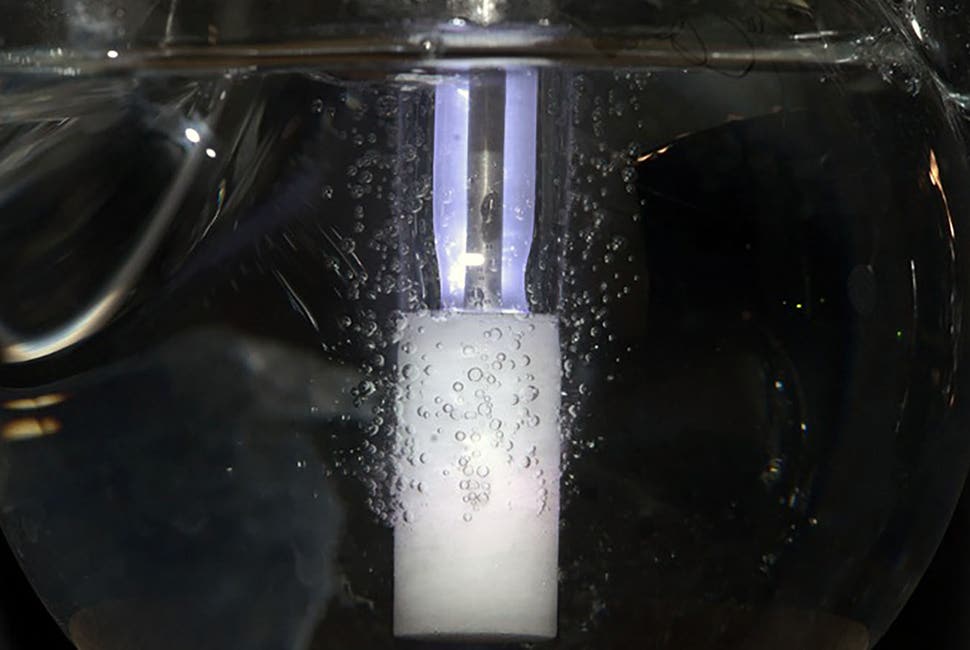
Tiny plasma bursts convert methane into methanol in one step, offering a cleaner route to liquid fuel production. (CREDIT: Northwestern University)
Tiny bolts of plasma, flickering inside a submerged glass tube, may have opened a new route for turning methane into liquid fuel.
Chemists from Northwestern University have developed a way to convert methane directly into methanol in a single step, using electricity, water and a copper oxide catalyst instead of the punishing heat and pressure used in conventional production. The process relies on pulses of high voltage that create miniature lightning-like discharges inside a porous glass reactor. These discharges set off reactions that are otherwise hard to start.
Methanol matters because it sits at the center of modern industry. It is used to make plastics, paints and adhesives. It is also drawing interest as a cleaner-burning fuel for ships and industrial boilers. Global production already exceeds 110 million metric tons a year. However, the path to making it is energy-hungry and carbon-intensive.
That is why methane-to-methanol conversion has long been treated as one of chemistry’s hardest practical problems. Methane is abundant and cheap, but it is stubbornly stable. Once methanol forms, it has the opposite problem. It can keep reacting until it breaks down into carbon dioxide.
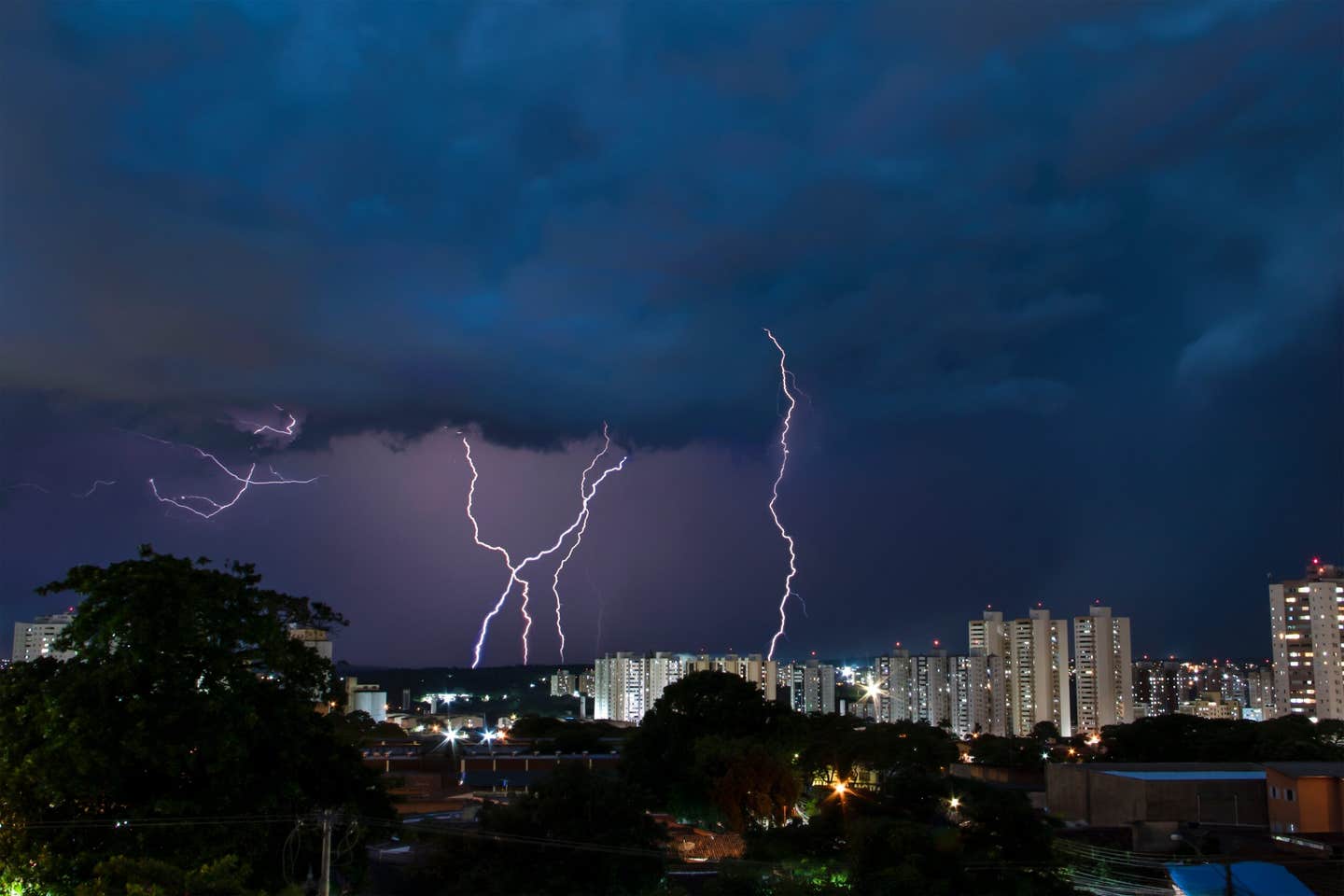
“We’re using pulses of high-voltage electricity,” said Northwestern University's Dayne Swearer, the study’s corresponding author. “If the electrical potential is high enough, lightning bolts form inside of our reactor the way they do during a summer thunderstorm. We’re taking advantage of that chemistry to break methane’s bonds without heating the entire system to extreme temperatures.”
Swearer is an assistant professor of chemistry and chemical and biological engineering at Northwestern University.
Why methane is so difficult to tame
Today’s industrial route to methanol begins by blasting methane with steam at temperatures above 800 degrees Celsius. That first step breaks methane into carbon monoxide and hydrogen. Then manufacturers recombine those gases under pressures 200 to 300 times higher than the atmosphere to make methanol.
It works, but it is a rough way to make a widely used molecule. The process takes enormous amounts of heat, consumes energy and produces carbon dioxide along the way.
“The extreme temperatures are needed to break the unreactive chemical bonds between carbon and hydrogen in methane,” Swearer said. “Then, you must use high pressure to squeeze all those molecules together onto the catalyst in order to make the methanol molecule. It works, but it’s not the most straightforward path to making methanol from methane.”
The new system tries to avoid that detour. Instead of tearing methane apart in one process and rebuilding it in another, the researchers built what they call a plasma bubble reactor. At its center is a porous glass tube coated with copper oxide. Methane flows through the tube. Meanwhile, high-voltage pulses turn the gas into plasma, a highly energized state of matter packed with fast-moving electrons.
Those electrons split methane and water into reactive fragments. The fragments can then recombine into methanol. The surrounding water plays an important role, too. It quickly dissolves the methanol as soon as it forms. This pulls it out of the most reactive zone before it can be overoxidized into carbon dioxide.
The trick was not just making methanol, but keeping it
James Ho, a Ph.D. candidate in Swearer’s lab and the study’s first author, said cold plasma offered a way to drive chemistry without heating the whole system.
“More than 99% of the observable universe is comprised of plasma,” Ho said. “But even though it’s ubiquitous, it really is an untapped resource in the field of chemistry. The reason we use cold plasmas is because we can produce them at low temperatures and normal atmospheric pressure conditions.”
That low-temperature control appears to be central to the result. When the team simply stirred copper oxide into the water, methanol production did not improve much. The difference came when the catalyst was placed directly inside the porous frit. At that point, plasma-generated species could reach it before they died off or diffused away.
The reactor geometry mattered as well. Pores that were too small limited plasma formation. Pores that were too large weakened the local plasma-catalyst interactions that helped preserve methanol. A medium pore size gave the best balance between conversion and selectivity.
Catalyst loading also changed the behavior of the discharge. As more copper oxide was added, liquid product yields and methanol selectivity increased. However, the gains flattened at higher loadings because the pores began to clog.
The team then adjusted methane flow rates and found another tradeoff. Lower flow gave methane more time to react, but higher flow helped whisk methanol into the water more quickly. This reduced overoxidation. The best performance came from carefully balancing reaction time, transport and quenching.
When an inert gas stopped acting inert
One of the more surprising parts of the study came when the chemists diluted methane with argon. Argon is usually treated as chemically inert, but in the plasma it became useful.
By adding argon, the researchers increased electron density inside the discharge and changed the plasma chemistry in a way that improved methanol production while cutting unwanted byproducts. At a 2-to-1 argon-to-methane ratio, methanol production rose to 51.8 millimoles per gram of catalyst per hour. Under those conditions, 96.8% of the liquid products were methanol. Looking at all products, gas and liquid combined, total methanol selectivity reached 50.4%.
At an even higher argon ratio, liquid-phase methanol selectivity climbed to 97.1%. The highest total selectivity reported in the study reached 57.9%. However, overall liquid yields dipped.
The reactor also made hydrogen and small hydrocarbons such as ethylene and propane. Swearer said those are not waste.
Precursor to plastic production
“We also ended up with ethylene, which is a precursor to plastic production, and hydrogen gas, which is an important commodity chemical and a zero-carbon fuel in its own right,” he said. “So, we took methane, which is a very abundant gas, and turned it into methanol along with ethylene, hydrogen and a bit of propane. These are all intrinsically more valuable products.”
The researchers argue that this kind of electrified chemistry could eventually support smaller, distributed systems rather than giant centralized plants. One possible use would be at remote or leaking methane sources, where the gas is often burned off.
“We could treat stranded resources, like leaky well heads that naturally emit methane into the environment,” Swearer said. “Right now, the way to deal with leaked methane is to light it on fire to turn it into carbon dioxide, which warms the climate less than methane but is still clearly a problem. Instead, we could take a smaller scale reactor to the place that’s leaking methane and turn it into a transportable liquid fuel.”
There are still limits. The reactor remains unoptimized, the fritted glass membranes are highly heterogeneous, and the exact role of copper oxide inside the plasma-liquid interface is not fully pinned down. The team also says unity selectivity toward methanol remains a goal. This means the process still produces a mix of products rather than methanol alone. More work is also needed to recover and separate methanol efficiently as a purified product.
Practical implications of the research
This work points to a possible lower-temperature, lower-pressure way to turn methane into a liquid chemical and fuel feedstock.
If the system can be improved and scaled, it could help reduce emissions tied to traditional methanol production. It could also create smaller reactors that operate where methane is currently wasted, vented or flared.
It also suggests that plasma-driven chemistry, especially when paired with catalysts and water, may offer a new way to make useful chemicals without relying on the most energy-intensive industrial methods.
Research findings are available online in the Journal of the American Chemical Society.
The original story "Mini lightning bolts help chemists turn methane into clean-burning fuel" is published in The Brighter Side of News.
Related Stories
- Methane-eating microbes turn greenhouse gas into fuel, food, and bioplastics
- Ship traffic releases large amounts of methane from the ocean into the atmosphere
- The environment faces new threats from global methane emissions
Like these kind of feel good stories? Get The Brighter Side of News' newsletter.
Rebecca Shavit
Writer
Based in Los Angeles, Rebecca Shavit is a dedicated science and technology journalist who writes for The Brighter Side of News, an online publication committed to highlighting positive and transformative stories from around the world. Having published articles on MSN, AOL News, and Yahoo News, Rebecca's reporting spans a wide range of topics, from cutting-edge medical breakthroughs to historical discoveries and innovations. With a keen ability to translate complex concepts into engaging and accessible stories, she makes science and innovation relatable to a broad audience.