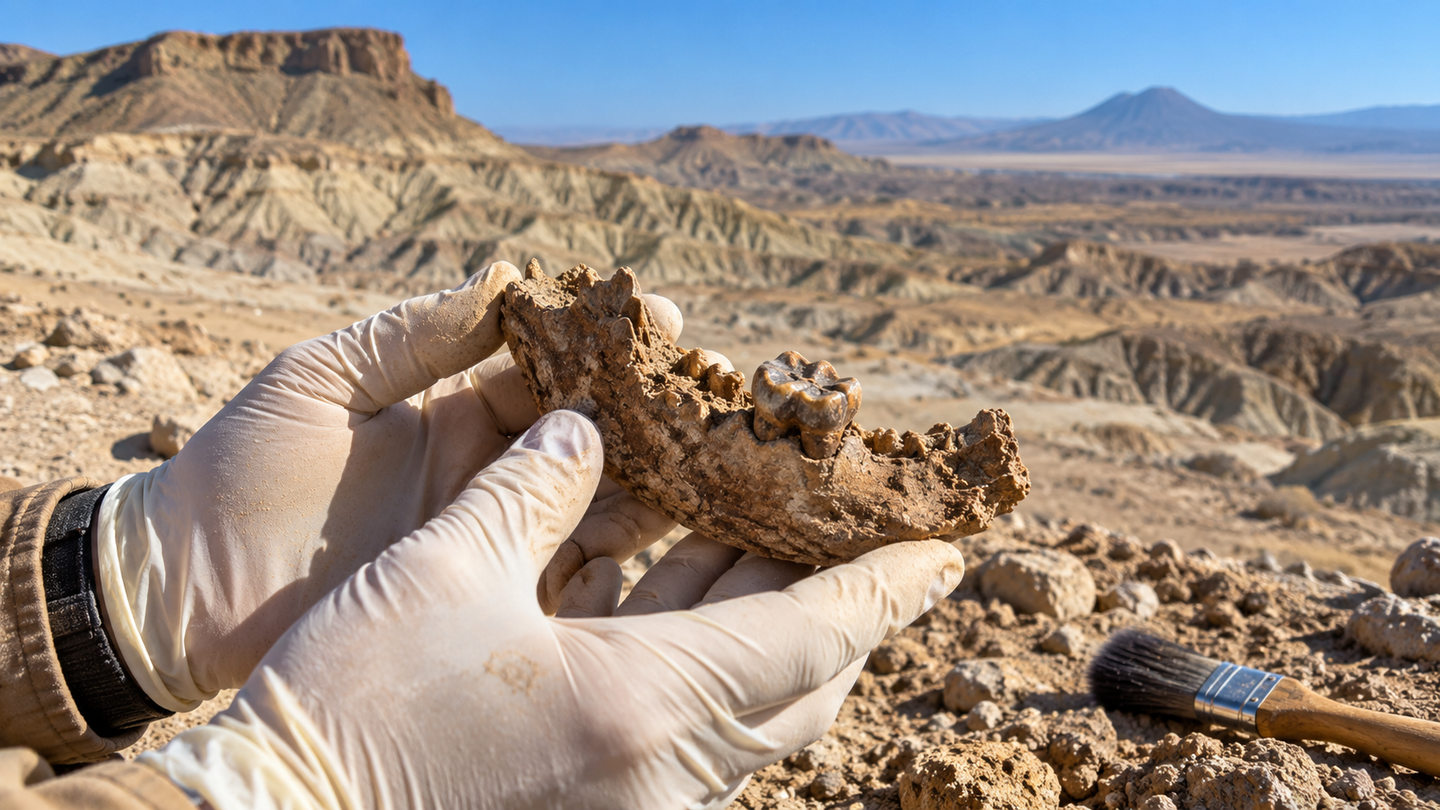
Natural selection is accelerating, massive DNA study finds
A huge ancient DNA study finds hundreds of signs of natural selection in West Eurasia over the past 10,000 years.

 Edited By: Joseph Shavit

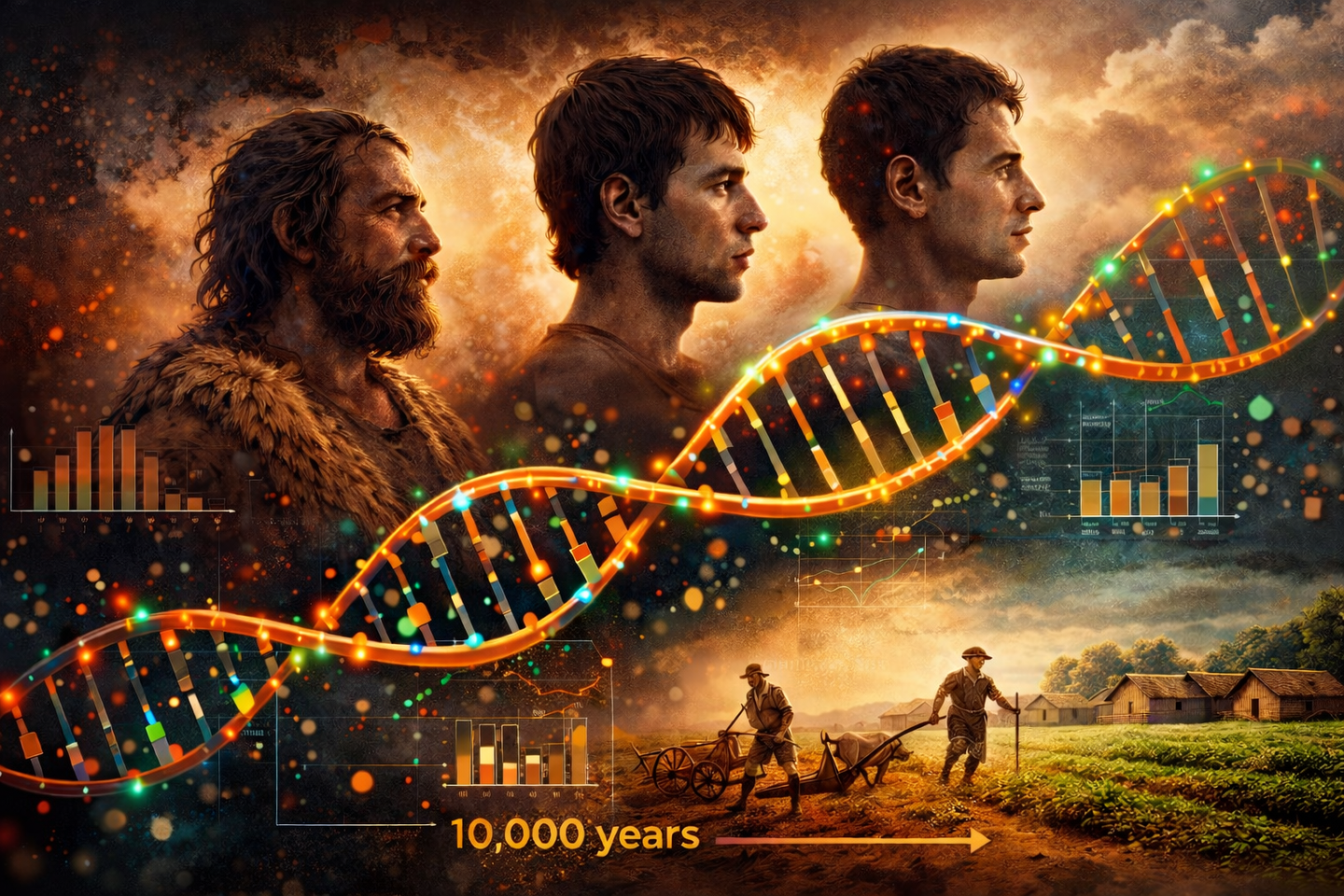
Ancient DNA from 16,000 people reveals natural selection shaped West Eurasian genomes more deeply than scientists thought. (CREDIT: AI-generated image / The Brighter Side of News)
For years, the story of recent human evolution looked relatively quiet.
Scientists studying ancient human DNA had found only a few dozen clear cases where natural selection appeared to strongly favor one version of a gene over another. As a result, it made it seem as though the most forceful kind of selection had played only a limited role after modern humans spread out of Africa. In addition, they formed distinct populations around the world.
A new analysis upends that picture. Drawing on DNA from nearly 16,000 ancient people across West Eurasia, researchers found that directional selection, the kind that pushes certain genetic variants to rise or fall in frequency because they help or hurt survival and reproduction, has been far more common than once believed. Moreover, the team identified hundreds of such cases over the past 10,000 years. Selection appears to speed up after the rise of farming.
The work, led by researchers at Harvard, was published in Nature.
“With these new techniques and large amount of ancient genomic data, we can now watch how selection shaped biology in real time,” said Ali Akbari, first author of the study and senior staff scientist in the lab of Harvard geneticist David Reich.
That shift in perspective matters because it changes how scientists think about the recent human past. Instead of relying only on clues preserved in modern genomes, researchers can now track how gene variants moved through populations over thousands of years.
“This work allows us to assign place and time to forces that shaped us,” said Reich. He is professor of genetics in the Blavatnik Institute at Harvard Medical School. He is also professor of human evolutionary biology in the Harvard University Faculty of Arts and Sciences. In addition, he is senior author of the study.
Ten millennia, one massive genetic record
The scale of the dataset helped make the breakthrough possible.
Over seven years, Reich’s lab built a large collection of DNA sequences from ancient people who lived in what is now Europe and parts of the Middle East. The study added newly reported DNA data from 10,016 ancient individuals to 5,820 previously published ancient sequences and 6,438 modern genomes. Altogether, the data covered 15,836 people spanning 18,000 years.
“This single paper doubles the size of the ancient human DNA literature,” Reich said.
That sheer volume mattered because the signal of directional selection turned out to be faint. By the researchers’ estimates, it accounted for only about 2 percent of all gene frequency changes. Most changes still came from other forces, including migration, population mixing, and the random fluctuations that happen in small populations.
But 2 percent of the genome across thousands of years is still a lot. The team found 479 gene variants, or alleles, that were strongly selected for or against in West Eurasia.
Akbari’s computational method was central to finding them. The challenge was separating real selection from all the other reasons gene frequencies change. Earlier studies often struggled with that, especially in regions shaped by repeated migrations and blending of populations.
“Ali developed a powerful technique that could zoom in on the patterns that actually mattered,” Reich said.
What rose, what fell
Many of the variants flagged in the study are tied to traits that people still recognize today.
They include links to light skin tone, red hair, lower odds of male-pattern baldness, changes in blood type, resistance to leprosy, immunity to HIV infection, and risks for conditions such as celiac disease, Crohn’s disease, rheumatoid arthritis, alcoholism, tuberculosis, and multiple sclerosis.
Some well-known cases stood out. The researchers found evidence that the B blood type allele increased over the past 6,000 years while the A allele declined. Furthermore, a variant tied to reduced male-pattern baldness dropped in frequency over the past 7,000 years. Another allele associated with resistance to HIV rose thousands of years before the medieval plagues it was once thought to be linked to.
The study also traced a strong increase in the major genetic risk factor for celiac disease. That may sound backward in a region where wheat farming became common. Nevertheless, it is one example of why the authors urge caution.
A gene’s modern association is not necessarily the reason it spread in the past.
That point runs through the study. An allele connected today to years of schooling, household income, or intelligence tests did not mean those same things in preliterate societies. To clarify, some traits measured in modern databases simply did not exist in ancient settings. In other cases, a variant may affect several traits at once. Alternatively, it may just sit near the gene natural selection was really acting on.
So the findings do not mean, for example, that ancient Europeans were evolving toward modern ideas of being smarter, richer, or healthier. They mean only that variants linked today to those outcomes changed in frequency in ways that were unlikely to be random.
Farming changed the pressures
One of the study’s clearest patterns is timing.
The researchers found that selection intensified after the transition from hunting and gathering to agriculture. As people settled, changed their diets, lived near domesticated animals, and gathered in larger populations, different traits likely became useful.
That may help explain why selection increased for blood, immune, inflammatory, and cardiometabolic traits during and after the Bronze Age.
The authors also found signals of polygenic selection, where many variants with small effects move in the same general direction. These included traits tied today to lighter skin pigmentation, lower body fat percentage, waist-to-hip ratio, and lower susceptibility to smoking. There were also signals linked to reduced genetic predisposition for bipolar disorder and schizophrenia.
The strongest polygenic signal involved light skin pigmentation. The researchers suggest that could reflect adaptation for vitamin D production in low-sunlight regions. This is especially true among farming populations with diets that may have provided less of it.
They also found negative selection on combinations of alleles associated today with type 2 diabetes-related traits, including body fat percentage and waist circumference.
Some of the patterns were highly polygenic, meaning no single variant explained the trend. Instead, hundreds of loci contributed.
A more complicated picture of selection
The study also helps explain an old puzzle.
If directional selection has been so widespread in the past 10,000 years, why do earlier periods of human evolution not show many fixed genetic differences between populations?
The researchers argue that one likely answer is that selection pressures changed over time. A variant that helped in one era may have become less useful, or even harmful, later on. The team found several examples where selection seems to have reversed direction. These include variants tied to tuberculosis risk, multiple sclerosis risk, and iron overload.
That matters because it undercuts any simple idea that a gene was either always good or always bad. Much depends on the environment, pathogens, diet, and way of life surrounding it.
The authors also note that West Eurasia may have experienced unusually intense and shifting selection during the Holocene. Specifically, this happened because daily life changed so quickly.
And this is probably not just a West Eurasian story.
The methods used here can now be applied to other ancient DNA datasets around the world, including East Asia, East Africa, and the Americas, as long as enough ancient genomes are available.
Practical implications of the research
This work gives scientists a clearer view of how human biology changed in response to disease, diet, environment, and culture over time. It may also point researchers toward genetic variants that still matter for health today. This includes disease risk and drug development.
The findings could help guide future work in medicine, molecular biology, and even gene therapy. This is especially helpful when scientists consider whether a genetic variant may have once offered an important advantage.
Beyond humans, the same tools could be used to study natural selection in domesticated animals. They could also help study other species adapting to environmental change.
Research findings are available online in the journal Nature.
The original story "Natural selection is accelerating, massive DNA study finds" is published in The Brighter Side of News.
Related Stories
- New study reveals the links between climate, earthquakes and human evolution
- Million-year-old skull discovery rewrites the story of human evolution
- New species of ancient humans rewrites the story of early human evolution
Like these kind of feel good stories? Get The Brighter Side of News' newsletter.
Mac Oliveau
Writer
Mac Oliveau is a Los Angeles–based science and technology journalist for The Brighter Side of News, an online publication focused on uplifting, transformative stories from around the globe. Having published articles on MSN, and Yahoo News, Mac covers a broad spectrum of topics including medical breakthroughs, health and green tech. With a talent for making complex science clear and compelling, they connect readers to the advancements shaping a brighter, more hopeful future.