New CPR simulator could help save astronauts in space
Scientists developed a new space CPR simulator to study blood flow and cardiac emergencies in reduced gravity environments.

 Edited By: Joseph Shavit

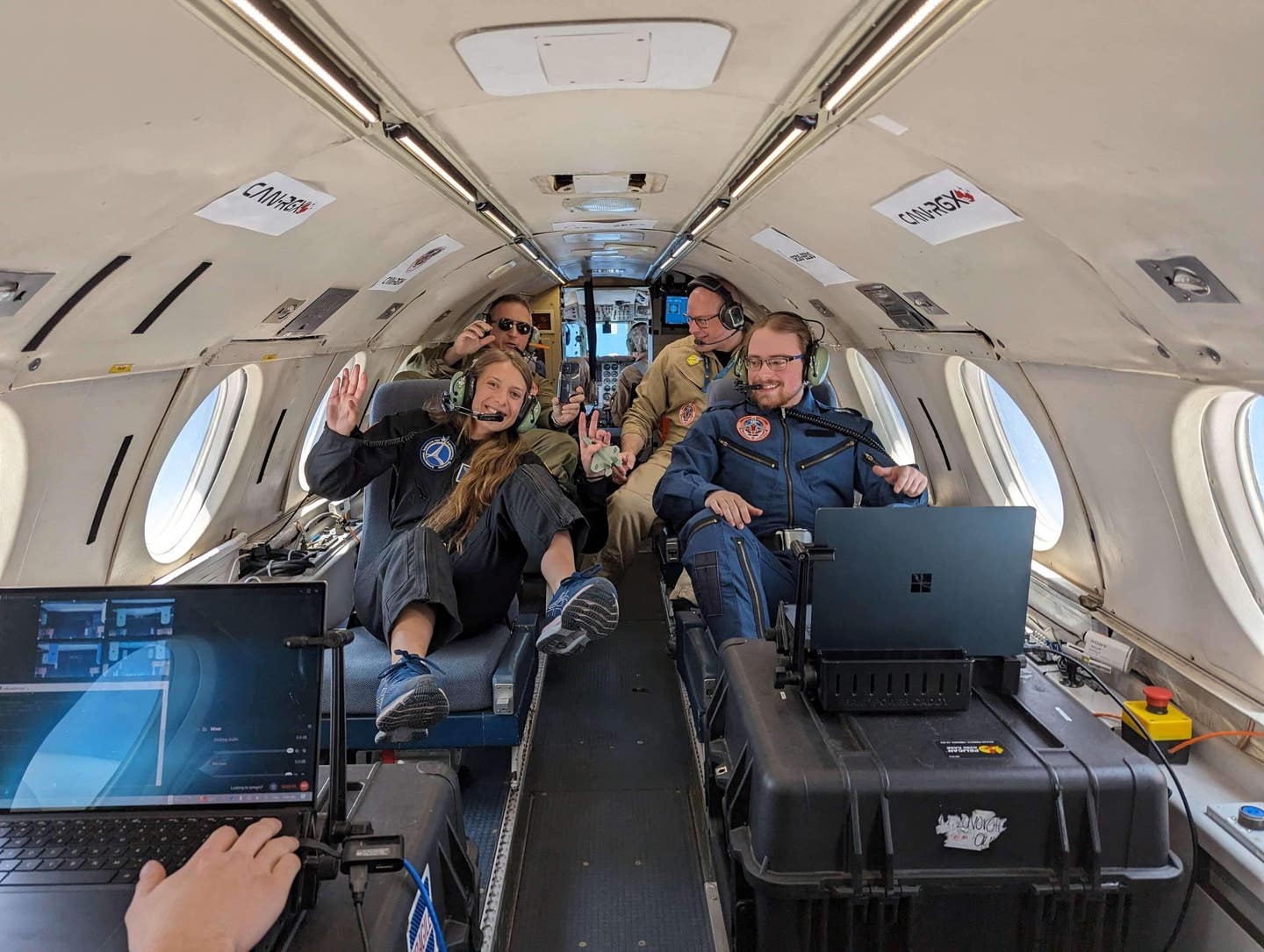
Researchers at Concordia University created a high-fidelity CPR simulator to study how blood circulates during cardiac arrest in space. (CREDIT: Concordia University)
The race to return humans to the moon and eventually send astronauts to Mars has forced scientists to confront a difficult reality. Space is dangerous, isolated and unforgiving. When a medical emergency happens millions of miles from Earth, there is no nearby hospital waiting to help.
One of the greatest concerns is sudden cardiac arrest. On Earth, doctors and first responders use cardiopulmonary resuscitation, or CPR, to keep blood flowing after the heart stops. In space, however, performing CPR becomes far more difficult because gravity itself changes how blood moves through the body.
Now, researchers at Concordia University have developed a new high-fidelity simulator designed to study how CPR works in reduced gravity environments. Their findings, published in the journal npj Microgravity, could help future astronauts survive cardiac emergencies during long missions in deep space.
The project combines engineering, medicine and space science into a system that mimics blood flow inside the human body. The simulator allowed scientists to track how artificial blood moved during CPR under both Earth gravity and hypogravity conditions.
The results revealed measurable differences in blood pressure and circulation when gravity changes, offering a new window into one of space medicine’s biggest unanswered questions.
A Medical Problem Far From Home
Long-duration spaceflight places enormous stress on the human body. Muscles weaken. Bones lose density. The cardiovascular system changes over time. Isolation and radiation exposure add even more strain.
Although cardiac emergencies in space are considered uncommon, researchers say the risk becomes more serious during missions lasting months or years. On a trip to Mars, astronauts would have no realistic way to return quickly to Earth for emergency care.
Current CPR methods were designed for life on Earth. They depend heavily on gravity. During chest compressions, rescuers use their body weight to push blood through the patient’s heart and vessels.
In space, that approach breaks down. Without gravity, rescuers can float backward while attempting compressions. Blood also behaves differently in reduced gravity, making it harder to know whether CPR is actually delivering enough circulation to keep organs alive.
“Most issues on CPR in space are oriented towards the health provider rather than the patient,” said Lyes Kadem, professor in Concordia’s Department of Mechanical, Industrial and Aerospace Engineering. “We see this system as a bridge that will help space medicine practitioners investigate the hemodynamics of blood flow.”
Building A Simulated Human Heart
To study the problem, researchers created a sophisticated mannequin equipped with a 3D-printed cardiovascular system. The simulator included a heart, artificial vessels, heart valves and a fluid-filled loop designed to mimic blood circulation.
The team modified a CPR mannequin and installed a custom-built circulatory system inside the chest cavity. The heart itself was based on a healthy male anatomy and printed using flexible material capable of surviving repeated compressions.
Researchers also built artificial arteries and veins that mirrored the dimensions and flexibility of real human vessels. A glycerol-water solution acted as a blood substitute because its thickness closely resembles human blood.
The system included chambers designed to mimic circulation throughout the body. These chambers expanded and recoiled during compressions, recreating the pressure changes that happen in living blood vessels.
An automated compression device delivered consistent CPR at a rate close to current medical guidelines. The device compressed the chest about 110 times per minute with a depth of roughly 5 centimeters.
This allowed researchers to study blood flow precisely while eliminating inconsistencies that often occur during manual CPR.
Taking The Experiment Into The Sky
The team tested the simulator aboard a Falcon 20 aircraft owned by the Canadian government and specially modified for space science experiments.
During parabolic flights, the aircraft climbs sharply before entering a controlled free-fall arc. For about 15 to 20 seconds at a time, passengers experience hypogravity conditions similar to those found on the moon or Mars.
Before each flight, the simulator was attached securely to a frame inside the aircraft cabin. During the brief reduced-gravity periods, the automated system delivered compressions to the mannequin’s artificial heart.
“That would begin the process of moving the fluid, a blood analogue, through the carotid artery to the brain,” said lead author Zoé Lord.
Sensors attached throughout the mannequin recorded pressure changes in real time. One key sensor monitored the carotid artery, the major vessel carrying blood from the heart to the brain.
These measurements gave researchers something previous studies often lacked: direct information about whether CPR was actually moving enough fluid through the body.
Surprising Differences In Reduced Gravity
The simulator successfully recreated pressure waveforms similar to those observed during effective CPR on Earth. Researchers then compared measurements collected under normal gravity and hypogravity conditions.
The findings showed clear physiological differences.
Under Earth gravity, the simulator produced a systolic pressure of about 49.4 millimeters of mercury during compressions. In hypogravity, systolic pressure increased to approximately 60.9 millimeters of mercury.
Diastolic pressure also rose significantly, increasing from roughly 19.0 to 26.5 millimeters of mercury. Mean arterial pressure and pulse pressure both increased as well.
“We saw significant increases between the different types of arterial pressure at hypogravity and at Earth gravity: systolic, diastolic, mean arterial pressure and pulse pressure were all higher. This validated our high-fidelity heart simulator,” Lord said.
The researchers believe these pressure changes reflect how reduced gravity alters blood movement and vessel behavior during CPR.
The compression rate itself stayed relatively stable between gravity conditions, suggesting that the differences came primarily from changes in circulation rather than the mechanical compressions.
Why Blood Flow Matters More Than Compression Depth
Previous studies on space CPR mainly focused on visible measures like compression speed and depth. While those metrics are important, they do not reveal whether blood is actually reaching critical organs like the brain.
This study shifts attention toward internal physiological responses.
The simulator recreated realistic pressure features seen in successful CPR, including rapid pressure increases during compression and gradual declines during decompression.
Normogravity pressure values also matched ranges reported in earlier animal and laboratory studies, giving researchers confidence that the simulator behaves realistically.
The findings suggest future space CPR studies should prioritize blood flow measurements rather than relying only on external movement.
For astronauts traveling far from Earth, that distinction could eventually save lives.
More Realistic Space Medicine Models Ahead
The researchers stress that this simulator represents only an early version of what they hope will become a far more advanced system.
“We want to make future models more physiologically realistic compared to the first one,” Lord said. “We hope to integrate a spine, a rib cage and a more complex thoracic cavity, since the heart shrinks when a person is in space.”
The team also hopes to improve the vessel structures, instrumentation and internal anatomy.
“The ultimate goal is to get our mannequin aboard the International Space Station to measure what happens in actual space flight conditions,” Lord added.
Future experiments may also measure volumetric blood flow more directly and test different CPR techniques under extended hypogravity conditions.
Practical Implications of the Research
This research could help scientists develop safer emergency medical procedures for astronauts traveling to the moon, Mars and beyond. By understanding how blood behaves during CPR in reduced gravity, researchers may eventually establish standardized space-based resuscitation methods.
The simulator may also improve astronaut training. Future crews could practice CPR techniques using systems that realistically mimic blood flow and internal physiology rather than relying only on traditional mannequins.
Beyond space travel, the technology may benefit medicine on Earth. High-fidelity cardiovascular simulators could help doctors study blood circulation, improve CPR training and test emergency procedures more safely. The research also highlights how engineering and medicine can work together to solve life-threatening challenges in extreme environments.
Research findings are available online in the journal npj Microgravity.
The original story "New CPR simulator could help save astronauts in space" is published in The Brighter Side of News.
Related Stories
- What TV Dramas Get Wrong About CPR—and the Real-World Cost
- Faster, clearer, smarter: How AI is transforming cardiac imaging
- Groundbreaking AI tool could save lives from sudden cardiac arrest
Like these kind of feel good stories? Get The Brighter Side of News' newsletter.
Joshua Shavit
Writer and Editor
Joshua Shavit is a NorCal-based science and technology writer with a passion for exploring the breakthroughs shaping the future. As a co-founder of The Brighter Side of News, he focuses on positive and transformative advancements in technology, physics, engineering, robotics, and astronomy. Having published articles on AOL.com, MSN, Yahoo News, and Ground News, Joshua's work highlights the innovators behind the ideas, bringing readers closer to the people driving progress.