New low-temperature process extracts battery-grade lithium with far less waste and energy
New MIT-led chemistry could make hard-rock lithium cheaper, cleaner, and easier to refine outside China.

 Edited By: Joseph Shavit

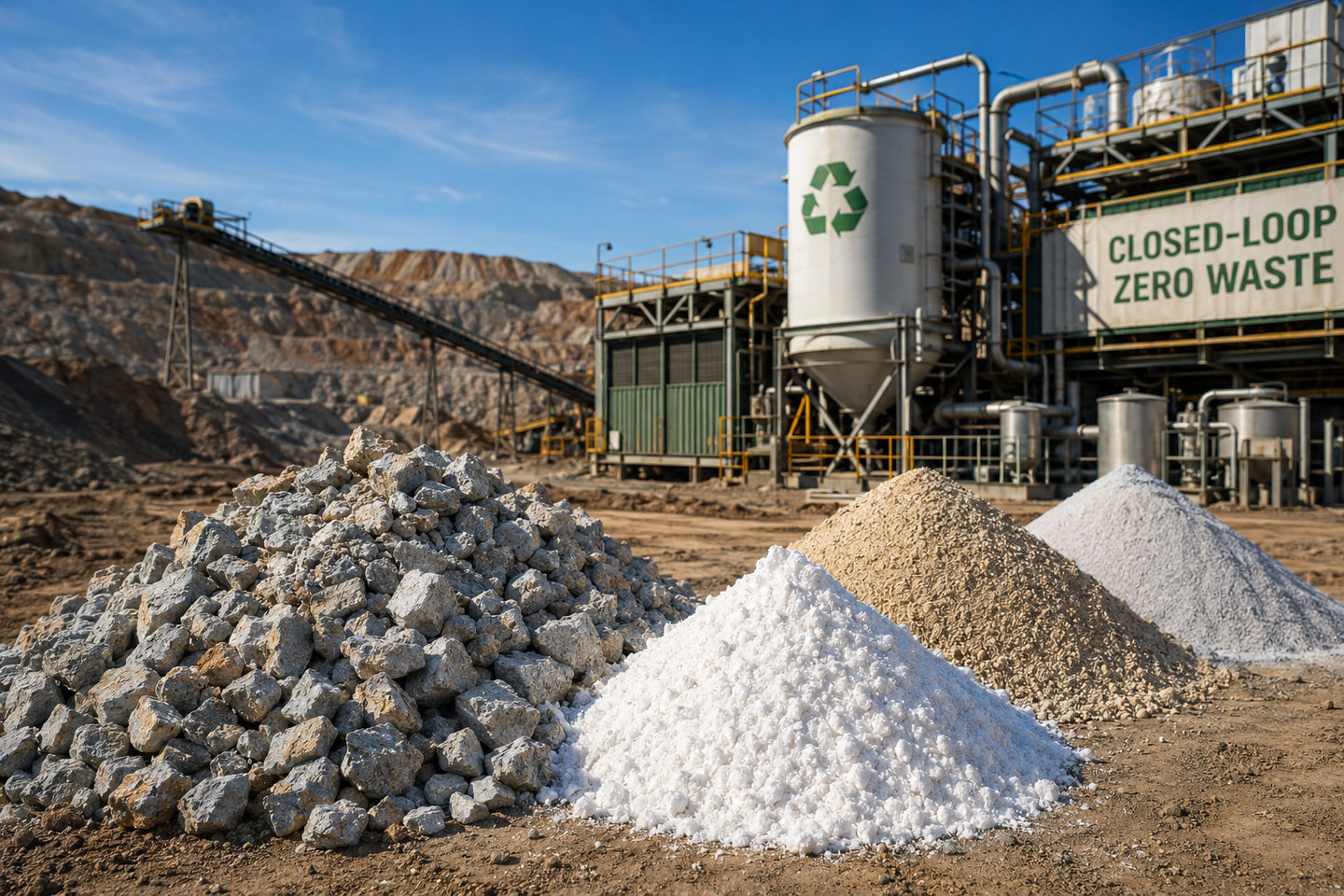
MIT researchers developed a low-temperature process that extracts battery-grade lithium from spodumene with far less waste and energy. (CREDIT: AI-generated image / The Brighter Side of News)
Lithium sits at the center of the battery economy. Yet getting it out of rock still looks surprisingly crude. Spodumene, the world’s most common lithium-bearing hard rock, is usually blasted with heat above 1,000 degrees Celsius. After that, acids and other chemicals pull out the metal. What remains is largely waste.
That old route has helped China dominate lithium refining. Even though countries like the United States and Australia hold large lithium resources of their own, China still leads the industry. Additionally, it has made hard-rock lithium more expensive than lithium drawn from brines. Yet brine extraction can place environmental strain on water-stressed regions.
A team led by researchers from MIT now says it has found a way around one of the industry’s central bottlenecks. Specifically, the challenge is how to crack open hard rock without the punishing heat, heavy waste, and long chain of cleanup steps that define conventional refining.
In a paper published in Science, the group describes a low-temperature, closed-loop process that extracts battery-grade lithium salts from spodumene. It also recovers alumina and silica as useful products rather than leaving them behind as tailings. The researchers estimate the process could cut refining costs roughly in half compared with standard hard-rock methods. Moreover, this brings it close to the cost of lithium from high-grade brines.
“By 2040, we need to quadruple production of lithium globally, which amounts to hundreds of new lithium producing assets,” says author Camden Hunt, a former project manager in MIT’s Center for Electrification and Decarbonization of Industry. “Hard rock is abundant; you can find it everywhere. But most hard rock refining is done in China. Our central thesis is if you can find an easier way to crack the rock, get lithium out, and make battery-grade lithium salts, you can change the lithium market. It aligns with the recent push to onshore production of critical minerals in the U.S.”
A different way to crack the rock
The idea traces back, unexpectedly, to a bathroom renovation.
About 25 years ago, MIT materials scientist Yet-Ming Chiang came across a glass-etching cream whose active ingredient was ammonium fluoride. Years later, while thinking about spodumene, he returned to that memory. Like glass, spodumene contains a great deal of silica, and silica is usually the stubborn part.
Conventional hydrometallurgy tends to dissolve the more reactive parts of a mineral first, leaving behind silica-rich waste. The MIT-led team reversed that logic. Using a mixture of water and ammonium fluoride, they dissolved the silica-bearing matrix of spodumene first. This opened a path to separate lithium, aluminum, and silicon into individual useful streams.
The process works mostly below 100 degrees Celsius, avoiding the roasting step that dominates the energy bill in standard refining. In the lab, the team reacted spodumene concentrate with ammonium bifluoride solution at 60 to 80 degrees Celsius. They showed that lithium could be fully extracted from the mineral.
That shift matters because traditional hard-rock refining is not just hot, it is messy. Standard processing requires roasting, sulfuric acid leaching, and extra reagents to neutralize what comes next. As a result, this produces solid waste and chemical byproducts along the way. The new system is designed as a loop, with the starting ammonium fluoride and water recovered and reused.
“We’re able to dissolve the rock with the spodumene in it, and that liberates all the elements, including the aluminum and lithium,” Chiang says. “The silica is in the solution, but on the way to making ammonium fluoride, ammonia gas also comes off. If that ammonia gas is then reapplied, it precipitates the silica again. That sequence gives us back the starting ammonium fluoride. That’s why it’s a circular process.”
Not just lithium, but everything else too
The chemistry alone would have been notable. What makes the work more ambitious is that the team did not stop at showing lithium extraction.
Spodumene is mainly made of lithium, aluminum, and silica, and the researchers set out to turn all three into marketable outputs. They isolated lithium fluoride first. Then, they developed routes to lithium hydroxide and lithium carbonate, both widely used in battery manufacturing. The lithium carbonate they produced reached 99 ± 0.6% purity. This meets battery-grade requirements reported in the paper.
For aluminum, the team recovered alumina with 98.6% purity, which meets specifications for metallurgical use. For silica, they aimed at the cement industry rather than disposal piles.
“First our goal was to produce these products, then there were additional steps of characterizing their purity and properties and making sure our products met the specifications for target markets,” Mowbray explains. “For the lithium salts, we identified the purity specifications for battery-grade lithium carbonate, the most widely used lithium salt. For the silica, we wanted it to be used as a cement additive, so we did cement reactivity tests and eventually created cubes of cement from it for strength testing using industrial methods. Lastly, for aluminum, we targeted smelter-grade aluminum. If any product didn’t meet the target specs, you’d end up with a waste stream.”
That silica performed unusually well. In cement tests, the spodumene-derived silica showed nearly twice the pozzolanic reactivity of reference silica fumes, according to the paper. Mortars made with it exceeded the compressive strength of ordinary Portland cement by 161%. That is well above the ASTM requirement of 105%.
Chiang has a phrase for the broader idea behind the system. “You’ve heard of nose-to-tail eating?” he says. “We refer to this as nose-to-tail mining.”
A cost problem, and maybe a market shift
The team did more than bench chemistry. It also ran a techno-economic analysis for a full-scale plant producing 30,000 tonnes per year of lithium carbonate equivalent. That amount is enough, the paper says, for about 600,000 electric vehicles.
That analysis projected a total production cost of $5,160 per tonne of lithium carbonate equivalent. The researchers compared that with $8,890 per tonne for the incumbent sulfuric-acid roasting route and about $5,000 per tonne from high-grade brines. Additionally, energy demand dropped sharply, from 254 gigajoules per tonne of lithium carbonate equivalent in the conventional hard-rock route to 57 gigajoules in the new one.
If the value of the alumina and silica coproducts is fully counted, the paper estimates the net production cost could fall to $3,900 per tonne. This is about 56% lower than current hard-rock refining and roughly 20% lower than production from high-grade brines.
The researchers say they tested 17 different spodumene feedstocks, including low-grade concentrates, ore, and tailings, and still achieved more than 95% lithium extraction. That does not erase the scaling challenge. Moreover, the paper notes that real commercial feedstocks often contain more impurities, some of which could consume extra reagent or demand additional cleanup steps.
Still, the team has already moved beyond the lab. With MIT’s Technology Licensing Office, the researchers launched a company called Rock Zero. Now, it is based at The Engine, to scale the process.
Practical implications of the research
If this process holds up outside the lab, it could change more than the cost of lithium. It could make hard-rock deposits in the U.S., Australia, Europe, and elsewhere more attractive by reducing reliance on extreme heat, lowering waste, and turning what is usually discarded into saleable materials.
That matters for battery supply chains, but also for industrial policy. Hard-rock lithium is abundant and geographically widespread, yet much of the value in refining has remained concentrated elsewhere. A lower-cost, closed-loop process could help shift that balance.
The work also points to a broader lesson in mining and materials processing: ores do not have to be treated as sources of one target metal plus a pile of leftovers. In this case, lithium, aluminum, and silica all leave the process as usable products. If the same logic works at scale, it could reshape how other silicate minerals are processed as demand rises for the raw materials behind electrification.
Research findings are available online in the journal Science.
The original story "New low-temperature process extracts battery-grade lithium with far less waste and energy" is published in The Brighter Side of News.
Related Stories
- NASA's lithium-fed electric thruster could carry humans to Mars and beyond
- Hard truth: Here's the reason most lithium-ion batteries fail
- World's largest lithium deposit discovered in the US along the Nevada - Oregon border
Like these kind of feel good stories? Get The Brighter Side of News' newsletter.
Rebecca Shavit
Writer
Based in Los Angeles, Rebecca Shavit is a dedicated science and technology journalist who writes for The Brighter Side of News, an online publication committed to highlighting positive and transformative stories from around the world. Having published articles on MSN, AOL News, and Yahoo News, Rebecca's reporting spans a wide range of topics, from cutting-edge medical breakthroughs to historical discoveries and innovations. With a keen ability to translate complex concepts into engaging and accessible stories, she makes science and innovation relatable to a broad audience.