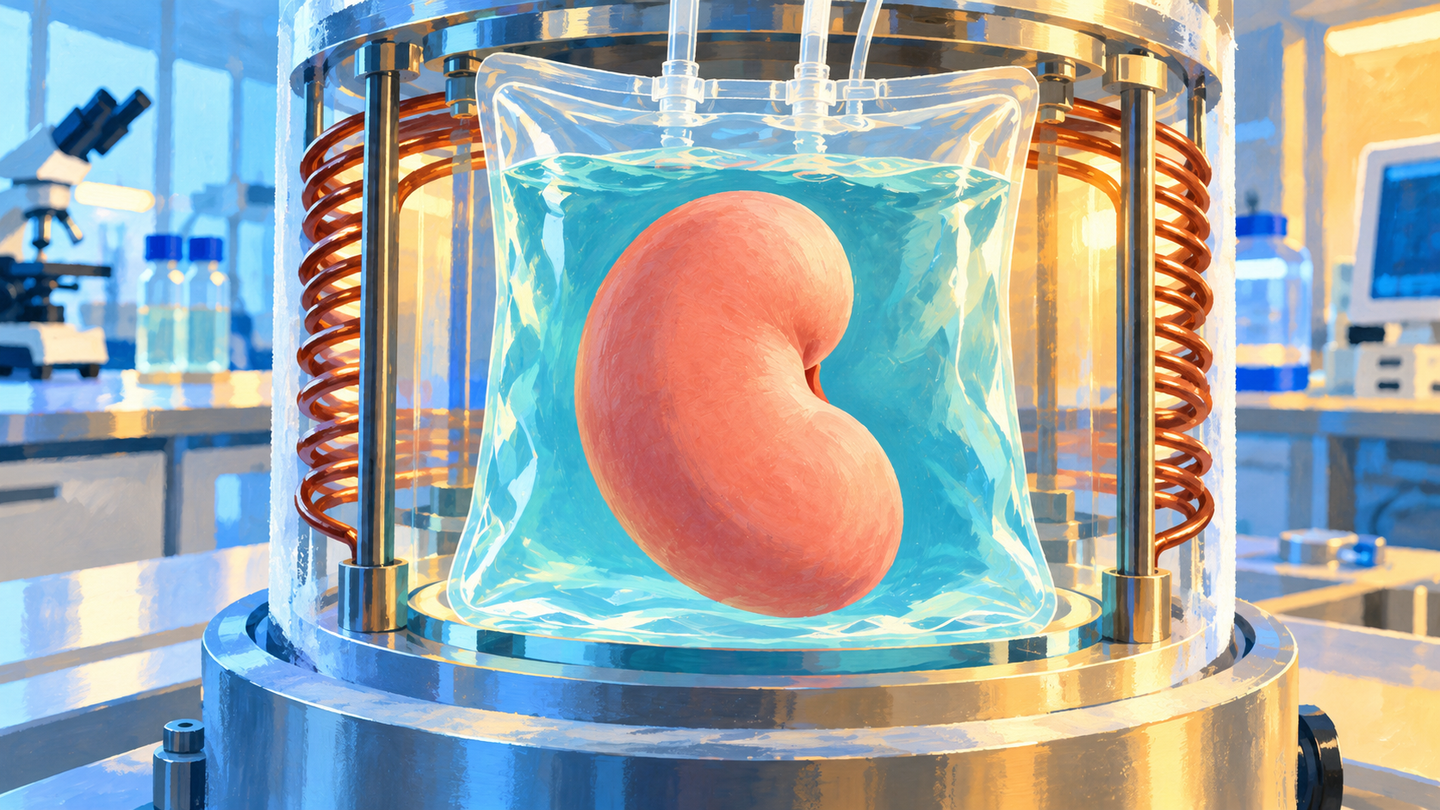
New palladium-coated membrane captured and destroyed 99% of forever chemicals
Hydrogen delivery through palladium-coated fibers combines PFAS capture with chemical breakdown, offering a possible treatment step.
 ASU Writer: Richard Harth

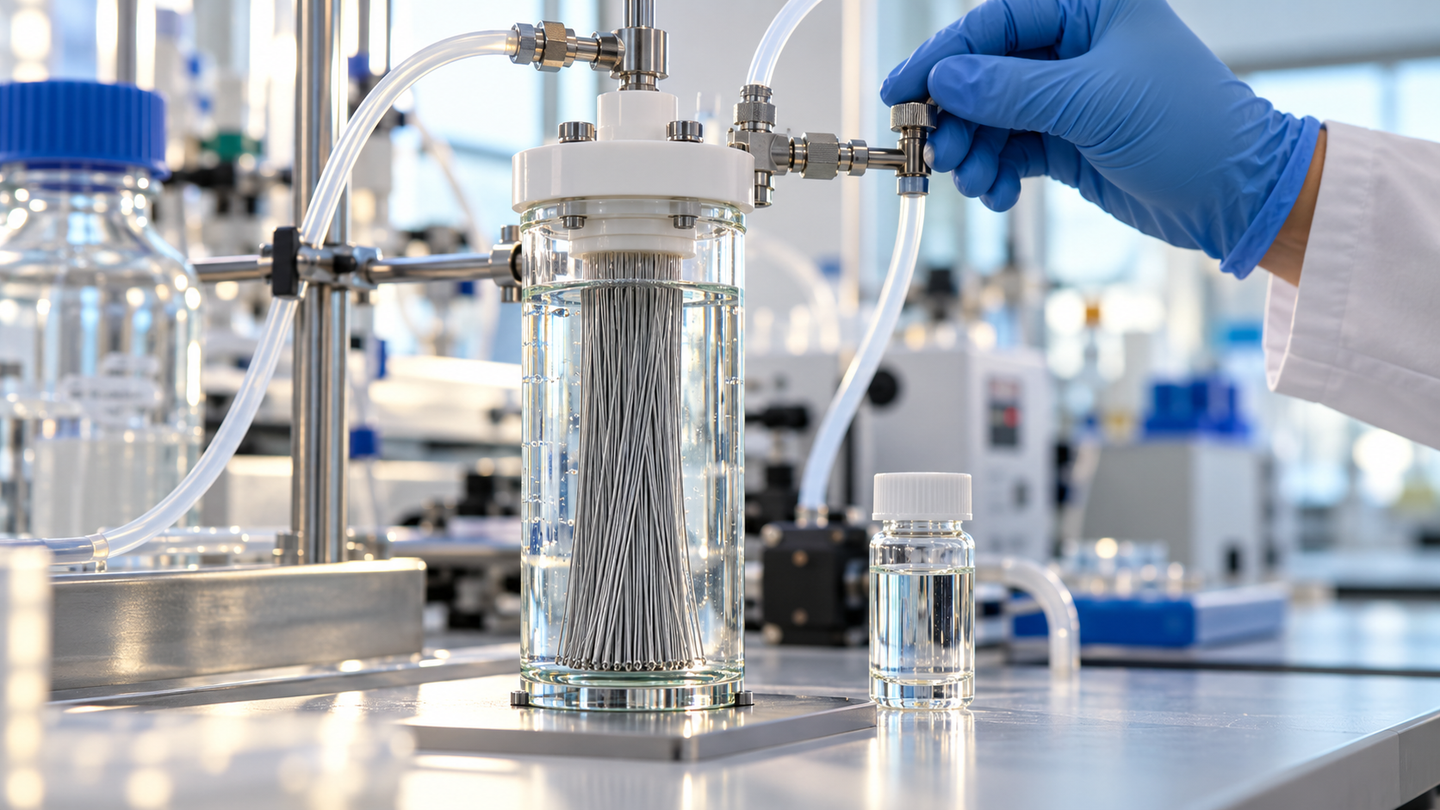
A palladium-coated membrane captured six PFAS and broke carbon-fluorine bonds during a 58-day lab test, with 83% defluorination. (CREDIT: The Brighter Side of News)
- A palladium-coated membrane combined PFAS capture with chemical breakdown across six tested compounds.
- A 58-day laboratory run achieved average removal of 93% to 99% and reported 83% overall defluorination efficiency.
- Small treatment volumes, incomplete defluorination and catalyst loss leave important questions for larger-scale use.
Removing a pollutant from water does not necessarily eliminate it. Filters and membranes can leave persistent chemicals concentrated in another waste stream, still requiring disposal or treatment. A catalytic membrane now offers a way to combine capture with the chemical reactions needed to break those contaminants down.
An international team involving Arizona State University tested the approach against six per- and polyfluoroalkyl substances, or PFAS. During a 58-day continuous laboratory experiment, average removal ranged from 93% to 99%. The system also released fluoride, evidence that it was breaking carbon-fluorine bonds rather than simply collecting the pollutants.
The study appears in Proceedings of the National Academy of Sciences. Bruce Rittmann, director of ASU’s Biodesign Swette Center for Environmental Biotechnology, worked with colleagues at Rice University, Tongji University, the National University of Singapore and Nanjing University.
PFAS have been used in firefighting foams, water-resistant materials and other products because of their durability. That persistence also creates a contamination problem. Exposure to certain PFAS has been linked to immune effects, developmental problems and increased risks of some cancers, although the thousands of compounds in this family differ in their properties and evidence of harm.
Capturing chemicals is only the first step
Activated carbon, ion exchange and filtration can separate PFAS from contaminated water. Those approaches remain useful, but the captured substances persist in spent materials or concentrated liquids. Destroying the molecules requires a different chemical process.
“PFAS are hard to break down, and normal processes that we use don't work,” Rittmann said.
The team’s system coats hollow polypropylene membrane fibers with tiny palladium particles. Hydrogen gas travels through the inside of the fibers toward the catalyst, while contaminated water contacts the outside. This arrangement brings the pollutant and activated hydrogen together at the metal surface.
Palladium splits hydrogen molecules and helps replace fluorine atoms attached to carbon with hydrogen atoms. Known as hydrodefluorination, the process can progressively change a highly fluorinated molecule into less-fluorinated intermediates and eventually nonfluorinated products. It does not necessarily dismantle the entire carbon skeleton.
Control experiments helped distinguish those effects. Hydrogen without palladium produced no measurable PFOA removal or fluoride release. Palladium supplied with nitrogen instead of hydrogen removed some PFOA from the water, but released no detectable fluoride, consistent with capture alone.
Hydrogen beneath the metal surface matters
The researchers investigated why the membrane’s hydrogen supply improves chemical breakdown. Their evidence distinguishes hydrogen attached to palladium’s outer surface from hydrogen stored just beneath it, within the metal’s structure. Those locations appear to support different parts of the process.
Surface interactions help retain PFAS near the catalyst. Subsurface hydrogen provides a reactive reservoir that favors carbon-fluorine bond cleavage. Measurements of the palladium structure showed reversible expansion as hydrogen entered the metal, supporting the proposed mechanism.
In a comparison using PFOA, hydrogen delivered through hollow fibers and hydrogen supplied above the water produced similar pollutant-removal rates. However, direct membrane delivery doubled the fluoride-release rate. The difference illustrates why disappearance from water alone is an incomplete measure of destruction.
Computer calculations supported that interpretation. Adding subsurface hydrogen made a modeled fluorine-replacement reaction more favorable, including for the comparatively resistant compound GenX. The combined experiments and calculations offer guidance for designing catalysts that do more than adsorb PFAS.
Six compounds followed different chemical paths
The study tested PFOA, PFOS, PFBS, PFNA, PFHxS and GenX. These substances differ in chain length and chemical structure, allowing the researchers to examine whether the same broad mechanism could work across several important PFAS types.
All six underwent removal and defluorination, but their responses were not interchangeable. Longer-chain compounds generally bound more strongly to the catalyst and progressed farther through the reaction sequence. PFNA performed particularly well, while short-chain PFBS and ether-containing GenX proved more resistant.
GenX’s structure affected both its attachment to the metal and the accessibility of its carbon-fluorine bonds. Its behavior cautions against treating every PFAS as the same cleanup target. Demonstrating a mechanism across six compounds also does not establish that it will work equally well across the entire PFAS family.
Separate batch experiments used acidic conditions at pH 4 and a pressurized hydrogen supply. Chemical analysis identified partially fluorinated intermediates and nonfluorinated products. Those findings demonstrate bond-breaking, while also showing that transformation proceeds through several stages rather than instantly eliminating every fluorinated molecule.
A continuous test ran for nearly two months
For the continuous experiment, the researchers supplied water containing 50 micrograms per liter of each of the six PFAS. Average removal reached 95% for PFOA, 97% for PFOS, 99% for PFHxS, 98% for PFNA, 93% for GenX and 94% for PFBS.
The paper reported an overall defluorination efficiency of 83%, accompanied by sustained fluoride release. This supports substantial chemical conversion. It does not mean that every original molecule was fully defluorinated or that the resulting water was demonstrated to be harmless.
The experiment was also small. Flow was 0.05 milliliters per minute, equivalent to about 72 milliliters per day, with a hydraulic residence time of 12 hours. The 58-day run therefore tested sustained laboratory operation, rather than a treatment plant’s throughput.
Additional batch tests found no clear inhibition of PFOA removal or fluoride release after adding nitrate or glucose. Those experiments provide useful initial checks, but do not reproduce every constituent or operating condition in contaminated groundwater, wastewater or treatment concentrates.
Practical treatment needs more than high removal
The palladium remained predominantly metallic after treatment, and the system showed sustained performance during the run. However, cumulative palladium loss was approximately 10%. Catalyst retention, recovery and lifetime will therefore matter alongside the ability to break pollutant bonds.
Cost is another obstacle. Rittmann identified reducing palladium use as a research priority. Operating near ambient conditions avoids the high temperatures used by some destructive processes, but does not by itself establish total energy demand, operating cost or commercial competitiveness.
One possible role is treating the smaller, concentrated waste streams produced by existing PFAS-separation systems. That could link bulk water purification with a subsequent destruction step. Larger studies would need to establish performance in those actual mixtures and account for remaining fluorinated products and released fluoride.
The advance is a sustained demonstration of capture coupled to catalytic defluorination. Its value lies in showing how hydrogen delivery and catalyst chemistry can work together. Turning that mechanism into reliable infrastructure will require further engineering and direct assessment of the treated water.
Dig deeper into PFAS destruction and water treatment
These five resources explore related catalytic methods, alternative destruction chemistry and the challenges of managing PFAS waste.
- Hydrodefluorination of Perfluorooctanoic Acid in the H₂-Based Membrane Catalyst-Film Reactor with Platinum Group Metal Nanoparticles: Pathways and Optimal Conditions: Investigates earlier membrane-supported catalytic treatment of PFOA and its reaction pathways. (Environmental Science & Technology, 2021)
- Method of H₂ Transfer Is Vital for Catalytic Hydrodefluorination of Perfluorooctanoic Acid (PFOA): Examines how delivering hydrogen through a membrane changes catalytic defluorination. (Environmental Science & Technology, 2024)
- Low-temperature mineralization of perfluorocarboxylic acids: Demonstrates a different chemical route for breaking down a class of PFAS. (Science, 2022)
- Removing ‘forever’ chemicals from drinking water: Explains related membrane catalyst and microbial treatment research, including proposed combined systems. (Arizona State University, 2023)
- Interim Guidance on the Destruction and Disposal of PFAS and Materials Containing PFAS: Summarizes available information and uncertainties concerning PFAS destruction and disposal options. (US Environmental Protection Agency, 2026)
Research findings are available online in the journal PNAS.
The original story "New palladium-coated membrane captured and destroyed 99% of forever chemicals" is published in The Brighter Side of News.
Related Stories
- 'Forever chemicals' in newborn blood linked to childhood leukemia
- New carbon-based catalyst breaks down forever chemicals using light
- Forever chemicals linked to accelerated aging risk in middle-aged men
Like these kind of feel good stories? Get The Brighter Side of News' newsletter.
Joshua Shavit
Writer and Editor
Joshua Shavit is a NorCal-based science and technology writer with a passion for exploring the breakthroughs shaping the future. As a co-founder of The Brighter Side of News, he focuses on positive and transformative advancements in technology, physics, engineering, robotics, and astronomy. Having published articles on AOL.com, MSN, Yahoo News, and Ground News, Joshua's work highlights the innovators behind the ideas, bringing readers closer to the people driving progress.