
Ozempic and Wegovy use during pregnancy: What scientists are discovering
A conference abstract reports reduced maternal cardiac output and fetal oxygen pressure after semaglutide infusion in pregnant sheep, prompting further research.
 Adelaide University Writer: Annabel Mansfield

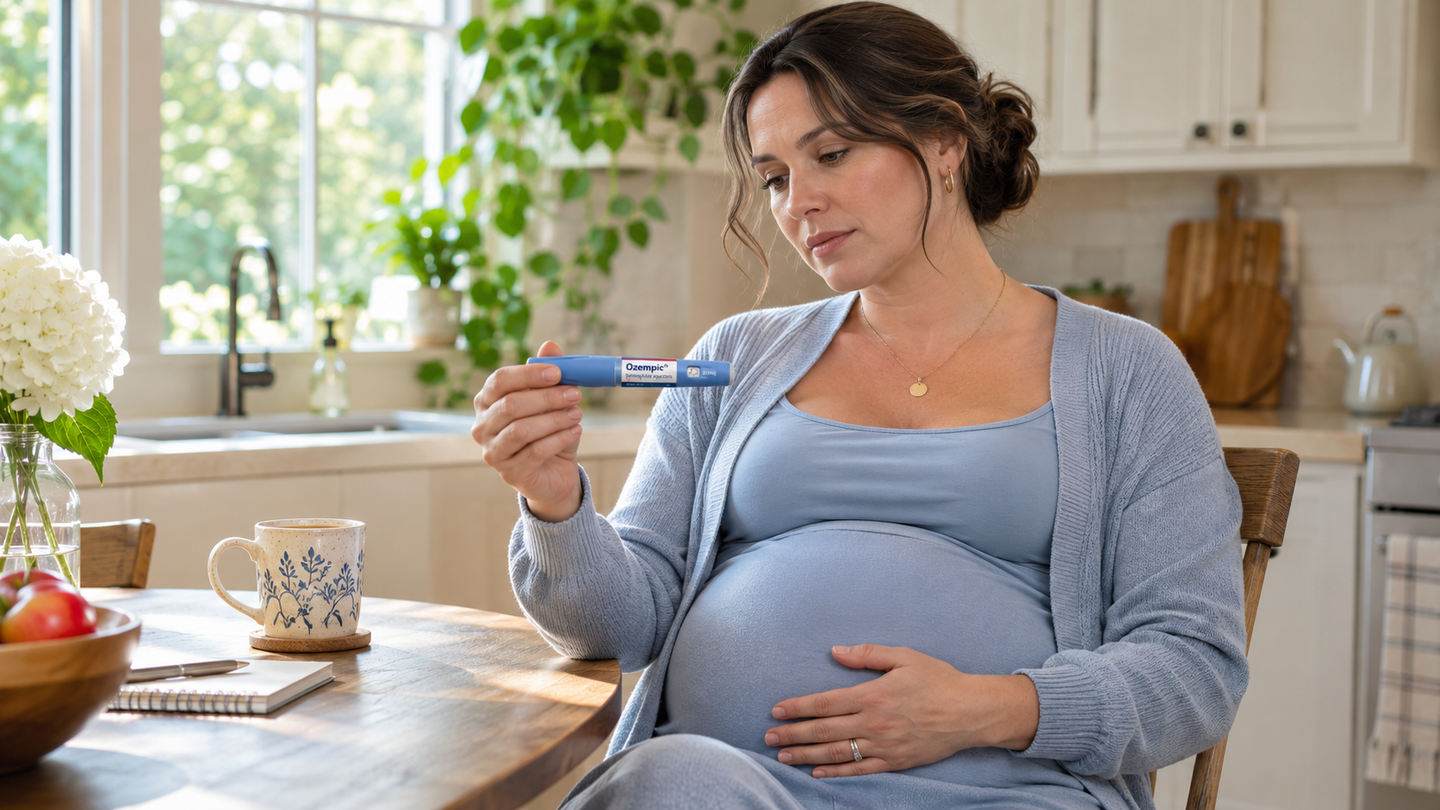
A pregnant woman considers an Ozempic pen at home in this illustrative scene accompanying research into semaglutide exposure during pregnancy. (CREDIT: The Brighter Side of News)
Semaglutide has changed the treatment of obesity and type 2 diabetes, but pregnancy presents a different set of questions. A small animal experiment now points to a possible effect on the circulation supporting a developing fetus. Its findings call for further research, rather than establishing what happens in human pregnancies.
Researchers at Adelaide University studied seven pregnant sheep and reported the results as a conference abstract in Heart, Lung and Circulation. Within two hours of an infusion, maternal cardiac output and uterine blood flow decreased, alongside a reduction in fetal arterial oxygen pressure.
The findings concern semaglutide during pregnancy, not the drug’s overall value for appropriate patients. Studies of cardiovascular outcomes investigate different populations and treatment circumstances. Evidence of benefit outside pregnancy cannot establish safety for a fetus, just as a short sheep experiment cannot determine a human pregnancy’s outcome.
The distinction is important for anyone reading alarming headlines. This experiment measured immediate physiological changes, not birth defects, miscarriage or childhood development. Work on fetal monitoring illustrates why circulation matters, but the significance of a particular change depends on its duration, severity and clinical setting.
How researchers studied semaglutide during pregnancy
The sheep underwent surgery at 113 to 116 days of gestation to place catheters in a fetal artery and maternal vein. Researchers performed the measurements at 117 to 119 days. This was a late-gestation animal experiment, not a study of people who took medication before realizing they were pregnant.
The team administered 0.75 milligrams of semaglutide by infusion. They used magnetic resonance imaging to measure maternal cardiac output and uterine artery blood flow before treatment, around 20 minutes afterward, and at two hours. Fetal blood samples provided additional information about oxygen levels during the same experimental period.
Researchers also monitored maternal and fetal blood pressure and heart rate. Measuring several variables helped them examine whether an apparent change in uterine circulation accompanied a broader change in maternal pumping. Such detailed approaches complement other research into pregnancy blood flow.
However, the dose and delivery method require caution when considering human relevance. An infused dose in sheep cannot be equated directly with a prescribed human injection based on milligrams alone. Species differences and drug exposure matter. As with other developmental models, the experiment provides access to biology while remaining distinct from a human pregnancy.
Blood flow changed without a detected pressure change
At two hours, maternal cardiac output was lower by an estimated 0.80 liters per minute compared with baseline. Its reported 95% confidence interval ranged from a reduction of 1.52 liters to 0.09 liters per minute. Cardiac output describes how much blood the heart pumps each minute.
Uterine artery blood flow decreased by an estimated 0.42 liters per minute, with a confidence interval spanning reductions of 0.75 to 0.09 liters per minute. The share of maternal cardiac output directed toward the uterus did not significantly change. The authors interpret that pattern as consistent with reduced overall pumping lowering uterine flow.
The abstract did not report significant changes in maternal or fetal blood pressure or heart rate. That does not negate the blood-flow findings: pressure, pulse and flow measure different things. Likewise, research into heart health must distinguish the population studied and the particular outcome being measured.
Mean fetal arterial oxygen pressure fell from 23.25 millimeters of mercury before treatment to 18.82 at two hours. The two-hour comparison reached statistical significance. Oxygen pressure is not identical to total oxygen delivery or proof of tissue injury. Measurements of metabolic health also require matching each numerical result to what it actually represents.
A signal that leaves major questions unanswered
“Oxygen is essential for healthy fetal growth and development, so any reduction in its supply raises questions about what might happen if exposure to the drug continues throughout pregnancy,” said researcher Mitchell Lock. The study offers a reason to investigate that possibility, rather than an answer about the consequences of sustained exposure.
Seven animals provide a limited basis for assessing a complex physiological response. The abstract describes comparisons with each animal’s baseline but does not describe a separate placebo group. Without a full report, readers cannot fully assess experimental conditions, exposure measurements, potential confounding factors or how reliably other laboratories could reproduce the findings.
A conference abstract is also a shorter report than a full research article. It presents key methods and results without the same level of detail. Results from other semaglutide studies, including work on kidney disease, cannot fill those gaps because they address different clinical questions.
The researchers did not establish whether the observed changes persisted or affected fetal growth. “Our findings suggest a potential risk to fetal development, but we haven’t yet established whether these short-term changes affect fetal growth, what happens over a longer period of semaglutide use or whether similar effects could occur in human pregnancies,” said senior researcher Janna Morrison. Research on fetal health must connect immediate measurements with meaningful longer-term outcomes.
Human evidence addresses different exposure windows
Some human observational research has examined accidental early-pregnancy exposure to GLP-1 medicines. A 2024 prospective study, published in BMJ Open, included 168 exposed pregnancies and did not identify an increased risk of major birth defects compared with its reference groups. Its limited size meant larger studies were still needed to validate the findings.
That evidence cannot establish safety throughout pregnancy. Early exposure, continued treatment later in gestation and a short infusion in sheep represent different scenarios. Studies also examine different outcomes: birth defects are not interchangeable with fetal blood-flow changes. The observations therefore need careful comparison rather than being treated as contradictory answers to one question.
Treatment decisions also involve why the medicine was prescribed. Someone using it for diabetes needs a plan for continued glucose management. Research on blood sugar control underscores that medication changes should consider the underlying condition, rather than focusing on body weight alone.
Concerns about weight regain can also make stopping treatment difficult. Those concerns deserve support, but they do not establish pregnancy safety. The appropriate response is coordinated care that addresses the patient’s treatment needs alongside existing pregnancy guidance and the uncertainties in the research.
Practical implications for patients and research
Existing guidance already advises against GLP-1 medicines during pregnancy. Australia’s Therapeutic Goods Administration reiterates that recommendation and advises effective contraception during treatment. This guidance predates the sheep findings; the abstract does not introduce a newly established human risk or replace individualized medical care.
UK Medicines and Healthcare products Regulatory Agency guidance advises stopping semaglutide at least two months before a planned pregnancy. Anyone who becomes pregnant while taking it should contact their prescriber promptly to arrange discontinuation and appropriate ongoing care, especially for diabetes. Accidental exposure does not establish that a fetus has been harmed.
For researchers, the priorities include replication, clinically relevant exposure comparisons and longer follow-up. Future work needs to distinguish temporary circulatory effects from lasting consequences for growth and development. The broader literature on GLP-1 treatment shows why findings must remain tied to the specific people, animals and conditions studied.
The practical message is to plan medication changes with a clinician, including support for treatment discontinuation. The sheep experiment identifies a physiological signal worth investigating. It does not predict an individual pregnancy’s outcome or establish the long-term effects of semaglutide exposure in humans.
This article is for informational purposes and does not provide medical advice. Consult a qualified health care professional about pregnancy, diabetes or medication changes.
Dig deeper into GLP-1 medicines and pregnancy
These resources provide regulatory guidance and human observational evidence, listed newest first. None establishes the safety of continuing semaglutide throughout pregnancy.
GLP-1 medicines for weight loss and diabetes: what you need to know
Current UK guidance covers pregnancy planning, contraception and medicine-specific stopping intervals. (Medicines and Healthcare products Regulatory Agency, February 2026)
Updated contraception advice for Mounjaro (tirzepatide)
The Australian update includes a reminder against GLP-1 medicine use during pregnancy; its additional oral-contraception advice is specific to tirzepatide. (Therapeutic Goods Administration, December 2025)
Pregnancy Outcomes After Semaglutide Exposure
A small observational report examines pregnancy outcomes after semaglutide exposure and provides context for the limited human evidence. (Basic & Clinical Pharmacology & Toxicology, April 2025)
Use of GLP1 receptor agonists in early pregnancy and reproductive safety
A prospective cohort compares 168 exposed pregnancies with diabetes and overweight or obesity reference groups. (BMJ Open, April 2024)
Safety of GLP-1 Receptor Agonists and Other Second-Line Antidiabetics in Early Pregnancy
A multinational observational study examines major congenital malformations after exposure around conception in patients with type 2 diabetes. (JAMA Internal Medicine, December 2023)
Research findings are available online in the journal Heart Lung and Circulation.
The original story "Ozempic and Wegovy use during pregnancy: What scientists are discovering" is published in The Brighter Side of News.
Related Stories
- GLP-1 drugs like Ozempic and Wegovy are changing the foods Americans buy
- Alpha cells produce GLP-1, like Ozempic drugs, study finds
- Eco-friendly weight loss: Grow Ozempic-like medication at home
Like these kind of feel good stories? Get The Brighter Side of News' newsletter.
Joseph Shavit
Writer, Editor-At-Large and Publisher
Joseph Shavit, based in Los Angeles, is a seasoned science journalist, editor and co-founder of The Brighter Side of News, where he transforms complex discoveries into clear, engaging stories for general readers. With vast experience at major media companies like The Los Angeles Times, Times Mirror and Tribune Publishing, he writes with both authority and curiosity. His writing focuses on space science, planetary science, quantum mechanics, geology. Known for linking breakthroughs to real-world markets, he highlights how research transitions into products and industries that shape daily life.