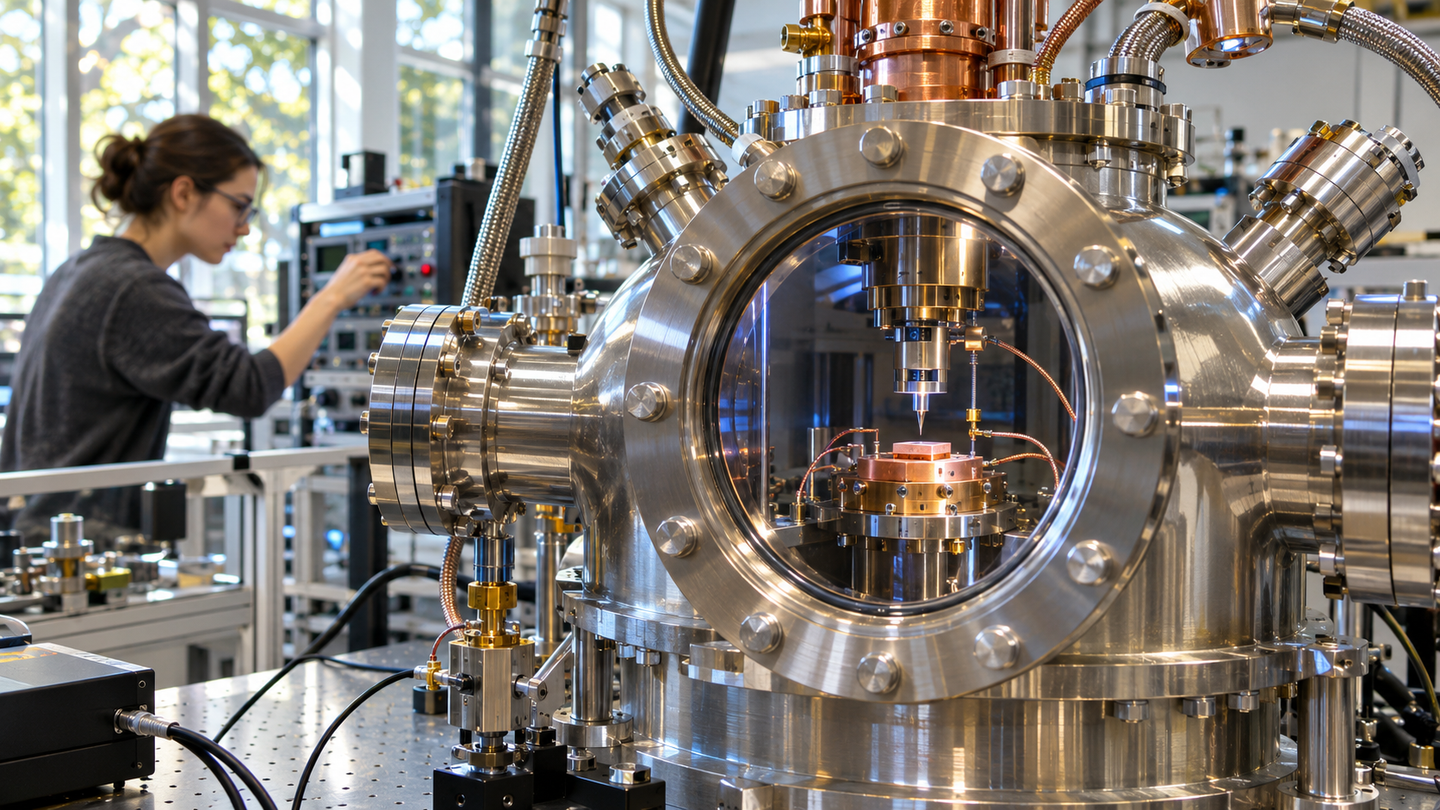
Scientists recycle old wind turbine blades into graphene and silicon carbide
A two-second electrical heating process converts retired blade material into a useful resin additive, with modeled emissions savings and potential profit.

 Edited By: Joseph Shavit

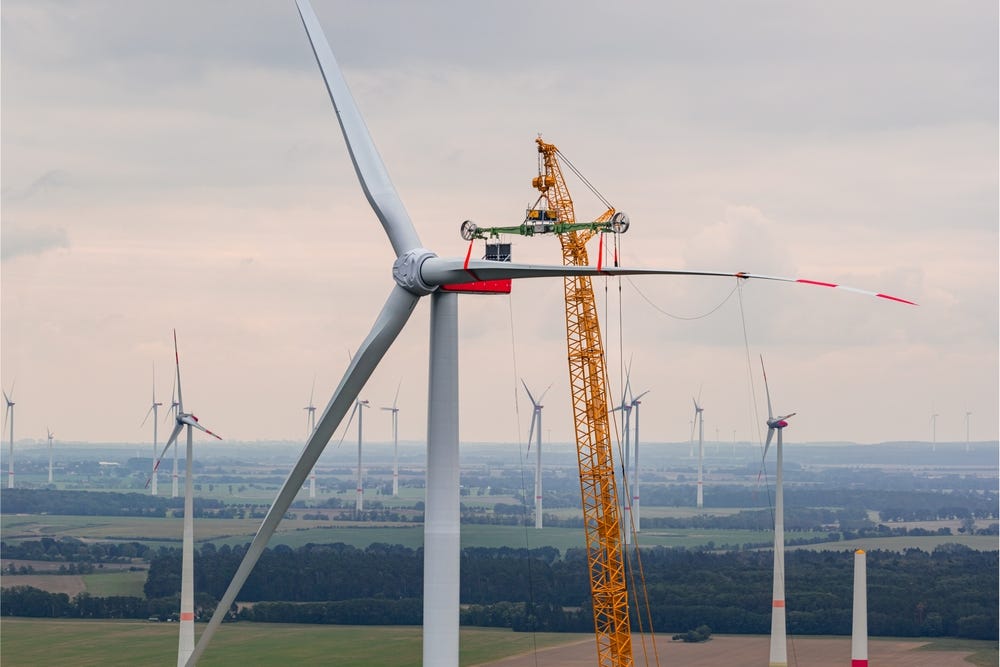
Wind turbine blade recycling gets a new route as electrical pulses turn waste into graphene and silicon carbide for stronger resin. (CREDIT: Shutterstock)
- Researchers converted retired wind turbine blade material into a silicon carbide–graphene mixture using rapid electrical heating.
- Small additions improved laboratory resin samples, including an 11% increase in tensile strength at the best tested loading.
- Models suggest lower emissions and potential profit, but industrial processing and full blade performance remain unproven.
A wind turbine blade must survive years of weather, mechanical stress and temperature changes. That toughness creates a difficult waste problem once the turbine retires. Researchers have now demonstrated a way to transform blade material into a useful ingredient for making stronger resin, rather than simply grinding it into filler.
The team, led by Bing Deng at Tsinghua University, used an intense electrical pulse to turn discarded blade powder into silicon carbide and flash graphene. Their findings appeared in Chem Circularity. The process adds a chemical conversion route to existing efforts at blade reuse.
The recovered mixture improved several properties of laboratory epoxy samples at low concentrations. Environmental and economic models also suggested advantages over two comparison routes. Those estimates are promising, but the demonstrated process remains small, and the study did not produce or test a complete replacement wind turbine blade.
The distinction matters for wind turbine blade recycling. A useful laboratory product must also meet manufacturing requirements, find buyers and work consistently at larger scale. Like research on healable composites, this work addresses one part of a broader challenge: keeping durable materials useful for longer.
Why wind turbine blade recycling is difficult
Many blades combine glass fibers with a hardened polymer resin. The fibers reinforce the structure, while the resin binds them together. Once cured, this thermoset network cannot simply melt and flow into a new shape like some familiar plastics. Its useful durability becomes an obstacle to material recovery.
“Wind turbines typically have a service life of around 20 years,” Deng said. “As aging turbines are decommissioned, especially in China, where wind power has expanded rapidly, much of the waste has ended up in landfills. It’s a waste of resources.”
Existing approaches tackle different parts of the problem. Mechanical processing makes smaller fragments, thermal treatment breaks down organic material, and chemical methods can separate components. Another strategy incorporates blades into bridges. Each route has its own requirements for handling, product quality and cost.
The new study takes a different approach to the chemistry already inside the blade. Glass supplies silica, while the resin supplies carbon. Instead of preserving the original fibers, researchers convert these ingredients into a new hybrid material. Related work on self-healing composites approaches sustainability by extending service life before disposal.
A brief electrical pulse changes the chemistry
The researchers collected retired blades from a wind farm in southern China and pulverized the material. They mixed the powder with carbon black to help it conduct electricity. The mixture went into a quartz tube between graphite electrodes connected to a capacitor discharge system.
Current heated the sample to about 2,000 degrees Celsius, or 3,632 degrees Fahrenheit, within half a second. The discharge finished within about two seconds. This flash Joule heating approach builds on a wider effort to convert carbon-rich waste into useful materials through rapid electrical heating.
Under those conditions, carbon helps convert silica into silicon carbide, a hard, heat-resistant compound. Other carbon reorganizes into flash graphene. Material analysis confirmed both components. In one typical run, the hybrid product weighed about 55.6% of the combined blade-powder and carbon-black feedstock, so the process did not recover everything as solid product.
The proposed reuse pathway incorporates the mixture directly into resin without separating its components. Researchers also demonstrated that recovered graphene could replace fresh carbon black in later reactions. Studies of tire-derived graphene similarly explore whether a waste-derived additive can improve another manufactured material.
Small additions improved resin performance
The team mixed different amounts of the recovered hybrid into epoxy and tested samples under tension and bending. At 0.3% by weight, tensile strength increased about 11% compared with unmodified resin. Tensile stiffness, measured through Young’s modulus, rose about 27%. These are separate properties: resisting stretching differs from surviving a greater load.
Bending strength increased about 6%, while bending stiffness rose about 9%. Untreated blade powder did not provide the same benefit. The hybrid also outperformed either recovered component used alone at the same total loading, supporting the researchers’ interpretation that the two materials provide complementary reinforcement.
At 0.1% by weight, thermal diffusivity increased about 41%, meaning temperature differences spread out more quickly. Thermal conductivity rose only about 1.4%. Much of the diffusivity change came from reduced heat capacity. This distinction is important when evaluating composite materials for particular applications, because different properties answer different engineering questions.
Adding more filler eventually reduced performance, with high concentrations causing mixing and curing problems. The results therefore point to carefully controlled formulations, rather than unlimited improvement. Work on graphene reinforcement in other materials likewise highlights the importance of how an additive is incorporated into its surrounding matrix.
Lower emissions and profit remain modeled outcomes
The team compared treating one metric ton of blade waste through three routes. These were electrothermal upcycling, thermal processing with heat recovery, and chemical dissolution using nitric acid. The life-cycle assessment estimated about 83% lower greenhouse gas emissions than the heat-recovery route and about 92% lower emissions than chemical dissolution.
These percentages describe the selected recycling comparisons. They do not represent a reduction in a wind farm’s total lifetime emissions. Actual performance at a processing plant would depend on its energy and material requirements. Research into lower-energy manufacturing illustrates why production details matter alongside the final material’s properties.
The preliminary economic analysis suggested a net benefit of about $80 per metric ton. The team contrasted that estimate with costs of about $460 for pyrolysis and $1,800 for chemical dissolution. Revenue from selling the recovered material drives the proposed advantage; the study does not establish a commercial facility’s operating profit.
“This is more than recycling. It’s upcycling,” Deng said. “We’re turning something that has little value into something that’s worth much more.” Similar efforts involving petroleum waste also seek to replace low-value disposal pathways with products that justify the expense of processing.
Practical implications for recycling and manufacturing
The main experimental advance is a waste-derived additive with measured benefits in resin samples. Potential applications include future turbine materials and other polymer composites. However, a tougher resin sample does not establish that a full blade will survive fatigue, weathering, lightning or repeated years of operation.
Most experiments used 0.3-gram batches, and the researchers demonstrated larger batches of 1.2 and 10 grams. They also built a reactor intended for 200-gram batches, but identified further optimization needs. Uniform heating, consistent products and stable yields remain essential before the process can handle industrial waste volumes.
Wind turbine blade recycling will also require tests of rebuilt fiber-reinforced structures and repeated recycling cycles. The authors explicitly identify those gaps. Meanwhile, improvements in wind turbine operation and blade materials address other parts of wind energy’s resource efficiency.
The study establishes a credible laboratory route from stubborn composite waste to a useful resin ingredient. Its next test is whether that chemistry can deliver consistent value at practical scale. Success would give manufacturers another option for recovering material from blades built to resist almost everything thrown at them.
Dig deeper into wind turbine blade recycling
These resources explore alternative recycling chemistry, blade separation and the development of flash graphene, listed newest first.
Chemical Recycling of Waste Wind-Turbine Blades Through Polymer Deconstruction and Upcycling
A review examines chemical bond cleavage, product recovery and approaches to retaining value from blade composites. (ChemSusChem, August 2026)
Upcycling of Epoxy Resin in Wind Turbine Blades into High-Strength Adhesives
Researchers investigate catalytic oxidation as a route from blade epoxy to adhesive products. (Engineering, February 2026)
Freeze–thaw recycling for fiber–resin separation in retired wind blades
An alternative process uses freeze–thaw treatment to help separate reinforcing fibers from resin. (Communications Engineering, August 2025)
Recycling of both resin and fibre from wind turbine blade waste via small molecule-assisted dissolution
This study investigates chemical recovery of resin-derived products and fibers from suitable composite waste. (Scientific Reports, June 2023)
Rice lab turns trash into valuable graphene in a flash
An early account explains the development of flash Joule heating for converting carbon-containing feedstocks into graphene. (Rice University, January 2020)
Research findings are available online in the journal Chem Circularity.
The original story "Scientists recycle old wind turbine blades into graphene and silicon carbide" is published in The Brighter Side of News.
Related Stories
- Scientists find a simple control change that could significantly boost wind turbine output
- Bladeless wind turbine 'skybrator' sways to generate quiet, clean, bird-safe power
- Penn State student cracks 100-year-old math problem transforming wind turbine design
Like these kind of feel good stories? Get The Brighter Side of News' newsletter.
Joshua Shavit
Writer and Editor
Joshua Shavit is a NorCal-based science and technology writer with a passion for exploring the breakthroughs shaping the future. As a co-founder of The Brighter Side of News, he focuses on positive and transformative advancements in technology, physics, engineering, robotics, and astronomy. Having published articles on AOL.com, MSN, Yahoo News, and Ground News, Joshua's work highlights the innovators behind the ideas, bringing readers closer to the people driving progress.