Scientists discover how natural hair patterns form without a blueprint
New study shows hair patterns form through simple cell movement and chemical signals, not complex instructions.

 Edited By: Joseph Shavit

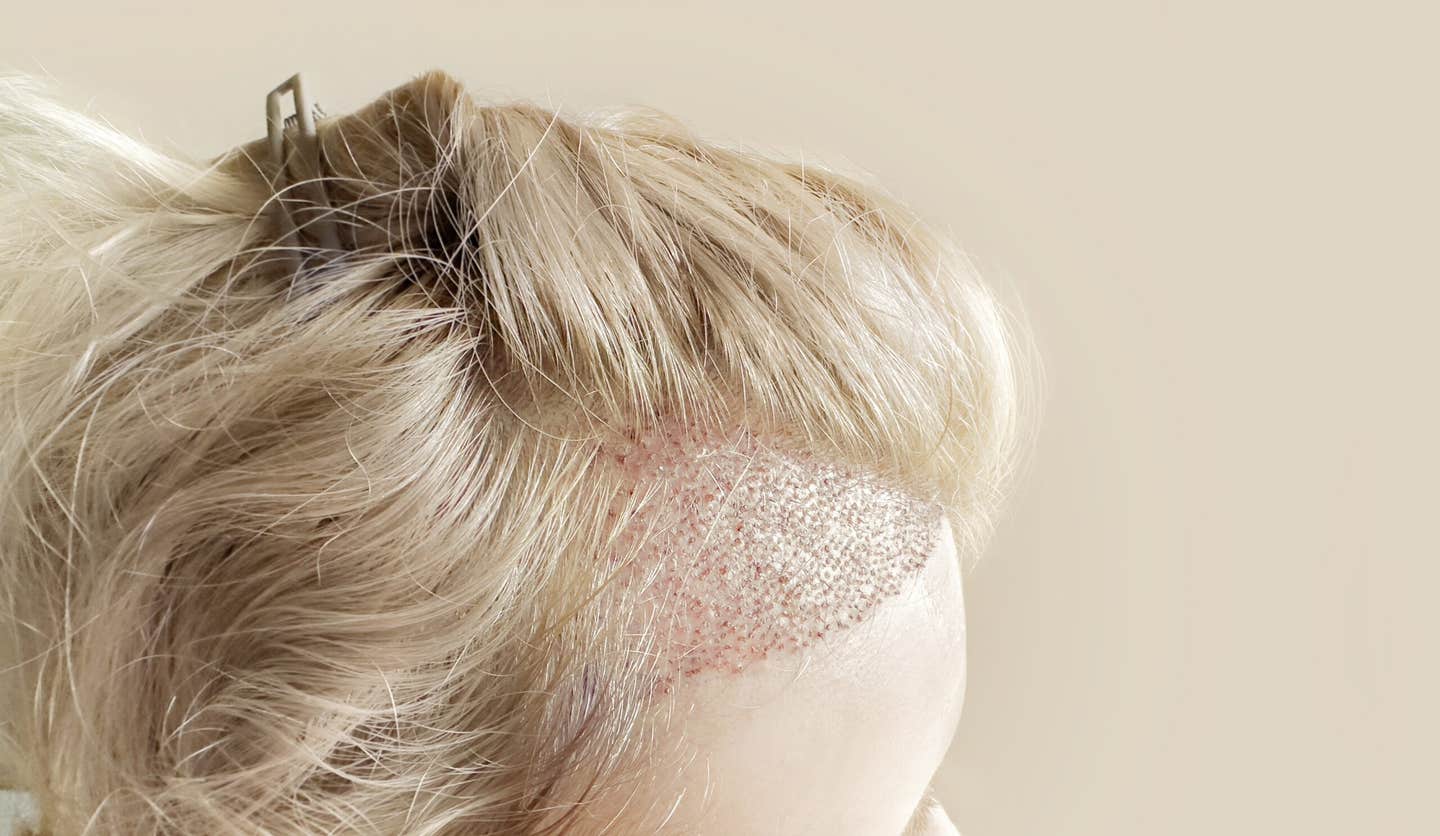
Researchers reveal that hair follicle patterns emerge from simple cell interactions, offering new insight into development. (CREDIT: Proceedings of the National Academy of Sciences)
A pattern as familiar as hair may hold clues to one of biology’s deeper mysteries. The way hair follicles arrange themselves across the skin has long puzzled scientists, raising a simple question with a complex answer. How does each follicle know where to form?
A new study from University of Geneva suggests that the answer may not lie in a detailed blueprint at all. Instead, it may emerge from simple interactions between cells and chemical signals, a process that quietly organizes tissue during early development.
The research challenges decades of thinking and offers a new way to understand how living systems build themselves.
A Familiar Pattern With Hidden Rules
Hair, feathers, and many types of scales begin as tiny structures known as placodes. These appear during embryonic development as small clusters of cells.
Over time, these clusters grow into the structures that cover the body. Their arrangement often follows clear geometric patterns, though these patterns vary between species.
For years, scientists believed they understood how these patterns formed, at least in some animals. A widely accepted theory proposed that each new placode releases a signal that prevents others from forming nearby.
As the skin grows, gaps appear between existing placodes. New ones then form in those spaces, gradually filling the surface.
This idea, known as the expansion-induction model, seemed to explain the spacing seen in laboratory mice. However, it relied on assumptions that were never fully confirmed.
A Simpler Explanation Emerges
The new research offers a different view. Instead of relying on inhibitory signals, it focuses on chemotaxis, the movement of cells in response to chemical gradients.
Chemotaxis is a common process in the body. It helps guide immune cells to sites of infection and directs cells during development.
In this case, the researchers studied how dermal cells move toward a chemical signal produced by the outer layer of the skin.
By building a mathematical model, they simulated how these cells behave as the skin grows. The results showed that clusters of cells naturally form in certain areas, creating patterns that resemble placodes.
“Our findings show that the observed patterns do not require a complex system telling each placode where to form,” said Muhamet Ibrahimi. “Instead, placodes emerge spontaneously from local interactions between cells and chemical signals.”
Patterns Without A Central Plan
The idea may seem surprising. There is no central control telling each cell where to go. Instead, the pattern emerges from simple rules applied across many cells.
As cells move toward higher concentrations of a chemical signal, they begin to cluster. These clusters then influence the surrounding environment, creating feedback that strengthens the pattern.
Over time, this process produces a network of evenly spaced spots. These spots become the foundation for hair follicles.
The model also shows how new placodes form as the skin expands. Areas with fewer cells become more favorable for clustering, leading to new formations in the gaps.
This behavior closely matches what scientists observe in real embryos. It suggests that the geometric spacing seen in nature may be a result of self-organization rather than direct instruction.
Testing Across Species
To test the model further, the team studied a second species, the spiny mouse, known for its highly ordered hair pattern.
Unlike laboratory mice, which show more variation, the spiny mouse displays a strikingly regular arrangement of follicles. This pattern also has a clear directional orientation.
The traditional model struggled to explain this structure. However, the chemotaxis-based model was able to reproduce it.
By incorporating differences in cell movement and skin growth, the researchers recreated the elongated and organized pattern seen in the spiny mouse.
“Our work suggests that simple cellular interactions can generate the remarkable diversity of tissue architectures observed throughout evolution,” said Athanasia Tzika.
The findings suggest that different species may use the same basic process, with small variations leading to different outcomes.
Clues From Inside The Cell
The study also examined the structure of cells in developing skin. In the spiny mouse, cells showed clear directional alignment.
Internal structures, such as actin filaments, were oriented along a specific axis. The nuclei of the cells were also stretched in that direction.
These features suggest that cells are physically prepared to move in certain directions. This directional movement helps shape the final pattern.
In laboratory mice, these features were less pronounced, which may explain their more irregular patterns.
A New View Of Biological Design
The findings point to a broader principle in biology. Complex structures may arise from simple interactions, without the need for detailed instructions.
This concept, known as self-organization, appears in many systems, from the formation of tissues to the behavior of cells.
It suggests that the body does not always follow a strict blueprint. Instead, it relies on local rules that guide cells as they interact with their environment.
This approach offers a more flexible and efficient way to build complex structures.
Rethinking Old Models
The study does not completely discard earlier theories. Instead, it shows that the patterns described by those models can arise naturally from deeper processes.
The spacing rules observed in the expansion-induction model still appear, but they are not the primary cause. They emerge as a result of cell movement and chemical signaling.
This shift in perspective helps unify different ideas about how patterns form in biology.
It also highlights the importance of testing assumptions with new methods and data.
Looking Ahead
The research opens new questions about how other structures develop. Similar processes may guide the formation of feathers, scales, and even internal organs.
Future studies will aim to identify the specific chemical signals involved. Researchers also want to understand how these processes interact with genetic and mechanical factors.
By combining experiments with advanced modeling, scientists hope to build a more complete picture of development.
Practical Implications Of The Research
This research could improve understanding of how tissues form and repair themselves. By revealing the principles behind pattern formation, it may help guide new approaches in regenerative medicine and tissue engineering.
For example, scientists could use these insights to grow skin or other tissues with the correct structure. This could benefit patients with injuries, burns, or certain diseases.
The findings may also help explain how developmental disorders arise. If the balance between cell movement and chemical signals is disrupted, patterns may form incorrectly.
Understanding these processes could lead to better diagnostic tools and treatments.
Beyond medicine, the study offers a model for how complex systems can organize themselves. This idea may inspire new approaches in engineering, robotics, and materials science.
By learning from nature, researchers can design systems that build themselves using simple rules.
In the long term, this work highlights a powerful concept. Even the most intricate patterns can emerge from basic interactions, guided by the movement of cells and the signals they follow.
Research findings are available online in the journal Proceedings of the National Academy of Sciences.
The original story "Scientists discover how natural hair patterns form without a blueprint" is published in The Brighter Side of News.
Related Stories
- Scientists create next-generation hair loss treatment safe for both men and women
- Gray hair may be a natural defense against cancer, study finds
- Sweet science: Natural sugar derived from Stevia helps regrow lost hair
Like these kind of feel good stories? Get The Brighter Side of News' newsletter.
Mac Oliveau
Writer
Mac Oliveau is a Los Angeles–based science and technology journalist for The Brighter Side of News, an online publication focused on uplifting, transformative stories from around the globe. Having published articles on MSN, and Yahoo News, Mac covers a broad spectrum of topics including medical breakthroughs, health and green tech. With a talent for making complex science clear and compelling, they connect readers to the advancements shaping a brighter, more hopeful future.