Scientists learn how tobacco plants make nicotine: could lead to new low-nicotine strains
Scientists discovered the hidden enzyme system tobacco plants use to produce nicotine after nearly 200 years of mystery.
 University of York Writer: Samantha Martin

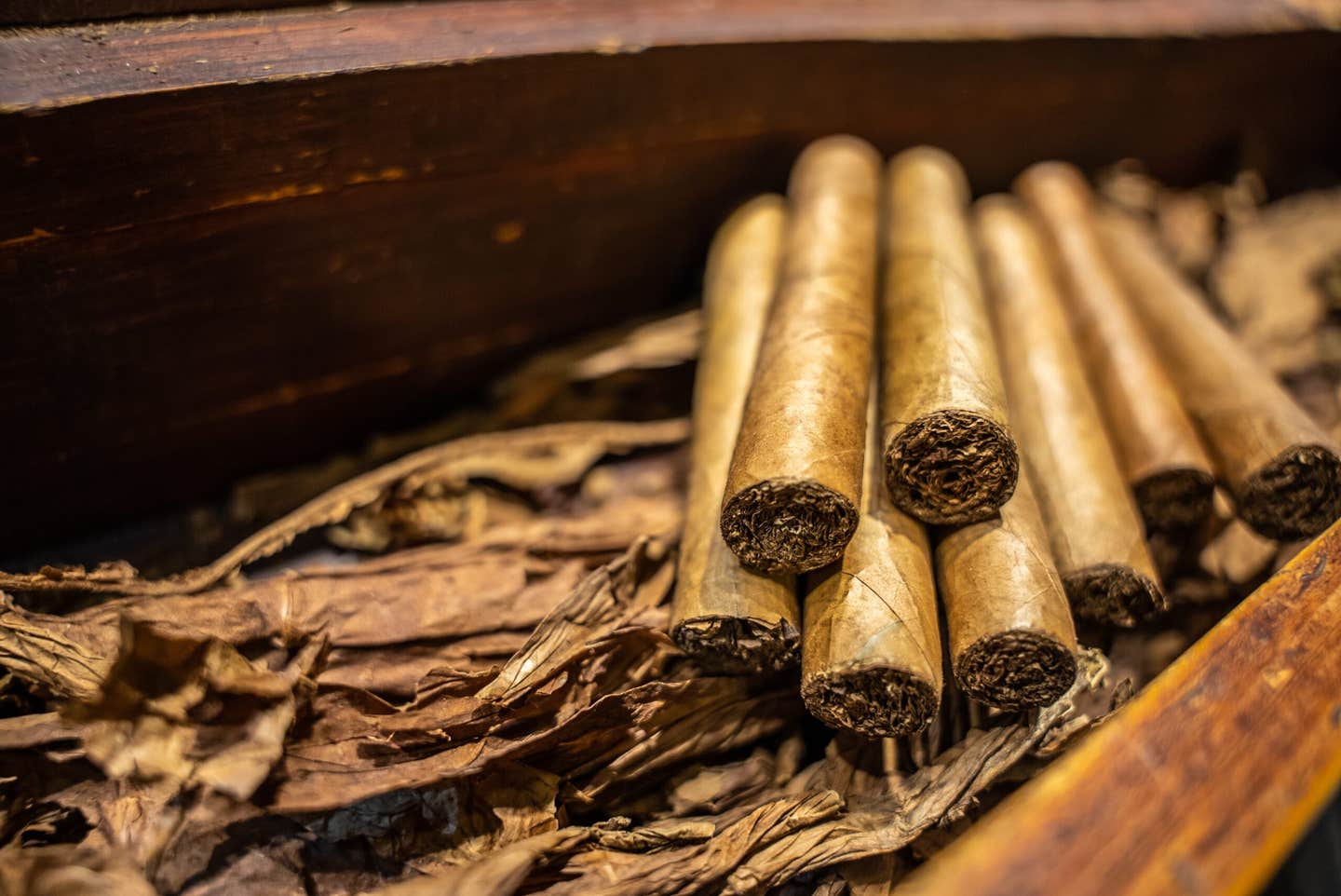
Researchers have uncovered the full nicotine production pathway in tobacco plants, opening new possibilities for safer medicines and biotechnology. (CREDIT: Shutterstock)
- Researchers have completed a four-enzyme pathway that explains how tobacco plants assemble nicotine from two chemical building blocks, resolving a biochemical puzzle that dates back nearly 200 years.
- The pathway uses an unexpected temporary glucose attachment that activates nicotinic acid before the sugar is removed, a strategy the researchers call cryptic activating glucosylation.
- Reconstructing the pathway both with purified enzymes and inside living plants could provide new ways to engineer low-nicotine tobacco strains and use the chemistry to manufacture other valuable alkaloids.
For nearly 200 years, nicotine has puzzled scientists.
Researchers knew tobacco plants produced the addictive chemical naturally. They knew the molecule came from two smaller chemical building blocks. But no one fully understood how the plant assembled nicotine step by step inside its cells.
Now, scientists at the University of York and their international collaborators say they have finally solved the mystery. Their findings reveal the missing genes and enzymes that tobacco plants use to build nicotine. The discovery could help researchers create safer tobacco-based medicines and vaccines without unwanted nicotine contamination.
The breakthrough also closes one of plant science’s oldest unanswered questions.
“It is a big moment in plant science and biochemistry that we now have the answer we have been chasing for more than 200 years!” said Dr. Benjamin Lichman from the Centre for Novel Agricultural Products at the University of York.
A Longstanding Scientific Puzzle
Nicotine was first extracted from tobacco plants in the 1820s. Since then, scientists have tried to understand how plants create the molecule naturally.
Nicotine is an alkaloid, a nitrogen-containing compound plants often use for defense. In tobacco plants, nicotine protects against insects and herbivores. In humans, it acts as a stimulant and creates addiction by binding to receptors in the nervous system.
For decades, researchers understood pieces of the pathway. They knew nicotine contained two connected ring structures. One ring came from nicotinic acid, a vitamin-related compound. The other came from N-methylpyrrolinium, which originates from amino acid metabolism.
But the exact chemical steps connecting those pieces remained hidden.
Scientists suspected the process involved several enzymes working together. Yet no one could identify the full pathway or prove how the plant controlled nicotine’s final structure.
The Hidden Role Of Sugar
The new study uncovered an unexpected answer. Tobacco plants briefly attach nicotine-building molecules to glucose, a simple sugar, before removing it later.
Researchers discovered that glucose acts like a temporary energy boost. It activates the molecule and helps its chemical parts snap together more easily. After doing its job, the sugar disappears during the final stage of nicotine production.
This hidden sugar step explains why scientists struggled to solve the mystery for so long.
“The puzzle of how tobacco plants produce nicotine, however, has been around since the late 1820s, when nicotine was first extracted from the plants,” Lichman said.
“With this new knowledge we can remove or repurpose the nicotine that is produced naturally by the plant and create better biotechnology tools, and there is also exciting potential for the future to adapt tobacco’s nicotine forming system to make useful pharmaceutical compounds.”
Rebuilding Nicotine In The Laboratory
To prove the process worked as predicted, the researchers rebuilt the nicotine pathway outside the plant in a controlled laboratory system.
The team purified four enzymes involved in the pathway and combined them with nicotine’s chemical building blocks. Together, the enzymes successfully produced nicotine.
This experiment marked the first time scientists recreated the complete nicotine biosynthesis process using defined components.
The researchers identified four major enzymes: NaGT, which attaches glucose to nicotinic acid, NaGR, which chemically reduces the activated molecule, NicGS, which controls the molecule’s three-dimensional shape, and NicGH, which removes the glucose at the final step
The system produced almost entirely the naturally occurring form of nicotine known as (S)-nicotine.
That detail mattered. Many biological molecules exist in mirror-image forms, but plants often produce only one version. The tobacco plant strongly favors the (S)-form of nicotine, which dominates in cigarettes and tobacco products.
Cracking The Structural Code
The scientists also solved detailed three-dimensional structures of two important enzymes involved in the pathway.
Using high-resolution X-ray crystallography, they examined how the enzymes physically interact with nicotine-building molecules at the atomic level.
One enzyme, NaGR, showed how the plant transfers hydrogen atoms during the reaction. Another enzyme, NicGS, revealed how the plant controls stereochemistry, meaning the precise spatial arrangement of the molecule.
Without NicGS, nicotine lost its proper orientation and became a mixture of mirror-image forms.
These structural insights confirmed decades of earlier theories while finally providing direct proof.
Benjamin Schwabe, a PhD student at the University of York and first author of the study, helped uncover the structures of the enzymes NaGR and NicGS.
Together, the findings showed exactly how tobacco plants guide nicotine formation with remarkable precision.
Testing The Process Inside Living Plants
The team did not stop at laboratory reconstruction.
Researchers also inserted the newly identified genes into Nicotiana benthamiana, a close tobacco relative widely used in biotechnology. This plant already serves as a production platform for vaccines and pharmaceutical proteins.
When scientists introduced the full nicotine pathway into the plant, it successfully produced labeled nicotine molecules exactly as predicted.
Removing individual enzymes disrupted the pathway in specific ways. For example, removing NicGH caused glucose-linked nicotine compounds to accumulate instead of finished nicotine.
These tests confirmed that the pathway works inside living plant tissue, not just in isolated chemical reactions.
Why Tobacco Plants Matter Beyond Cigarettes
Although tobacco is strongly associated with smoking and addiction, scientists increasingly use tobacco plants in biotechnology.
Plants such as Nicotiana benthamiana can quickly produce vaccines, antibodies and therapeutic proteins. Researchers call this process molecular farming.
One challenge, however, is nicotine contamination. Because tobacco relatives naturally produce nicotine, pharmaceutical products often require extra purification steps to remove it.
Lichman said the new findings could change that.
“Tobacco plants can be used in biotechnology as platforms for producing vaccines or other pharmaceutical products, but it is plagued by the presence of nicotine which contaminates the products and requires processing to remove it,” he said.
By targeting the newly discovered genes and enzymes, scientists may eventually create tobacco plants that no longer produce nicotine naturally.
That could make pharmaceutical production cleaner, cheaper and safer.
A Discovery With Future Potential
The research may also open new opportunities beyond nicotine removal.
Because the pathway can combine different chemical building blocks, scientists believe it may be adaptable for creating entirely new molecules. In experiments, researchers already showed the system could produce related alkaloids such as nornicotine and anabasine.
This flexibility raises the possibility of engineering tobacco plants or enzyme systems to manufacture useful pharmaceutical compounds in the future.
The study also highlights how plants use surprisingly sophisticated chemistry. In many plant systems, glucose acts as a storage or detoxification tag. Here, it functions as a hidden activation tool that drives a complex reaction forward.
That strategy, called cryptic activating glucosylation, was previously unknown in nicotine biosynthesis.
“It opens up new ways to use tobacco plants for good: not in cigarettes, but for medicines and other valuable products,” Lichman said.
Practical Implications Of The Research
This discovery could help researchers redesign tobacco plants for safer biotechnology applications. By removing nicotine production from pharmaceutical tobacco strains, scientists may reduce purification costs and improve safety in vaccine and drug manufacturing.
The work may also support new forms of molecular farming. Tobacco plants grow quickly and produce large amounts of biomass, making them attractive tools for large-scale pharmaceutical production. Understanding nicotine biosynthesis gives researchers greater control over these systems.
In the future, scientists may adapt the nicotine pathway to create useful medicinal compounds instead of addictive chemicals. The discovery also deepens scientific understanding of plant metabolism and enzyme chemistry, which could influence broader agricultural and biotechnology research.
Dig deeper into nicotine biosynthesis and molecular farming
These resources explore the newly completed nicotine pathway, earlier genetic work on nicotine production and the growing use of tobacco relatives as biotechnology platforms.
Complete biosynthesis of nicotine: An independent 2026 study reconstructs nicotine formation and identifies a closely related sequence of glycosylation, reduction, stereoselective coupling, oxidation and deglycosylation reactions. (Cell, 2026)
How tobacco builds nicotine: A scientific commentary examines the two 2026 studies that completed nicotine biosynthesis and explains why the newly identified temporary glucosylation step was so important. (Nature Chemical Biology, 2026)
Genetic regulation and manipulation of nicotine biosynthesis in tobacco: strategies to eliminate addictive alkaloids: Reviews the genes, signaling systems and genome-editing strategies used to control nicotine production and develop tobacco with greatly reduced alkaloid levels. (Journal of Experimental Botany, 2024)
Research findings are available online in the journal Nature Communications.
The original story "Scientists learn how tobacco plants make nicotine: could lead to new low-nicotine strains" is published in The Brighter Side of News.
Related Stories
- Study finds surprising new link between vaping and cancer
- Scientists discover why smoking loosens teeth and eats away at bone
- Are Zyn and other nicotine pouches safe?
Like these kind of feel good stories? Get The Brighter Side of News' newsletter.
Rebecca Shavit
Writer
Based in Los Angeles, Rebecca Shavit is a dedicated science and technology journalist who writes for The Brighter Side of News, an online publication committed to highlighting positive and transformative stories from around the world. Having published articles on MSN, AOL News, and Yahoo News, Rebecca's reporting spans a wide range of topics, from cutting-edge medical breakthroughs to historical discoveries and innovations. With a keen ability to translate complex concepts into engaging and accessible stories, she makes science and innovation relatable to a broad audience.