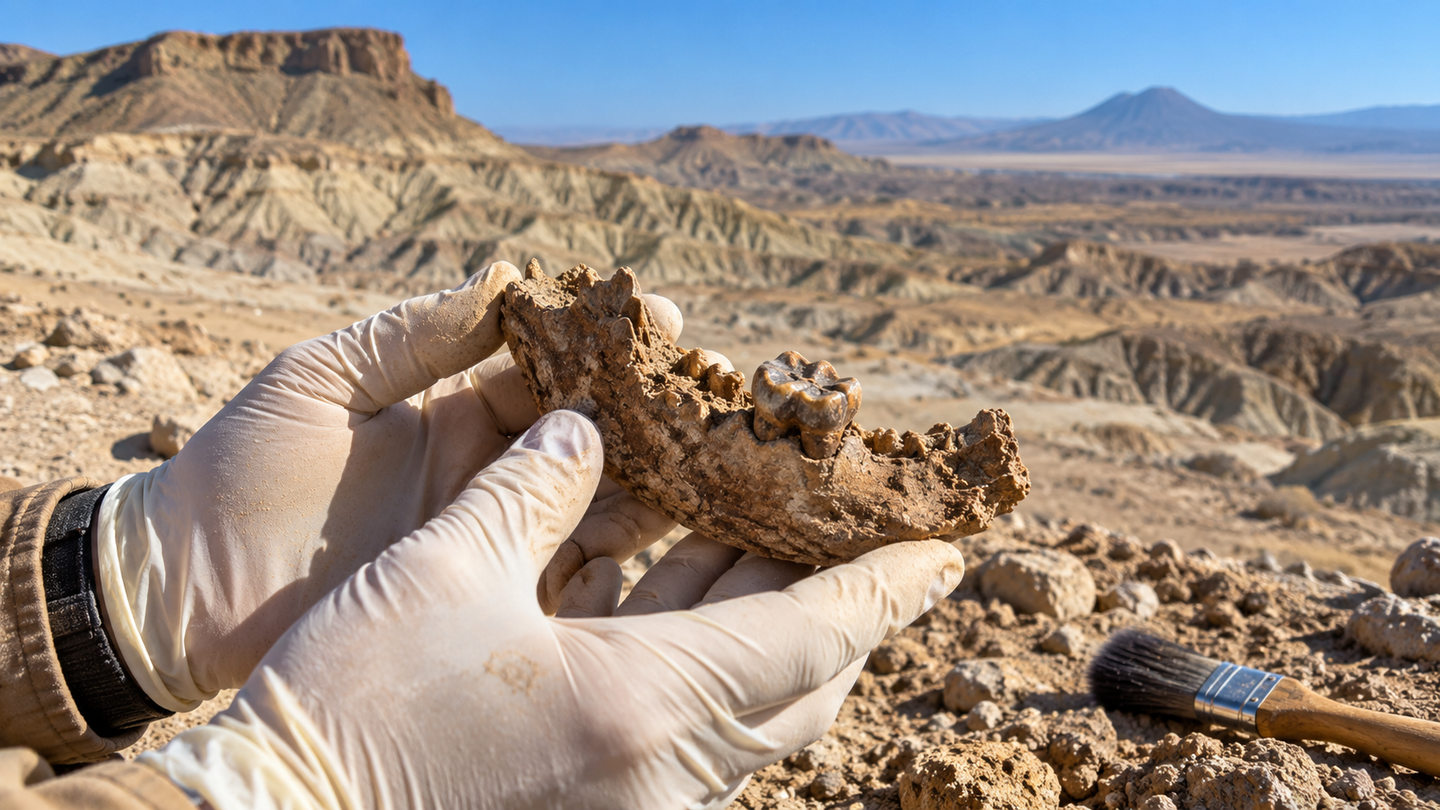
Water seeping into Earth’s mantle 3.1 billion years ago fueled early volcanic activity and plate tectonics
Pilbara volcanic rocks suggest deep water recycling shaped Earth’s mantle and volcanism 3.1 billion years ago.

 Edited By: Joseph Shavit

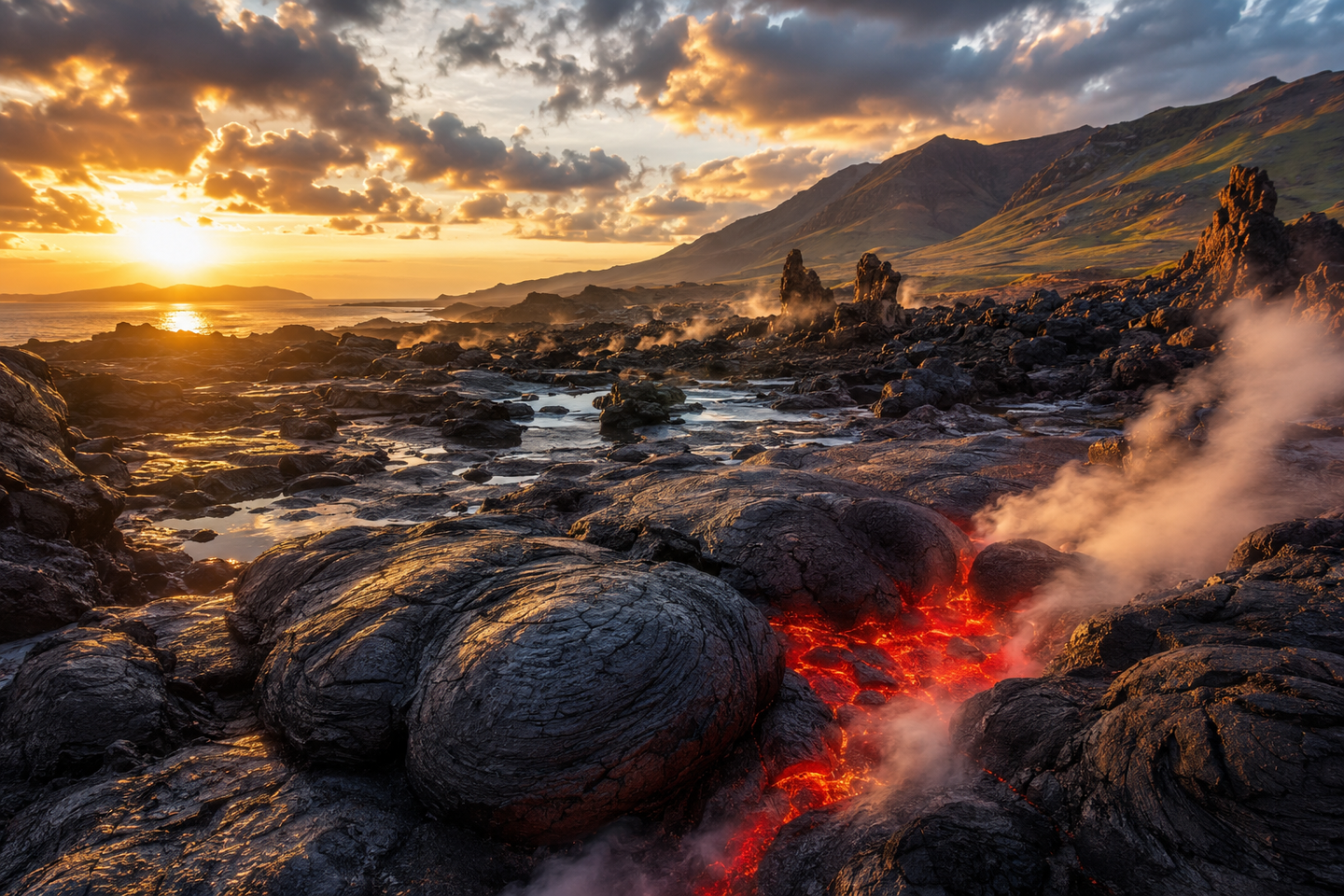
Ancient rocks from Pilbara suggest water reached Earth’s mantle 3.1 billion years ago, fueling volcanism before modern plate tectonics. (CREDIT: AI-generated image / The Brighter Side of News)
Water may have been shaping Earth’s deep interior far earlier than many geologists thought. In rocks more than 3 billion years old from Western Australia, a research team found chemical signs that water had already travelled down into the mantle, where it helped generate magma and fuel volcanic activity.
That matters because the modern planet depends on this kind of deep recycling. Today, water is dragged into the mantle at subduction zones, where one tectonic plate slides beneath another. The process helps drive volcanism, build continents and regulate chemical cycles tied to habitability. But whether anything similar could happen on the much hotter early Earth has remained a stubborn question.
The new evidence comes from the Whundo Group in the Pilbara Craton, one of the rare places where very old crust is still well preserved. The rocks formed about 3.13 billion to 3.10 billion years ago, and the team says they preserve an unusually clear record of how magma formed in a young planet that did not yet operate like the Earth of today.
"These rocks formed more than three billion years ago, when Earth was a very different place,” said lead author Dr. Eric Vandenburg of the University of Adelaide. “What surprised us was finding evidence that large amounts of water had already made their way deep into the Earth's interior and influenced the formation of volcanic rocks."
Rocks that kept their original story
Ancient rocks are often so altered that their original chemistry is partly erased. The Whundo Group is different. The researchers describe low levels of metamorphism and deformation, with volcanic textures still visible, including pillow basalts and other features that help show how the lavas first erupted.
That preservation gave the team a better chance of reading the rocks’ chemical fingerprints. They analyzed a roughly 10-kilometer-thick volcanic succession representing about 30 million years of activity. In those rocks, they identified three distinct magma series: tholeiitic basalts, calc-alkaline basalts and boninites.
Boninites are especially important here. They are high-magnesium, silica-rich lavas usually linked to water-rich melting in subduction settings. The study argues that the Whundo Group contains Earth’s oldest known widespread and volumetrically significant boninite volcanism, a striking clue that water was involved in mantle melting very early in Earth history.
The chemistry also suggested that these magmas were not simply produced by contamination from older crust. Instead, the signatures point back to the mantle source itself. Some magmas appear to have formed through decompression melting, while others carry the marks of flux melting, in which added water helps rock melt at lower temperatures.
A young Earth with an old-looking habit
That distinction is central to the paper. The calc-alkaline basalts and boninites show patterns consistent with water-rich fluids entering the mantle source. The tholeiites do not show the same signal, suggesting a different path to melting. Taken together, the volcanic sequence looks surprisingly diverse, more like the mixture of magmas seen around modern convergent margins than a simple plume-driven volcanic setting.
The authors modeled how much water would have been needed. For the calc-alkaline basalts, they estimate mantle water contents of roughly 0.16 to 1.98 weight percent H2O. For the most primitive boninites, the required range is about 0.79 to 1.53 weight percent H2O. They describe these as minimum estimates, because the models do not fully include water stored in nominally anhydrous minerals.
Those numbers matter because they overlap with water contents measured in mantle wedge rocks from modern subduction zones. In other words, the mantle beneath this part of the early Earth may have been hydrated to levels that look surprisingly familiar.
Yet the team does not argue that modern-style plate tectonics was already in place. In a hotter Archean Earth, rigid Benioff-style subduction would have been mechanically difficult, perhaps impossible. Instead, the authors point to a different process: “dripduction.”
In that model, cooler and denser pieces of the outer crust sag downward into the hotter mantle in localized, short-lived events. Those sinking drips would carry water-rich material with them. As that material descended, fluids and melts could be released into the surrounding mantle, triggering hydrous magma production.
The case for “dripduction”
The paper presents dripduction as a way to reconcile two facts at once. First, the geochemistry looks much like magma generation in water-influenced convergent settings. Second, the physical conditions of the early Earth likely ruled out long, stable subduction zones like those operating now.
The Whundo rocks also hint at a long-lived system rather than a single odd episode. The evidence for flux melting extends through much of the stratigraphy, suggesting sustained recycling of hydrated lithosphere over tens of millions of years.
One of the most unusual signs comes from the boninites. Their chemistry points to a highly depleted mantle source that had already undergone very strong melting at depth, beyond the point where garnet remained stable. The authors call the lingering trace of that history a “ghost garnet” signature.
That source, they argue, was later mixed with more ordinary upper mantle and then re-enriched by water-rich metasomatic agents before melting again. The result was a set of magmas unlike most modern boninites but still tied to a process that resembles water-fluxed melting in arcs.
The team places all of this in off-plateau crust formed after the breakup of an older proto-cratonic block in the Pilbara. In that thinner juvenile crust, conditions may have favored water transfer back into the mantle far more than in thicker plateau interiors, where fluids could be trapped higher up.
"The Earth wasn't operating exactly as it does now, but it appears some of the key processes were already in place," Vandenburg said.
A deeper connection between surface and mantle
The broader implication is that Earth’s surface and deep interior may have been exchanging material by 3.1 billion years ago in ways that were more vigorous than previously recognized. If water was already being cycled downward and then returned through volcanism, that would have affected continental growth, mantle chemistry and the balance of volatile elements important to life.
It may also help explain why so much early crust is missing. The authors suggest that thin, evolved crust created in these off-plateau settings could later have been recycled, leaving only rare scraps behind in places like the Pilbara.
The work does not settle every argument about early tectonics. The authors note that some aspects of the mantle models are not unique, and they do not claim Whundo records the start of modern subduction. But the rocks do appear to show that deep water recycling did not have to wait for the plate-tectonic world seen today.
Practical implications of the research
The findings sharpen one of geology’s biggest timelines: when Earth began moving water and other surface materials back into its interior.
That matters because deep recycling helps shape volcanoes, continents and the long-term chemical conditions of the planet.
By showing that mantle hydration and water-driven magma production were already underway in the Mesoarchean, the study gives researchers a stronger framework for understanding how the young Earth became a habitable world, and where to look next for equally old evidence in other cratons.
Research findings are available online in the journal Nature Communications.
The original story "Water seeping into Earth’s mantle 3.1 billion years ago fueled early volcanic activity and plate tectonics" is published in The Brighter Side of News.
Related Stories
- Ancient impact with Theia may have brought water and life to Earth
- Planetary scientists reveal where Earth's water and building blocks came from
- Earth’s lower mantle trapped far more early water than previously thought
Like these kind of feel good stories? Get The Brighter Side of News' newsletter.
Shy Cohen
Writer