World’s first superconducting quantum heat engine looks to transform quantum computing
A qubit-based heat engine completes an Otto cycle near absolute zero and points toward simpler large-scale quantum computers.

 Edited By: Joshua Shavit


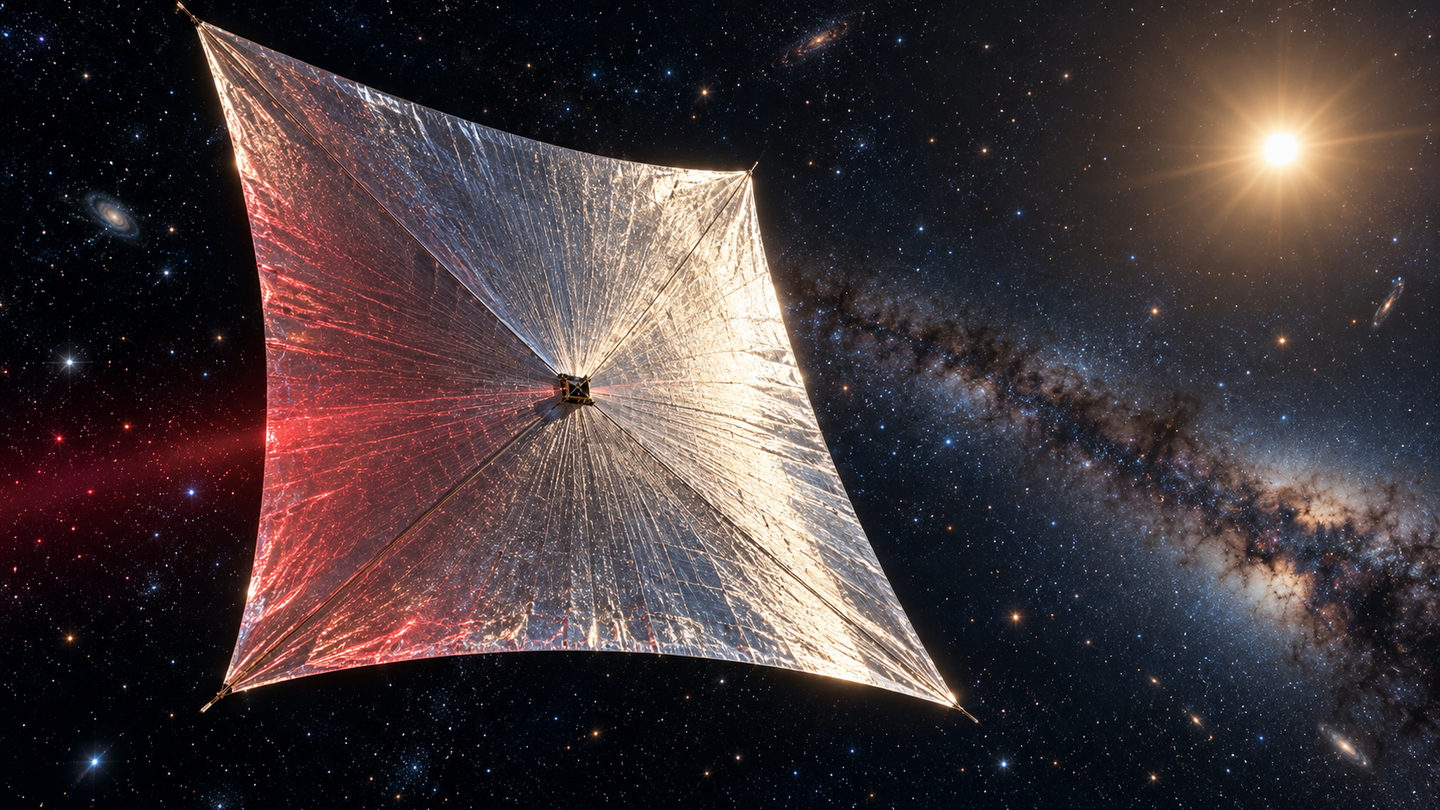
Artistic impression of a superconducting quantum heat engine. Aalto University researchers built the first cyclic quantum heat engine in a superconducting circuit, extracting real work from heat in a single qubit near absolute zero. (CREDIT: Heikka Valja / Aalto University)
A heat engine small enough to fit inside a superconducting circuit has converted heat into measurable work near absolute zero, offering a new test bed for quantum thermodynamics and a possible route toward simpler, larger quantum computers.
The device uses a transmon qubit, a resonator and a quantum-circuit refrigerator. Together, they form a microscopic version of an Otto engine, the same broad thermodynamic cycle used in many car engines.
Aalto University researchers operated the system inside a cryostat, where temperatures sit close to absolute zero. Even in those conditions, tiny amounts of heat remain. The team showed that this heat could be directed through the circuit and converted into positive work.
The study, led by Academy Professor Mikko Möttönen, was published in Nature Communications.
An engine built around a qubit
Classical heat engines use temperature differences to produce useful energy. Steam engines helped launch the Industrial Revolution, while modern heat engines still power vehicles and many electricity-generating plants.
The new device applies the same basic idea to a quantum system.
“In our experiment, we built a nanofabricated heat engine using superconducting circuits and operated it in a cryostat near absolute zero. At its heart is a transmon qubit, one of the basic building blocks of modern quantum technologies,” said first author Tuomas Uusnäkki.
The transmon served as the engine’s working material. Researchers changed its energy levels with magnetic-flux pulses and controlled its temperature with a quantum-circuit refrigerator, or QCR.
That refrigerator played an unusual double role. Traditional engines rely on separate hot and cold environments. Here, one tunable device supplied both.
“Our quantum-circuit refrigerator can be tuned to both heat and cool the qubit on demand. Using carefully timed control pulses, we drove the engine in an Otto cycle and monitored the qubit state as the engine ran,” Uusnäkki said.
The cycle had four strokes. First, the qubit expanded as its transition frequency dropped. It then cooled as the refrigerator removed thermal energy. Next came compression, as the transition frequency increased. A heating stroke completed the cycle.
During expansion, the qubit did work on the field controlling its frequency. Compression required work to be put back into the system. Because the qubit held fewer excitations during compression, the input was smaller than the work extracted during expansion.
The difference produced a positive output.
Heat and work at quantum scale
The team tracked the qubit’s changing state through repeated single-shot measurements. Each measured point drew on 10,000 readouts, allowing the researchers to estimate state populations, internal energy and effective temperature.
They followed the engine through three consecutive cycles. The measured behavior closely matched simulations based on an open quantum system.
The qubit began at an effective temperature of about 160 millikelvin. Across three cycles, its estimated temperature rose from roughly 200 millikelvin to 600 millikelvin because the heating stroke initially outweighed the cooling stroke.
That imbalance meant the early cycles were not yet operating in a perfect steady state. The energy at the beginning and end of each cycle did not fully match. Still, the mismatch decreased as the system warmed and approached saturation.
The researchers also repeated the first cycle eight times to measure performance. The engine produced an average output power of 0.039 electron volts per second and an average efficiency of 0.0055.
Those numbers are far too small for practical power generation. They also reached only 27 percent of the ideal Otto efficiency expected for the device’s operating range.
Yet the key result was not raw performance. The experiment demonstrated that heat flowing through a superconducting qubit could repeatedly generate positive work within a controlled thermodynamic cycle.
“This is the first experimental demonstration of a cyclic quantum heat engine in superconducting circuits. Using a single controllable quantum refrigerator as both the hot and cold environment of the engine makes it simpler and more versatile,” Uusnäkki said.
Previous quantum heat engines have been demonstrated with trapped ions, nuclear spins, diamond defects and cold atoms. Superconducting circuits had been studied theoretically, but a cyclic engine comparable to a classical heat engine had not been experimentally achieved in that platform.
Fewer cables for larger machines
The work may also address a practical problem in quantum computing: wiring.
Today’s superconducting quantum computers require microwave lines that carry control and readout signals between ultracold circuits and room-temperature electronics. The challenge grows rapidly as machines add more qubits.
“Finland’s Quantum Technology Strategy envisions a quantum computer with one thousand logical qubits by 2035, which probably means hundreds of thousands of physical qubits. Doing that with current technology requires millions of microwave cables costing thousand euros each. The cables also introduce noise into the system. Using autonomous devices instead would mostly eliminate the need for those cables,” Möttönen said.
The team now aims to develop an autonomous version of the engine. Such a device could potentially assist with qubit readout inside the cold circuit, reducing the need to send every signal through long microwave cables.
The present engine still depends on carefully timed external pulses. Its power and efficiency remain low, and the first cycles do not begin in steady-state operation. The researchers said performance could improve through stronger cooling, weaker heating or operation over additional cycles.
The superconducting platform could also support experiments involving quantum coherence, interference and non-adiabatic changes. Those tests may help clarify where classical thermodynamic rules hold and where distinctly quantum behavior begins to matter.
Practical implications of the research
The immediate value lies in control rather than energy production. The circuit gives physicists a working system for testing how heat, work and fluctuations behave at quantum scales.
For quantum computing, the longer-term goal is more concrete. Autonomous thermal devices could perform tasks directly inside cryogenic hardware, reducing cables, cost and noise as computers grow.
The experiment remains a proof of concept. Still, it shows that a familiar engine cycle can operate inside one of the leading hardware platforms for quantum technology.
Research findings are available online in the journal Nature Communications.
The original story "World’s first superconducting quantum heat engine looks to transform quantum computing" is published in The Brighter Side of News.
Related Stories
- Researchers may have observed triplet superconductivity - the holy grail in quantum computing
- Scientists reveal how quantum electron spin can create magnetism
- Device smaller than a grain of dust looks to supercharge quantum computers
Like these kind of feel good stories? Get The Brighter Side of News' newsletter.
Joseph Shavit
Writer, Editor-At-Large and Publisher
Joseph Shavit, based in Los Angeles, is a seasoned science journalist, editor and co-founder of The Brighter Side of News, where he transforms complex discoveries into clear, engaging stories for general readers. With vast experience at major media companies like The Los Angeles Times, Times Mirror and Tribune Publishing, he writes with both authority and curiosity. His writing focuses on space science, planetary science, quantum mechanics, geology. Known for linking breakthroughs to real-world markets, he highlights how research transitions into products and industries that shape daily life.