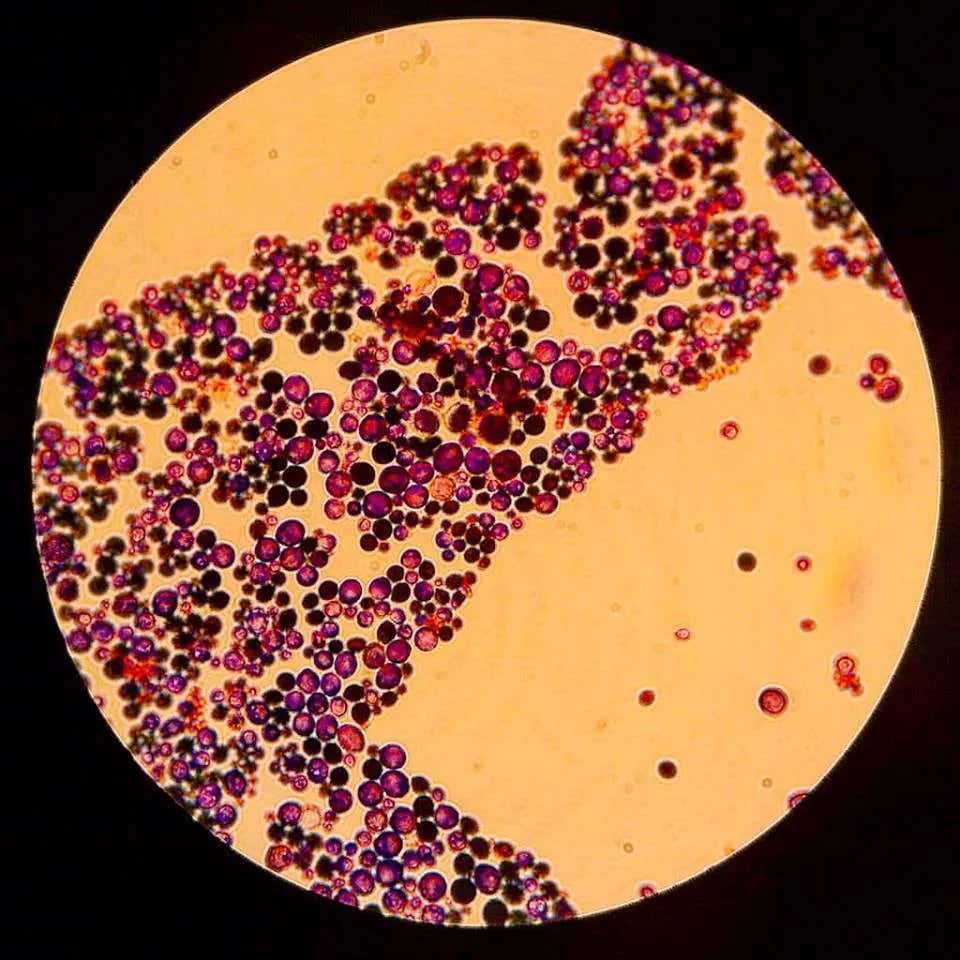
A single gene may explain why some males live fast and die young
A killifish gene speeds growth and maturity, but later raises cancer risk and shortens lifespan.
Media Contact: Danae Marx/Edited By: Joseph Shavit

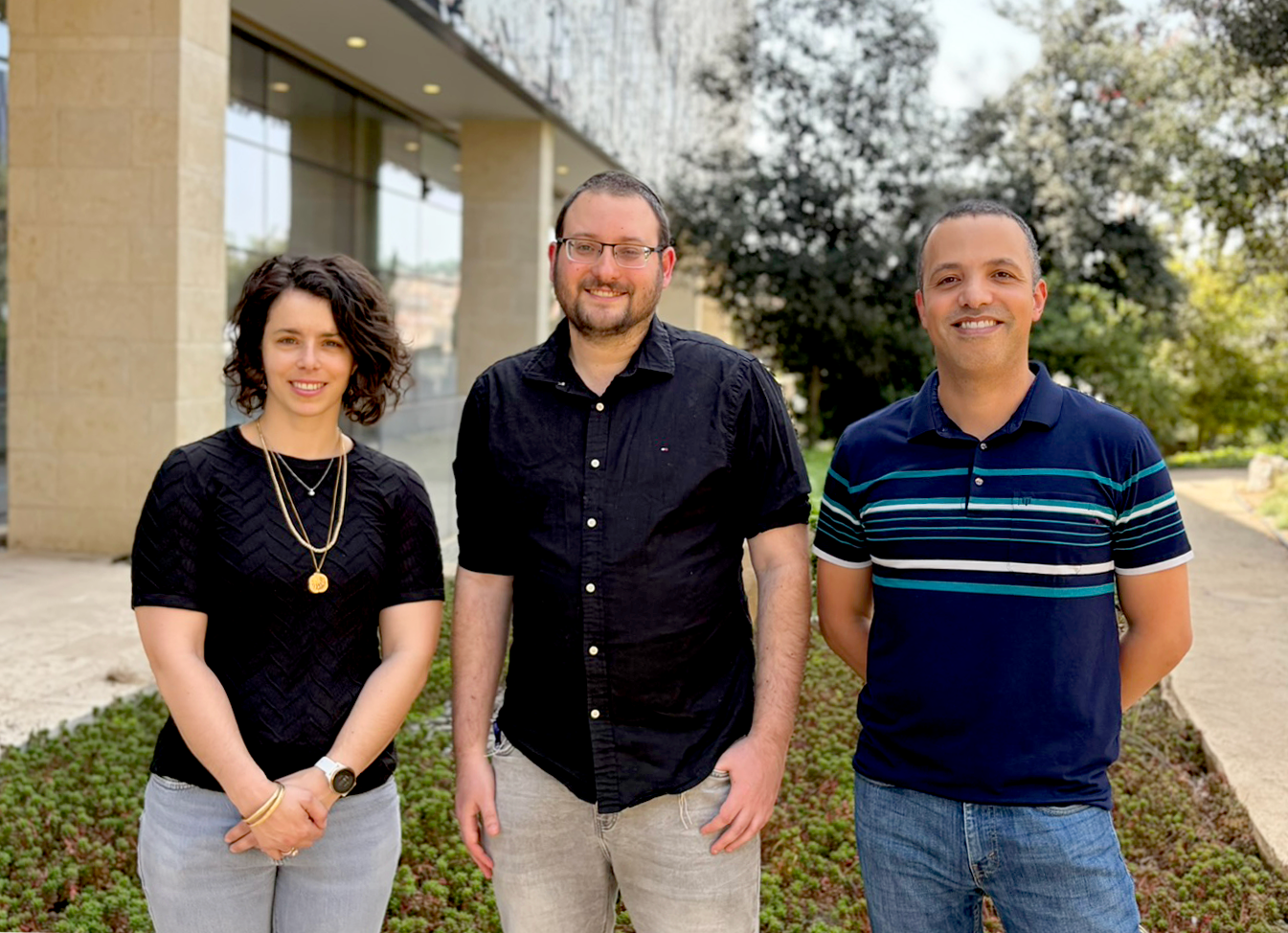
This project was led by (from left to right): Dr. Marva Bergman, Dr. Eitan Moses, and Prof. Itamar Harel. (CREDIT: Tehila Atlan_
A small fish that lives fast and dies young has given biologists a rare look at one of evolution’s oldest bargains.
In the African turquoise killifish, researchers traced that bargain to a single gene called vgll3, which helped push males toward faster growth and earlier sexual maturity. But the same shift also came with a darker side: shorter lives, more age-related tumors, and a higher risk of melanoma-like cancers in old age.
The finding offers unusually direct evidence for antagonistic pleiotropy, a long-debated theory of aging that holds that some genes are favored because they improve early-life success, even if they cause damage later on.
“We have effectively caught evolution in the act of making a trade-off,” said Dr. Itamar Harel of Hebrew University. “For years, we’ve asked why our bodies can’t just maintain themselves indefinitely. This gene gives us a direct answer: nature doesn’t prioritize longevity; it prioritizes continuity. We are built to sprint, not to marathon.”
The study was led by Dr. Eitan Moses, Dr. Marva Bergman, and Harel at Hebrew University, with collaborators including Prof. Nabieh Ayoub of the Technion and Prof. Alexei A. Maklakov of the University of East Anglia.
A gene tied to growing up faster
The idea behind antagonistic pleiotropy has been around for decades. It tries to explain why aging persists even though natural selection should favor healthy bodies. The answer, in theory, is that selection acts most strongly early in life, when growth, mating, and reproduction matter most.
What has been much harder is pinning that trade-off to a specific gene in a vertebrate.
That is where the turquoise killifish proved useful. The fish matures in roughly two to four weeks and typically lives only four to six months, making it a powerful model for studying aging. The team focused on vgll3, a gene already linked in earlier human and salmon studies to puberty timing and maturation.
Using CRISPR, the researchers altered the gene in killifish and tracked what changed. In males, the effects were striking. Mutant fish grew faster, reached sexual maturity earlier, and showed stronger signs of reproductive development. One-month-old males were more likely to display nuptial coloration, a visible marker tied to maturity in this species. Mutant males also grew longer and heavier, and their gonadosomatic index, a measure of gonad size relative to body mass, rose significantly.
The team also found increased proliferation in the testis and more mature sperm, suggesting the fish were not only maturing earlier in appearance but also in reproductive function.
The cost arrives with age
Those early-life gains did not come free.
As the fish aged, males with the altered vgll3 gene showed a sharp rise in melanoma-like growths in the tail fin. These were not just suspicious patches of pigment. The team developed a new immunodeficient killifish model by mutating the rag2 gene, allowing tumor cells to be transplanted into recipient fish.
Cells taken from the pigmented expansions in old mutant fish successfully engrafted in the new model and developed into invasive melanoma-like tumors. Histology showed melanocytes spreading into multiple organs, including skeletal muscle and blood vessels, and many of those tumor cells were actively dividing.
“What’s fascinating, and slightly terrifying, is that the cancer we see in these fish isn’t a random accident,” Harel said. “It’s the direct shadow of their youthful vitality. The same machinery that drives a cell to build a young body is hijacking the system to build a tumor in the old one. If we can understand this mechanism, we might finally learn how to decouple healthy growth from the disease of aging.”
The survival data pointed the same way. Male mutants had a 15% shorter median lifespan, while females showed a smaller 7% drop. Hazard analyses found that mutant females had a 35% higher risk of death than wild-type fish, and mutant males had a 55% higher risk. The researchers also found stronger age-related mortality in the mutants, a pattern consistent with faster senescence.
One gene, several biological systems
The team did not stop at outward traits. They also looked at what vgll3 was doing inside cells.
Their analyses linked the gene to cell cycle control, stem cell activity, germline proliferation, and DNA repair. In mutant-derived cells, proliferation increased, but so did signs of DNA damage after stress. In living fish, the same pattern appeared in the testis and in intestinal crypts, where proliferating somatic stem cells were also more abundant.
That combination helps explain why the gene may be so powerful. Greater cellular activity can support rapid development and earlier reproduction, but it may also increase the long-term burden of damage and raise the odds of late-life disease.
The researchers argue that vgll3 acts as a major-effect gene with age-opposed consequences. Early in life, it appears to help scale growth and maturity. Later, it raises the chances of cancer and shortens life.
The work also fits with a broader ecological picture. In the wild, turquoise killifish live in seasonal habitats that often dry out within months. Under those conditions, growing fast and breeding early can be a major advantage. The study notes that vgll3 is under positive selection in annual killifish compared with non-annual relatives, although the authors are careful not to overstate what that means. Their experiments support antagonistic pleiotropy, but they do not fully rule out other evolutionary forces, including mutation accumulation.
That caution matters. The researchers say showing a true fitness trade-off in nature will require population-level evidence and tests in ecologically relevant settings.
A human clue in a short-lived fish
The work matters beyond killifish because vgll3 is conserved in humans. Previous association studies had linked the gene to puberty timing, sex hormone levels, body size, cancer, and metabolic traits, but they did not show directly what the gene does. This study provides functional evidence that changing vgll3 can alter development, lifespan, and disease risk in a vertebrate.
That does not mean the same effects play out in people in the same way. But it does sharpen the case that one gene can sit at the intersection of growth, reproduction, aging, and cancer.
Practical implications of the research
The findings could help researchers think more clearly about why some biological systems that support healthy development early in life later become dangerous. By tying vgll3 to faster maturation, reduced lifespan, and melanoma-like tumors, the study offers a new route for examining how cancer risk and aging may be linked at the genetic level.
The new immunodeficient killifish model may also become a useful tool for tumor transplantation studies in this species. And because vgll3 is conserved across vertebrates, the work could guide future research into whether the gene’s early benefits can be separated from its late-life harms, a question with clear relevance for cancer prevention and efforts to extend healthy lifespan.
Research findings are available online in the journal Nature Communications.
The original story "A single gene may explain why some males live fast and die young" is published in The Brighter Side of News.
Related Stories
- Longevity secrets of a 117-year-old woman who lived cancer and dementia free
- Secrets of the Greenland Shark’s Longevity Revealed in New Study
- New study reveals the dietary secret to brain health and longevity
Like these kind of feel good stories? Get The Brighter Side of News' newsletter.