AI will not displace jobs, it will radically transform them, research finds
New research suggests generative AI can support engagement and career growth when workers use it as a partner, not a threat.

 Edited By: Joseph Shavit

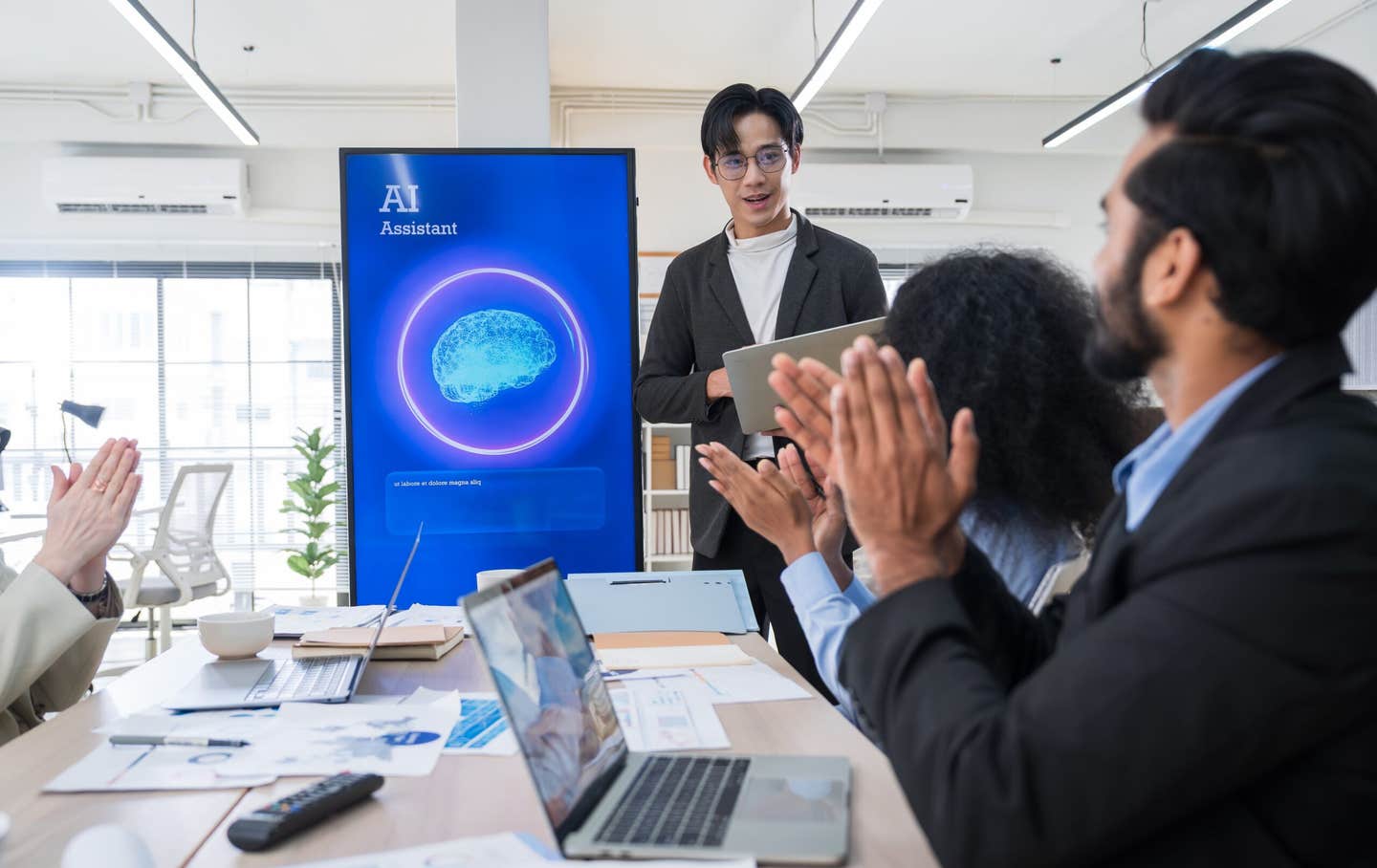
New research finds generative AI can boost work engagement and career adaptability when employees trust it without giving up judgment. (CREDIT: Shutterstock)
Generative AI is changing work faster than many employees can process it, but new research from Finland suggests the technology does not have to hollow out careers. Under the right conditions, it can deepen engagement, adaptability, and long-term resilience.
The fear around generative AI is easy to recognize. A machine that writes, summarizes, designs, and answers questions can seem less like a tool than a quiet replacement waiting in the wings. But new research from the University of Vaasa argues that the picture is more complicated, and in some cases more hopeful.
In his doctoral dissertation in information systems science, researcher Zhe Zhu examined how artificial intelligence, especially generative AI, is changing both organizational decision-making and employees’ day-to-day experience of work. His conclusion is not that the technology is harmless. It is that the effects depend heavily on how people and organizations approach it.
Workers who see generative AI as a useful collaborator, and who trust it without surrendering their judgment, tend to be more engaged in their work and better prepared to adapt their careers over time. The danger is not only that AI can be misused. It is also that employees can misread what it means for their future.
“As NVIDIA CEO Jensen Huang has pointed out, workers are not simply being replaced by AI, but by those who have learned to use GenAI to work more effectively,” Zhu said. “The workers that perceive GenAI more positively are also more engaged and adaptable in their careers.”
Not just a software upgrade
Zhu’s dissertation treats generative AI as more than a productivity feature dropped into office software. It describes the technology as part of a broader socio-technical shift, one that changes how decisions are formed, how tasks are shared, and how employees judge their own value at work.
That matters because generative AI does something earlier workplace systems often did not. Instead of only sorting information or automating routine steps, it can generate alternatives. It can draft, compare, simulate, and suggest. In other words, it can enter the decision process itself, not just support it from the sidelines.
The research brings together four connected studies. One maps earlier literature on human and AI interaction in decision-making. Another looks at how organizations move from experimenting with generative AI to embedding it in real workflows. Two others focus on workers, one on work engagement and one on long-term career development.
Together, they point to the same idea: the outcome depends less on raw technical power than on the interaction between the system, the organization, and the employee.
Why the same tool can motivate one worker and unsettle another
A key part of Zhu’s work focuses on what employees think AI collaboration means for them. In a survey of 395 U.S.-based professionals who use generative AI tools in their jobs, collaboration with AI was strongly linked to what the research calls opportunity appraisal. Workers who saw AI as a source of help, growth, and better performance were more engaged in their work.
Threat appraisal told a different story. It was negatively linked to work engagement, but it was not directly triggered by AI collaboration itself. That suggests employees do not automatically read generative AI as a menace. Threat rises more easily when other stressors are already present.
One of those stressors is job insecurity. Zhu found that insecurity sharpened both kinds of appraisal. It made workers more sensitive to the possibility that AI could either help them stay relevant or leave them behind. Perceived ease of use, meanwhile, reduced the intensity of both reactions, suggesting that familiar, easy systems may feel less emotionally charged overall.
The broader point is simple but important. The same technology can land very differently depending on context. A worker who feels supported, trained, and included may see AI as a way to learn faster and contribute more. Someone who feels exposed or replaceable may read the same system as a warning.
Trust, but not blind trust
Trust sits near the center of the dissertation. Zhu argues that employees need enough trust in AI to use it meaningfully, but not so much that they stop questioning it.
That balance matters because generative AI can still produce weak reasoning, false information, biased outputs, or confident nonsense. Employees who trust it too much may accept bad answers. Employees who distrust it completely may miss useful possibilities.
The same balancing act appears at the organizational level. Zhu’s research argues that successful adoption depends less on buying advanced systems than on aligning them with actual goals, workflows, and governance. The dissertation proposes a framework for moving from experimentation to more integrated use, emphasizing design, rapid testing, user focus, collaboration, and ethical oversight.
“Organisations should follow a strategic roadmap to align the technology with their goals and build ecosystems with industry and academic partners,” Zhu said. “My research proposes an eight-step framework that guides organisations in moving from experimentation toward a more integrated and purposeful use of GenAI.”
The dissertation also frames AI as part of a larger industrial shift. As more workplaces become AI-native, the technology stops appearing as a separate add-on and starts becoming part of ordinary processes.
“We are in a new industrial revolution,” Zhu said. “Some jobs will disappear, but new forms of work and entirely new industries will also emerge around AI infrastructure, data centres, and digital services. Instead of fearing the technology, employees should learn how to use it critically and develop their skills alongside it.”
Careers shaped by adaptability
The final piece of the dissertation looks beyond today’s workflow and into career durability. Using a subsample of 361 expatriate professionals, Zhu examined whether working with generative AI affects career sustainability. It did, but indirectly.
The mechanism was career adaptability, the set of resources that helps people respond to change. In Zhu’s model, that includes concern for the future, control over one’s path, curiosity about options, and confidence in solving problems. Generative AI collaboration was linked to stronger adaptability across all four dimensions, and that adaptability, in turn, supported career sustainability.
Here too, trust mattered. Higher trust in AI strengthened the positive link between AI collaboration and adaptability. Job insecurity also intensified the importance of adaptability, suggesting that uncertain environments make these inner resources more valuable, not less.
That finding pushes back against a narrow view of AI as only a threat to employment. Zhu’s work suggests the technology can also function as a developmental force, especially when workers use it to explore, learn, and rethink their role in a changing labor market.
Practical implications of the research
For employers, the dissertation points to a clear lesson: rolling out generative AI is not just a technical project. It is a management and design problem. Organizations that want better outcomes need to connect AI use to real work goals, explain its limits, protect privacy, build ethical safeguards, and give employees room to learn with the technology rather than feel judged by it.
For workers, the message is not blind optimism. It is that critical use matters. Zhu’s findings suggest engagement rises when employees see AI as a tool that can expand their effectiveness, and career resilience grows when they use it to strengthen adaptability rather than outsource judgment.
In workplaces moving quickly toward AI integration, the most durable advantage may be neither total trust nor total resistance, but informed collaboration.
Research findings are available online in the journal OSUVA Open Science.
The original story "AI will not displace jobs, it will radically transform them, research finds" is published in The Brighter Side of News.
Related Stories
- First-ever American AI Jobs Risk Index released by Tufts University
- What do people think about AI replacing human jobs? Major study yields surprising results
- Americans are increasingly concerned about AI – want more regulation
Like these kind of feel good stories? Get The Brighter Side of News' newsletter.
Shy Cohen
Writer