Air conditioning cuts heat-related deaths by more than half, but its protection has limits
AC prevents more than 5,000 heat-related deaths a year in the U.S., but extreme heat can still push mortality risks higher.
 Yale University Writer: Fran Silverman

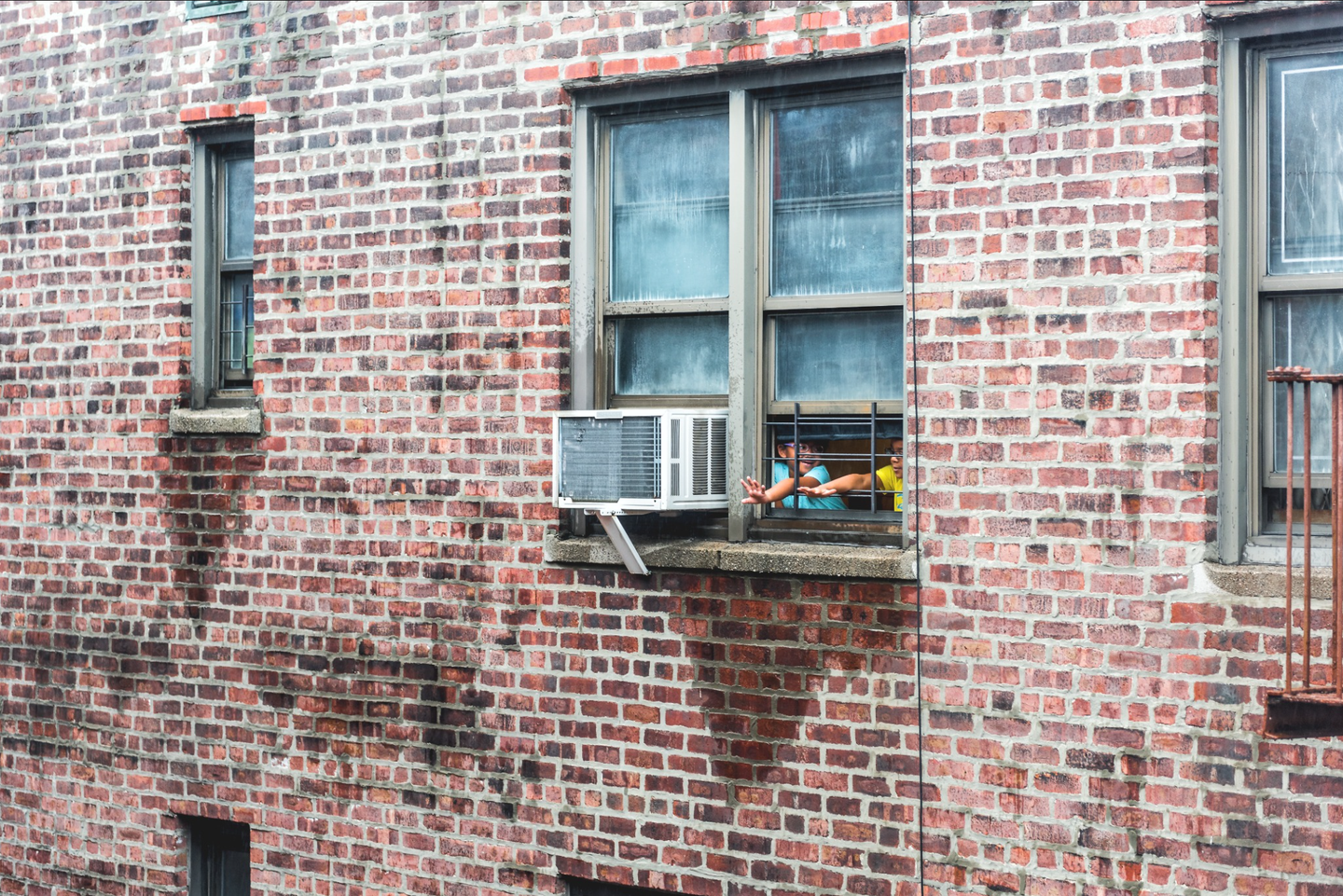
Air conditioning cuts heat-related mortality by 57% in the U.S., but Yale researchers find its protective benefits eventually level off. (CREDIT: Shutterstock)
- Air conditioning prevented an estimated 5,267 heat-related deaths each year across the contiguous United States, cutting heat-attributable mortality by 57%.
- The strongest gains occurred as AC use rose from low to moderate levels. Beyond median usage, additional cooling produced little extra reduction in mortality.
- Affordability remains a major obstacle. More than a quarter of U.S. households report difficulty paying for energy, limiting their ability to use AC when temperatures become dangerous.
Air conditioning can make the difference between surviving dangerous heat and becoming another heat-related death, but simply turning the thermostat lower does not keep adding protection.
A nationwide analysis from Yale University estimates that household air conditioning prevented 5,267 heat-related deaths each year across the contiguous United States. That amounts to a 57% reduction in heat-attributable mortality, offering one of the clearest measurements yet of how much residential cooling protects people as temperatures rise.
The study, published in Nature Health, examined nearly 30 million death records from 3,108 counties between 2010 and 2020. Unlike previous research that largely measured whether households owned air conditioners, the Yale team estimated how much people actually used them.
That distinction revealed both the enormous value of cooling and an important limit. Moving from relatively low AC use to moderate use produced substantial health benefits. Once usage climbed beyond the median level, however, the improvement largely leveled off. Even in places with considerable air conditioning use, the danger began rising again on extremely hot days.
Measuring AC use instead of simply counting units
Knowing that a home contains an air conditioner does not reveal whether anyone can afford to switch it on. That has made it difficult to measure how much AC actually contributes to avoiding deaths during periods of high heat.
“For years we have known that air conditioning protects people from extreme heat, but we could only guess by how much because the available data told us who owned an air conditioner, not who could actually afford to run one,” said Kai Chen, associate professor of epidemiology at the Yale School of Public Health.
The researchers addressed that gap with Yale’s fusionACS data platform, which combines information from U.S. household surveys with American Community Survey microdata. They then examined how county-level AC usage altered the relationship between temperature and mortality.
“Our dataset enabled us to relate AC use to mortality and temperature at a meaningful spatial scale,” said study co-author Narasimha Rao, professor of energy systems.
The analysis estimated temperature-mortality relationships separately for counties and then pooled those results according to average household AC use. Researchers compared counties ranging from relatively low use, represented by the 10th percentile, through median and higher levels of use.
More cooling created a wider zone of safety
As air conditioning use increased from the 10th percentile to the median, the temperature range in which heat had no statistically significant association with mortality became wider.
The mortality odds ratio at the 95th percentile of temperature also declined from 1.022 in counties with relatively low AC usage to 1.008 around median usage. Taken across the country, that protection translated into thousands of avoided deaths each year.
The greatest numbers of averted deaths were concentrated in Florida, the Southwest and the Gulf Coast, regions where residents face substantial heat exposure.
But the relationship did not continue indefinitely. Once average AC use rose beyond the median, additional usage produced little further decline in heat-related mortality risk.
The authors suggest that some of this flattening could result from high AC use during moderately hot weather, when additional cooling provides little extra health protection. The finding does not mean cooling stops working. Instead, it indicates that much of its mortality benefit may come from reaching an adequate level of use rather than continually increasing it.
Extreme heat can overpower some of the protection
The study also found that air conditioning does not eliminate the danger from the most severe temperatures. On extreme heat days, mortality risk began climbing even where AC use was substantial.
That matters as exposure to intense heat grows. High temperatures can cause heat exhaustion and heat stroke while also contributing to cardiovascular, respiratory and kidney diseases. Heat stress is the leading cause of weather-related deaths.
The findings portray AC as a highly effective adaptation to heat, but not a complete solution. Its protective effect has limits, particularly as temperatures move farther into dangerous extremes.
That creates a public health challenge in which access to cooling must be considered alongside other approaches to reducing heat exposure. The authors point to measures such as increasing urban greenery while ensuring households can afford to cool their homes when necessary.
The cost of staying cool
Affordability complicates the apparent abundance of residential air conditioning in the United States. More than one-quarter of households report difficulty paying for household energy use.
Owning AC therefore does not necessarily provide the protection implied by ownership statistics. A household facing high electricity costs may limit cooling precisely when it is most needed.
“This is one of many studies we are undertaking to understand how low-income households cope with extreme heat,” Rao said. “While some choose to turn on their ACs, others make the uncomfortable choice of bearing the heat to save money for food.”
That tradeoff helps explain why actual usage provides a more meaningful measure of protection than ownership alone. An air conditioner sitting idle because a household cannot afford the electricity offers little defense against extreme temperatures.
The results also highlight why policies aimed at heat adaptation may need to consider energy affordability rather than simply expanding access to cooling equipment.
AC saves lives, but more is not always better
The estimated 57% reduction in heat-attributable mortality establishes household AC as a powerful defense against high temperatures. At the same time, the plateau at higher usage levels suggests that continually increasing cooling does not translate into an equivalent increase in lives saved.
That distinction becomes increasingly important when weighing the benefits of air conditioning against the consequences of excessive energy use. The authors argue that heat adaptation strategies need to preserve access to lifesaving cooling while avoiding unnecessary overuse.
For households struggling with utility bills, however, the immediate problem can be much simpler. Having an air conditioner and being able to use it are two different forms of protection.
As extreme temperatures become more common, the findings suggest that making adequate cooling affordable may matter more than encouraging people who already use substantial amounts of air conditioning to turn it up even further.
Dig deeper into air conditioning, extreme heat and heat-related mortality
These resources examine how extreme heat affects mortality, how cooling changes health risks, and how energy affordability and urban design influence people’s ability to stay safe.
The effects of residential air conditioning and social vulnerability on heat-related hospitalizations in California: Researchers examining 27 California cities found that greater residential AC prevalence reduced the association between extreme heat and hospital admissions, although it did not eliminate the danger. The study also considered how cooling access intersects with social vulnerability. (Environment International, 2025)
Air Conditioning in Nursing Homes and Mortality During Extreme Heat: This study examined deaths in nursing homes during extreme heat and compared facilities with and without air conditioning, focusing on older adults who face particularly high heat-related risks. It provides evidence from a vulnerable population that complements nationwide research on residential cooling. (JAMA Internal Medicine, 2026)
Interactions between indoor heat and energy affordability amplify household risks in hot-humid US climate zones: This research found that considering indoor heat or energy costs separately can underestimate household vulnerability. Low-income households and those with inadequate buildings or cooling systems were especially likely to face overlapping heat, energy and well-being burdens. (One Earth, 2025)
Association between all-cause mortality and locally-defined extreme heat events: A global systematic review and meta-analysis: Drawing on 21 studies and more than 126 million people, this meta-analysis found that locally defined extreme heat events were associated with a 24% increase in mortality risk overall, while also documenting substantial differences among populations and locations. (Environmental Research, 2026)
Estimating the urban heat-related mortality burden due to greenness: a global modelling study: Researchers modeled more than 11,000 urban areas and found that increasing vegetation could reduce temperatures and substantially lower the burden of heat-related mortality. The findings support urban greening as a complementary strategy rather than relying on air conditioning alone. (The Lancet Planetary Health, 2025)
Research findings are available online in the journal Nature Health.
The original story "Air conditioning cuts heat-related deaths by more than half, but its protection has limits" is published in The Brighter Side of News.
Related Stories
- Eco-friendly roof paint cools homes and extracts fresh water from the air
- Hidden wavelengths in white light can change how warm a room feels
- New biodegradable film keeps buildings cool without electricity
Like these kind of feel good stories? Get The Brighter Side of News' newsletter.
Joseph Shavit
Writer, Editor-At-Large and Publisher
Joseph Shavit, based in Los Angeles, is a seasoned science journalist, editor and co-founder of The Brighter Side of News, where he transforms complex discoveries into clear, engaging stories for general readers. With vast experience at major media companies like The Los Angeles Times, Times Mirror and Tribune Publishing, he writes with both authority and curiosity. His writing focuses on space science, planetary science, quantum mechanics, geology. Known for linking breakthroughs to real-world markets, he highlights how research transitions into products and industries that shape daily life.