Hidden wavelengths in white light can change how warm a room feels
White light temperature perception shifted in a Penn State study using invisible red and blue wavelength differences.
 Penn State Writer: Adrienne Berard


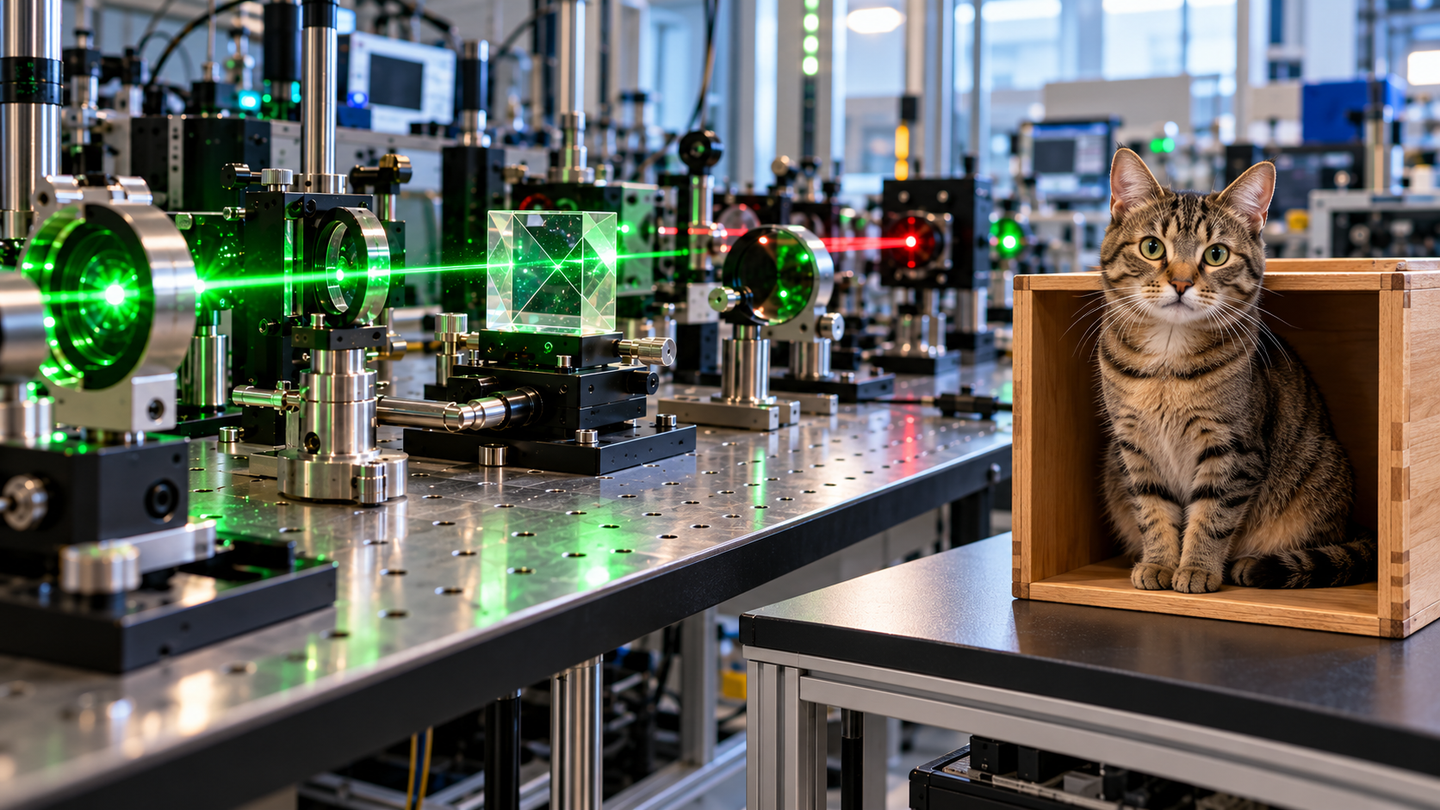
Penn State researchers found hidden differences in white light can change how people feel indoor temperatures. (CREDIT: Shutterstock)
- White light that looks identical to the human eye can still contain different mixes of red and blue wavelengths that change how warm or cool a room feels.
- In a Penn State experiment, blue-enriched white light allowed participants to tolerate air temperatures about 1.3 degrees Fahrenheit warmer.
- If larger studies confirm the effect, lighting could eventually work with heating and cooling systems to widen comfort ranges and reduce building energy use.
A room can look exactly the same and still feel different. Penn State researchers found that hidden differences in white light can shift how people experience indoor temperature.
The study tested whether ordinary-looking white light could affect thermal comfort. The work was led by scientists at Penn State and focused on red and blue wavelengths inside white light.
Those wavelength differences were invisible to participants. Yet they changed the gap between perceived and real temperature by as much as 1.3 degrees Fahrenheit.
Julian Wang, professor of architectural engineering at Penn State and principal investigator of the study, said the goal was to see whether lighting could help people feel comfortable across a wider temperature range.
‘‘We wanted to understand whether lighting can widen people’s thermal comfort zone,” Wang said. “If it can, even a modest shift in perceived temperature can translate into substantial cumulative energy savings over time.’’
White light with a hidden difference
Previous studies have shown that colored lights can influence how warm or cool people feel. Blue light may feel cooler. Red light may feel warmer.
But colored lighting is not practical for many everyday spaces. Offices, classrooms and homes usually need neutral light that does not distract people or make routine tasks harder.
Wang’s team tested a subtler idea. The researchers used white light that looked identical to the human eye but differed in spectral composition. One light was enriched in blue short-wave light. The other was enriched in red long-wave light.
‘‘The novelty of this study is that we used white light that looks identical to the human eye but has a different spectral composition,’’ Wang said.
That design allowed the team to study whether people were responding to the spectrum of the light, not to obvious color.
‘‘That allowed us to evaluate whether the response was driven by the spectral composition of the light, rather than by people’s perception of color.’’
A small office inside a chamber
The researchers recruited 10 participants, five women and five men, between the ages of 18 and 35.
Each participant sat inside a simulated office cubicle in a climate-controlled chamber at Penn State’s University Park campus. The room began at about 76 degrees Fahrenheit.
During separate experimental sessions, participants experienced the two types of white light. The lights looked the same but carried different dominant wavelengths.
The chamber temperature gradually rose and fell during the tests. Throughout the study, the researchers monitored thermal sensation, comfort and behavioral responses.
Thermal sensation refers to whether someone feels warm, cool or neutral. Thermal comfort asks whether that feeling is acceptable. Behavioral response captures what people actually do when they want the environment changed.
That distinction mattered. Feeling slightly warm does not always mean a person feels uncomfortable. And a person may want the room adjusted before reporting strong discomfort.
Blue light made warmer air tolerable
The clearest result came under blue-enriched white light. In that condition, participants felt cool enough to tolerate air temperatures about 1.3 degrees Fahrenheit warmer.
Red-enriched white light had the opposite effect. It made participants feel warmer.
The finding suggests that lighting can affect temperature perception even when people do not see a visible color difference. The room does not have to look blue or red for the effect to appear.
The effect was modest, but building energy use often turns on modest changes. A small thermostat adjustment repeated across many rooms and many days could reduce heating or cooling demand.
That is why the research matters beyond the chamber. If certain light settings help people tolerate warmer indoor air in cooling season, buildings may need less air conditioning. If other settings help people feel warmer in cooler spaces, heating demand could also shift.
The study did not claim that lighting can replace heating or cooling. It suggests lighting may become one tool in a larger comfort strategy.
Comfort is not only a thermostat setting
Indoor comfort depends on many factors. Air temperature is important, but it is not the only influence. Light, sound, window views and visual patterns may all shape how people experience a space.
Wang’s group plans to study those interactions more closely. The researchers want to know whether the light effect holds for people from a wider range of ages and backgrounds.
‘‘The next step is to do research in a larger and more diverse population to determine whether these effects extend beyond young adults and could be applied globally,” Wang said.
That limitation is important. The study included only 10 young adults. The results may differ for older adults, children or people with different health, cultural or environmental backgrounds.
The study was also exploratory. It gives early evidence, not a final rule for building design.
Still, the work points to a practical question. Buildings already use artificial lighting. If that lighting can quietly support comfort without changing how a room looks, designers may be able to coordinate lights and temperature controls more carefully.
Toward lighting that supports energy savings
The researchers ultimately want to test the lighting strategies under more extreme heat and cold conditions. They also want to examine how the approach could work in real buildings.
‘‘This is just one of our starting points,’’ Wang said. ‘‘Our long-term goal is to expand people’s multi-domain interactions, and if successful, this approach could improve comfort and human performance while reducing energy use in buildings, from homes and offices to space habitats.’’
The mention of space habitats shows how broad the comfort question can become. In any enclosed environment, people depend on managed air, light and temperature. Small changes in perception could matter where energy is limited or environmental control is difficult.
The research was funded by the Institute of Energy and the Environment Seed Grant at Penn State.
For now, the main finding is simple but unusual: two rooms can have the same thermostat reading and the same-looking white light, while people inside them feel different temperatures. The difference comes from wavelengths the eye does not notice as color.
Practical implications of the research
The study could help building researchers design indoor systems that use lighting and temperature together. If larger studies confirm the effect, white-light spectra might help widen comfort ranges without visibly changing rooms.
That could support modest thermostat adjustments in offices, classrooms and homes. Over time, those shifts could reduce heating and cooling energy demand while maintaining comfort.
The findings also give researchers a reason to study indoor comfort as a multi-sensory experience. Temperature perception may depend not only on air and clothing, but also on the unseen structure of light around us.
Dig deeper into lighting, thermal comfort and indoor environmental design
These resources examine how lighting interacts with temperature perception, where the evidence remains uncertain and how multi-sensory building design could influence comfort.
Beyond hue and heat: A multi-site experimental study of lighting–thermal interactions in human perceptions: Across 464 experimental sessions in eight laboratories, researchers found that conventional warm and cool white-light color temperatures did not significantly change thermal sensation or preference. The results highlight how strongly temperature, participant characteristics and local testing conditions can shape outcomes. (Building and Environment, 2026)
Seasonal lighting-thermal interactions and occupant comfort in open-plan offices: A year-long field study in China’s HSCW climate zone: A year-long study involving 3,910 observations in an open-plan office found that lighting and thermal conditions interacted differently across seasons and influenced both comfort and adaptive behavior. The findings show why real-world responses may be more complicated than laboratory results alone suggest. (Energy and Built Environment, 2026)
Investigating the validity of the hue-heat effect on thermal sensitivity: Researchers tested whether red and blue illumination changed people's ability to distinguish temperatures between climate chambers. They found no consistent hue-heat advantage and reported substantial differences among individuals, underscoring uncertainty around color-based thermal effects. (Scientific Reports, 2024)
On the interaction between lighting and thermal comfort: An integrated approach to IEQ: This controlled experiment examined 163 participants under warm and cool white lighting at different temperatures. Warm light shifted thermal sensation toward warmth, although researchers did not find corresponding effects on thermal comfort or temperature preference. (Energy and Buildings, 2020)
Combined effects of daylight transmitted through coloured glazing and indoor temperature on thermal responses and overall comfort: A controlled experiment with 75 participants found that blue and orange-tinted daylight altered thermal responses primarily through psychological rather than physiological effects. The work helped establish how visual environments can interact with temperature perception. (Building and Environment, 2018)
Research findings are available online in the journal Energy and Buildings.
The original story "Hidden wavelengths in white light can change how warm a room feels" is published in The Brighter Side of News.
Related Stories
- Reducing city light pollution could improve urban tree and plant growth
- Spring daylight saving time shift linked to higher risk of retinal disease
- Daylight saving time has a negative impact on healthy living, new research finds
Like these kind of feel good stories? Get The Brighter Side of News' newsletter.
Joshua Shavit
Writer and Editor
Joshua Shavit is a NorCal-based science and technology writer with a passion for exploring the breakthroughs shaping the future. As a co-founder of The Brighter Side of News, he focuses on positive and transformative advancements in technology, physics, engineering, robotics, and astronomy. Having published articles on AOL.com, MSN, Yahoo News, and Ground News, Joshua's work highlights the innovators behind the ideas, bringing readers closer to the people driving progress.