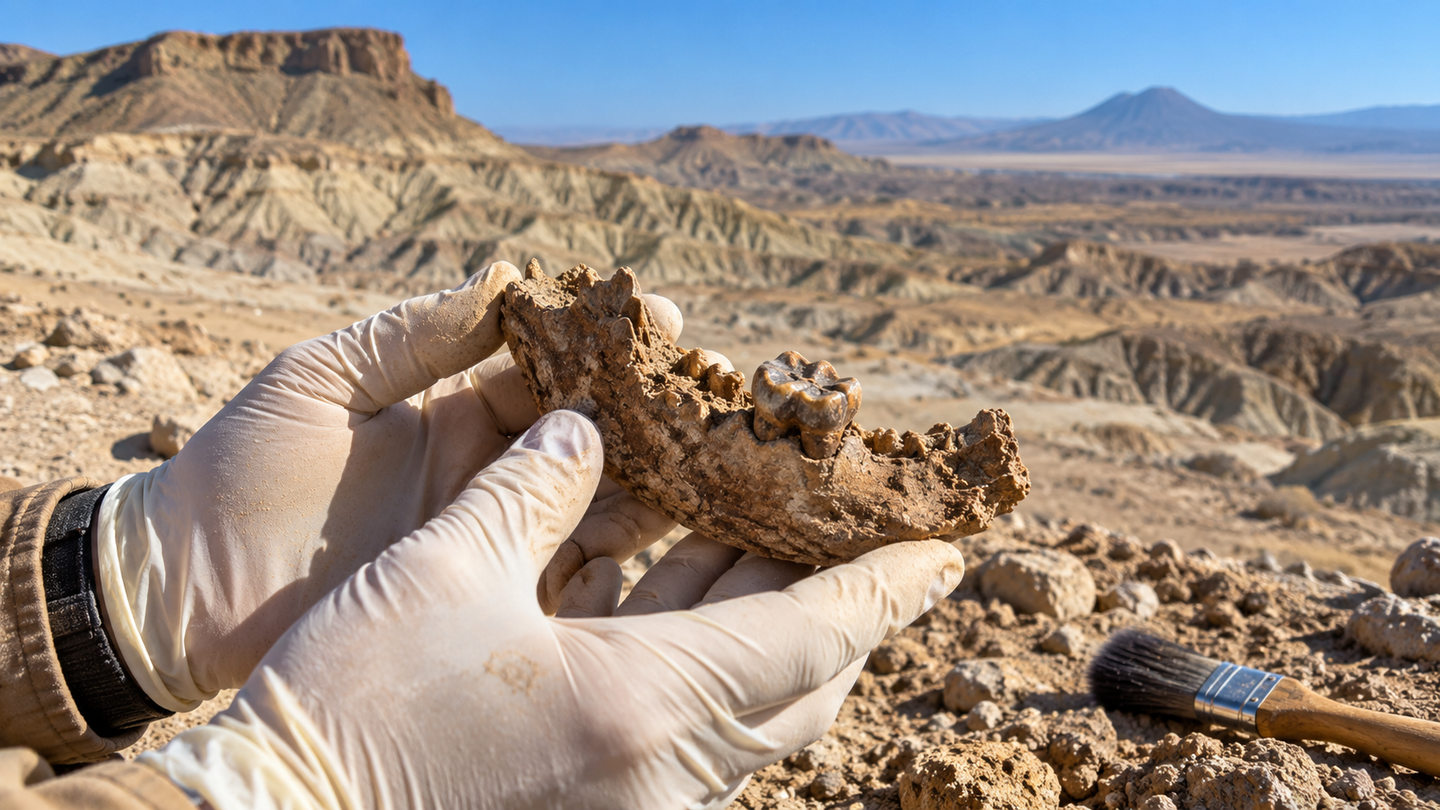
Ancient oceans started to suffocate 8 million years before the Triassic mass extinction
New geochemical evidence suggests end-Triassic oceans were losing oxygen millions of years before the mass extinction peaked.

 Edited By: Joseph Shavit

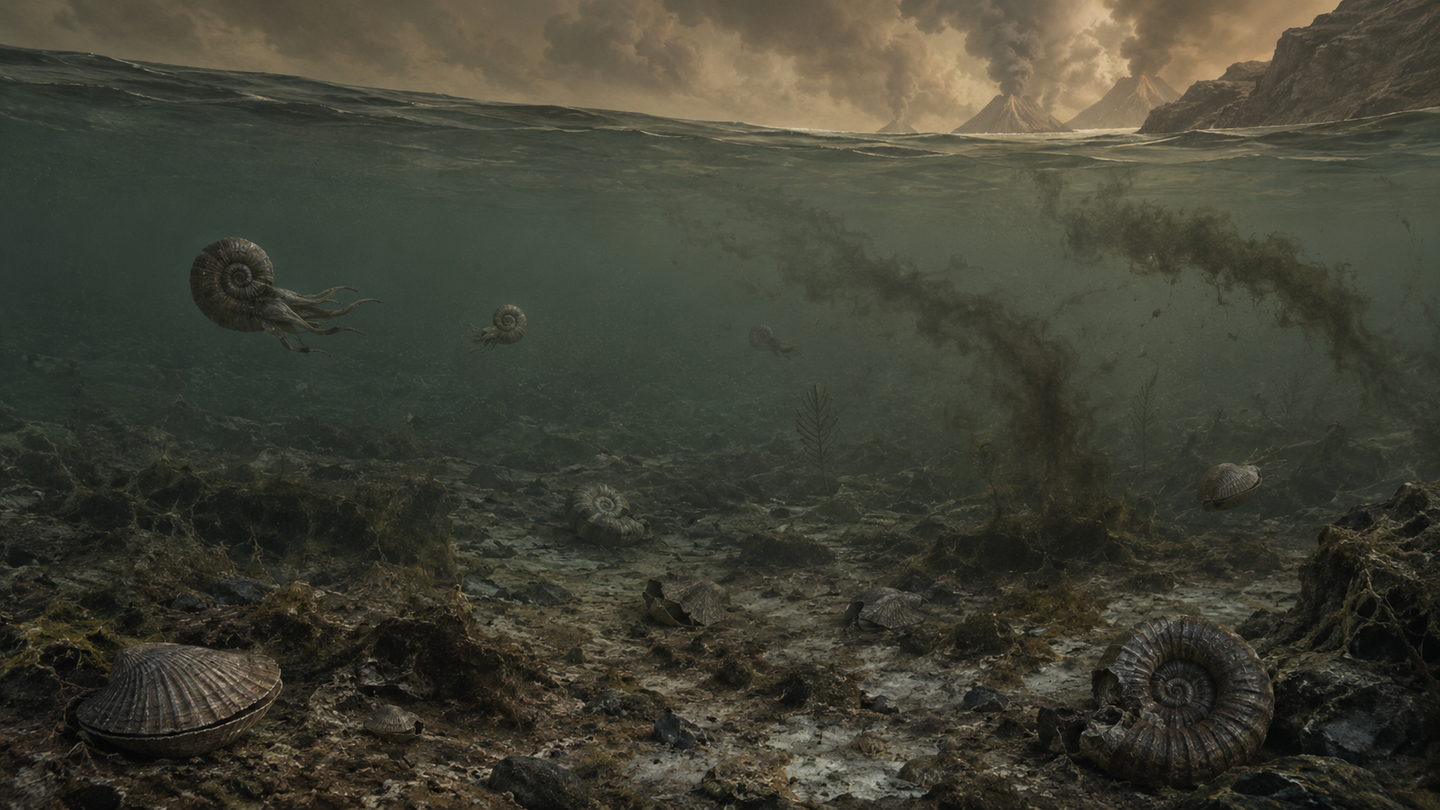
Alaska rock records show ocean deoxygenation began nearly 8 million years before the end-Triassic mass extinction. (CREDIT: AI-generated image / The Brighter Side of News)
The end-Triassic extinction is often overshadowed by the disaster that killed the dinosaurs, but on its own it ranks among the worst biological crises in Earth’s history. Around 201 million years ago, roughly 60 percent of marine invertebrate genera disappeared, along with many other forms of life on land and in the sea. Now, a new study suggests the oceans had been sliding toward trouble long before the main collapse arrived.
By tracing chemical signals preserved in ancient rocks from Alaska, geologists found that oxygen loss in marine waters began nearly 8 million years before the end-Triassic mass extinction itself. The finding shifts the timeline of environmental decline backward and raises a harder question: what started the damage so early?
The work, led by researchers at Virginia Tech and published in Nature Communications Earth & Environment, points to a drawn-out ocean crisis rather than a single sudden blow. In their reading of the rock record, marine ecosystems in part of the vast Panthalassic Ocean were already under stress well before the better-known volcanic catastrophe at the end of the Triassic.
“It’s a 200-million-year-old cold case,” said Kayla McCabe, first author of the study and a former geosciences graduate student at Virginia Tech.
For years, scientists have linked the end-Triassic extinction to huge volcanic eruptions from the Central Atlantic Magmatic Province, a sprawling burst of magmatism tied to the breakup of Pangaea. Those eruptions are thought to have driven global warming, ocean acidification, and deoxygenation, a dangerous combination for marine life.
In warmer oceans, oxygen becomes harder to hold in seawater. At the same time, climate shifts can speed up rock weathering on land, sending nutrients into the sea and fueling chemical changes that make conditions even harsher.
A longer slide into marine stress
The new study focuses on Grotto Creek in Wrangell-St. Elias National Park, a remote site in Alaska reachable only by small aircraft. There, the team examined layers of sedimentary rock laid down before, during, and after the extinction interval. Those layers preserve chemical clues about the state of the ocean at the time they formed.
The researchers used two main tools. One tracked nitrogen isotopes, which can reveal shifts in the marine nitrogen cycle and changes tied to oxygen-poor waters in the upper ocean. The other analyzed iron in the rocks, which helps show whether bottom waters were oxygen-rich or oxygen-starved.
Taken together, the evidence points to a long-term worsening of ocean conditions. In the late Norian, well before the extinction pulse, the upper water column appears to have begun losing oxygen as low-oxygen zones expanded. During the Rhaetian, conditions intensified. By the extinction interval itself, the deeper waters remained anoxic and the chemistry suggests more frequent euxinia, a particularly hostile state in which waters are not just oxygen-free but also rich in hydrogen sulfide.
“More acid and less oxygen is kind of like a one-two punch,” said geochemist Ben Gill. “It wouldn’t have been a very happy place to be.”
That phrase captures the broader picture. Earlier studies had already pointed to marine deoxygenation around the extinction, but much of that evidence came from a limited set of locations and from records tightly clustered around the main event. The Alaska section gave the team a longer view.
What they found was not a brief environmental stumble. It was an extended deterioration.
Clues from an ocean that no longer exists
The ocean in question was Panthalassa, the immense body of water that surrounded the supercontinent Pangaea. Grotto Creek sat in equatorial eastern Panthalassa during the Late Triassic and Early Jurassic, offering a window into a part of the marine world that has been less studied than the western Tethys.
That matters because local ocean geography can distort the picture. Some earlier redox records came from more restricted seaways, where shallow depths and limited circulation made it hard to tell whether the same conditions existed in the open ocean. The Alaska rocks widen that frame.
At Grotto Creek, the geochemical record suggests the upper ocean first shifted from nitrate-rich, more oxygenated conditions toward stronger denitrification, a sign that oxygen-poor waters were expanding upward. Later, during and after the extinction interval, the data indicate continued deoxygenation, nitrate drawdown, and persistent anoxic bottom waters, with a stronger signal of euxinia around the crisis itself.
The study also points to a brief improvement in the early Jurassic. In one higher interval of the section, the chemistry suggests a short-lived oxygenation event, possibly the first local sign of environmental recovery after the extinction.
That does not erase the scale of what came before it.
The authors place their findings alongside other records from northeastern Panthalassa, including sites in Canada, where nitrogen isotope shifts also suggest a regional expansion of oxygen minimum zones. Together, the evidence supports a multi-phase decline in marine oxygen levels that started before the end-Triassic extinction and deepened into it.
The mystery before the main disaster
One reason the new timeline stands out is that it appears to begin before the main phase of Central Atlantic Magmatic Province volcanism. The oldest CAMP deposits are younger than the Norian-Rhaetian boundary interval captured at Grotto Creek, where the early deoxygenation signal appears.
That means the volcanic trigger most commonly blamed for the end-Triassic extinction may not explain the first chapter of the crisis.
The study does not settle what did. It points instead to a live debate. One possibility is another volcanic province active earlier in the Late Triassic. The paper notes possible links to other igneous activity, including evidence from the Tethys Ocean and older volcanism associated with Alaska terranes, but the timing is still too uncertain to draw a firm line.
“There’s evidence of another volcanic province that roughly lines up with this time interval,” Gill said. “But we’re in the very beginning of trying to understand what happened.”
That uncertainty matters because the new results suggest marine ecosystems were not simply smashed by a single end-point catastrophe. They may have been weakened over millions of years by falling oxygen, changing nutrient cycles, and repeated environmental disruptions. By the time the best-known extinction phase arrived, some ocean systems may already have been living on the edge.
The pattern also lines up with broader signs of trouble across the Late Triassic. Other studies have found carbon-cycle disturbances near the Norian-Rhaetian boundary, as well as declines in marine biodiversity. The Grotto Creek record adds a possible mechanism: expanding oxygen-poor waters in the upper ocean and persistently hostile conditions below.
Practical implications of the research
This study sharpens the warning carried by ancient mass extinctions. Ocean crises do not always begin at the moment they become obvious in the fossil record. Environmental damage can build for millions of years before the final losses become unmistakable.
That matters now because modern oceans are also warming, acidifying, and losing oxygen. The new findings do not suggest today’s world is repeating the end-Triassic exactly, but they do show how warming can trigger linked changes in ocean chemistry that squeeze marine life from more than one direction at once.
The work also gives scientists a more detailed timeline for one of Earth’s major extinction events. By showing that deoxygenation began well before the final biological crash, it helps explain why the end-Triassic extinction may have been so severe and why finding its earliest trigger is now one of the next major questions.
Research findings are available online in the journal Nature Communications Earth & Environment.
The original story "Ancient oceans started to suffocate 8 million years before the Triassic mass extinction" is published in The Brighter Side of News.
Related Stories
- Earth’s core may hold 45 oceans worth of hydrogen, study finds
- Deep magma oceans generate magnetic fields to protect planets and support life
- Large parts of the world’s oceans are growing darker, study finds
Like these kind of feel good stories? Get The Brighter Side of News' newsletter.
Rebecca Shavit
Writer
Based in Los Angeles, Rebecca Shavit is a dedicated science and technology journalist who writes for The Brighter Side of News, an online publication committed to highlighting positive and transformative stories from around the world. Having published articles on MSN, AOL News, and Yahoo News, Rebecca's reporting spans a wide range of topics, from cutting-edge medical breakthroughs to historical discoveries and innovations. With a keen ability to translate complex concepts into engaging and accessible stories, she makes science and innovation relatable to a broad audience.