Artemis II isn’t the farthest human spaceflight, and it’s not even close
Artemis II went farther from Earth than any human mission, but that is not the same record as longest trip.

 Edited By: Joshua Shavit

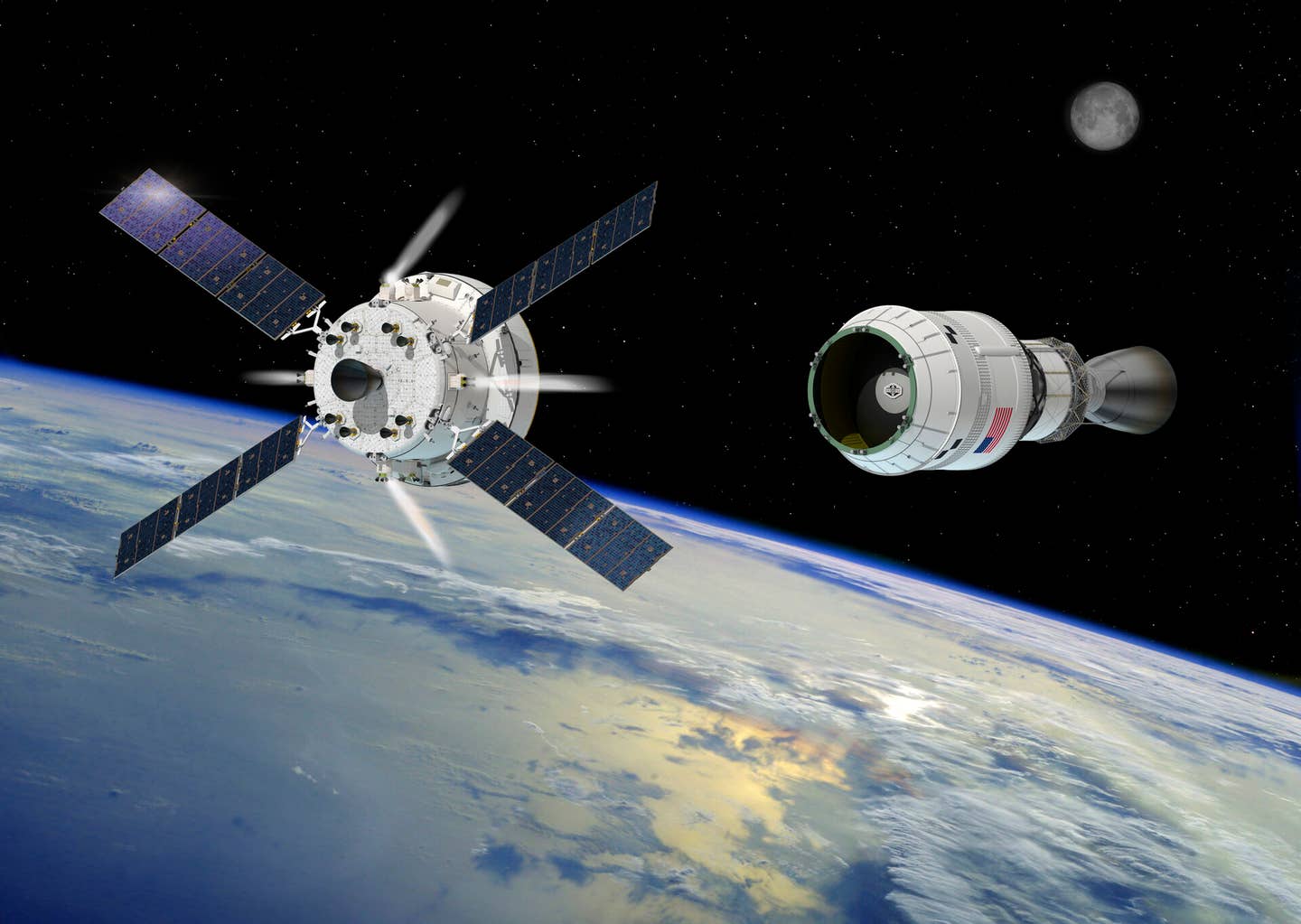
Artist impression of Artemis II: Orion and its European Service Module as they separate from the second stage of NASA’s Space Launch System rocket, the Interim Cryogenic Propulsion Stage (ICPS). (CREDIT: ESA-D. Ducros)
Artemis II, NASA’s first crewed mission of the Artemis era, sent four astronauts on a sweeping journey around the Moon before bringing them safely back to Earth. The mission carried the crew farther from Earth than any humans had traveled before, using a free-return trajectory that looped around the Moon and set up a fiery return through Earth’s atmosphere. It ended with Orion splashing down in the Pacific Ocean after nearly 11 days in space, closing out a mission designed to test the spacecraft, its life-support systems, and the agency’s readiness for future lunar expeditions.
According to NASA, the mission reached a maximum distance of 252,760 miles from Earth, passed within about 4,070 miles of the lunar surface, and covered 695,081 miles from launch to splashdown. By the measure of how far humans had ever gotten from home, Artemis II set a new record.
It is not, however, the farthest distance traveled by humans in space.
A simple everyday comparison helps. A former job might have been 20 miles from your house. A new one could sit only 10 miles away. But if the route to the closer job snakes through bad roads and detours, your odometer might still rack up 30 miles. The closer destination becomes the longer drive.
That is essentially what happened here.
One kind of distance, not every kind
Artemis II went farther outward than any earlier crewed mission. It headed toward the Moon, looped around it, and came back to Earth. So when NASA describes it as the farthest human spaceflight, the claim holds up, but in a very specific sense. Artemis II set the record for maximum distance from Earth, not for total miles traveled.
That distinction matters because another lunar mission still leads in NASA’s own mileage totals.
Apollo 17, the final crewed Moon landing mission, lasted 12 days, 13 hours, and 52 minutes, according to NASA’s mission page. It spent 75 hours on the lunar surface, completed 75 revolutions, and traveled 1,484,933.8 miles. Artemis II’s published total was 695,081 miles.
By NASA’s own figures, Apollo 17 covered a little more than twice as much ground.
The gap is striking, especially since Artemis II just set the record for getting farthest from Earth. The explanation is less mysterious than it first sounds. Artemis II flew by the Moon. Apollo 17 got there and did much more.
Where Apollo 17 built its lead
Once Apollo 17 reached the Moon, the mission did not simply swing around and head home. It entered lunar operations, circled the Moon again and again, landed, remained on the surface for more than three days, launched back into space, and then returned to Earth.
NASA’s public mission page does not break that 1.48 million-mile total into a detailed accounting. Still, it provides enough to explain why Apollo 17’s number climbs so much higher than Artemis II’s.
The biggest clue is the 75 revolutions.
A rough geometric estimate helps show the scale. A low orbit around the Moon runs a little more than 7,000 miles per lap. Over 75 revolutions, that alone adds up to more than 500,000 miles. Then come the descent to the surface, the ascent back to orbit, and the other local maneuvers near the Moon.
That estimate is not an official NASA breakdown. It is a back-of-the-envelope way to understand the mission profile. Even so, it points in the same direction as the published totals. Apollo 17 racked up its extra miles because it spent far longer operating in the Moon’s neighborhood.
Artemis II did not.
It went out, looped around, and came back.
A bigger frame changes the leaderboard
There is also another way to think about travel in space, though it is separate from NASA’s official mission-mileage totals.
NASA says Earth sits about 93 million miles from the Sun and takes 365.25 days to complete one orbit. That works out to roughly 1.61 million miles of travel per day around the Sun. By that measure, every crewed mission is also being carried through space by the motion of the Earth-Moon system.
Using that frame, Apollo 17’s 12.58-day mission corresponds to roughly 20.2 million miles of solar-orbit travel. Artemis II’s 10.98-day mission comes out to about 17.6 million miles.
Those are not NASA’s official mission-distance numbers. They are separate calculations based on NASA’s Earth-orbit facts and the length of each mission. They help clarify what NASA’s published totals are measuring, and what they are not.
Apollo 17’s official 1,484,933.8 miles and Artemis II’s official 695,081 miles make the most sense in the Earth-Moon flight frame. If solar motion were part of the official count, both totals would be dramatically larger.
That point cuts both ways. It means solar motion is real, but it does not explain why Apollo 17 beats Artemis II in NASA’s official numbers. That advantage still comes from what Apollo 17 did around the Moon.
The stations run away with it
Once the frame widens to include the Sun, lunar missions stop looking like the mileage champions.
Long-duration space stations take over almost immediately.
The reason is simple. If Earth moves about 1.6 million miles per day around the Sun, then any occupied station is also covering that distance day after day, week after week, year after year. On top of that, the station is circling Earth the whole time.
By this method, the International Space Station sits in a category of its own. NASA says the ISS has been continuously occupied since November 2, 2000 and travels around Earth at about 17,500 miles per hour. From November 2, 2000 to April 13, 2026, that uninterrupted human presence spans about 9,293 days. Earth’s motion around the Sun over that stretch adds up to about 14.86 billion miles. The station’s own orbit adds about 3.90 billion miles. Together, that comes to roughly 18.76 billion miles traveled while humans were aboard.
Mir also leaves the lunar missions far behind by the same method. NASA says human occupancy resumed in September 1989 and continued without interruption for 10 years, until August 1999. NASA also says Mir traveled at an average speed of 17,885 miles per hour. Over that inhabited stretch, Earth’s motion around the Sun accounts for about 5.84 billion miles, while Mir’s orbit adds another 1.57 billion. Combined, that comes to about 7.41 billion miles.
Even Skylab looks surprisingly strong once the calculation changes. NASA says its three crewed stays lasted 28 days, 59 days, and 84 days. NASA also says Skylab orbited at about 435 kilometers altitude and completed one orbit every 93 minutes. Using solar motion plus Skylab’s own movement around Earth, the three inhabited stays work out to about 56.3 million miles, 118.6 million miles, and 168.9 million miles.
These are estimate-based totals, not official NASA mileage tallies. They combine Earth’s orbit around the Sun with each station’s orbit around Earth, and they count only periods when humans were continuously aboard. That makes them useful for comparison, but not interchangeable with NASA’s official mission-distance figures.
Some readers may object that these space-station totals are not “real travel” because the station is not firing its engines across the solar system. It is mostly being carried along with Earth. But that does not make the distance any less real for the people aboard. A passenger still travels even when another vessel is doing the pulling.
If a cruise ship towed a dinghy from Catalina Island to Italy, the passenger in the dinghy would still have traveled to Italy. They also would have spent the entire trip exposed to wind, waves, spray, and every other hazard of the crossing. Spaceflight works the same way. A crew aboard a station locked to Earth orbit is still traveling through space, and still accumulating exposure over that distance.
Why this distinction matters
This is not just a debate about wording. The larger Sun-centered distances of long-duration missions point to something much more important: time spent exposed to danger. NASA has made clear that space radiation remains one of the central human risks of exploration, especially as missions grow longer and push farther from Earth.
Mechanical reliability matters just as much. Even on Artemis II, NASA had to deal with hardware issues, including problems with Orion’s toilet system, before the mission was over. On missions that last months or even years, the question is not only how far a crew travels, but how long the spacecraft, life-support systems, and other machinery can keep functioning while facing radiation, micrometeoroids, orbital debris, and ordinary wear.
Distance and duration are not competing ideas. For future exploration, they are part of the same equation.
Future Mars missions
NASA takes that equation seriously because Mars is the next scale of challenge. The agency has said that round-trip Mars missions could last up to three years, and NASA is already using Artemis, the International Space Station, and analog missions on Earth to understand the human and mechanical limits of deep-space flight. In that sense, the large station numbers are not just a curiosity. They represent years of learning how to keep people healthy, equipment working, and missions on track over very long stretches of time. That is exactly the kind of experience a Mars mission will depend on.
For that reason, the most useful station comparison is not the full history of the ISS, since that span included many different crews. A better benchmark is the longest single human stay aboard it. NASA says astronaut Frank Rubio spent 371 days on one ISS mission, the longest single spaceflight by a U.S. astronaut. Using NASA’s figures for Earth’s orbit around the Sun, that mission corresponds to about 593 million miles of solar travel while Rubio was aboard. That is the more relevant number here, because it tracks how far one person was carried through space during a single continuous mission.
To make that distance easier to picture, imagine taking half of those 593 million miles and turning them into a straight-line trip away from Earth. That would place the astronaut about 296.6 million miles from Earth, or roughly 3.2 times Earth’s distance from the Sun. In solar-system terms, that would carry you past Mars and into the asteroid belt, though still well short of Jupiter.
Why distance precision really matters
It helps to be precise about mission distance. The goal is not to diminish one record in favor of another. It is to show that each number captures something different and useful. Artemis II’s record tells you how far humans have gone from Earth. Apollo 17’s larger official mission mileage shows what a more complex lunar expedition can add. And long-duration station missions show how time, exposure, endurance, and machine reliability become just as important as raw distance for the much longer journeys still ahead.
So NASA’s framing and the broader physics view can both be true at once. Artemis II set the record for going farther from Earth than any human mission before it. Apollo 17 still logged more official mission miles and proved that astronauts could land on another world and return safely. And in the wider Sun-centered frame, the space stations show how enormous human travel through space can become when duration, exposure, and operational endurance are part of the story.
The original story "Artemis II isn’t the farthest human spaceflight, and it’s not even close" is published in The Brighter Side of News.
------ Updated on Apr. 15, 2026 ------
The story was updated to include reference to the upcoming Mars mission and how the Artemis II record, Apollo 17 mission and distance, and the long duration and large distance space station missions are proving our ability to get there.
Related Stories
- To the Moon and beyond: Artemis II and humanity's reach into space
- Chang’e-6 samples show ancient lunar impacts left rust on the Moon
- Why the U.S. hasn't returned to the Moon and what's next
Like these kind of feel good stories? Get The Brighter Side of News' newsletter.
Joseph Shavit
Writer, Editor-At-Large and Publisher
Joseph Shavit, based in Los Angeles, is a seasoned science journalist, editor and co-founder of The Brighter Side of News, where he transforms complex discoveries into clear, engaging stories for general readers. With vast experience at major media companies like The Los Angeles Times, Times Mirror and Tribune Publishing, he writes with both authority and curiosity. His writing focuses on space science, planetary science, quantum mechanics, geology. Known for linking breakthroughs to real-world markets, he highlights how research transitions into products and industries that shape daily life.