Chris Johnson’s ALS fight turns a football legend’s speed into a new kind of strength
Chris Johnson, once defined by speed, is now using his public voice to bring urgency and awareness to ALS.

 Edited By: Joseph Shavit

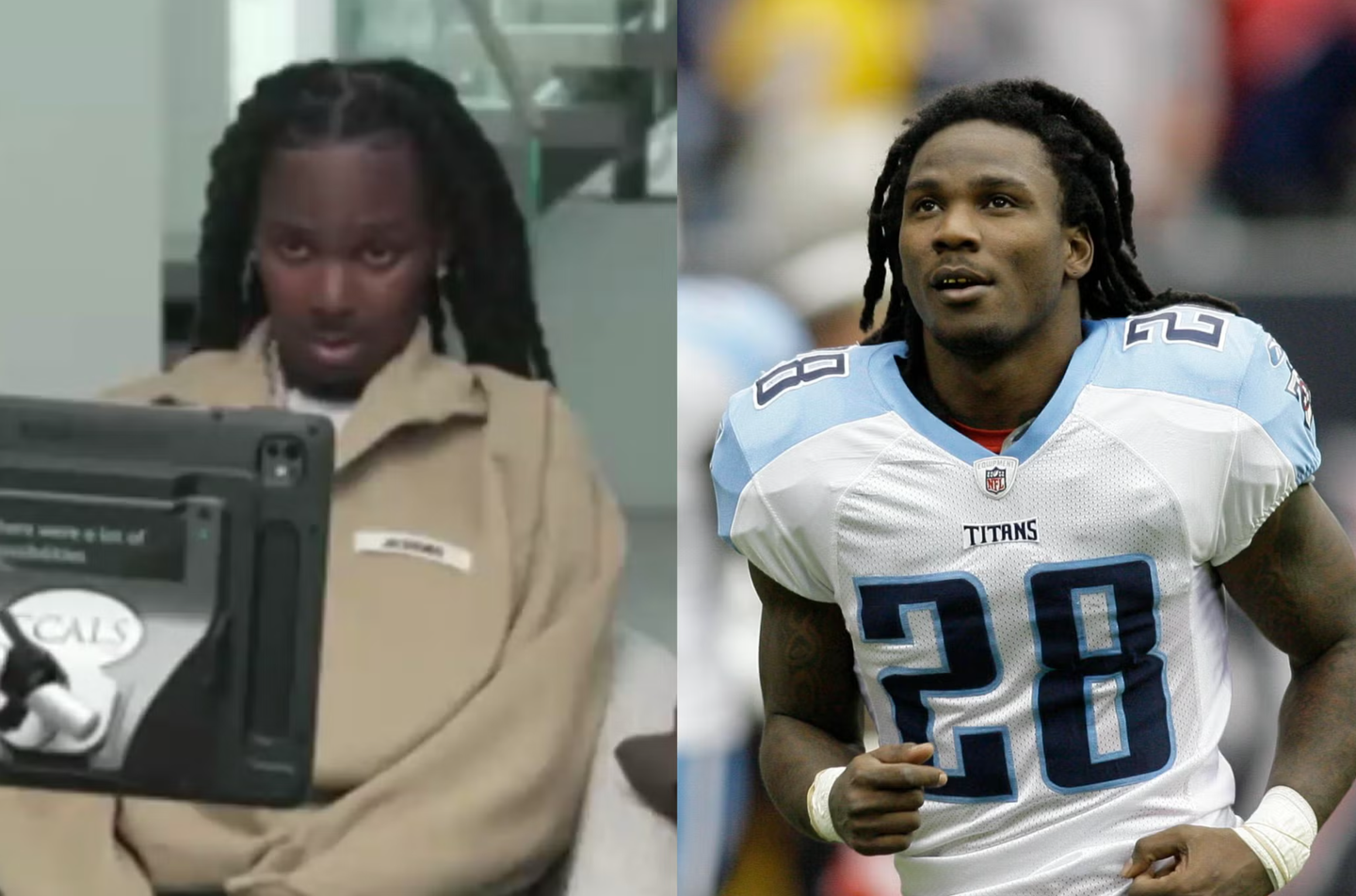
Tennessee Titans running back Chris Johnson then and now. (CREDIT: Brett Davis-USA TODAY Sports GMA / NFL: Tennessee Titans at Houston Texans)
Chris Johnson built his football life on speed. He was the back who could turn a small opening into a sprint, a routine handoff into a highlight, and one missed angle into a touchdown.
For years, that speed defined him. It carried him from Orlando to East Carolina, from a first-round NFL draft night to one of the most memorable seasons any running back has ever produced. It made him one of the rare players in NFL history to rush for more than 2,000 yards in a season.
Now, Johnson is facing a different kind of fight.
The former Tennessee Titans, New York Jets and Arizona Cardinals running back has revealed that he was diagnosed in 2025 with amyotrophic lateral sclerosis, or ALS, a progressive neurodegenerative disease that attacks nerve cells in the brain and spinal cord. The disease, also known as Lou Gehrig’s disease, gradually weakens muscles involved in movement, speech, swallowing and breathing.
Speaking in His Own Voice
Johnson shared the diagnosis publicly in an emotional interview on “Good Morning America,” speaking with co-anchor Michael Strahan, another former NFL star. Because ALS has affected his ability to speak, Johnson used a speech-generating device. The technology allowed him to communicate in his own voice, preserving something deeply personal at a time when the disease has taken control from parts of his body.
His message was direct, honest and defiant.
ALS has changed what his body can do, Johnson said, but it has not changed who he is.
That distinction sits at the heart of his story. Johnson is not only a former football star with a devastating diagnosis. He is a husband, a father, a competitor and now an advocate using the same visibility that once followed him down NFL sidelines to bring attention to a disease that still needs better treatments, faster diagnosis and more public understanding.
The First Signs
Johnson said his first symptoms began with weakness in his grip. At first, the signs did not point clearly to ALS. His wife, Brittany, thought the problem might have been connected to football, perhaps a pinched nerve or an old injury showing up years later. That kind of uncertainty is common in ALS, where early symptoms can be subtle, confusing and easy to mistake for something less serious.
After testing, doctors diagnosed Johnson with ALS. They believe his case is sporadic, meaning it developed without a known family history. That is the most common form of ALS, and it is one reason the disease can feel so shocking. It can appear in people who had no reason to expect it.
Johnson has described the diagnosis as something that is hard to fully process. First comes shock. Then comes the choice. Give up, or fight.
He chose to fight.
A Career Built on Rare Speed
For longtime football fans, that answer feels familiar. Johnson’s career was built on rare physical gifts, but also on resilience, discipline and confidence. He entered the NFL in 2008 as the 24th overall pick by the Tennessee Titans after a standout career at East Carolina. Before he ever became a household name, scouts already knew he had unusual speed. At the NFL Combine, Johnson ran the 40-yard dash in 4.24 seconds, one of the fastest times ever recorded at the event.
He proved quickly that his speed translated to the NFL. As a rookie, Johnson made the Pro Bowl. One year later, he delivered the season that turned him into a legend. In 2009, he rushed for 2,006 yards, won the NFL rushing title, earned Offensive Player of the Year honors and set a league record with 2,509 yards from scrimmage.
That season gave him the nickname “CJ2K,” but his career was more than one historic year. Johnson played 130 regular-season games, rushed for 9,651 yards and scored 55 rushing touchdowns. He added more than 2,200 receiving yards and finished as a three-time Pro Bowler and first-team All-Pro. At his best, he was one of the defining running backs of his era.
His ALS diagnosis has reminded fans that athletic greatness does not shield anyone from illness. ALS can affect people who once seemed physically unstoppable. It can turn ordinary tasks into daily challenges. Johnson said the disease has progressed faster than he ever imagined. He recalled being able, just over a year ago, to lift his young daughter so she could make a wish with her birthday cake. Today, he said, he could not do that.
Why His Story Matters
That image is painful. It is also why his decision to speak matters.
ALS remains a disease with no cure. Most treatments available today do not reverse the condition. Instead, they aim to slow decline, support function, extend survival, manage symptoms and preserve quality of life. That reality is sobering. But it is not the same as hopeless.
The treatment landscape for ALS is changing. Progress is uneven, and some promising drugs have disappointed in trials, but scientists now understand far more about the biology of ALS than they did a generation ago. The field has moved toward earlier diagnosis, better genetic testing, biomarkers that can track nerve damage, platform trials that test multiple drugs more efficiently, and assistive technologies that help people stay connected to family, work and community.
For someone like Johnson, hope may come from several places at once: FDA-approved therapies, clinical trials, multidisciplinary care, respiratory support, nutrition, physical therapy, speech technology and the emotional strength of family and community.
FDA-Approved ALS Treatments
One long-standing FDA-approved treatment is riluzole, which has been used for ALS for decades. It is not a cure, but it has been shown to modestly extend survival for some patients. Another therapy, edaravone, sold as Radicava, was approved by the FDA in intravenous form in 2017. In 2022, the FDA approved Radicava ORS, an oral suspension version that can be taken at home by mouth or through a feeding tube. Its approval was based on data showing comparable drug levels to the IV version, whose effectiveness had been shown in a six-month clinical trial where patients receiving edaravone declined less on a daily-function assessment than those receiving placebo.
That oral option matters because ALS care often becomes logistically demanding. A treatment that can be taken at home may reduce the burden on patients and families, especially as mobility becomes more difficult.
Another important development is Qalsody, the brand name for tofersen. The FDA approved Qalsody in 2023 for ALS associated with mutations in the SOD1 gene, a rare genetic form that accounts for a small percentage of ALS cases. Qalsody is an antisense oligonucleotide, a therapy designed to reduce production of the SOD1 protein. It is given by spinal injection and was approved through the FDA’s accelerated approval pathway based on reductions in neurofilament light, a blood-based biomarker of nerve injury and neurodegeneration.
Qalsody may not apply to Johnson if his doctors believe he has sporadic ALS without a SOD1 mutation. Still, its approval is a milestone for the entire ALS field. It shows that genetically targeted therapy is possible. It also encourages broader genetic testing and pushes researchers toward more personalized treatment strategies.
Setbacks and Scientific Momentum
The path has not been without setbacks. Relyvrio, an ALS drug approved in 2022, was voluntarily withdrawn from the U.S. and Canadian markets in 2024 after a larger Phase 3 trial failed to confirm benefit. For patients and families, disappointments like that can be crushing. But in science, negative results also sharpen the field. They help researchers redirect resources, improve trial design and avoid giving patients false hope.
That is why platform trials have become so important.
One of the most closely watched efforts is the HEALEY ALS Platform Trial, led by the Sean M. Healey & AMG Center for ALS at Massachusetts General Hospital in partnership with the Northeast ALS Consortium. Unlike traditional trials that usually test one drug at a time, platform trials can evaluate multiple investigational therapies using shared infrastructure. The goal is to move faster, lower costs and make participation easier for more patients.
The HEALEY trial has already tested several regimens and continues to add new investigational products. In 2026, researchers announced enrollment in a regimen evaluating NUZ-001, an oral therapy designed to target mechanisms linked to ALS, including TDP-43 protein aggregation and impaired autophagy. The Healey Center has also described newer trial concepts that use biomarkers to better match patients to experimental treatments.
A More Personalized Future
This is where the future of ALS care may become more hopeful: not one universal treatment, but a smarter system that recognizes ALS as a biologically diverse disease. Some patients may have genetic drivers. Others may show different inflammatory patterns, protein changes or progression markers. The more precisely doctors can understand each person’s disease, the better chance researchers have of finding a treatment that helps.
Johnson has said he is participating in a clinical trial as part of his treatment. That step matters. Clinical trials are not guarantees, and experimental therapies may not work. But every participant contributes to the knowledge that moves the field forward. For a public figure like Johnson, his participation can also encourage others to ask about trials, seek specialized ALS clinics and consider research opportunities early, when they may have more options.
ALS care is not only about drugs. Multidisciplinary ALS clinics can bring together neurologists, respiratory therapists, physical therapists, occupational therapists, nutritionists, speech-language pathologists, social workers and palliative care specialists. That kind of coordinated care can help people maintain independence longer, adapt their homes, protect breathing, manage swallowing issues, conserve energy and communicate as the disease progresses.
Assistive technology is especially powerful. Johnson’s use of a speech-generating device shows how modern tools can preserve identity and connection. Eye-tracking systems, voice banking and communication devices can help people with ALS continue to speak with loved ones, make decisions, tell stories and advocate for themselves even when muscles no longer cooperate.
Strength Beyond the Field
That is not a small thing. Communication is dignity. For Johnson, whose public life was once measured in yards and touchdowns, the ability to tell his story in his own voice is another form of strength.
The NFL community has already begun to respond. The Titans praised Johnson’s leadership, his impact in the locker room and his place in the franchise’s history. The Jets also sent support. Fans have returned to old highlights, remembering the way Johnson could erase angles and make elite defenders look slow.
His diagnosis also places him in a broader line of athletes who have lived with ALS, including former New Orleans Saints player Steve Gleason, whose advocacy has transformed public awareness around ALS technology and caregiving, and former Chicago Bears great Steve McMichael, who died from ALS complications after years of public courage. Their stories have shown how athletes can keep leading long after their playing days end.
There is ongoing debate and research over whether professional football and repeated head impacts may be associated with a higher risk of neurodegenerative diseases, including ALS. Some studies have suggested elevated risks among former professional players, but scientists continue to study the relationship and cannot say that football caused Johnson’s ALS. His doctors have described his case as sporadic. Still, his diagnosis will likely renew conversations about long-term player health, neurological monitoring and support for retired athletes.
A Legacy of Hope
The most important part of Johnson’s message, though, is not fear. It is awareness.
He wants people to understand how quickly ALS can change a body. He wants earlier diagnosis. He wants more research. He wants families facing the same disease to feel less alone.
That is where his story becomes bigger than football.
The original story "Chris Johnson’s ALS fight turns a football legend’s speed into a new kind of strength" is published in The Brighter Side of News.
Related Stories
- The long-term effects of repeated head trauma in football
- Scientists develop a light-based approach to protecting football players’ brains
- An early focus on a single sport may carry lasting injury risks for athletes
Like these kind of feel good stories? Get The Brighter Side of News' newsletter.