Earth may be home to 3x more insect species than scientists thought
A huge Costa Rica dataset suggests insect diversity may be far greater than scientists have long believed.

 Edited By: Joseph Shavit

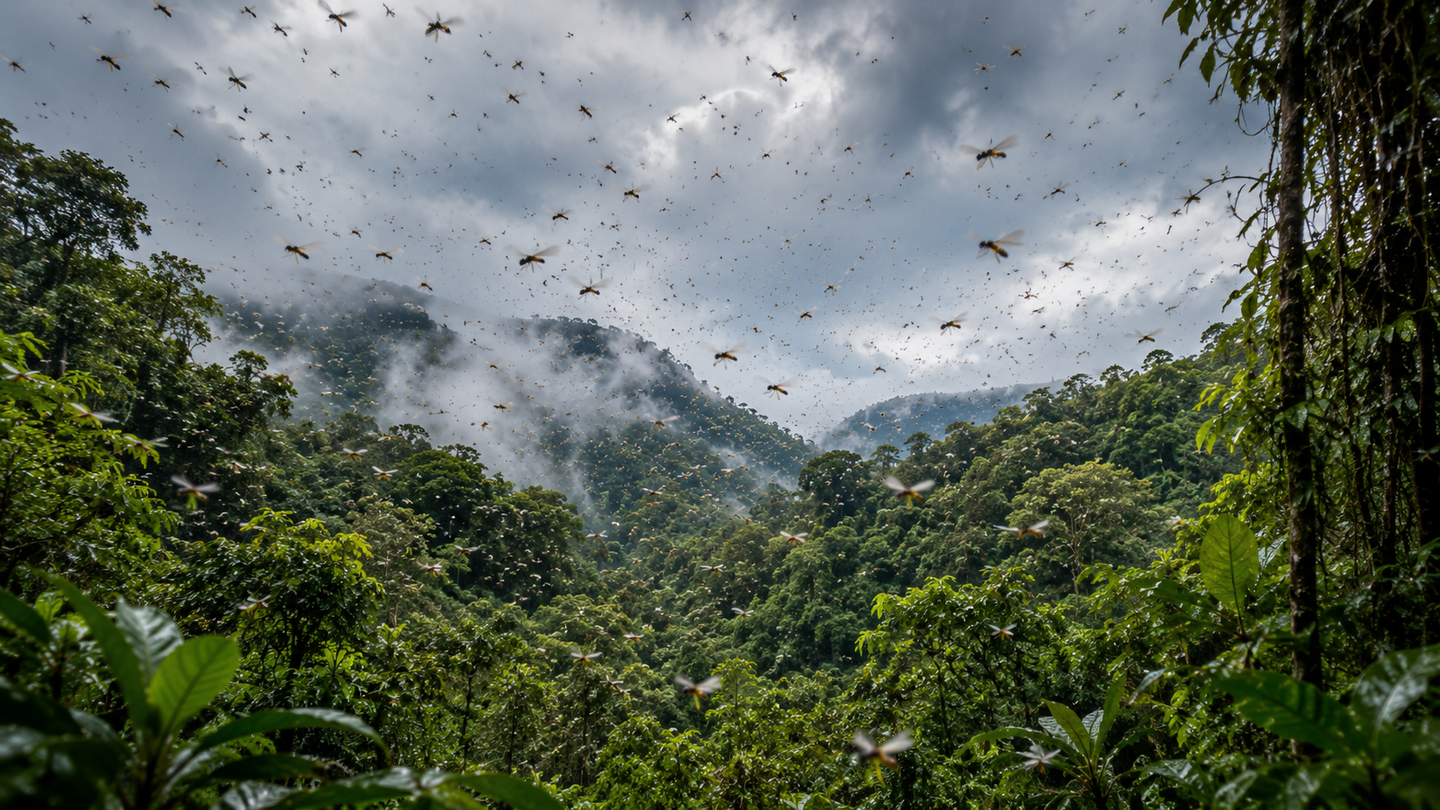
New research suggests Earth may hold 14 million to 20 million insect species, far above the long-accepted estimate of 6 million. (CREDIT: Wikimedia / CC BY-SA 4.0)
Insects may be even more dominant on Earth than scientists thought.
A new estimate suggests the planet could hold 14 million to 20 million insect species, far above the long-accepted figure of about 6 million. If that lower-bound range holds up, it would mean millions of insect species remain unknown to science. Meanwhile, concern grows over widespread insect declines.
Scientists have formally described about 1.2 million insect species so far. That leaves a staggering gap between what has been named and what may still be out there.
“We cannot protect species if we don’t know that they exist, and so to be able to understand the biodiversity on our planet, it’s important to know how many there are,” said Laura Melissa Guzman, assistant professor of entomology at Cornell University and the study’s corresponding author.
The new work, published in the Proceedings of the National Academy of Sciences, builds its estimate from an enormous sampling effort in Costa Rica’s Área de Conservación Guanacaste, or ACG. This region is a protected area covering 169,000 hectares in the country’s northwest.
A vast count from a small corner of the tropics
The foundation of the analysis was a remarkable dataset: 1,633,855 insect specimens collected in 15 Malaise traps, tent-like structures that intercept flying insects. Every specimen was DNA barcoded, allowing the team to sort them into Barcode Index Numbers, or BINs, used here as a proxy for species. Notably, those core traps alone produced 53,945 insect species.
That total, the researchers argued, still missed many species present in the region.
To estimate how much was being missed, the team turned to a hyperdiverse group of tiny parasitoid wasps called Microgastrinae. These wasps lay eggs inside caterpillars. The larvae then develop by feeding within the host before emerging.
Researchers sampled Microgastrinae three ways: from the 15 core Malaise traps, from 15 additional peripheral traps spread across the landscape, and by collecting caterpillars and identifying the wasps that later emerged from them. Together, those efforts yielded 1,414 observed Microgastrinae species.
But nearly a third of those species were represented by a single specimen, a sign that many more likely remained undetected. Using Chao’s “one-step” sample coverage richness estimator, the team calculated a lower-bound estimate of 2,394 Microgastrinae species in ACG. The 95% confidence interval was 2,221 to 2,604.
That comparison revealed how incomplete the core trap sample still was. The core traps had detected 388 Microgastrinae species, just a fraction of the estimated true richness for that wasp group in the area.
Turning local undersampling into a global estimate
The team used that gap as a benchmark.
If the same level of undersampling applied broadly to insects in the core trap sample, then the observed 53,945 insect species in ACG could be adjusted upward to an estimated 333,000 species for the region.
From there, the researchers scaled that local estimate to the world.
Their preferred approach used trees as a reference group. The logic was that if scientists have a reasonable estimate of tree richness in ACG and on Earth as a whole, they can use that ratio as an upscaling factor for insects. ACG is estimated to contain about 1,200 to 1,500 tree species. Global tree richness estimates used in the study ranged from about 60,000 described species to more than 89,000, depending on the source and method.
Tree-based pathway
Using the more conservative tree-based pathway, the authors settled on a representative estimate of 20.3 million insect species globally. When they used a narrower set of reference groups with smaller median range sizes, trees, amphibians, mammals, and saturniid moths, the resulting estimates ranged from 14.2 million to 20.3 million. The mean was 17.3 million.
That is still close to triple the long-standing consensus.
The paper argues that this larger figure is more likely to be an underestimate than an overestimate. The authors point to several reasons. Malaise traps are strong tools for some insects, especially flies and parasitoid wasps, but they underrepresent other groups. The sampling also did not directly target the forest canopy, where many tropical species live. And the rearing program did not include all possible caterpillar niches, such as leaf miners and stem borers.
Why insects are so hard to count
Part of the difficulty is biological. Insects are small, often highly localized, and able to exploit different habitats across their life cycles. A caterpillar and the butterfly or moth it becomes can use very different food sources and environments. That helps drive diversity, but it also makes complete inventories difficult.
Another challenge is taxonomic scale. New bird species are rare enough that each one tends to draw attention. Tiny tropical insects are another story. Many are found in small numbers, many still lack formal names, and the more scientists sample, the more new forms appear.
DNA barcoding has changed that search by giving researchers a faster way to flag putative species in huge collections. The study relies on those barcode clusters rather than full traditional descriptions, a practical move when dealing with millions of specimens. The authors acknowledge that BINs are only an approximation of species, but they argue that the method is accurate enough for large-scale richness estimates. In fact, it may even slightly underestimate true totals in some insect groups.
The findings also reopen an old debate about which insects dominate global diversity. Beetles have long held the title in popular and scientific imagination. But this study leans on the extraordinary richness of parasitoid wasps, and it cites other barcode-based work showing immense undescribed diversity in tiny flies as well.
A biodiversity crisis with unnamed species
The timing makes the estimate more than a taxonomic curiosity.
Recent reports of severe insect declines have fueled fears of an “insect apocalypse,” driven by habitat change, climate change, and pesticide use. If Earth holds many more insect species than previously thought, that means the number of species at risk may also be much larger. This may include species that have never been named.
“Our results point to a large number of undescribed insects, those without a name,” Guzman said. “With recent reports of insect declines, there could be many species that are declining that we haven’t even discovered.”
That possibility sharpens the paper’s central message. The insect world may be far richer than science has recognized, and much of that richness may be disappearing before it ever comes fully into view.
Practical implications of the research
A much larger global insect count would change how biodiversity is measured, monitored, and prioritized. It suggests that conservation planning may be working from an incomplete picture. This is especially an issue in tropical regions where many species remain undescribed.
The study also highlights the value of long-term sampling, DNA barcoding, and intensive local inventories for tracking insect populations over time.
If many species are still unknown, then insect declines could be erasing parts of biodiversity before they are even documented. This makes baseline data and continued field collection more important.
Research findings are available online in the journal PNAS.
The original story "Earth may be home to 3x more insect species than scientists thought" is published in The Brighter Side of News.
Related Stories
- Why don't giant prehistoric insects still exist?
- Scientists reveal the staggering number of insects flying in the sky above the US
- Scientists rethink animal consciousness: Reptiles, fish, and insects may be sentient
Like these kind of feel good stories? Get The Brighter Side of News' newsletter.
Hannah Shavit-Weiner
Medical & Health Writer
Hannah Shavit-Weiner is a Los Angeles–based medical and health journalist for The Brighter Side of News, an online publication focused on uplifting, transformative stories from around the globe. Having published articles on AOL.com, MSN and Yahoo News, Hannah covers a broad spectrum of topics—from medical breakthroughs and health information to animal science. With a talent for making complex science clear and compelling, she connects readers to the advancements shaping a brighter, more hopeful future.