Inside the Dodo’s skull, scientists found a bird unlike any living pigeon
New CT scans of rare dodo skulls reveal how the extinct bird sensed its world and challenge myths about its intelligence.
 University of Copenhagen Writer: Robin Crisp

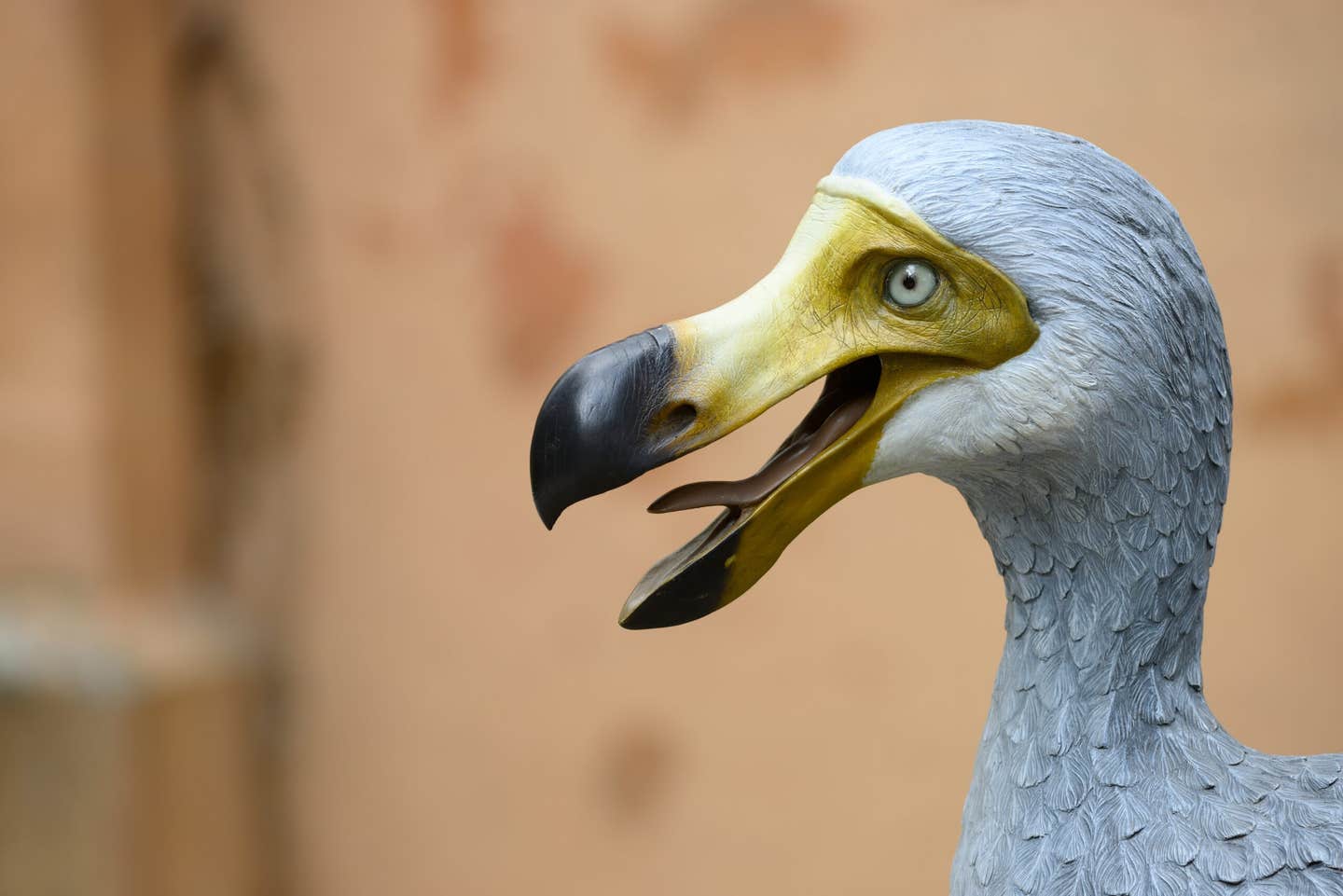
Scientists have used rare skull scans to uncover how the dodo saw, smelled, and interacted with its environment before extinction. (CREDIT: Shutterstock)
- CT scans and digital endocasts of rare dodo skulls suggest the extinct bird had a brain broadly comparable in relative size to living pigeons, challenging its centuries-old reputation as unusually simple.
- The dodo combined relatively large eye sockets with unusually small optic lobes, while evidence from its olfactory, beak-sensory and auditory anatomy suggests it may have relied on several senses rather than detailed vision alone.
- Researchers caution that skull anatomy cannot reconstruct behavior with certainty, but comparisons with 36 living pigeon and dove species provide new clues to how the dodo experienced its Mauritian environment.
A bird that vanished more than 300 years ago is offering new clues about how it once lived. Researchers have taken a rare look inside one of the only complete dodo skulls in the world, revealing details about how this famous species may have sensed and moved through its island home.
The work, led by an international team and involving scientists at the University of Lethbridge, draws on specimens housed at the Natural History Museum Denmark and the Oxford University Museum of Natural History. By scanning these skulls and reconstructing the space once occupied by the brain, the team has begun to answer a long-standing question. How did the dodo experience its world before it disappeared?
Looking Inside A Lost Species
Only two complete dodo skulls are known to exist. One has been preserved in Copenhagen for centuries. Researchers recently examined it using high-resolution CT scanning, producing a detailed three-dimensional model without damaging the specimen.
The scan revealed the internal cavity of the skull, where the brain once sat. Because the brain leaves subtle impressions on bone, scientists can use these shapes to infer how different senses were developed.
“Studying extinct animals is a bit like detective work,” said Christy Anna Hipsley of the Natural History Museum Denmark. “Although the dodo’s brain disappeared centuries ago, it left an imprint on the inside of the skull. By digitally reconstructing those spaces and comparing them with the brains of living birds, we can begin to piece together how the dodo sensed, behaved and interacted with the world around it.”
The team compared these digital models with those of pigeons and doves, the dodo’s closest living relatives. The results show a bird that was more complex than its long-standing reputation suggests.
Not The “Simple” Bird Of Myth
For generations, the dodo has been portrayed as slow and unintelligent. Early accounts described it as unafraid of humans, which likely contributed to its rapid extinction.
The new findings do not support that view. The reconstructed brain suggests that the dodo had cognitive abilities similar to those of modern pigeons. Key brain regions linked to learning and behavior were not reduced.
“The dodo is one of the world’s most recognisable extinct animals, yet surprisingly little is known about how it actually lived,” said Peter Andrew Hosner of the Natural History Museum Denmark. “Having access to one of only two complete dodo skulls has given us a unique opportunity to compare the dodo with its closest living relatives and gain new insights into how it experienced and interacted with its environment.”
Rather than being inherently limited, the bird appears to have been well adapted to its environment. Its behavior likely reflected life on an island with few natural predators.
A Different Way Of Seeing
The study revealed unusual features in the dodo’s visual system. While its eye sockets were relatively large, suggesting decent light sensitivity, the brain regions responsible for processing visual information were smaller than expected.
This combination suggests that the bird may not have relied heavily on detailed vision. Instead, it may have used a broader, less detailed view of its surroundings.
Such patterns appear in animals that are active in low-light conditions. Based on these findings, researchers believe the dodo may have been active during dawn and dusk, rather than only during the day.
This type of behavior, known as crepuscular activity, could have helped the bird avoid heat and compete for resources more effectively.
A Nose That May Have Led The Way
Another striking feature involves the sense of smell. The dodo’s olfactory regions appear larger than those of many related birds, though results vary between specimens.
If confirmed, this suggests the bird may have relied more on scent than its relatives. This ability could have helped it locate food in dense vegetation or detect changes in its environment.
On an island like Mauritius, where food availability can shift with seasons, a strong sense of smell may have offered a clear advantage.
Feeling The World Through Its Beak
The dodo’s large, curved beak has long been one of its most recognizable features. The new study suggests it may have served more than a feeding function.
Nerve pathways connected to the upper beak show signs of increased development. This indicates that the bird may have used its beak to gather sensory information, much like some modern birds do when probing for food.
This tactile ability would have helped the dodo explore its surroundings more effectively, especially in environments where vision played a lesser role.
Hearing In Lower Tones
The research also points to differences in hearing. Structures in the inner ear suggest that the dodo may have been sensitive to lower-frequency sounds.
Lower tones travel farther through dense environments. This could have helped the bird communicate over longer distances or detect environmental cues that higher-frequency hearing might miss.
While exact hearing abilities remain uncertain, the evidence suggests a sensory world shaped by more than sight alone.
A Bird Shaped By Its Island
Taken together, these features paint a picture of a bird adapted to a unique environment. The dodo lived on Mauritius, an island with no large predators before human arrival.
In such conditions, survival depended less on speed or fear and more on efficient foraging and environmental awareness. The bird’s sensory traits reflect this balance.
Its possible reliance on smell, touch, and low-light activity suggests a flexible lifestyle. It may have searched for food during cooler hours and used multiple senses to navigate its surroundings.
“The dodo’s skull is unlike that of any living bird, which makes it both fascinating and difficult to interpret,” Hipsley said. “By comparing digital reconstructions of the world’s only two complete dodo skulls, we now have a much stronger foundation for identifying which features are truly characteristic of the species and what they can tell us about how the dodo lived.”
Solving A Long-Standing Puzzle
For centuries, scientists have debated how the dodo behaved and how it found food. Without living examples, much of this discussion relied on speculation.
The new study does not answer every question. Anatomy alone cannot fully explain behavior. However, it narrows the gap between guesswork and evidence.
By combining data from multiple skulls, including both complete specimens, the researchers have created a more reliable framework for understanding the species.
“The dodo has become a symbol of extinction, but in many ways it remains surprisingly mysterious,” Hosner said. “Every new piece of evidence helps us move beyond myths and build a more accurate picture of how this extraordinary bird lived before it disappeared.”
Practical Implications Of The Research
This research goes beyond understanding a single extinct species. It shows how modern imaging tools can reveal the hidden lives of animals that disappeared long ago. By studying brain structures and sensory systems, scientists can better understand how species adapt to their environments.
These methods can also be applied to other extinct animals. This could help researchers reconstruct ecosystems from the past and understand how species responded to environmental changes.
The findings also highlight the importance of museum collections. Specimens preserved for centuries can still provide new insights when studied with modern technology. This reinforces the value of maintaining and expanding these collections.
On a broader level, the work offers lessons for conservation. Understanding how species adapt to specific environments can inform efforts to protect those that remain. It reminds us that each species carries unique evolutionary history, shaped over millions of years.
Dig deeper into the dodo and its lost world
These studies provide additional evidence about dodo neuroanatomy, life history, ecology and the Mauritian ecosystem it inhabited before extinction.
The first endocast of the extinct dodo (Raphus cucullatus) and an anatomical comparison amongst close relatives (Aves, Columbiformes): The first detailed CT-based reconstruction of the dodo’s endocranial anatomy found an endocranial volume comparable with other pigeons and highlighted enlarged olfactory bulbs. (Zoological Journal of the Linnean Society, 2016)
Bone histology sheds new light on the ecology of the dodo (Raphus cucullatus, Aves, Columbiformes): Microscopic analysis of dodo bones provided evidence about breeding, rapid juvenile growth and seasonal molting, offering an independent window into the bird’s life cycle. (Scientific Reports, 2017)
A review of the dodo and its ecosystem: insights from a vertebrate concentration Lagerstätte in Mauritius: An interdisciplinary analysis of the Mare aux Songes deposits reconstructed the ecosystem in which dodos and other native Mauritian animals lived. (Journal of Vertebrate Paleontology, 2015)
Research findings are available online in the Zoological Journal of the Linnean Society.
The original story "Inside the Dodo's skull, scientists found a bird unlike any living pigeon" is published in The Brighter Side of News.
Related Stories
- Incredible bonebed discovery finds large dinosaur fossils nearly stacked on top of each other
- CT scans reveal a new species of baby dinosaur hidden in rock for 100 million years
- Fossil skull discovery reveals when land animals first learned to eat plants
Like these kind of feel good stories? Get The Brighter Side of News' newsletter.
Joshua Shavit
Writer and Editor
Joshua Shavit is a NorCal-based science and technology writer with a passion for exploring the breakthroughs shaping the future. As a co-founder of The Brighter Side of News, he focuses on positive and transformative advancements in technology, physics, engineering, robotics, and astronomy. Having published articles on AOL.com, MSN, Yahoo News, and Ground News, Joshua's work highlights the innovators behind the ideas, bringing readers closer to the people driving progress.