Scientists turn hard-to-recycle PVC plastic into high-performance engine oil
Virginia Tech researchers developed a process that turns hard-to-recycle PVC waste into valuable lubricant ingredients.
 Virginia Tech Writer: Margaret Ashburn

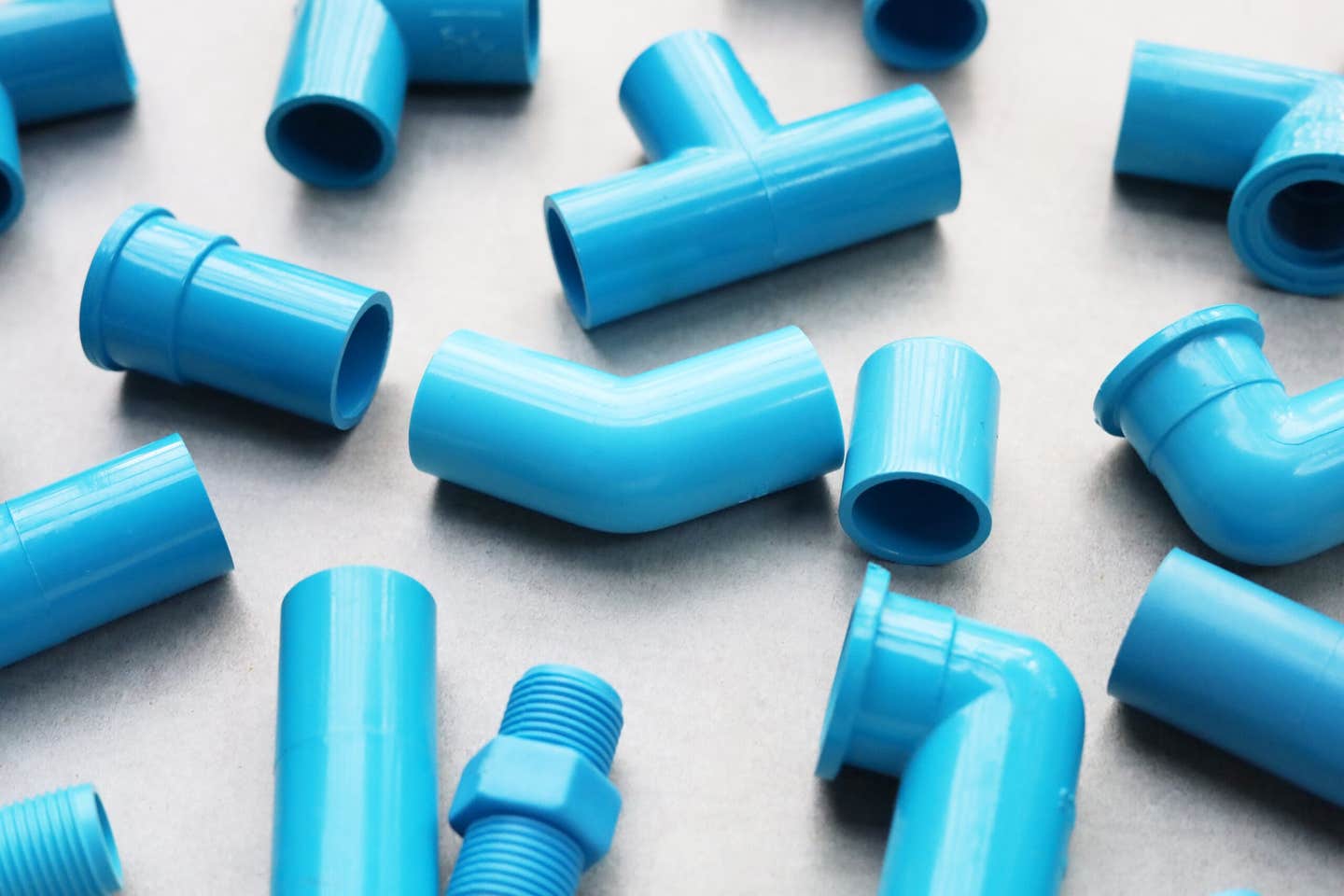
A new Virginia Tech study shows how PVC waste can be transformed into high-performance synthetic oil for lubricants. (CREDIT: Shutterstock)
- Virginia Tech researchers developed a mild chemical process that converts difficult-to-recycle PVC waste into polyalphaolefin, a high-performance synthetic lubricant base oil.
- The method removes more than 99.98% of chlorine under key conditions and produced lubricants with viscosities, friction performance and wear resistance comparable with commercial PAO products.
- The researchers also processed real-world PVC waste from pipes, cards, gloves and toys, while an economic model suggested a 50,000-tonne-per-year plant could potentially generate a 22.8% internal rate of return.
A plastic pipe, an old credit card or a worn-out toy may seem destined for a landfill. New research from Virginia Tech suggests some of that stubborn waste could instead become engine oil.
Chemist and chemical engineer Guoliang “Greg” Liu and his lab have developed a process that converts polyvinyl chloride, or PVC, into polyalphaolefin, a key ingredient in high-performance lubricants. The work offers a possible way to tackle one of the hardest plastics to recycle while creating a valuable industrial product.
PVC appears in plumbing, window frames, cards, gloves, toys and many household goods. It is useful because it is strong, cheap and long-lasting. Those same traits make it a major waste problem when its useful life ends.
A Tough Plastic With A Big Problem
PVC is among the most difficult common plastics to recycle. It contains chlorine, which makes up about 57% of its weight. During recycling, that chlorine can form corrosive compounds that damage equipment.
The plastic also often contains additives. Manufacturers use plasticizers, stabilizers, fillers and flame retardants to change how PVC performs. These mixtures make waste PVC harder to process into new products.
As a result, much of it ends up in landfills. There, discarded PVC can contribute to pollution risks over time. Used material may release chlorinated compounds or additives into soil and groundwater.
Liu’s team wanted to change that equation. Instead of turning PVC back into low-value plastic, they aimed for a high-value product.
“We want to help improve the recycling and upcycling of PVC,” Liu said.
Turning Waste Into Lubricant
Lubricants may not get much attention, but they help keep modern life moving. Engine oil is used in lawn mowers, passenger cars, industrial machines and jet engines.
These oils reduce friction, limit wear and help machines run smoothly. Producing them can carry environmental costs, and demand remains strong across many industries.
The Virginia Tech process turns PVC into polyalphaolefin, also called PAO. PAO is a synthetic base oil used in high-performance lubricants.
The team places PVC in a solvent, then adds aluminum trichloride and alpha-olefins. The mixture is heated to 158 degrees Fahrenheit for three hours. After processing, the researchers extract a thick oil from the solvent.
“Number one, we have proved that it is feasible to use plastic waste to make high-performance lubricants. Number two, these lubricants are green, and they can meet the emerging needs for sustainability by the market,” Liu said.
A Simple Idea That Took Work
The idea grew from earlier work in Liu’s lab. His team had already studied ways to convert other plastic waste into surfactants, which are used in soaps and detergents.
After that success, the group turned its attention to PVC. At first, the plan seemed straightforward.
“The idea was simple. PVC, as one of the most activated forms of polyethylene, ought to be easily converted into some other molecules by replacing the chlorine atoms with other groups,” Liu said.
But the early products disappointed the team. The material came out soft, sticky and not useful enough. It did not perform like the high-value product they wanted.
Then Liu reconsidered the problem. If the polymer was too gooey, maybe the team should break it down further.
“One day I realized — if this polymer is so gooey and so soft, why don’t I just keep breaking the polymer chains down to smaller segments?” said Liu.
The Three Musketeers In The Lab
To push the work forward, Liu assembled a group of graduate researchers. He called them “the three musketeers.”
Eric Munyaneza Nuwayo, a doctoral student in the final year of his program, led the effort. Connor S. Thompson, a graduate student in chemistry, shifted from another project to join the challenge.
Abby Civiello, a first-year graduate student, also made important contributions. Together, the team tested reaction conditions, studied the products and refined the process.
Their work showed that PVC could be converted through a set of chemical steps. The chlorine is removed, new hydrocarbon chains attach and the long PVC backbone breaks into oil-sized pieces.
That combination produced vinyl-derived PAO lubricants. These oils could be tuned by changing reaction conditions.
Testing Performance And Structure
The team found that the final lubricant’s properties depended on the ingredients and conditions. Different alpha-olefins produced oils with different branching, flow and friction behavior.
In the study’s detailed tests, some products showed strong lubricant performance. Their kinematic viscosities at 100 degrees Celsius ranged from about 14.9 to 26.3 centistokes. Their coefficient of friction ranged from about 0.08 to 0.15.
One waste-derived lubricant, made with 1-decene in hexanes, showed especially promising results. It reached a viscosity index of 130, a useful measure of stable performance across temperatures.
The oil also showed a low coefficient of friction of about 0.08 at 25 degrees Celsius. In wear tests, it performed strongly compared with commercial PAO samples.
Real Waste, Not Just Lab Plastic
The researchers did not limit their work to clean PVC powder. They also tested mixed waste from pipes, cards, gloves and toy frogs.
Real PVC waste is messy. It contains fillers, metals, plasticizers and other additives. These materials can interfere with chemical reactions.
To handle that, the team cleaned the waste before processing. They dissolved it, filtered out insoluble material and removed salts and organic additives.
After that preparation, the mixed waste could become lubricant. Tests found that chlorine levels in some final oils were extremely low, with more than 99.98% dechlorination efficiency under key conditions.
This matters because real-world recycling rarely deals with pure plastic. A process that works on mixed waste has greater practical promise.
Why Hexanes Helped
The study found that solvent choice strongly affected performance. Hexanes produced the best lubricant yield among the tested solvents, about 89.5%.
Hexanes helped because it avoided unwanted side reactions. It has no carbon-chlorine bonds and is not aromatic. That made it less likely to compete with PVC during the reaction.
Using hexanes also allowed researchers to lower the amount of aluminum trichloride needed. That improved efficiency and produced oils with less unwanted branching.
Less excessive branching can help molecules pack better on sliding surfaces. That may explain why some waste-derived oils showed low wear in testing.
A Possible Business Case
The study also looked at whether the method could make financial sense. Researchers modeled a system producing 50,000 tonnes of lubricant each year.
They estimated total capital investment at $84 million. Annual revenue could reach $160 million, with annual variable production costs of $136 million.
The projected net annual profit was $19.6 million. The model showed an internal rate of return of 22.8% and a payback period of 4.26 years.
Those numbers suggest the process could attract interest because it creates a high-value product. PVC waste is difficult to recycle, but PAO lubricants can sell for much more than many recycled plastics.
A Step Toward Sustainable Oils
Liu also worked with outside collaborators to understand the product. He sent oil samples to Ali Erdemir at Texas A&M University for materials testing.
He collaborated with William Goddard from Caltech on chemical computations. Virginia Tech colleague Xi Chen helped study economic and production questions.
The next goal is to make the lubricant even more sustainable and accessible. That includes improving production at larger scales and exploring cleaner raw materials.
“Lubricants are the silent hero out there. We often don’t recognize they exist, but they are out there working quietly. We want to be able to produce the oil on a larger scale to reach more people in the world,” Liu said.
Practical Implications Of The Research
This research could help reduce PVC waste by giving it a more valuable second life. Instead of sending hard-to-recycle plastic to landfills, companies may one day convert it into useful lubricant ingredients.
The findings could also support cleaner industrial supply chains. Lubricants are essential for transportation, manufacturing and machinery. Making some of their ingredients from waste plastic could reduce reliance on traditional production routes.
The work may also encourage more investment in plastic upcycling. Recycling often struggles when the final product has low value. Turning PVC into high-performance synthetic oil could make recovery more economically attractive.
For humanity, the broader benefit lies in redesigning waste as a resource. A plastic once viewed as nearly impossible to recycle could become part of a circular materials system. That would help cut pollution while producing materials society still needs.
Dig deeper into PVC recycling and upcycling
These resources examine the chemical, environmental and economic challenges involved in turning chlorine-rich PVC waste into useful materials.
Degradation and utilization of polyvinyl chloride (PVC): Challenges and opportunities toward a circular economy: Surveys PVC deconstruction, reconstruction and co-processing technologies while examining their potential role in a more circular plastics economy. (Green Energy & Environment, 2026)
Techno-Economic and Life Cycle Assessment of Chemical Recycling and Upcycling of Mixed Plastics Waste Containing Poly-vinyl-chloride: Compares eight PVC-containing waste conversion routes and evaluates their economics and environmental performance, including pathways that produce lubricant oils. (ACS Sustainable Chemistry & Engineering, 2026)
Dechlorination of poly(vinyl chloride): thermal benchmarks and complementary non-thermal pathways toward sustainable recycling: Examines both established thermal approaches and newer lower-temperature strategies for removing chlorine before PVC recycling or upcycling. (Polymer Chemistry, 2026)
Research findings are available online in the journal Nature.
The original story "Scientists turn hard-to-recycle PVC plastic into high-performance engine oil" is published in The Brighter Side of News.
Related Stories
- New recycling process converts plastic waste into useful chemicals using only water and oxygen
- Scientists discover six types of nanoplastics polluting Antarctica's soil for the first time
- Scientists use microbubbles and nanobubbles to remove 90% of microplastics from water
Like these kind of feel good stories? Get The Brighter Side of News' newsletter.
Joseph Shavit
Writer, Editor-At-Large and Publisher
Joseph Shavit, based in Los Angeles, is a seasoned science journalist, editor and co-founder of The Brighter Side of News, where he transforms complex discoveries into clear, engaging stories for general readers. With vast experience at major media companies like The Los Angeles Times, Times Mirror and Tribune Publishing, he writes with both authority and curiosity. His writing focuses on space science, planetary science, quantum mechanics, geology. Known for linking breakthroughs to real-world markets, he highlights how research transitions into products and industries that shape daily life.