Life depended on a rare metal for survival – billions of years ago
Scientists discovered that early life relied on molybdenum billions of years ago despite the metal being scarce on Earth.

 Edited By: Joseph Shavit


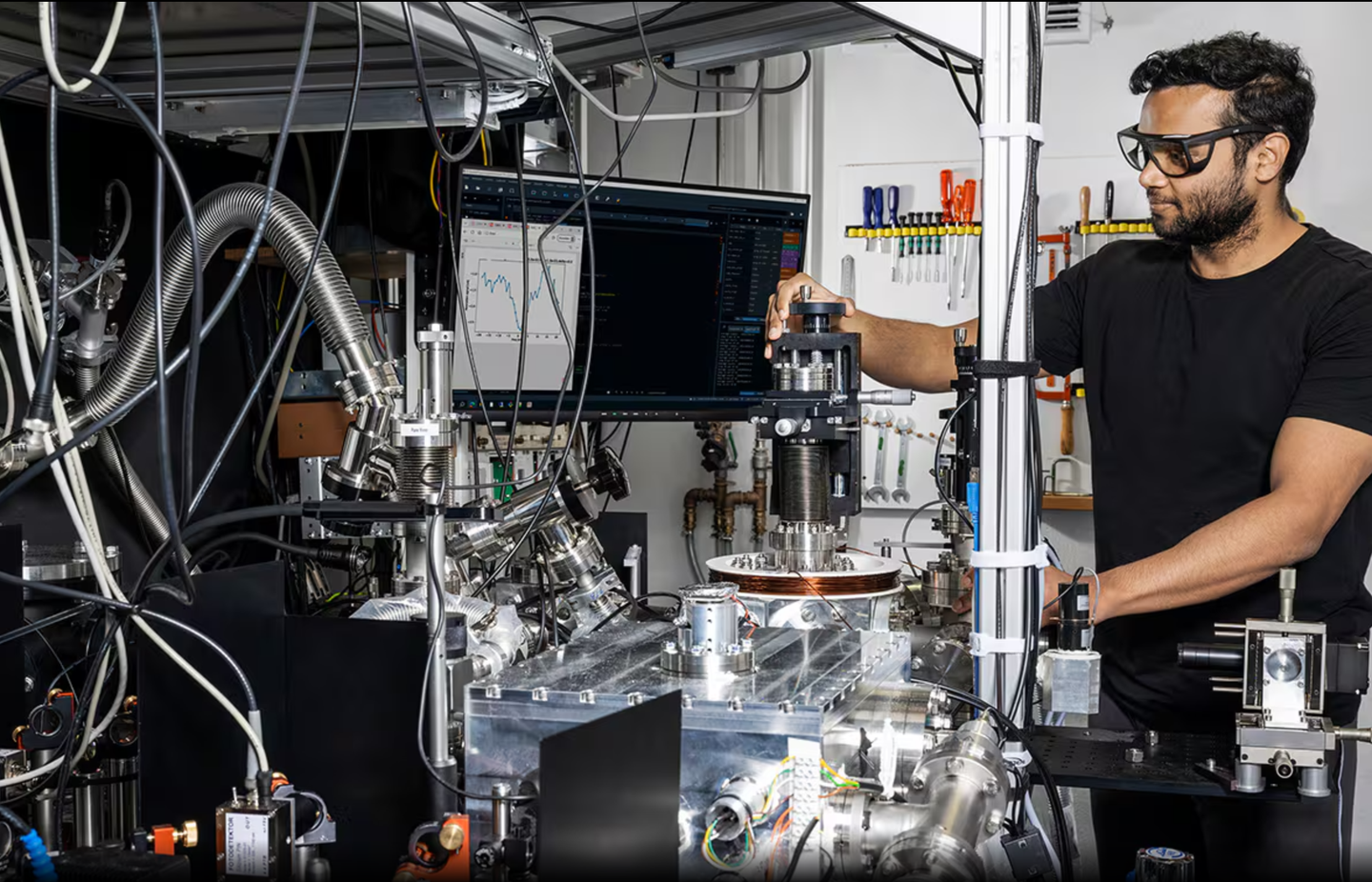
A new study reveals that life on early Earth depended on molybdenum and tungsten billions of years before oxygen filled the atmosphere. (CREDIT: Wikimedia / CC BY-SA 4.0)
Earth’s earliest microbes may have built vital chemistry around molybdenum, a metal thought too scarce to matter in ancient oceans. By tracing genes across life, researchers now argue those organisms exploited rarity itself, opening a view of evolution and habitability.
Long before forests covered Earth or animals swam through the oceans, tiny organisms were already building complex chemical systems to survive. A new study from researchers at the University of Wisconsin–Madison now suggests that some of those early life forms depended on a rare metal called molybdenum more than 3.4 billion years ago, despite the element being extremely scarce at the time.
The findings challenge long-standing assumptions about how life evolved on the young Earth. Scientists once believed molybdenum was too limited in ancient oceans to play a major biological role before oxygen became common in the atmosphere. The new research paints a very different picture.
Instead of avoiding the rare metal, early organisms appear to have embraced it. They built critical biochemical machinery around molybdenum and even experimented with tungsten, another metal with similar chemical abilities.
“This study shows that just because an element is scarce in the environment doesn’t mean life will not find a way to use it and even build an empire with it,” said Betül Kaçar, senior author of the study. “Life works in surprising ways. Discoveries like this remind us that the search for life beyond Earth may require us to imagine possibilities we haven’t yet considered.”
A Metal Hidden Inside Life’s Chemistry
Molybdenum may not be familiar outside chemistry labs, but modern life depends on it. The metal helps enzymes speed up vital chemical reactions inside cells. Without those reactions, many forms of life could not survive.
One of the most important processes involving molybdenum is nitrogen fixation. This process converts nitrogen gas from the atmosphere into ammonia, a form organisms can use to build proteins and DNA. Even though the reaction can technically happen without molybdenum, it would move far too slowly to support living systems.
Today, oceans contain relatively high levels of dissolved molybdenum. Ancient Earth looked very different. Before oxygen-producing photosynthesis spread across the planet roughly 2.45 billion years ago, seawater likely contained less than 5 nanomolar molybdenum. Modern oceans average about 105 nanomolar.
That dramatic difference created a scientific mystery. If molybdenum was so scarce billions of years ago, why did life evolve systems that depended on it?
“What is kind of counterintuitive is that, according to the geochemical record, molybdenum abundance on the early Earth seems to have been a lot lower billions of years ago, particularly before the advent of oxygenic photosynthesis,” said Aya Klos.
Yet life continued using molybdenum-based chemistry anyway. Those systems survived through evolution and still exist in organisms today.
Tracing Ancient Metals Through Modern Genes
To investigate the mystery, researchers examined the evolutionary history of genes tied to molybdenum and tungsten use. The team analyzed 1,609 genomes from bacteria, archaea and eukaryotes across the tree of life.
They searched for genes connected to metal transport, storage, enzyme building and cofactor production. Cofactors are specialized molecular structures that help enzymes function properly.
The researchers identified 102 protein groups related to molybdenum or tungsten biology. Many appeared across a huge range of environments, from oxygen-rich ecosystems to extreme habitats with little oxygen.
The study found strong evidence that molybdenum-related systems emerged between about 3.7 and 3.1 billion years ago during the Archean Eon. This was a time when Earth’s atmosphere lacked abundant oxygen and the oceans were chemically hostile compared to modern conditions.
Scientists also traced the use of tungsten, a chemically similar metal often linked to organisms living in extreme environments today. The findings suggest early life experimented with both metals at nearly the same time.
Rather than replacing one another, molybdenum and tungsten may have coexisted in ancient metabolic systems.
Why Early Organisms Needed These Metals
Inside cells, molybdenum works through enzymes called molybdoenzymes. These enzymes help control redox reactions, which involve the movement of electrons during energy production and nutrient cycling.
These reactions influence carbon, nitrogen and sulfur cycles across the planet. In many ways, they helped shape Earth’s biosphere.
The study found that some of the oldest molybdoenzymes belonged to families involved in methanogenesis, sulfur processing and nitrogen metabolism. Nitrogenase, the enzyme responsible for nitrogen fixation, also showed ancient evolutionary origins.
That matters because nitrogen fixation remains one of the most important biological processes on Earth today. Without it, ecosystems could not sustain large-scale plant growth or complex food webs.
The researchers argue that molybdenum’s chemical flexibility likely made it especially valuable to early organisms. Even in low concentrations, the metal could catalyze a wide variety of reactions under harsh environmental conditions.
Life Found Ways To Access Scarce Resources
The findings suggest ancient life did not need globally abundant molybdenum to survive. Instead, organisms may have relied on local sources.
Submarine hydrothermal vents likely supplied dissolved molybdenum to nearby waters. Iron sulfide particles may also have carried the metal through ancient oceans. These localized environments could have provided enough molybdenum to support early microbial ecosystems.
The study also found that genes for molybdenum transport systems appeared very early in evolutionary history. This suggests organisms were already investing energy into acquiring and managing the rare metal.
Interestingly, molybdenum storage proteins evolved much later, between roughly 2.2 and 1.1 billion years ago. Researchers believe this may reflect growing competition for the metal after oxygen levels rose and biological demand increased.
As oxygen accumulated during the Great Oxidation Event, weathering on land released more molybdenum into the oceans. This likely expanded opportunities for molybdenum-based metabolisms.
The study found that many later molybdoenzymes specialized in processing oxidized compounds like nitrate and sulfite, linking their evolution to Earth’s changing atmosphere.
What This Means For The Search For Alien Life
The research carries implications far beyond Earth’s ancient oceans. Astrobiologists often look for planets rich in elements considered essential for life. This study suggests life may adapt to environments once thought chemically unfavorable.
“This study shows that just because an element is scarce in the environment doesn’t mean life will not find a way to use it,” Kaçar said.
That idea could reshape how scientists search for habitable worlds. A planet with low concentrations of a key element may still support life if organisms can evolve efficient ways to capture and use scarce resources.
The findings also reinforce the idea that early life was far more innovative than scientists once assumed. Even in a dark, oxygen-poor world, microscopic organisms built sophisticated systems involving transport proteins, metal cofactors and specialized enzymes.
Those ancient systems laid the foundation for the modern biosphere.
A New Picture of Early Earth
The study reveals a world where early life forms were not simple chemical accidents barely surviving hostile conditions. Instead, they were already experimenting with advanced biochemical tools billions of years ago.
These organisms adapted to scarcity, harnessed rare metals and developed systems that still power life today. The genes preserved inside modern cells carry echoes of that distant past.
The paradox of ancient molybdenum scarcity may no longer be a paradox at all. Life did not wait for perfect conditions. It evolved around the materials available and found ways to thrive anyway.
Practical Implications of the Research
This research could help scientists better understand how life first emerged and adapted under extreme conditions. By identifying which metals early organisms relied on, researchers can improve models of Earth’s earliest ecosystems and refine theories about biological evolution.
The findings may also influence astrobiology research. Scientists searching for life on other planets often focus on environments rich in elements associated with modern biology. This study suggests life may survive even when key elements are scarce, as long as organisms evolve efficient systems to use them. That broadens the range of planets and environments considered potentially habitable.
In biotechnology and environmental science, understanding ancient metal-dependent enzymes may also inspire new industrial catalysts or biochemical tools. These ancient systems evolved under difficult conditions and may offer insights into designing more efficient reactions for energy production, agriculture or environmental cleanup.
Research findings are available online in the journal Nature Communications.
The original story "Life depended on a rare metal for survival - billions of years ago" is published in The Brighter Side of News.
Related Stories
- Scientists use microbes on ISS to extract valuable metals from meteorites
- Metal tubes stay afloat even after severe damage — opening the door to unsinkable ships
- MIT study uses medical CT imaging to reconstruct 5,000 year-old metal production
Like these kind of feel good stories? Get The Brighter Side of News' newsletter.
Rebecca Shavit
Writer
Based in Los Angeles, Rebecca Shavit is a dedicated science and technology journalist who writes for The Brighter Side of News, an online publication committed to highlighting positive and transformative stories from around the world. Having published articles on MSN, AOL News, and Yahoo News, Rebecca's reporting spans a wide range of topics, from cutting-edge medical breakthroughs to historical discoveries and innovations. With a keen ability to translate complex concepts into engaging and accessible stories, she makes science and innovation relatable to a broad audience.