New oral diabetes pill sharply lowers blood sugar and body weight in phase 2 trial
A once-daily oral GLP-1 drug cut blood sugar and weight in adults with type 2 diabetes in a new phase 2b trial.

 Edited By: Joseph Shavit

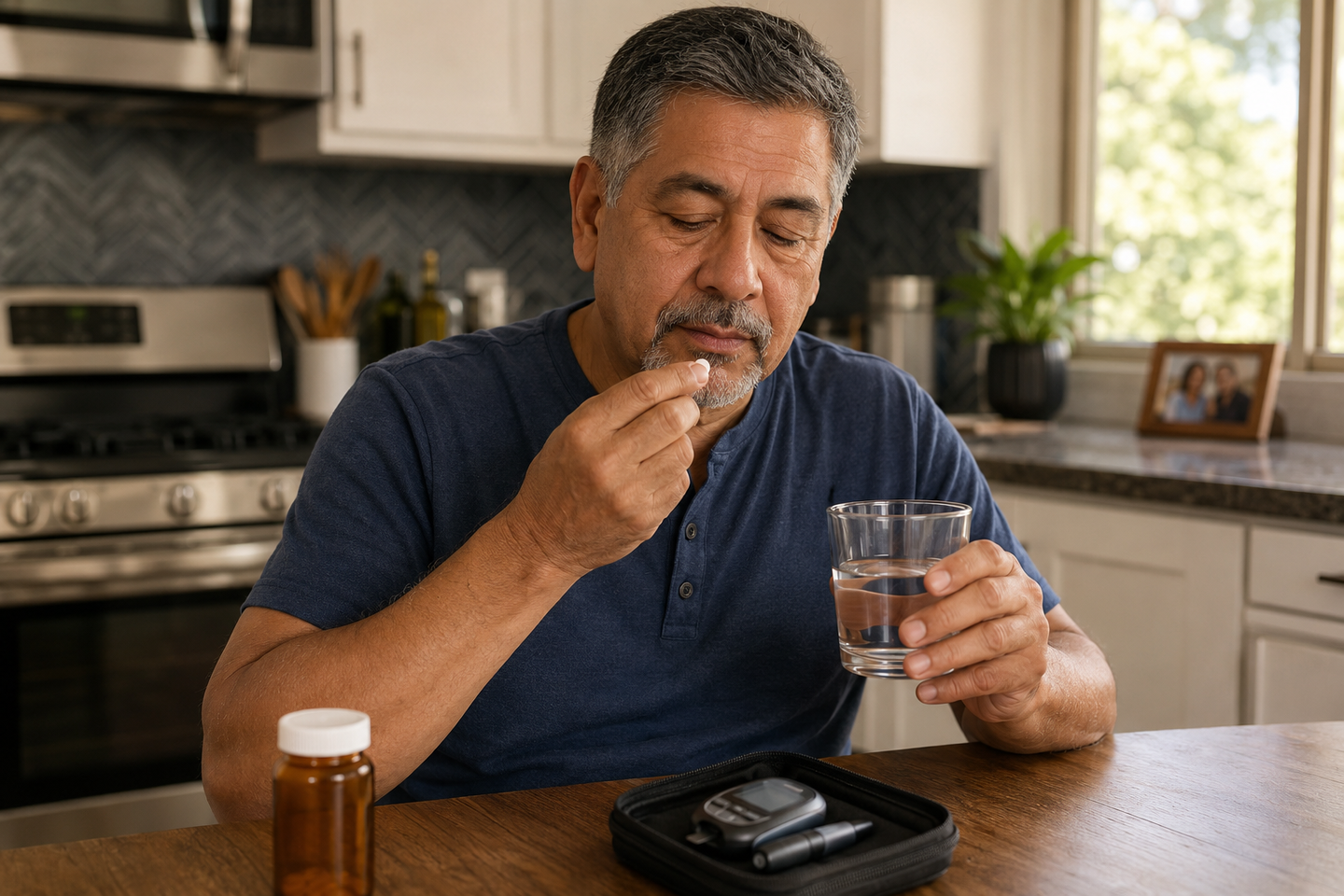
Elecoglipron lowered HbA1c and body weight in a phase 2 trial, pointing to a simpler oral option for type 2 diabetes. (CREDIT: Wikimedia / CC BY-SA 4.0)
For many people with type 2 diabetes, the problem is not just finding a drug that works. It is finding one they can realistically live with. A once-daily pill called elecoglipron is now drawing attention because it appears to lower blood sugar and body weight without the food and water restrictions tied to some existing oral options.
In a phase 2b clinical trial called SOLSTICE, adults with type 2 diabetes who took oral elecoglipron saw bigger drops in HbA1c, a measure of average blood sugar over the past two to three months, than those who received placebo. The treatment also led to weight loss over 26 weeks, results that add momentum to the search for easier-to-use GLP-1 medicines.
The findings were presented at the American Diabetes Association’s 2026 Scientific Sessions and published in The Lancet. Vanita Aroda, a Mass General Brigham physician investigator and director of diabetes clinical research in the Division of Endocrinology, Diabetes & Hypertension, said the results point to a broader future for oral GLP-1 therapies.
“Our study’s findings underscore the expanding potential of oral GLP-1 receptor agonists for people with type 2 diabetes,” Aroda said.
A pill aimed at practical barriers
GLP-1 receptor agonists are already widely used to help lower blood glucose and support weight loss. But most are given by injection, a barrier for some patients. One approved oral option, semaglutide, comes with strict dosing rules, including taking it on an empty stomach and waiting before eating or drinking.
Elecoglipron is different in one important way. It is a small-molecule oral GLP-1 receptor agonist designed to be taken once daily with no food or fluid restrictions, according to the study background. That kind of flexibility could matter for people who are unwilling or unable to use injectable drugs, or who struggle with complicated dosing routines.
SOLSTICE tested whether that convenience could still come with meaningful clinical benefit. The randomized, double-blind, placebo-controlled trial was conducted in hospitals and medical research centers across nine countries: Canada, Germany, Hungary, Japan, Poland, Slovakia, Spain, the UK, and the United States.
Researchers enrolled adults age 18 and older with type 2 diabetes and a body mass index of at least 23 kg/m². Participants had HbA1c levels from 7.0% to 10.5%, or 6.5% to 10.5% in the U.S., and were managing diabetes with diet and exercise alone or with metformin or an SGLT2 inhibitor.
Stronger blood sugar drops at higher doses
From October 8, 2024, to June 6, 2025, the team screened 863 people. Of those, 406 were randomly assigned to one of eight treatment groups, and 404 received at least one dose of trial treatment. Their average age was 58.4, average HbA1c was 7.9%, average body weight was 99.8 kilograms, and average BMI was 34.9 kg/m².
Participants received elecoglipron in daily tablet form at fixed doses of 5, 15, or 25 milligrams, or through dose-escalation schedules leading to 50 or 75 milligrams. Some received matched placebo, and another group received open-label oral semaglutide titrated to 14 milligrams once daily for 26 weeks.
The main question was how much HbA1c changed from baseline after 26 weeks. Across elecoglipron groups, the mean drop ranged from 0.91 percentage points at the 5 milligram dose to 1.88 percentage points in the 75 milligram group with dose escalation every two weeks. In the placebo group, the mean change was 0.15 percentage points.
At the highest 75 milligram dose, adults achieved a mean HbA1c reduction of 1.9%, compared with 0.2% in the placebo group, according to the meeting report. The report also said 90% of participants on elecoglipron 75 milligrams reached an HbA1c below 7%, and 85% reached 6.5% or lower.
That pattern showed up in broader target-based results as well. Up to 89.6% of participants taking the drug reached an HbA1c of 7%, compared with 24.9% in the placebo group.
Weight loss came with the glucose improvements
The drug’s effect did not stop with blood sugar. In the meeting findings, elecoglipron 75 milligrams produced a 7.7% reduction in body weight over 26 weeks, compared with 1.7% in the placebo group.
Up to 72.3% of people in the treatment groups lost at least 5% of their body weight, while 20.2% of people in the placebo group reached that mark.
Those results matter because type 2 diabetes and excess weight often travel together, shaping long-term cardiometabolic risk and treatment choices. An oral medicine that addresses both could expand options for patients and clinicians, especially if later trials confirm the balance of benefit and side effects.
"These findings suggest small-molecule GLP-1 RA therapies could provide an important new option for people living with type 2 diabetes and related metabolic conditions," Aroda said. "Elecoglipron has the potential to offer people more treatment options that can meet their preferences and support their care goals."
Familiar side effects, next-step questions
The safety profile looked broadly similar to what has been seen with other drugs in the GLP-1 class at this stage of development. Adverse events were reported by 63% to 87% of participants across elecoglipron dose groups, compared with 63% in the placebo group.
The most common side effects were gastrointestinal, including nausea, constipation, diarrhea, and vomiting.
That matters because tolerability often shapes whether patients stay on therapy. The authors said once-daily oral elecoglipron showed reductions in glycemia and a safety and tolerability profile consistent with the GLP-1 receptor agonist class, supporting continued development in phase 3 trials for people with type 2 diabetes.
Aroda also presented results from another trial at the same meeting, REIMAGINE 1, which evaluated the combination therapy CagriSema. In that study, up to 87% of participants reached an HbA1c target of 7%, underscoring how quickly the diabetes treatment landscape is shifting.
“At the center of every one of our clinical trials is the goal of improving outcomes for patients,” Aroda said. “The studies being presented at this year’s meeting highlight how essential carefully designed trials are for evaluating new therapies, refining existing approaches, and ensuring that advances in science translate into safer, more effective care for people living with diabetes.”
Practical implications of the research
If elecoglipron continues to perform well in phase 3 testing, it could give people with type 2 diabetes another way to use a GLP-1 drug without injections or strict morning dosing rules.
That may help patients who have avoided current options because of delivery method, routine burden, or both.
The trial also suggests that oral small-molecule GLP-1 drugs may be able to lower blood sugar and body weight at the same time, a combination that could make treatment more practical for everyday use.
Research findings are available online in the journal The Lancet.
The original story "New oral diabetes pill sharply lowers blood sugar and body weight in phase 2 trial" is published in The Brighter Side of News.
Related Stories
- Cleveland Clinic study reveals what happens when patients stop taking GLP-1 drugs
- GLP-1 weight-loss drugs could help protect eyes from diabetic retinopathy
- GLP-1 drugs like Ozempic and Wegovy are changing the foods Americans buy
Like these kind of feel good stories? Get The Brighter Side of News' newsletter.
Hannah Shavit-Weiner
Medical & Health Writer
Hannah Shavit-Weiner is a Los Angeles–based medical and health journalist for The Brighter Side of News, an online publication focused on uplifting, transformative stories from around the globe. Having published articles on AOL.com, MSN and Yahoo News, Hannah covers a broad spectrum of topics—from medical breakthroughs and health information to animal science. With a talent for making complex science clear and compelling, she connects readers to the advancements shaping a brighter, more hopeful future.