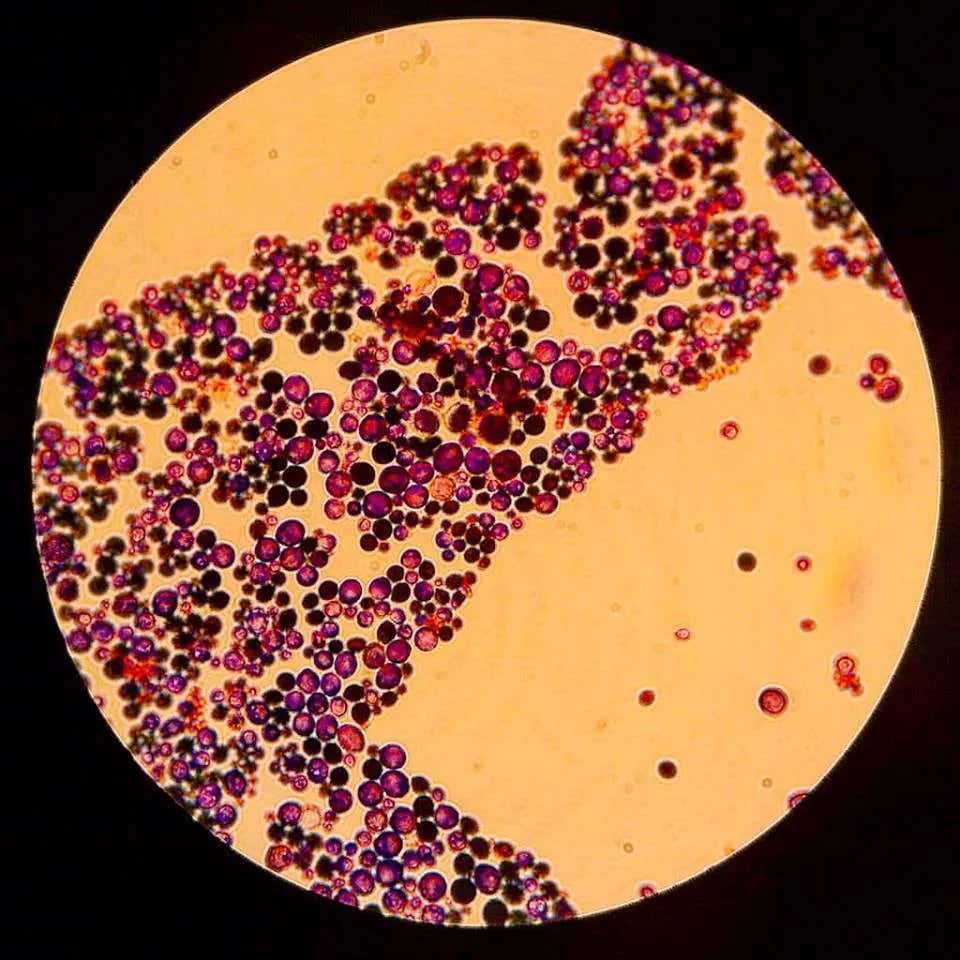
New process extracts 90% of the oil locked in waste coffee grounds – producing clean bio-diesel
A mild extraction method recovers 90% of coffee-ground oil while keeping plant fibers available for more fuels and chemicals.

 Edited By: Joseph Shavit

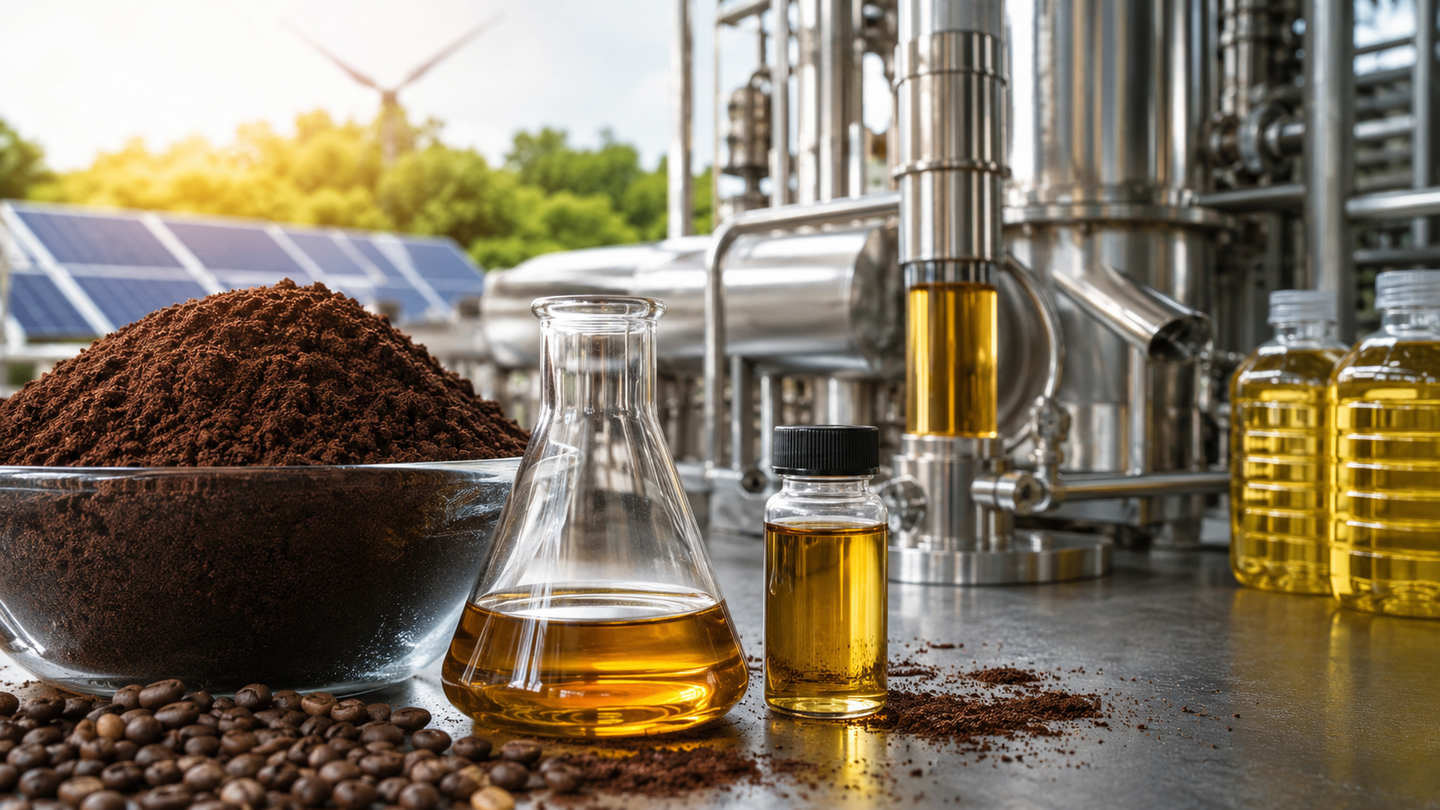
Coffee grounds biodiesel could become cleaner and more efficient through a one-hour oil extraction process that preserves useful biomass. (CREDIT: Wikimedia / CC BY-SA 4.0)
- Used coffee grounds contain oils that can serve as a raw material for biodiesel.
- A one-hour process recovered most of the available oil with far fewer impurities than a standard laboratory method.
- The remaining plant fibers stayed largely intact, allowing them to be used for other fuels and useful chemicals.
Coffee grounds carry more energy than their trip to the trash suggests. Packed with oils and plant fibers, the waste can support biodiesel production while leaving useful material behind for other fuels and chemicals.
A team from Universitat Rovira i Virgili tested how to remove that oil quickly without damaging the remaining biomass. The work identifies moderate conditions that recover most of the oil with fewer impurities than a standard laboratory method.
Spent coffee grounds are produced on a vast scale. Global coffee bean production reaches about 10 million tonnes each year. Only around 10% of the coffee cherry fruit enters the beverage, while the rest becomes solid residue. More than 6 million tonnes of spent grounds are generated annually.
Those grounds contain about 15% lipids, or fats. They also hold cellulose, hemicellulose and lignin, which can become other products. That combination makes the waste attractive for a biorefinery, where several outputs come from one raw material.
Finding the extraction sweet spot
The URV team examined temperature, extraction time and the ratio of solvent to dry grounds. The researchers used n-hexane, a common fat-extraction solvent, in 27 combinations. Each test was repeated, producing 54 observations.
The dry grounds came from the university cafeteria and contained roasted Coffea arabica beans. The material was dried, sieved to particles smaller than 500 micrometers and prepared for analysis.
"We have found that the optimal conditions are at 45°C for 60 minutes with a ratio of 35 millilitres of hexane per gram of dry residue," explained Magdalena Constantí, one of the study's authors.
Under those conditions, the batch process recovered about 90% of the oil obtained through Soxhlet extraction. Soxhlet served as the benchmark because it delivers high, repeatable yields. But it requires continuous solvent reflux, long processing times and high energy use.
The optimized method reached its result in one hour. Soxhlet extraction took 24 hours and produced a crude oil yield of 16.6% of the dry grounds.
Temperature had the strongest influence on recovery. Yield rose as the process warmed from 25°C to 45°C. The warmer solvent became less viscous, while oil molecules moved more easily through the porous coffee material.
Yet temperatures near hexane’s 68.7°C boiling point did not improve the result. Yield weakened, especially during 90-minute runs. The team linked that decline to a growing mismatch between the solvent and the main coffee oils.
More heat did not mean more oil
Time followed a similar pattern. Recovery improved until 60 minutes, then leveled off or slipped slightly. The system appeared to reach equilibrium within the first hour.
The solvent ratio also had limits. Too little hexane became saturated quickly. Too much failed to produce a matching increase. A ratio of 35 millilitres per gram created the best balance.
Oil quality separated the optimized process from the benchmark even more clearly. Only 0.3% of the extract consisted of impurities that did not convert into fatty acid methyl esters. The Soxhlet extract contained 3.9%.
The main fatty acids remained stable across the tested conditions. Linoleic acid accounted for about 44% of the profile, while palmitic acid made up about 35%. Oleic acid contributed around 8%, and stearic acid about 7%.
That consistency showed that lower yields at high temperatures did not result from thermal damage to the major fatty acids. More severe conditions produced a modest increase in unidentified material, reaching as much as 1.7%.
The fatty acid mix also matters for fuel production. These compounds influence biodiesel properties such as ignition quality, oxidation resistance and low-temperature behavior.
The solid residue keeps its value
Removing the oil did not strip the grounds of their remaining usefulness. The original dry material contained 8.8% cellulose, 30.9% hemicellulose and 17.9% lignin. Its ash content was 6.2%.
"In our study, we also demonstrate that extracting the oil does not mean that the rest of the material cannot be used for something else," pointed out Francesc Medina, a researcher at the Department of Chemical Engineering who participated in the research.
The optimized treatment preserved cellulose and hemicellulose. It also left the solid with a lignin concentration above 20%, higher than levels measured after more severe Soxhlet or ultrasound treatments.
That preservation is central to a sequential biorefinery. Fats can block solvents and catalysts from reaching sugars and lignin inside plant matter. Removing the oil acts as a pretreatment without heavily changing the material’s structure.
The defatted grounds could support production of bioethanol, lactic acid and polyhydroxyalkanoates. Their lignin fraction could also provide precursors for sustainable aviation fuel or phenolic compounds.
Faster tools brought added tradeoffs
The team compared the batch method with ultrasound- and microwave-assisted extraction. Microwaves recovered 12.5% oil in five minutes and 14.7% after 20 minutes. Ultrasound reached 12.5% in 15 minutes and 14.3% after 30 minutes.
Both methods accelerated the early stages. Their gains then slowed as the process shifted from rapid mass transfer toward equilibrium.
Neither offered enough benefit in oil purity, overall efficiency, energy demand or scalability. Both also produced more non-oil material than the optimized batch process. The authors found that further intensification was not justified despite shorter extraction times.
Practical implications of the research
Spent coffee grounds often accumulate in landfills, where decomposition can release methane. Using them as feedstock could recover value from a waste stream produced in large quantities.
The optimized method creates two useful outputs. It produces cleaner oil rich in fatty acids suited to biodiesel, then leaves a preserved plant matrix for further conversion.
This approach could help lower raw-material costs for second-generation fuels, which do not rely on edible crops. It may be relevant to heavy transport and aviation, where high-energy-density renewable fuels remain important.
By keeping the process moderate, the work gives future biorefineries a clearer operating window. The result is not just efficient oil recovery. It is a route for using more of each coffee ground before anything is discarded.
Research findings are available online in the journal Biomass and Bioenergy.
The original story "New process extracts 90% of the oil locked in waste coffee grounds - producing clean bio-diesel" is published in The Brighter Side of News.
Related Stories
- Researchers turn coffee waste into a weapon against Alzheimer's disease
- Scientists use coffee and plastic waste to brew up a new way to capture carbon
- Drinking coffee linked to slower aging and better health
Like these kind of feel good stories? Get The Brighter Side of News' newsletter.
Shy Cohen
Writer