Physicists achieve most accurate measurement yet of the W boson
A new CERN measurement of the W boson mass supports the Standard Model and deepens doubts about a famous 2022 anomaly.

 Edited By: Joseph Shavit

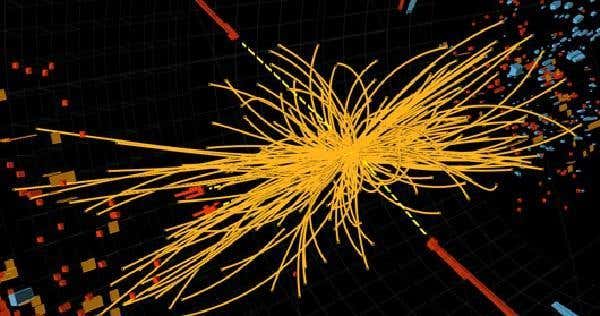
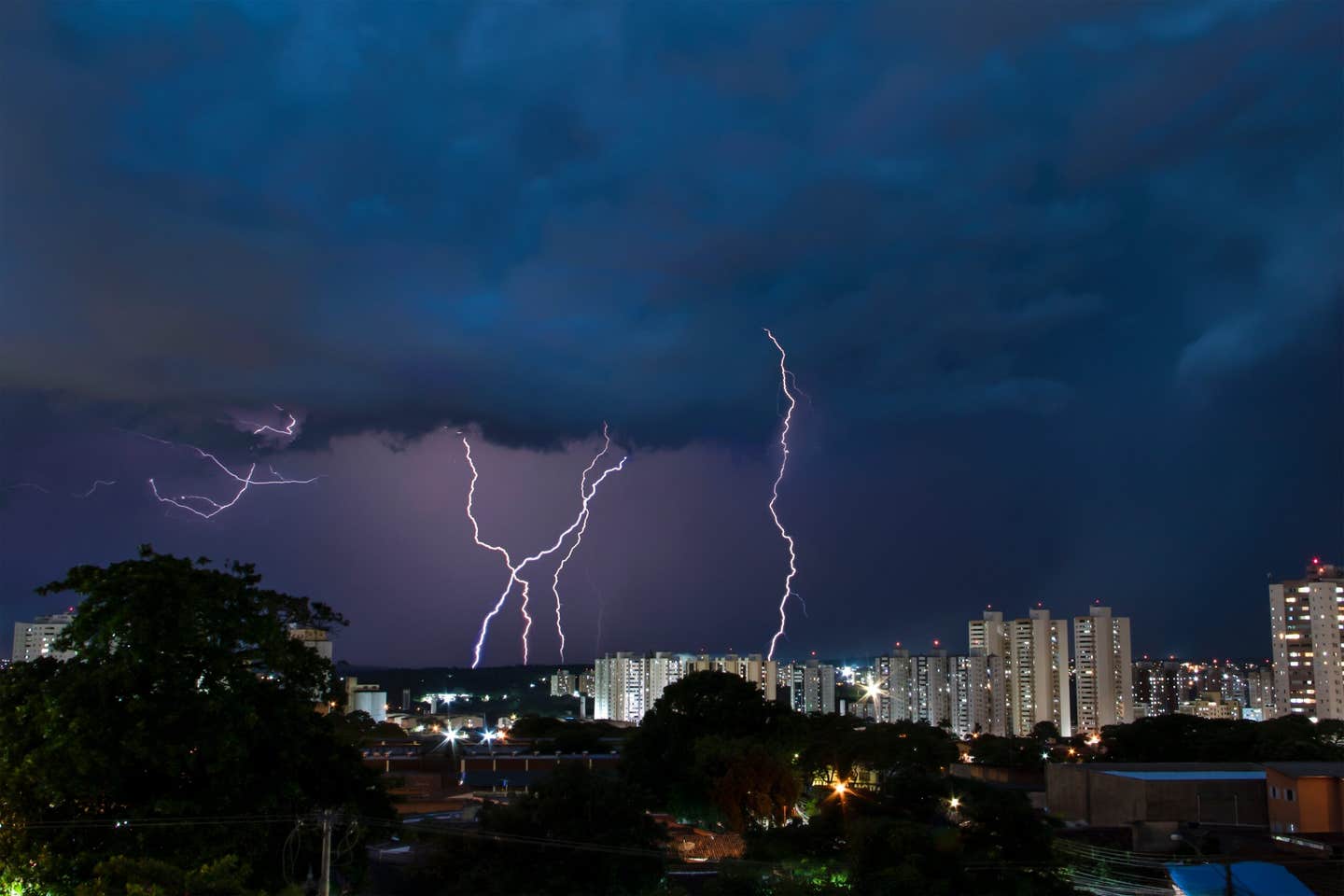
CMS measured the W boson mass with high precision, backing the Standard Model and challenging the 2022 CDF anomaly. (CREDIT: Wikimedia / CC BY-SA 4.0)
For a few years, one of particle physics’ most unsettling numbers seemed to be pointing somewhere strange.
The trouble centered on the W boson, a heavy particle that carries the weak force, one of the four fundamental forces in nature. That force helps particles switch identities, letting protons turn into neutrons and back again. It sits behind radioactive decay and helps make nuclear fusion in the sun possible.
Then came a jolt in 2022. A measurement from the Collider Detector at Fermilab, or CDF, put the W boson’s mass noticeably above what the Standard Model of particle physics said it should be. Because the Standard Model is the field’s best-tested framework for matter and forces, the result stirred talk of hidden particles, unknown forces, and a crack in the theory itself.
Now a new measurement from the CMS experiment at CERN’s Large Hadron Collider points the other way. In a paper published in Nature, the CMS Collaboration reports that the W boson has a mass of 80,360.2 ± 9.9 megaelectron volts, a figure that lines up with the Standard Model and falls well below the CDF result.
“It’s just a huge relief, to be honest,” said Kenneth Long, a lead author of the study and a senior postdoc in MIT’s Laboratory for Nuclear Science. “This new measurement is a strong confirmation that we can trust the Standard Model.”
A puzzle built from a tiny mismatch
The W boson is not new. Physicists first found it in 1983, and for decades experiments have tried to pin down its mass with increasing precision. Most of those measurements have agreed with the Standard Model. The CDF result stood out because it was both very precise and much heavier than expected.
“If you take the CDF measurement at face value, you would say there must be physics beyond the Standard Model,” said MIT physicist Christoph Paus, a co-author on the new study. “And of course that was the big mystery.”
That mystery mattered because the W boson’s mass is tied tightly to other parts of the Standard Model. If its measured value drifted away from the expected one, the mismatch could hint at new particles appearing indirectly through quantum effects, even if those particles were too heavy to make directly in current accelerators.
CMS set out to test the issue with an independent measurement that could match CDF’s precision.
Following only half the trail
The job is harder than it sounds.
At the Large Hadron Collider, protons slam into each other at nearly the speed of light. In a small fraction of those collisions, a W boson appears, then vanishes almost instantly. It survives for only about 10^-24 seconds before decaying. In the channel CMS used, it breaks into a muon and a neutrino.
The neutrino escapes the detector.
So physicists have to reconstruct the W boson from incomplete evidence, using the muon they can see and modeling the missing piece. That turns a simple question, what is the particle’s mass, into a long exercise in calibration, simulation, and error control.
“A particle like the W boson exists for a teeny tiny moment,” Long said, “before decaying to two particles, one of which is a neutrino that can’t be measured directly. That’s the tricky part: You have to measure the other particle, a muon, really well, and be able to piece things together with only one piece of the puzzle.”
CMS analyzed proton-proton collisions collected in 2016 at 13 teraelectron volts. From billions of collisions, the team selected 117 million candidate W-to-muon-and-neutrino events, the largest sample yet used for this kind of measurement. The final mass result came from a highly detailed fit to the muons’ momentum, pseudorapidity, and electric charge.
One sentence matters here: the precision depended not only on a huge dataset, but on how well the experiment understood its own detector.
Ten years of cleanup behind one number
The new result grew out of about a decade of work.
CMS researchers calibrated the muon momentum scale using J/Ψ decays and checked that calibration with Y(1S) and Z boson decays. They modeled how the detector bends muon tracks in its magnetic field and simulated more than 4 billion W boson events and 400 million Z boson events. They also built detailed corrections for background processes, detector effects, pileup from overlapping collisions, and uncertainties in the quark and gluon structure of the proton.
The biggest single uncertainty came from calibrating muon momentum, which contributed 4.8 MeV to the total uncertainty. Parton distribution functions, which describe how momentum is shared inside the proton, added another 4.4 MeV. Background from nonprompt muons contributed 3.2 MeV.
CMS also tested the machinery in several ways before leaning on the W result. The team measured the Z boson mass directly and then did a “W-like” Z analysis, pretending one of the Z boson’s two muons was invisible. Both checks agreed with the known Z boson mass, helping support the methods used in the W boson measurement.
The collaboration also ran an alternate “helicity fit” that relaxed some modeling assumptions. That analysis gave 80,360.8 ± 15.2 MeV, consistent with the main result.
What the result settles, and what it does not
The new CMS number does not erase the CDF result. It does, however, weaken the case that the heavier Fermilab value points to new physics.
CMS notes that its measurement agrees with the Standard Model electroweak fit prediction of 80,353 ± 6 MeV and with other experiments, while disagreeing with CDF. Because the new result is nearly as precise as the Fermilab one, many physicists will see it as a sign that the Standard Model remains on firm ground, at least on this front.
Still, the paper does not present the problem as fully closed. The authors stress that more data and sharper methods could tighten the picture further. The dominant uncertainties, especially those tied to muon calibration and proton structure, are not gone.
Long put it plainly: “Though I do think people should continue doing this measurement. We are not done.”
Paus used a more vivid line. “We want to add more data, make our analysis techniques more precise, and basically squeeze the lemon a little harder. There is always some juice left.”
The study itself also makes clear where its weak spots lie. The largest uncertainties came from muon momentum calibration and parton distribution functions. The nonprompt-muon background required a correction after the analysis method was found to overestimate yields in a control region. CMS tested those effects and folded them into the final uncertainty, but they remain important limits on how far the precision can be pushed.
Practical implications of the research
This result gives physicists a steadier reference point for testing the Standard Model. It lowers the pressure created by the 2022 CDF measurement and makes it harder to argue that the W boson already points to hidden particles or unknown forces.
That does not make the search for new physics less important. It changes where the pressure sits. Instead of chasing one apparently off-balance number, researchers can now focus on refining the measurement further and looking for cracks elsewhere, with a clearer sense of what this cornerstone particle is actually doing.
Research findings are available online in the journal Nature.
The original story "Physicists achieve most accurate measurement yet of the W boson" is published in The Brighter Side of News.
Related Stories
- Physicists build a quantum Newton’s cradle where energy flows without resistance
- Physicists use pulses of light in 37 dimensions to prove quantum paradox
- Scientists discover new elusive particle related to the Higgs Boson
Like these kind of feel good stories? Get The Brighter Side of News' newsletter.
Joshua Shavit
Writer and Editor
Joshua Shavit is a NorCal-based science and technology writer with a passion for exploring the breakthroughs shaping the future. As a co-founder of The Brighter Side of News, he focuses on positive and transformative advancements in technology, physics, engineering, robotics, and astronomy. Having published articles on AOL.com, MSN, Yahoo News, and Ground News, Joshua's work highlights the innovators behind the ideas, bringing readers closer to the people driving progress.