Plague was killing hunter-gatherers 5,500 years ago, long before cities
A Nature study finds plague was already deadly in mobile Siberian hunter-gatherers thousands of years before medieval outbreaks.

 Edited By: Joshua Shavit

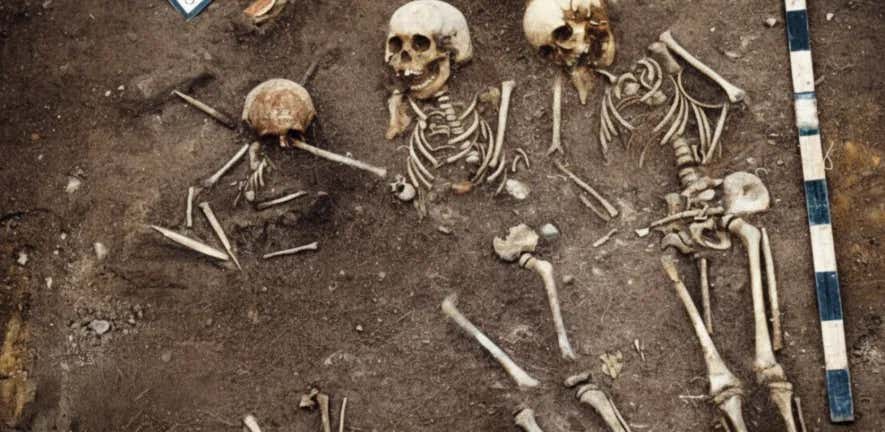
Ancient DNA shows plague killed Siberian hunter-gatherers 5,500 years ago, before cities and flea-borne epidemics. (CREDIT: Wikimedia / CC BY-SA 4.0)
Plague did not wait for medieval cities, crowded streets, or shipborne rats to become deadly.
More than 5,500 years ago, the disease was already killing people in small hunter-gatherer communities near Lake Baikal in East Siberia, according to a new study in Nature. The evidence comes from ancient DNA preserved in teeth, where researchers found the bacterium Yersinia pestis in nearly 40 percent of the individuals tested from four cemeteries.
That level of detection startled the research team. It also helped solve a puzzle that had troubled archaeologists for decades: why so many children and young teenagers were buried at two of the largest sites, and why so many of those burials appeared to have happened within a narrow span of time.
“Whether the earliest forms of plague were mild or virulent has been a matter of debate, but our findings demonstrate that these ancient strains were already highly lethal,” says senior author Eske Willerslev, Professor at the University of Copenhagen and the University of Cambridge.
The work challenges a long-running assumption about early plague. Because these ancient strains lacked some of the genes that later allowed bubonic plague to spread efficiently through fleas, many researchers had argued that the earliest versions of the disease may have been relatively mild.
This study points in the other direction.
Graves that suddenly made sense
The team analyzed DNA from 46 Late Neolithic individuals buried at four cemetery sites along the Angara River, which drains from Lake Baikal. Eighteen tested positive for Y. pestis. Radiocarbon dating, genetic relationships among the dead, and burial patterns together suggested two separate plague outbreaks, spaced roughly four to six centuries apart.
At Ust’-Ida I, the largest site in the sample, 11 of 31 sequenced individuals carried plague DNA. The cemetery’s Late Neolithic graves were tightly clustered in time, unusual for a burial ground of that size. Family relationships also pointed to deaths happening within less than a generation.
“Based on the plague DNA, the genetic relationships between the victims, the archaeological analysis and the radiocarbon dating, we’ve built a really clear, complete picture of what happened during these outbreaks,” says lead author Ruairidh Macleod, who carried out the work while a PhD student at the University of Cambridge and is now Research Fellow at the University of Oxford.
Several burials deepen that picture. At one cemetery, three young girls between 4 and 9 years old were buried together in a shared grave, and all three carried plague DNA. At another, an aunt and nephew buried together both tested positive. In other graves, siblings lay side by side, but only one tested positive, a pattern the researchers say fits with false negatives in ancient DNA screening rather than proof that the other sibling escaped infection.
Archaeologist Andrzej Weber of the University of Alberta, Principal Investigator of the Baikal Archaeology Project, said the cemetery’s age pattern had long defied explanation. “The unusually high number of children and the short timespan was a real puzzle that we’ve been trying to solve since the 1990s. Finding out that plague was the cause is extraordinary, but it makes so much sense.”
A deadlier form than expected
The bacterial strains found near Lake Baikal sit close to the base of the plague family tree, making them among the earliest known forms of Y. pestis. They appeared before the better-known Late Neolithic and Bronze Age strains found elsewhere in Eurasia.
These early strains lacked the ymt gene, which helps plague survive in fleas and supports flea-borne bubonic transmission. They also lacked the YpfΦ prophage. That means the Siberian outbreaks probably did not unfold in the classic medieval way.
But the strains were not harmless. The genomes carried a superantigen called YPM, a toxin-producing factor seen in Yersinia pseudotuberculosis, the closest known relative of Y. pestis, but not in later historic plague strains. Superantigens can drive extreme immune reactions and severe inflammatory complications.
“This finding changes our understanding of the earliest plague outbreaks: Even before the bacterium evolved efficient flea-borne transmission, these ancient strains appear to have carried a potent combination of virulence factors that could make infection highly lethal,” says senior author Martin Sikora, Associate Professor at the University of Copenhagen.
The researchers found that the version of the YPM gene in these ancient strains was closest to the ypmA form, which is regarded as the most virulent modern variant, though it differed at three positions. The team says those differences may have affected how the protein behaved, but that question will need functional studies.
Why children were hit so hard
One of the study’s most striking findings is who seems to have suffered most.
At Ust’-Ida I and Bratskii Kamen, the two cemeteries with multiple plague detections, deaths were heavily skewed toward children, especially those roughly 7.5 to 11 years old. Those sites stood out sharply from other hunter-gatherer cemeteries in the region.
Adults between 20 and 35 were notably scarce in the mortality profile, especially at Bratskii Kamen, where deaths in that age range were absent. The researchers considered several possibilities. Adults may have had some immunity from prior exposure, though the available evidence cannot prove repeated outbreaks. Differences in behavior by age could also have shaped exposure, but the team found little support for that in the broader archaeological record.
Another possibility is that children were biologically more vulnerable. The paper notes that children today are more susceptible to infections from Gram-negative bacteria, and that YPM-related inflammatory complications in modern infections are mainly seen in children.
Taken together, the authors argue that these ancient plague strains may have been especially dangerous for prepubescent children, even without flea-borne transmission.
Marmots, mobility, and a much older plague story
The study also shifts where plague may have first emerged. The findings support an origin in Central or North-East Asia, rather than Europe, and point to wild rodents as an early reservoir.
Around Lake Baikal today, the main zoonotic reservoir of plague is the marmot. Historical records describe infections linked to hunting, skinning, and eating infected marmots. Archaeological evidence shows that prehistoric people in the region interacted closely with these animals, and the authors argue that spillover from marmots is the most likely starting point for the Baikal outbreaks.
The outbreaks then may have moved between people, possibly through pneumonic spread. The kinship patterns, shared graves, and closely clustered deaths suggest person-to-person transmission was plausible, even in small, mobile groups.
That matters beyond plague history. These were not dense farming settlements or cities. They were hunter-gatherers with low inbreeding, a large effective population size, and social ties spread over long distances along the Angara River. Their experience suggests that major zoonotic outbreaks did not require the crowded conditions usually blamed for ancient epidemics.
Practical implications of the research
The study reshapes one of the oldest stories told about plague. It suggests the disease was already capable of causing lethal outbreaks in mobile hunter-gatherer societies, long before cities, domestic livestock, and flea-driven bubonic epidemics came to define it in the historical record.
It also strengthens the case that animal spillover has deep roots in human history. In this case, the likely source was not an urban rat population but wild rodents in a natural reservoir. That makes the findings relevant to modern disease ecology, where outbreaks still emerge at the boundaries between humans, animals, and changing environments.
By combining pathogen DNA, burial archaeology, kinship data, and radiocarbon dating, the research also shows how ancient cemeteries can reveal not just what infected past populations, but how outbreaks moved through families and communities. That could help researchers better understand how pathogens evolved into the forms that later reshaped human history.
Research findings are available online in the journal Nature.
The original story "Plague was killing hunter-gatherers 5,500 years ago, long before cities" is published in The Brighter Side of News.
Related Stories
- 4,000 year old sheep tooth reveals how an ancient plague spread across Eurasia
- Scientists reveal what triggered the Black Death plague in Europe
- What Arizona's Pneumonic Plague death means for public health
Like these kind of feel good stories? Get The Brighter Side of News' newsletter.
Hannah Shavit-Weiner
Medical & Health Writer
Hannah Shavit-Weiner is a Los Angeles–based medical and health journalist for The Brighter Side of News, an online publication focused on uplifting, transformative stories from around the globe. Having published articles on AOL.com, MSN and Yahoo News, Hannah covers a broad spectrum of topics—from medical breakthroughs and health information to animal science. With a talent for making complex science clear and compelling, she connects readers to the advancements shaping a brighter, more hopeful future.