Researchers make a sweet discovery to fight obesity and burn visceral fat
A molecule made by Clostridium immunis changed visceral-fat activity and reduced weight gain in mice. Human microbiome data provide a related clue, but clinical trials must establish whether the approach can work safely in people.
 Duke-NUS Writer: Zi-Hao Benjamin Tan

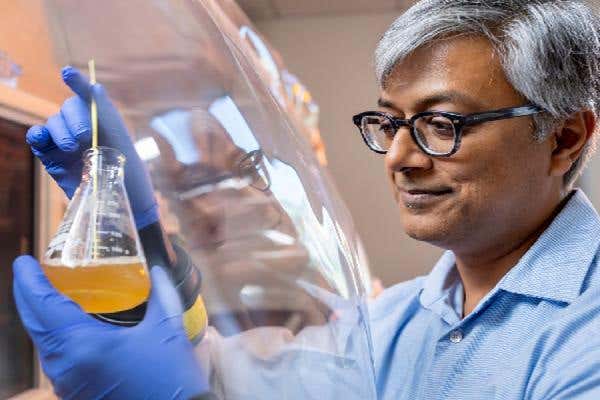
Researchers led by Neeraj Surana, MD, PhD, identified a previously unknown gut bacterium that produces a sugar molecule capable of increasing energy expenditure and reducing harmful visceral fat in obese mice. (CREDIT: Duke-NUS Medical School)
A molecule made by a gut bacterium helped mice use more energy while accumulating less fat around their internal organs. The animals did not achieve that change by eating less or moving more. Instead, the experiments point to a chemical conversation between gut microbes, immune cells and visceral fat.
Researchers at Duke-NUS Medical School and Duke University School of Medicine identified the molecule in work published in Cell Host & Microbe. It comes from Clostridium immunis, a bacterium found in the human gut. Their findings provide a possible route toward a therapy, with effectiveness in people still untested.
The focus on visceral fat matters because fat around internal organs is closely linked with metabolic disease. The study also moves beyond comparing lists of microbes in different people. It identifies a particular bacterial product and tests how it changes gut-linked metabolism.
The mouse experiments point to a specific fat compartment
The team had previously studied C. immunis because it protected mice against colitis. While investigating that effect, researchers noticed changes in genes involved in handling fats. That unexpected result prompted them to ask whether the bacterium also influenced body weight and fat storage.
One week after a single oral treatment, otherwise healthy mice weighed about 3% less than untreated controls. Their blood triglycerides were approximately 25% lower, and two visceral fat depots were about one-third smaller. The researchers found no corresponding decrease in lean mass.
The pattern was selective: fat beneath the skin and a brown-fat depot did not show the same reduction. That distinction is important in research on fat-cell biology. Different fat compartments can respond differently to the same signal, so a change in one cannot describe the whole body.
Next, mice received weekly treatment during 12 weeks on a high-fat diet. Treated animals gained less weight, had less visceral fat and showed improved glucose tolerance. Alongside other work on microbial molecules, the result encouraged the team to identify exactly what the bacterium was producing.
A small chemical attachment makes the difference
The active substance proved to be an exopolysaccharide, or EPS: a large molecule built from linked sugar units and released by bacteria. This is a specific microbial product, rather than ordinary table sugar. Its biological effects depend on its structure and chemical modifications.
Purified EPS reproduced the metabolic effects in mice, helping separate the molecule’s activity from the presence of living bacteria. C. immunis itself was no longer detectable in feces by 48 hours after administration, although effects persisted for at least a week. Durable colonization therefore did not explain the observed benefit. It remains unclear whether the molecule persists for that entire period or whether changes in immune activity continue after the molecule itself has disappeared.
The crucial feature was phosphocholine attached to the EPS. Removing the relevant bacterial genes produced a molecule without that modification, and the metabolic effect disappeared. Free phosphocholine alone also failed to reduce visceral fat, showing that the attachment to the larger molecule mattered.
Adding the genes to a related bacterium gave its EPS metabolic activity, strengthening the chemical explanation. Studies of dietary sugar and other bacterial products illustrate how varied gut-related effects can be. Here, the evidence concerns one specifically modified compound.
The animals used more energy without eating less
To understand the weight difference, researchers measured energy intake, absorption and expenditure. They found no differences in food intake, physical activity or nutrient absorption that explained the result. Instead, EPS-treated mice expended more energy, meaning their bodies were using more of the available fuel. That distinction helped direct the investigation toward what fat tissue was doing with energy, rather than how much energy entered the body through food.
“What surprised us was that this bacterial sugar did not work by reducing food intake or increasing activity,” said first author Tan Chin Yee. “Instead, it changed how visceral fat used energy.” Tan began the research as an MD-PhD student and is now in the SingHealth Internal Medicine Residency Programme.
Visceral fat from treated mice showed greater metabolic activity and more cells containing UCP1, a protein associated with releasing energy as heat. Researchers have long investigated energy-burning fat as a possible way to alter metabolism. Visceral fat is usually comparatively resistant to recruiting these heat-producing cells.
The study links their appearance with increased energy expenditure, but does not establish how much of that increase requires UCP1 itself. Other pathways may contribute, leaving further experiments to resolve the balance. That makes the finding a mechanistic lead within the broader search for metabolic targets.
Immune signaling connects the gut with visceral fat
The next part of the explanation involves IL-22, an immune signaling protein. EPS treatment reduced its levels in the small intestine and visceral fat. The experiments implicated group 3 innate lymphoid cells, immune cells that help connect microbial signals with tissue responses.
When the researchers restored IL-22 levels in EPS-treated mice, the metabolic benefit weakened. Additional experiments supported the requirement for reduced IL-22 in this pathway. That gives the study more than an association between a bacterium and body weight: manipulating the proposed mechanism changed the outcome.
Such immune communication can have different consequences in different tissues. The paper found contrasting responses to IL-22 in visceral and subcutaneous fat, and earlier research has reported metabolic benefits from increasing IL-22 in other settings. Its role therefore cannot be reduced to a universally harmful signal. Although treated mice showed no measured loss of intestinal barrier integrity, that observation cannot establish the safety of manipulating this pathway in people.
The connection also places cell metabolism within a wider network of immune effects. Senior author Neeraj Surana said the findings reveal how bacteria communicate through chemically modified sugars. The exact recognition process, including whether other cells act before the identified immune cells, still needs clarification.
Human data offer a clue, with clinical testing ahead
The researchers then examined existing gut metagenomic data from 4,145 people across 11 studies in nine countries. They focused on licC, a bacterial gene involved in producing the phosphocholine modification. People with obesity had lower gene abundance than participants whose BMI was below 25. These measurements concern genes in microbial DNA, providing clues about what the gut community might produce rather than describing an inherited human gene.
A separate analysis of 247 people found lower abundance associated with high triglycerides. Those data came from four studies covering six countries, supplying another comparison for the researchers. These observations support investigating the pathway in humans, but cannot show that the gene difference caused obesity or that the mouse mechanism operates in people. Nor do they establish that having more C. immunis would produce the same effect.
That gap is why clinical testing matters in microbiome research. The team reports filing a patent and planning US trials, while questions remain about safety, delivery and durable benefit. Results from other human microbiome studies cannot answer those questions for this compound.
For now, the work identifies a bacterial molecule and a testable route linking gut signals to visceral-fat activity. Its therapeutic promise rests on what happens next: whether researchers can reproduce a useful effect safely in people.
Dig deeper into gut microbes and metabolic health
These studies explore microbial chemistry, immune signaling and the challenges of translating metabolic findings into human treatments.
- Gut microbial carbohydrate metabolism contributes to insulin resistance: Combines human microbiome and metabolite analyses with experimental work to examine links between bacterial carbohydrate metabolism and insulin resistance. (Nature, August 2023)
- Microbiota imbalance induced by dietary sugar disrupts immune-mediated protection from metabolic syndrome: Investigates how dietary sugar alters intestinal microbes and immune-mediated metabolic protection in mice. (Cell, August 2022)
- Supplementation with Akkermansia muciniphila in overweight and obese human volunteers: a proof-of-concept exploratory study: Reports a small human intervention study of a different gut bacterium, providing a comparison for the clinical work needed to evaluate microbiome-based treatments. (Nature Medicine, July 2019)
- The intestinal microbiota regulates body composition through NFIL3 and the circadian clock: Examines an immune-linked pathway through which gut microbes influence intestinal lipid handling and body composition in mice. (Science, September 2017)
- Interleukin-22 alleviates metabolic disorders and restores mucosal immunity in diabetes: Reports beneficial metabolic effects of IL-22 in mouse experiments, illustrating why its effects require attention to tissue and experimental context. (Nature, August 2014)
Research findings are available online in the journal Cell Host & Microbe.
The original story "Researchers make a sweet discovery to fight obesity and burn visceral fat" is published in The Brighter Side of News.
Related Stories
- Genes carried by 60% of Europeans predisposes them to be slim
- Battling hidden fat: The wonders of green juice and coriander
- Research shows you can lose weight by literally sweating out your fat
Like these kind of feel good stories? Get The Brighter Side of News' newsletter.
Mac Oliveau
Writer
Mac Oliveau is a Los Angeles–based science and technology journalist for The Brighter Side of News, an online publication focused on uplifting, transformative stories from around the globe. Having published articles on MSN, and Yahoo News, Mac covers a broad spectrum of topics including medical breakthroughs, health and green tech. With a talent for making complex science clear and compelling, they connect readers to the advancements shaping a brighter, more hopeful future.