Ancient teeth found in China reveal a surprising chapter in Homo erectus survival
Eight fossil teeth place Homo erectus in southern China’s tropical forests long after its previously documented mainland record. Their chemistry offers clues to forest resources and possible childhood movement across a wider landscape.
 Macquarie University Writer: Stephen Downes

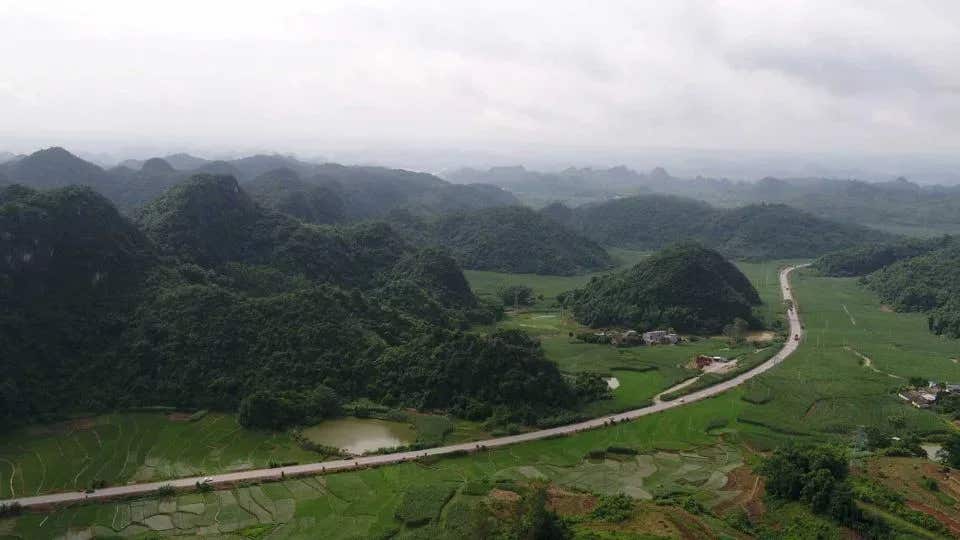
The rugged limestone landscape surrounding the entrance to Naxian Cave in southern China, one of two archaeological sites where researchers discovered eight fossilized teeth identified as belonging to Homo erectus. The discoveries provide important evidence of this extinct human ancestor’s presence in the region. (CREDIT: Wang Wei/Shandong University)
Eight teeth from two caves in southern China are changing the picture of where an ancient human relative could survive. The surrounding landscape was a dense tropical forest, a habitat long considered beyond the usual abilities of Homo erectus. Yet the teeth carry evidence that these humans drew food from that forest.
An international team reports the findings in two papers published in Nature. Researchers including Kira Westaway of Macquarie University combined dating and environmental evidence, while a companion paper in Nature examined the fossils’ identity. Together, they place H. erectus in Guangxi sometime between 324,000 and 184,000 years ago.
The discovery adds another dimension to an already remarkable ancient relative, which survived for nearly two million years across Africa and Asia. It also shows how much of the human story can remain hidden inside something as small as a tooth.
Establishing who left the teeth behind
The fossils came from Baxian and Naxian caves, about 15 kilometers apart near Chongzuo, among steep limestone hills and valleys called karst. Their deposits contained more than 18,000 mammalian fossils, giving researchers an unusually rich setting in which to investigate the human remains. Porcupines initially accumulated the fossils, so the deposits preserve a record of the surrounding ecosystem without necessarily marking places where people made their homes.
Identifying isolated teeth requires care because different species can share similar features. The researchers examined external shape and internal structure, including the boundary between enamel and the tissue beneath it. Such details make fossil teeth useful even when skulls and skeletons are missing.
Eight human teeth showed characteristics associated with H. erectus. Ancient proteins preserved in four supported that identification, providing molecular evidence alongside anatomy. These were protein sequences rather than recovered ancient DNA, an important distinction in understanding how the identification worked.
The companion paper also describes a ninth human tooth that did not fit the same pattern, leaving its identity unresolved. That uncertainty illustrates why ancient proteins are valuable: they can test an anatomical interpretation, while also showing where a confident answer remains out of reach.
Five clocks help place the fossils in time
Once the team established the teeth’s identity, the next question was their age. Earlier securely dated Chinese H. erectus finds generally stopped around 400,000 years ago, so a younger population would change the species’ known mainland timeline. “This is a fascinating discovery because it confirms the presence of Homo erectus in a location we were not expecting and at a time we hadn’t considered,” said Westaway.
The researchers used five dating techniques on teeth, sediments and mineral deposits. These included methods that track radiation-related changes in minerals and teeth, along with uranium-series dating. Luminescence measurements, for example, estimate when sediment grains last saw sunlight, while mineral formations can help bracket the age of the fossil-bearing material. Combining several approaches helped them check whether different materials told a consistent chronological story, as reliable cave dating requires.
Their preferred statistical model placed Baxian’s fossil evidence between 324,000 and 184,000 years ago, and Naxian’s between 319,000 and 241,000 years ago. Those ranges overlap, supporting a broadly similar age for the two sites. They describe uncertainty about when the fossils accumulated, rather than proving that humans occupied the area throughout every intervening year.
The result makes these the youngest securely dated H. erectus fossils in mainland China. Other Chinese fossils show how complex the region’s human history became. The Guangxi teeth now give that history a later, firmer place for H. erectus.
Tooth chemistry brings the forest into view
Knowing that these humans were present is only part of the story. To learn about their surroundings, the team studied chemical signatures in human and animal enamel. Food and water leave traces while teeth form, preserving clues to environments that disappeared long ago.
Carbon isotope measurements help distinguish resources associated with different vegetation. Here, animal teeth pointed toward forest plants, with many signatures consistent with a dense canopy. Researchers use related approaches to investigate ancient diets, although chemical patterns cannot supply a complete menu.
Three human teeth from Naxian produced carbon values consistent with rainforest resources. That small sample agreed with the much larger animal record, strengthening the interpretation that humans participated in the same ecosystem. Oxygen measurements and additional sediment analyses also supported humid tropical conditions, wetter and cooler than the area is today. Because each line of evidence captures a different part of the environment, their agreement gives the forest interpretation more weight than any one measurement could provide alone.
“Teeth can record the environments in which animals and humans lived,” said Nicolas Bourgon of the Max Planck Institute of Geoanthropology. The agreement matters because tooth enamel offers direct evidence about resources consumed during life. The case rests on more than finding human fossils beside forest animals.
A childhood record hints at wider movement
Another element, strontium, helped the researchers ask where these individuals obtained their food. Its isotope ratios vary with geology and can enter enamel through local resources. Comparing those ratios with a regional map can suggest possible source areas.
Four individuals showed changing signatures during tooth formation, corresponding to childhood ages of roughly two to six. The patterns suggest movement between different geological areas, or consumption of resources brought from several locations. Similar methods have illuminated human mobility in much more recent populations.
Some values matched possibilities beyond the immediate limestone hills, potentially including northern Vietnam. Renaud Joannes-Boyau of Southern Cross University said the findings suggest greater mobility than previously recognized. The chemical matches identify plausible regions, however, rather than tracing a unique journey.
That leaves room for several explanations, including seasonal movement and wider resource gathering. Alongside other evidence of early dispersal, the results encourage a broader view of how ancient humans used challenging landscapes. More teeth and better regional comparisons could help separate those possibilities.
A refuge changes the question about extinction
Rainforest expansion has been proposed as a pressure behind the disappearance of some ancient human populations in Southeast Asia. The Guangxi evidence complicates that explanation. At least these late H. erectus populations could obtain resources within tropical forests, even if those environments were not their preferred habitat.
The findings also fit a wider reassessment of archaic humans and their environmental range. Adaptability need not have appeared identically in every population. Local knowledge and available resources may have mattered, though these fossils cannot reveal the specific survival strategies involved.
The discovery does not establish when H. erectus finally disappeared. Younger fossils from Java date to about 117,000–108,000 years ago, and southern China’s possible role as a refuge needs further investigation. Evidence of environmental adaptation elsewhere reinforces the value of examining each setting closely.
For the Guangxi population, eight teeth have already changed the starting point. Explaining its fate now requires accounting for humans capable of using a rainforest, rather than assuming the forest itself kept them out.
Dig deeper into ancient humans and forest survival
These studies explore the molecular evidence, diets and environmental changes that help reconstruct ancient human lives.
- Enamel proteins from six Homo erectus specimens across China: Reports protein sequences from approximately 400,000-year-old Chinese teeth, providing molecular comparisons for identifying H. erectus and investigating relationships with other human groups. (Nature, May 2026)
- Humans in Africa’s wet tropical forests 150 thousand years ago: Combines archaeological and environmental evidence from Côte d’Ivoire to document a much earlier human association with African wet tropical forests. (Nature, February 2025)
- The demise of the giant ape Gigantopithecus blacki: Examines dating, environmental conditions and behavior across southern Chinese cave sites to investigate why this enormous ape disappeared. (Nature, January 2024)
- Dietary strategies of Pleistocene Pongo sp. and Homo erectus on Java (Indonesia): Uses tooth chemistry to compare resource use and seasonal dietary patterns in ancient orangutans and H. erectus. (Nature Ecology & Evolution, January 2023)
- Last appearance of Homo erectus at Ngandong, Java, 117,000–108,000 years ago: Establishes the age of the species’ youngest known Javanese remains, providing an important comparison for the later mainland record. (Nature, December 2019)
Research findings are available online in the journal Nature.
The original story "Ancient teeth found in China reveal a surprising chapter in Homo erectus survival" is published in The Brighter Side of News.
Related Stories
- Homo erectus and modern humans may have more in common than previously thought
- Two-million-year-old skeleton reveals homo habilis had strong, long arms
- Ancient human fossils reveal a startling twist in evolutionary history
Like these kind of feel good stories? Get The Brighter Side of News' newsletter.
Rebecca Shavit
Writer
Based in Los Angeles, Rebecca Shavit is a dedicated science and technology journalist who writes for The Brighter Side of News, an online publication committed to highlighting positive and transformative stories from around the world. Having published articles on MSN, AOL News, and Yahoo News, Rebecca's reporting spans a wide range of topics, from cutting-edge medical breakthroughs to historical discoveries and innovations. With a keen ability to translate complex concepts into engaging and accessible stories, she makes science and innovation relatable to a broad audience.