Self-powered toothbrush uses tiny electrical charges to fight plaque bacteria
Researchers developed a battery-free toothbrush whose bristles generate electrical charges when bent. Laboratory experiments and a three-month human trial suggest benefits for plaque control, although long-term protection against cavities remains unproven.

 Edited By: Joseph Shavit

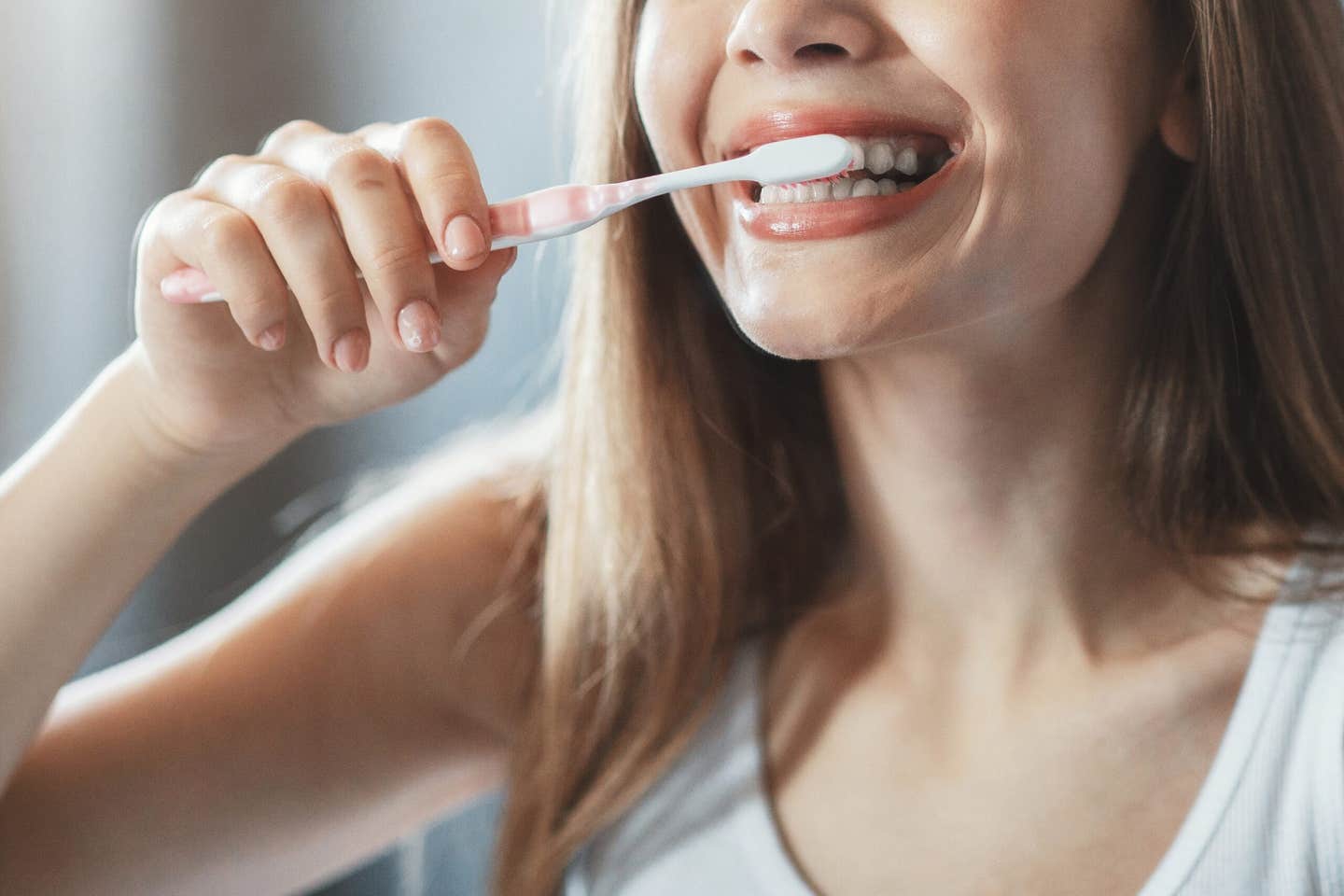
A self-powered toothbrush turns brushing into antibacterial activity, with promising plaque and gum results in a three-month trial. (CREDIT: Shutterstock)
- Experimental bristles turn brushing movements into electrical activity that helps damage bacteria associated with cavities and gum disease.
- A three-month randomized study enrolled 115 adults and found improvements in plaque, gum inflammation and bleeding with the experimental brushes.
- The results are promising, but the study does not establish fewer cavities, long-term safety or superiority over powered toothbrushes.
A toothbrush that produces electricity as its bristles bend could add a new layer of protection to everyday brushing. Researchers have developed a battery-free design that combines ordinary scrubbing with chemical reactions that damage bacteria associated with tooth decay and gum disease.
The experimental brush uses a plastic called polyvinylidene fluoride, or PVDF, instead of conventional nylon bristles. Bending the material generates electrical charges through the piezoelectric effect. Those charges help produce reactive molecules that can disrupt bacterial membranes, potentially making the bristles useful beyond their cleaning motion.
Researchers at Peking University School and Hospital of Stomatology reported the work in Science Advances. Yanhui Lu, Jia Song and Xiaopei Chi share first authorship; Xuehui Zhang and Xuliang Deng are the corresponding authors. Their experiments ranged from material tests to a three-month human trial.
The findings fit a broader effort to improve how dental tools deal with sticky bacterial biofilms. Other experimental approaches include shapeshifting microrobots that brush and floss. The self-powered toothbrush places the added function directly inside familiar-looking bristles, using the wearer’s brushing movements as its energy source.
How the self-powered toothbrush works
Ordinary brushing breaks up plaque, the bacterial film that clings to teeth. However, microbes can remain and rebuild that film. Some plaque bacteria produce acids that damage enamel, while imbalanced microbial communities contribute to gum inflammation. Removing plaque regularly helps limit those processes.
The researchers made PVDF bristles in two diameters, 0.16 and 0.24 millimeters, and treated them with heat to improve their properties. Both brush designs met the soft-bristle classification used in the study. Their tips were mechanically rounded, giving them a practical structure for routine brushing.
When the bristles flex, their electrical activity promotes reactions involving water that generate reactive oxygen species. These chemically active molecules can damage bacterial cells. The researchers also found antibacterial effects under static conditions, which they attributed partly to the material’s persistent surface electrical potential.
This is a different strategy from simply adding a motor to a brush handle. It also differs from the magnetically controlled cleaning system developed at Penn. Both approaches combine physical cleaning with antimicrobial chemistry, addressing challenges also explored in research on plaque acidity.
Laboratory tests reveal an antibacterial effect
The team tested two bacteria with well-established links to oral disease: Streptococcus mutans, associated with tooth decay, and Porphyromonas gingivalis, associated with periodontal disease. These experiments measured bacterial responses under controlled conditions, allowing researchers to examine effects that would be difficult to isolate inside a mouth.
After nine hours of coculture, fluorescence-based measurements indicated about 53% bacterial death for S. mutans exposed to the thicker PVDF bristles. The comparable nylon result was about 9%. For P. gingivalis, the figures were approximately 78% and 8%, respectively. These percentages describe laboratory exposure, not a single brushing session.
In another experiment, researchers grew human-derived dental biofilms on cow tooth enamel. Three minutes of brushing with the experimental designs produced removal efficiencies above 99%. That result supports further investigation, but it should not become a claim that the brush removes 99% of plaque in people. The researchers also compared electrically unpoled PVDF with poled material under matching mechanical conditions. Lower antibacterial activity in the unpoled group supported a contribution from the material’s electrical properties.
Plaque behaves differently in a living mouth, where saliva, meals and bacterial regrowth continually change conditions. The CDC’s explanation of tooth decay describes that ongoing process. Related research on targeted treatments for gum bacteria likewise highlights the importance of testing beyond simplified laboratory systems.
A three-month study moves into human mouths
The clinical trial screened 135 people and enrolled 115 adults with gingivitis or caries at Peking University Hospital of Stomatology. Researchers randomly assigned participants to four groups using sealed envelopes. Two groups received PVDF brushes, while two received nylon brushes with different bristle diameters.
Everyone received brushing instructions and used the supplied fluoride-free toothpaste twice daily. Examiners recorded plaque, gum inflammation and bleeding at the start, after one month and after three months. The main clinical figure reports outcomes for 109 participants across the four groups, rather than all 115 initially enrolled.
The researchers reported greater improvements with the experimental brushes. Plaque control improved early, while gum inflammation and bleeding improved more gradually. Samples also showed decreases in the relative abundance of several disease-associated bacteria. Relative abundance describes their share of the microbial community, rather than an absolute count. The trial excluded people with advanced periodontal disease, smokers and several other groups. Its findings therefore cannot automatically extend to everyone who might eventually use a self-powered toothbrush.
These are encouraging clinical signals, but they do not demonstrate fewer new cavities or prevention of advanced periodontal disease. The fluoride-free protocol also leaves questions about performance alongside fluoride toothpaste. The distinction between gingivitis and destructive periodontitis matters, as the NIH’s gum disease overview explains.
Investigating what happens inside bacterial cells
Microscopy revealed wrinkled and deformed bacterial membranes after exposure to the experimental bristles. Other tests detected increased reactive oxygen species inside the bacteria. Adding the antioxidant N-acetylcysteine weakened the antibacterial effect, supporting the conclusion that oxidative damage plays an important role in the response.
The team also examined genes associated with ATP-binding cassette transporters. These membrane systems help bacteria move substances into and out of their cells. Exposure to the experimental brushes reduced expression of selected transporter-related genes in the two disease-associated species, alongside changes in bacterial membrane potential.
The authors propose that these linked effects interfere with bacterial survival and attachment. However, the exact sequence remains an explanation to investigate further. The experiments do not establish that the brush selectively targets every harmful oral bacterium while sparing every beneficial species in a complex community. Laboratory checks included two nonpathogenic bacterial strains, but those comparisons represent only a small portion of the mouth’s microbial diversity.
Understanding that balance matters because a healthy mouth contains many microbes. Northwestern research on toothbrush communities illustrates their diversity. The American Dental Association’s toothbrush guidance also notes that finding bacteria on bristles does not itself establish adverse health effects.
Practical implications and the next tests
Durability and preliminary safety results were encouraging. The bristles retained useful electrical and mechanical properties after three months of testing, and brushing did not significantly increase enamel surface roughness. Cell experiments showed little toxicity. These findings support development, while leaving long-term tissue effects and broader safety questions open.
The authors acknowledge that prolonged laboratory exposure does not reproduce brief brushing followed by salivary rinsing and meals. They also call for comparisons with electric, sonic and antimicrobial-coated brushes. Existing Cochrane evidence comparing powered and manual brushes makes those comparisons important for establishing an added benefit.
For now, the research offers a promising way to combine cleaning and localized antibacterial activity without batteries. Larger and longer trials must establish whether those improvements translate into lasting dental benefits. Current ADA brushing advice continues to emphasize soft bristles, fluoride toothpaste and cleaning between teeth.
Dig deeper into plaque control and dental technology
These resources explain cavity formation, experimental cleaning tools and established evidence on toothbrushes and fluoride. Entries appear from newest to oldest.
About Cavities (Tooth Decay)
This overview explains how bacterial acids damage enamel and outlines established ways to prevent and treat cavities. (Centers for Disease Control and Prevention, May 2024)
Researchers Call in a Swarm of Tiny, Tooth-Scrubbing Robots
This research summary describes a proof-of-concept system that combines mechanical biofilm removal with antimicrobial activity. (National Institute of Dental and Craniofacial Research, September 2022)
Your toothbrush reflects you, not your toilet
Researchers explain what used toothbrushes reveal about the microbes that live on bristles and where they originate. (Northwestern University, January 2021)
Fluoride toothpastes of different strengths for preventing tooth decay
This systematic review evaluates fluoride toothpaste and explains the evidence for cavity prevention across different concentrations. (Cochrane, March 2019)
Powered/electric toothbrushes compared to manual toothbrushes for maintaining oral health
This systematic review compares plaque and gingivitis outcomes, providing context for future tests against existing powered brushes. (Cochrane, June 2014)
Health disclaimer: This article is for informational purposes only and does not provide medical advice. Consult a qualified dental professional about oral health concerns or changes to dental care.
Research findings are available online in the journal Science Advances.
The original story "Self-powered toothbrush uses tiny electrical charges to fight plaque bacteria" is published in The Brighter Side of News.
Related Stories
- You’re probably using your electric toothbrush wrong, study finds
- Revolutionary smart dental floss tracks your stress in real time
- Eco-friendly toothpaste made from hair could protect and repair damaged teeth
Like these kind of feel good stories? Get The Brighter Side of News' newsletter.
Joshua Shavit
Writer and Editor
Joshua Shavit is a NorCal-based science and technology writer with a passion for exploring the breakthroughs shaping the future. As a co-founder of The Brighter Side of News, he focuses on positive and transformative advancements in technology, physics, engineering, robotics, and astronomy. Having published articles on AOL.com, MSN, Yahoo News, and Ground News, Joshua's work highlights the innovators behind the ideas, bringing readers closer to the people driving progress.