The hidden costs of climate change for bees and wasps
A Bavaria study found warmer springs speed insect emergence, but often leave bees and wasps with less energy.

 Edited By: Joseph Shavit

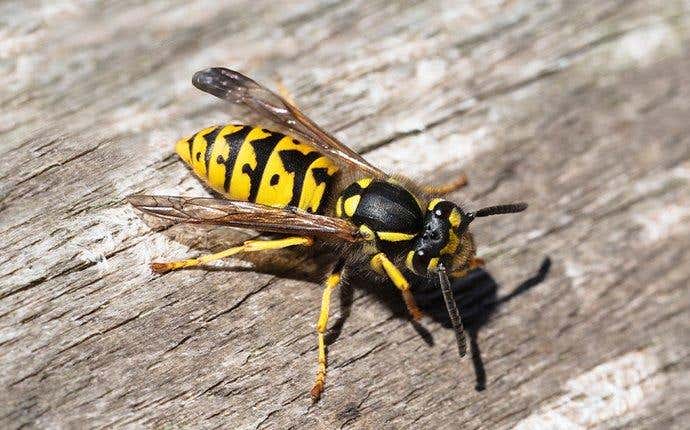
Warmer springs make bees and wasps emerge earlier, but many lose crucial body mass before adulthood. (CREDIT: Wikimedia / CC BY-SA 4.0)
A warm spring can look harmless, even welcome. For a bee or wasp sealed inside a cocoon, it can be costly.
That is the tension running through a new study of wild bees and wasps in Bavaria, where researchers found that higher post-winter temperatures pushed all five studied species to emerge earlier. But the earlier timing came with a price for some insects, especially those from cooler regions and those that still had to finish development in spring. In some cases, females of summer species lost up to 34 percent of their body mass under warmer conditions before emergence.
The work, published in Functional Ecology, was led by Dr. Cristina Ganuza and Professor Ingolf Steffan-Dewenter of the University of Würzburg’s Biocentre. It draws on nearly 15,000 hibernating bees and wasps collected from 178 sites across Bavaria, then raised under controlled spring conditions meant to mimic cool, warm, and hotter climate scenarios.
Where a bee comes from mattered
Wild bees and wasps do not all wait out winter in the same way. Some species that appear early in spring spend that period as fully developed adults inside the cocoon. Others, which emerge later in summer, overwinter at an earlier stage and still need to finish development once temperatures rise.
That difference turned out to matter.
From March 16 to September 24, the researchers recorded the emergence of 14,921 insects from 6,449 nests. The species came from 161 sites spanning a broad climate gradient in southern Germany, with mean annual temperatures at origin ranging from 5.9 to 10 degrees Celsius. The team then exposed nests to three post-winter treatments: cool, warm, and hot. The hot treatment simulated the warmest site plus 5 degrees Celsius.
Across all groups, insects emerged earliest in the hot treatment and latest in the cool one.
Still, not every population responded in the same way. Early-emerging species from warmer areas tended to emerge especially early under warm spring conditions. In contrast, the latest-emerging bee in the study, Heriades truncorum, often showed the opposite pattern, with individuals from cooler climates emerging earlier under cool treatment conditions.
The researchers argue that these patterns point to a mix of phenotypic plasticity, meaning flexible responses to short-term temperature changes, and local adaptation shaped by long-term climate.
The hidden cost of waiting too long
Timing was only part of the story. The team also looked at body condition, using scaled body mass at emergence as a proxy for fat reserves.
Here the pattern was striking. Across species, insects that emerged later had lower scaled mass. That relationship held more consistently than many of the climate-origin effects. In other words, every extra delay could leave an insect starting adult life with less stored energy.
The researchers weighed and measured 3,748 bees from 141 sites to estimate this effect. Scaled mass declined with later emergence in all groups they examined. In the strongest cases, the reduction reached 34 percent.
One sentence in the results stands out: warmer springs did not simply make insects faster, they could also leave them thinner.
For the summer bee Heriades truncorum, females in the warm and hot treatments emerged earlier, over a shorter period, and initially with higher scaled mass than those in the cool treatment or outdoor control. That suggests warmer post-winter conditions may sometimes help late-emerging species preserve body condition, at least if they can complete development quickly and emerge on time.
Spring species looked more vulnerable. In Osmia bicornis, climatic origin affected scaled mass, and insects from cooler climates were more likely to lose condition under warmer post-winter conditions than those from warmer origins. The authors say this points to a particular risk for spring-emerging insects from cooler regions.
As Ganuza put it, “Our data show that insects from cooler regions are particularly vulnerable to warm springs. They lose energy more quickly and therefore have poorer starting conditions.”
A large experiment across Bavaria
The scale of the project helped the researchers ask a harder question than a simple lab test could answer: not just whether warmer springs change emergence, but whether populations from different climates handle that warming differently.
The insects were collected in 2019 using trap nests across a 310-by-310-kilometer area of Bavaria, ranging from 168 to 1,122 meters in elevation. The study focused on four bee species and one hunting wasp species, including early-spring and late-summer insects with different overwintering stages.
Nests were stored outdoors at the University of Würzburg through winter under standardized conditions. On March 1, 2020, balanced groups of nests were assigned to different post-winter treatments. Researchers then checked the stems daily to record emergence.
The study also accounted for temperature conditions in the insects’ home sites during the previous year. Those temperature deviations produced additional patterns, although they were less consistent than the spring warming effect. Spring-emerging species generally emerged earlier when the previous season had been warmer than average, while summer-emerging species often moved in the opposite direction. The authors say these responses may reflect developmental effects, maternal effects, or both, but they could not fully separate those possibilities in this design.
That is one of the study’s important limitations. Because the team did not rear a second generation under controlled conditions, they could not cleanly disentangle genetic adaptation from maternal or transgenerational influences. The authors also note that some results, especially where variables were statistically entangled, should be treated with care.
Not all warming works the same way
One unexpected result came from the outdoor control. Insects exposed to naturally fluctuating temperatures had lower scaled mass than those kept in the temperature treatments, even compared with the warm treatment that had a similar average temperature.
That suggests fluctuations themselves may carry a cost, not just higher mean warmth.
The researchers argue that this could matter in a warming climate where springs bring not only higher average temperatures, but also swings and heat spikes. For insects living off finite fat reserves, those fluctuations may speed up energy loss before emergence.
The study leaves several open questions. The team wants to know how extra days of extreme heat affect hatching, how fat reserves influence pollination performance, and how quickly populations can adapt to changing temperatures.
Practical implications of the research
This study suggests that climate warming may reshape insect communities in more complicated ways than simply making them emerge earlier. Species that appear in spring, especially those from cooler regions, may face the heaviest strain because warm conditions can drain their reserves before they even begin feeding or nesting.
Later species may sometimes benefit from earlier completion of development, but only if they stay synchronized with flowers and seasonal conditions.
That matters beyond the insects themselves. Bees and wasps help support pollination and other ecological interactions. If warming shifts their timing and weakens their body condition, the effects may ripple outward through plant reproduction, food webs, and local ecosystems.
Research findings are available online in the journal Functional Ecology.
The original story "The hidden costs of climate change for bees and wasps" is published in The Brighter Side of News.
Related Stories
- Southern California bees are keeping deadly mites in check
- Bumblebees use light to tell time, study finds
- Scientists discover the ancient link between bees and the evolution of colors in flowers
Like these kind of feel good stories? Get The Brighter Side of News' newsletter.
Hannah Shavit-Weiner
Medical & Health Writer
Hannah Shavit-Weiner is a Los Angeles–based medical and health journalist for The Brighter Side of News, an online publication focused on uplifting, transformative stories from around the globe. Having published articles on AOL.com, MSN and Yahoo News, Hannah covers a broad spectrum of topics—from medical breakthroughs and health information to animal science. With a talent for making complex science clear and compelling, she connects readers to the advancements shaping a brighter, more hopeful future.