The strange reason nearly all humans are right-handed
A new primate analysis suggests upright walking and bigger brains shaped humanity’s strong right-handed bias.

 Edited By: Joseph Shavit

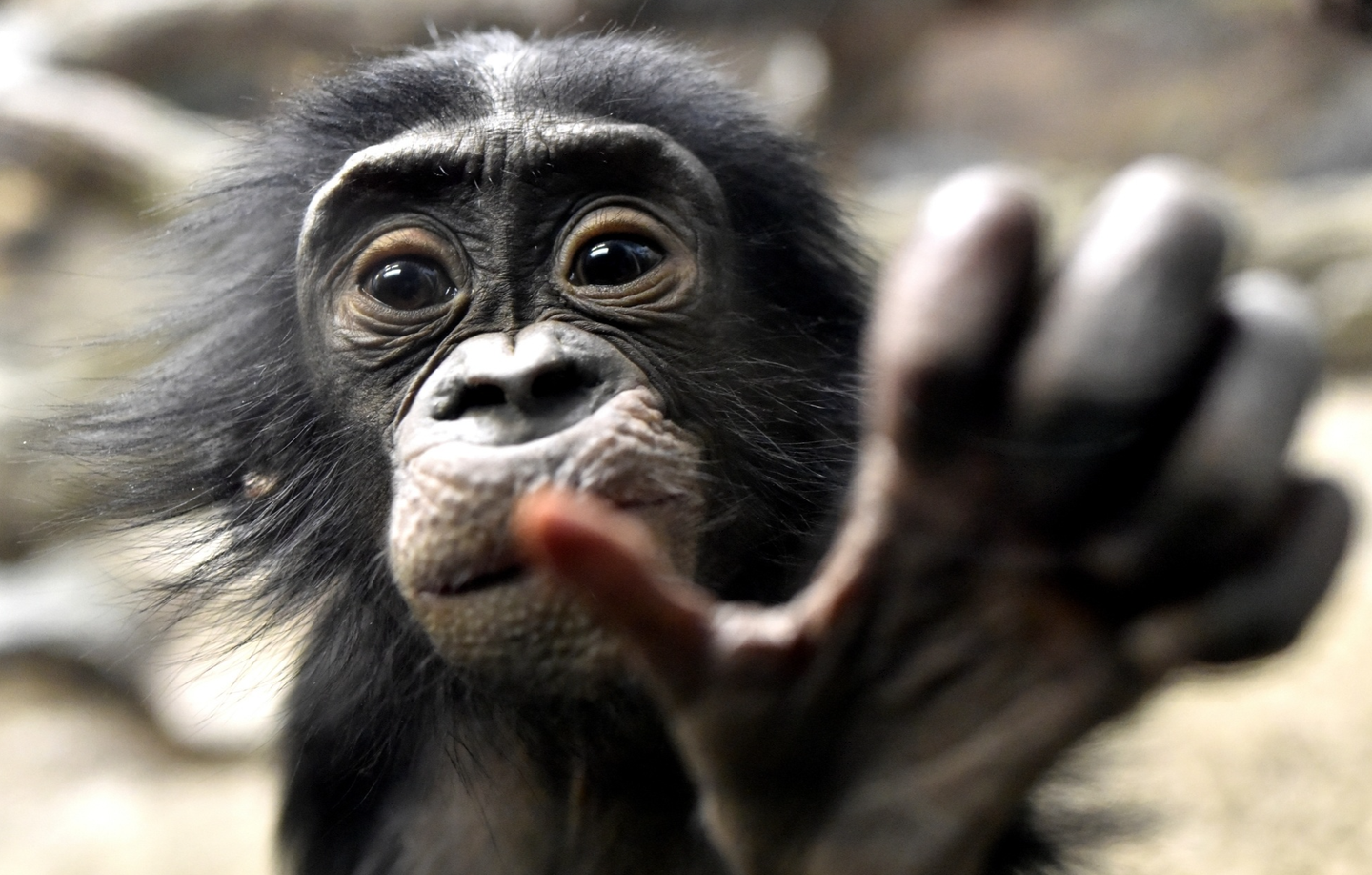
Oxford study links human right-handedness to bipedalism and larger brains across primate evolution. (CREDIT: Shutterstock)
Roughly nine out of 10 people favor their right hand, a pattern so common it can feel almost invisible. Yet in evolutionary terms, it is deeply strange. No other primate species comes close to showing such a strong, consistent population-wide bias.
A new analysis suggests that this familiar human trait may have grown out of two of the biggest changes in our evolutionary history. These are standing upright and growing a larger brain.
Researchers led by the University of Oxford examined handedness across 41 species of monkeys and apes. They drew on data from 2,025 individuals. Their results, published in PLOS Biology, suggest humans no longer look like an outlier once two factors are taken into account. These two factors are brain size and the relative length of the arms compared with the legs, a standard marker tied to bipedalism.
That matters because human handedness has long resisted easy explanation.
Scientists have spent years tracing its roots in genes, brain specialization and development. Hand preference seems to begin early, possibly even before birth, and it becomes more established over time. But none of that has fully answered the bigger question of why humans, unlike other primates, ended up so overwhelmingly right-handed in the first place.
A pattern no other primate shares
The Oxford team, led by Dr. Thomas A. Püschel and Rachel M. Hurwitz, worked with Professor Chris Venditti at the University of Reading. They tested many of the leading ideas that have been proposed to explain handedness. These included tool use, diet, habitat, body mass, social system, brain size and locomotion.
They used Bayesian phylogenetic comparative meta-analysis. This is a method designed to compare species while accounting for shared evolutionary history and differences between studies.
The researchers looked at two parts of handedness. One was direction, whether a species tends to lean right or left overall. The other was strength, meaning how strongly individuals favor one hand regardless of which hand it is.
Humans stood apart most clearly on direction.
Among all anthropoid primates, humans had the highest rightward handedness index at 0.76. No other species showed a similarly credible rightward population bias. Chimpanzees, gorillas and Diana monkeys showed weaker rightward tendencies, while some other primates leaned left. In most cases, though, those patterns were variable enough that they could not be treated as strong species-wide trends.
The broader message was striking: across primates, strong hand preference exists. However, a shared directional tilt toward the right does not exist.
When humans stop looking exceptional
That changed when the team adjusted their models to include endocranial volume, a measure tied to brain size. They also included intermembral index, which captures the balance between arm and leg length.
Humans have an unusually low intermembral index of 72. This reflects legs that are much longer than arms, a hallmark of bipedalism. Once that and brain size were included, the extreme human pattern was largely accounted for.
The study’s phylogenetic outlier tests make the shift easy to see. In a model that excluded humans, the predicted handedness direction for Homo sapiens was 0.0, far from the observed value of 0.76. But in a model that included brain size, intermembral index and one social-system variable, the predicted value rose to 0.74. This is almost identical to the real one.
A similar result appeared for handedness strength. Humans had an observed strength value of 0.94. A model without humans predicted only 0.43. Once relevant factors were added, especially intermembral index, that prediction climbed to 0.86.
In other words, humans do not seem so evolutionarily bizarre when the anatomy of upright walking and the effects of a larger brain are brought into the picture.
Püschel said the study is the first to test several major explanations for human handedness within a single framework. He said the results suggest the trait is tied to features that are especially central to being human. In particular, walking upright and evolving larger brains are important factors.
A gradual shift through human evolution
The team also used its reduced models to estimate likely handedness patterns in extinct hominins.
What emerged was not a sudden jump but a gradient.
Early species such as Ardipithecus ramidus and Australopithecus afarensis were predicted to have only mild rightward preferences, with handedness levels closer to those of modern great apes. Later members of the human lineage showed a stronger bias. Predicted handedness direction rose from 0.16 in Ardipithecus ramidus to 0.32 in Australopithecus afarensis, then to 0.50 in Homo ergaster, 0.54 in Homo erectus and 0.64 in Homo neanderthalensis.
That trend lines up with a broader evolutionary story. Upright walking likely came first, freeing the hands from locomotion. That opened new opportunities for fine manual behavior and may have increased the payoff for using one hand more consistently. Later, as the genus Homo evolved larger brains, the rightward bias appears to have become more pronounced.
The analysis also found that handedness strength may have stayed high across much of the hominin lineage. Even early species were predicted to show substantial manual preference. What changed more dramatically over time was direction. It was not simply whether individuals favored one hand, but whether entire populations leaned in the same direction.
The “hobbit” stands apart
One fossil species broke the pattern.
Homo floresiensis, the small-bodied and small-brained hominin from Indonesia often nicknamed the “hobbit,” showed a much weaker predicted rightward bias at 0.28. The authors suggest that may fit its unusual anatomy. While it had clear adaptations for upright walking, other features point to a locomotor repertoire that still involved climbing.
Its smaller brain may also matter.
That combination, a more mixed style of movement and less encephalization, fits the larger picture proposed by the study. Species that were not fully committed to terrestrial bipedalism, or that lacked the larger brains seen later in human evolution, may not have developed the same degree of rightward specialization.
The researchers also found that among nonhuman primates, arboreal species often showed stronger hand preferences than terrestrial ones. That may reflect the demands of moving and stabilizing the body in trees, where one hand may be used for support while the other carries out precise actions. Humans, the authors argue, may represent a special case. This is a terrestrial species whose fully freed hands created an unusual opening for manual specialization.
Practical implications of the research
The findings do not settle every debate around handedness. The authors note several limits, including differences in how human and nonhuman data are collected, the context-dependent nature of hand preference and the challenge of comparing behavior across species and study designs. They also say culture may help reinforce handedness in humans, even if it cannot explain the pattern on its own.
Still, the work sharpens the evolutionary picture. It suggests right-handedness is not just a quirky human trait floating free of the rest of primate biology. It may be tied to the same shifts that reshaped the human body and brain.
That has practical value for future research. It gives scientists clearer targets when studying how lateralization evolved, why left-handedness persists, and whether similar patterns in parrots, kangaroos and other animals reflect deeper evolutionary parallels. It also offers a more grounded way to think about one of the most ordinary features of daily life. For instance, consider the hand you reach for first as part of a much longer human story.
Research findings are available online in the journal PLOS Biology.
The original story "The strange reason nearly all humans are right-handed" is published in The Brighter Side of News.
Related Stories
- Classical Indian dance is teaching robots how to move and use their hands
- Writing by hand boosts reading skills in young children, study finds
- Million-year-old fossil changes what we know about human hands and feet
Like these kind of feel good stories? Get The Brighter Side of News' newsletter.
Hannah Shavit-Weiner
Medical & Health Writer
Hannah Shavit-Weiner is a Los Angeles–based medical and health journalist for The Brighter Side of News, an online publication focused on uplifting, transformative stories from around the globe. Having published articles on AOL.com, MSN and Yahoo News, Hannah covers a broad spectrum of topics—from medical breakthroughs and health information to animal science. With a talent for making complex science clear and compelling, she connects readers to the advancements shaping a brighter, more hopeful future.