WSU scientists convert sewage sludge into 99% pure natural gas sharply boosting energy recovery
A WSU pilot system turns sewage sludge into pipeline-quality renewable gas while cutting disposal burdens.

 Edited By: Joseph Shavit

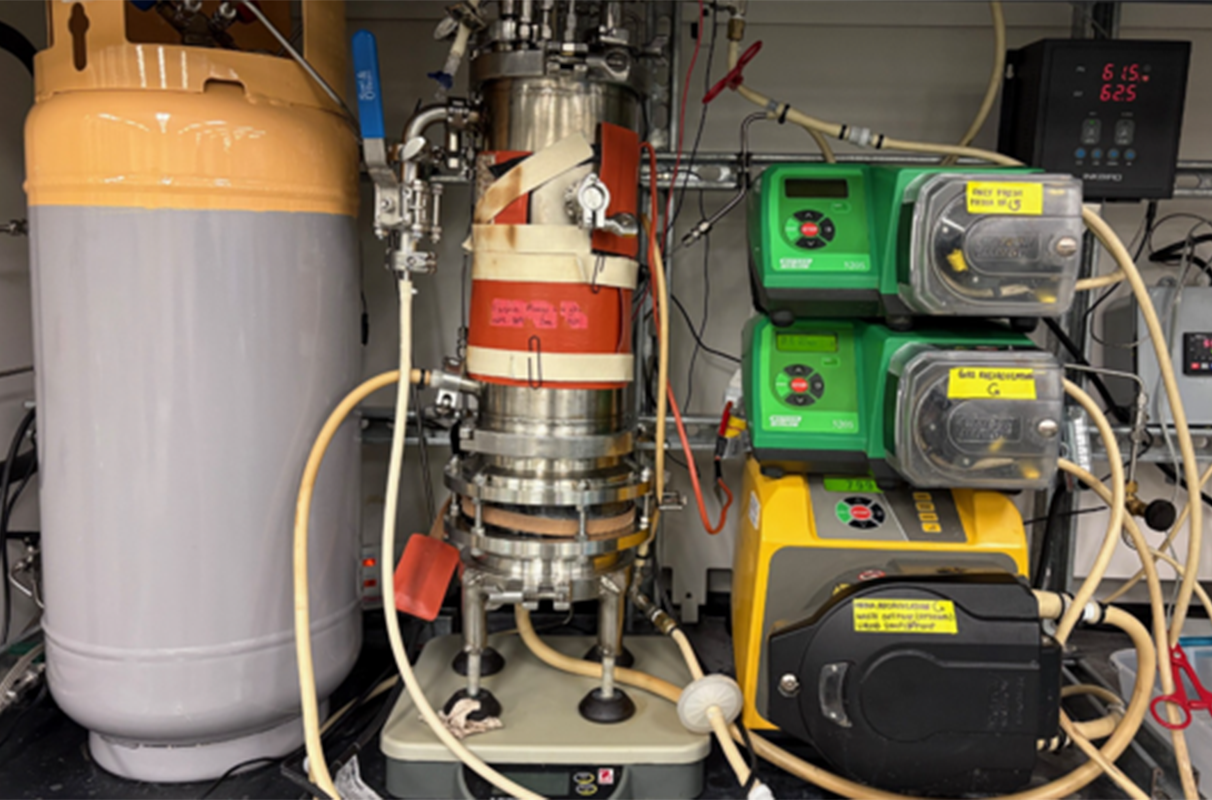
As part of the project, the team used a novel bacterial strain to upgrade the biogas in a reactor, converting carbon dioxide with hydrogen into methane or renewable natural gas. (CREDIT: WSU)
Sewage sludge is usually the part nobody wants to think about. It is costly to handle, hard to get rid of, and after treatment, much of it still ends up in landfills.
A Washington State University team says it has found a way to squeeze far more value from that waste. In a pilot study, researchers turned treated sewage sludge into renewable natural gas that was 99% methane, while sharply improving how much of the sludge’s carbon ended up in usable fuel instead of leftover waste.
The work, published in the Chemical Engineering Journal, points to a different way of thinking about wastewater plants, not just as public utilities that clean water, but as places that might also recover energy from a stubborn waste stream. That matters because wastewater treatment facilities consume between 3% and 4% of total U.S. electricity demand, and they release about 21 million metric tons of greenhouse gases each year.
“There is a workhorse,” researcher Birgitte Ahring said of the microbial strain used in the system. “It doesn’t need organic additives or a lot of nursing. It does well with water and a vitamin pill.”
Turning sludge into gas
The U.S. has roughly 14,780 municipal wastewater treatment facilities, handling more than 32,000 million gallons of wastewater a day. About half use anaerobic digestion to break down sewage sludge and produce biogas. But that common process leaves a lot behind. In many cases, 50% or more of the treated sludge remains as biosolids that still need disposal.
That leftover waste has become a growing problem. Land application has long been a favored option, but concerns over substances such as PFAS and PFOS are pushing more biosolids toward landfills. The paper notes that about 2 million dry tons of biosolids are landfilled each year.
The WSU team tried to attack both problems at once, first by making the sludge easier to break down, then by upgrading the resulting gas into a cleaner fuel.
Their process, called Advanced Pretreatment and Anaerobic Digestion, or APAD, adds a high-temperature, high-pressure pretreatment step before a second round of digestion. The sludge was heated to 175 degrees Celsius with oxygen added at controlled levels, then rapidly depressurized. That combination, known as Advanced Wet Oxidation and Steam Explosion, helped break apart stubborn organic material that normally resists digestion.
Once that happened, microbes in an anaerobic digester could get at more of the sludge.
More methane, less waste left behind
In pilot-scale testing, the pretreated sludge produced an average methane output of 39.7 liters per day, compared with 26.7 liters per day for untreated sludge. The researchers said that represented a 49.8% increase in methane yield.
The gains carried through the larger system. The study found that conventional anaerobic digestion converted 37.3% of the sludge carbon, while the pretreatment approach raised that figure to 61.6%. With biological biogas upgrading added, the overall carbon conversion efficiency reached 83%.
The paper describes that as a major jump over conventional treatment. In its conclusions, the team said the full system delivered a 200% increase in renewable natural gas production compared with standard treatment.
It also produced a very pure gas. After the biogas moved into a trickle-bed bioreactor, a thermophilic methanogenic strain called Methanothermobacter wolfeii BSEL converted carbon dioxide and hydrogen into extra methane. The resulting renewable natural gas tested at 99% methane.
“This technology basically converts up to 80% of the sewage sludge into something valuable,” said Ahring, a professor in WSU’s Bioproducts, Sciences, and Engineering Laboratory and the Gene and Linda Voiland School of Chemical Engineering and Bioengineering.
That matters because ordinary biogas often contains 35% to 40% carbon dioxide, which limits its use unless it is upgraded. The WSU system aimed to solve that problem inside the treatment chain rather than as a separate, heavily chemical process.
The cost story is more complicated
The most eye-catching cost reduction came from the pretreatment side. The researchers reported that adding the AWOEx pretreatment train cut sludge treatment costs from $494 to $253 per dry ton.
That is a steep drop, nearly 50%, and it came largely from reducing the amount of sludge left for disposal.
But the full APAD system, which includes both pretreatment and biological gas upgrading, did not yet produce the lowest total treatment cost. The techno-economic analysis found that the complete setup came in at $530 per dry ton. The big reason was hydrogen. The upgrading step depends on added hydrogen gas, and that cost weighed heavily on the economics.
The study’s annual operating analysis also found that raw materials made up the biggest expense, with much of that tied to hydrogen.
Even so, the full system generated revenue potential through the sale of renewable natural gas and related credits. The researchers estimated that more than $1 million could come from renewable natural gas sales, renewable identification numbers, and low-carbon fuel standard credits.
So the study does not present one neat answer. It shows a cheaper pretreatment route today, and a more ambitious integrated system that could become more attractive if renewable hydrogen gets cheaper.
Climate promise, with conditions attached
The environmental picture followed a similar pattern.
The life-cycle analysis found that the complete APAD process cut net greenhouse gas emissions to 220 kilograms of carbon dioxide equivalent per ton of treated sludge, down from a project baseline of 490 kilograms. A pretreatment-only version performed even better, reaching a net negative result of minus 160 kilograms of carbon dioxide equivalent per ton, largely because of offsets tied to natural gas and fertilizer replacement.
The upgrading-only scenario, however, came out worse than baseline at 540 kilograms of carbon dioxide equivalent. The paper says that route would likely need carbon-free or renewable hydrogen to deliver a clear emissions advantage.
That is one of the study’s biggest limitations. The pilot work relied on bottled industrial hydrogen, and the authors say future economics and climate gains will depend on cleaner, cheaper hydrogen supplies. The researchers also assumed that lab- and pilot-scale performance would scale to full plant operations. Their sludge samples came from a small wastewater treatment facility in Walla Walla, Washington, producing 4.5 tons of sewage sludge a day, so broader testing still needs to happen.
The team includes researchers from WSU, Pacific Northwest National Laboratory, and Clean-Vantage LLC, a Richland clean technology startup. The bacterial strain has been patented, and the group is working with WSU’s Office of Innovation and Entrepreneurship and an industrial partner on larger-scale development.
Practical implications of the research
For wastewater utilities, the clearest near-term takeaway is that better pretreatment could reduce disposal burdens and recover more energy from a waste stream that now costs money.
For communities, that could mean lower operating strain on treatment plants and more renewable gas moving into existing energy systems.
The full integrated version still hinges on hydrogen costs and scale-up, but the study suggests sewage sludge may not have to remain a landfill problem. It could become a more useful energy resource.
Research findings are available online in the Chemical Engineering Journal.
The original story "WSU scientists convert sewage sludge into 99% pure natural gas sharply boosting energy recovery" is published in The Brighter Side of News.
Related Stories
- Mini lightning bolts help chemists turn methane into clean-burning fuel
- Methane-eating microbes turn greenhouse gas into fuel, food, and bioplastics
- New flaxseed feed helps reduce methane in cow burps
Like these kind of feel good stories? Get The Brighter Side of News' newsletter.
Rebecca Shavit
Writer
Based in Los Angeles, Rebecca Shavit is a dedicated science and technology journalist who writes for The Brighter Side of News, an online publication committed to highlighting positive and transformative stories from around the world. Having published articles on MSN, AOL News, and Yahoo News, Rebecca's reporting spans a wide range of topics, from cutting-edge medical breakthroughs to historical discoveries and innovations. With a keen ability to translate complex concepts into engaging and accessible stories, she makes science and innovation relatable to a broad audience.