Yellowstone lake mud reveals 15,000 years of fire, forest and geyser change
Yellowstone lake sediments reveal how climate, wildfire and hydrothermal activity shaped the plateau for 15,000 years.

 Edited By: Joseph Shavit

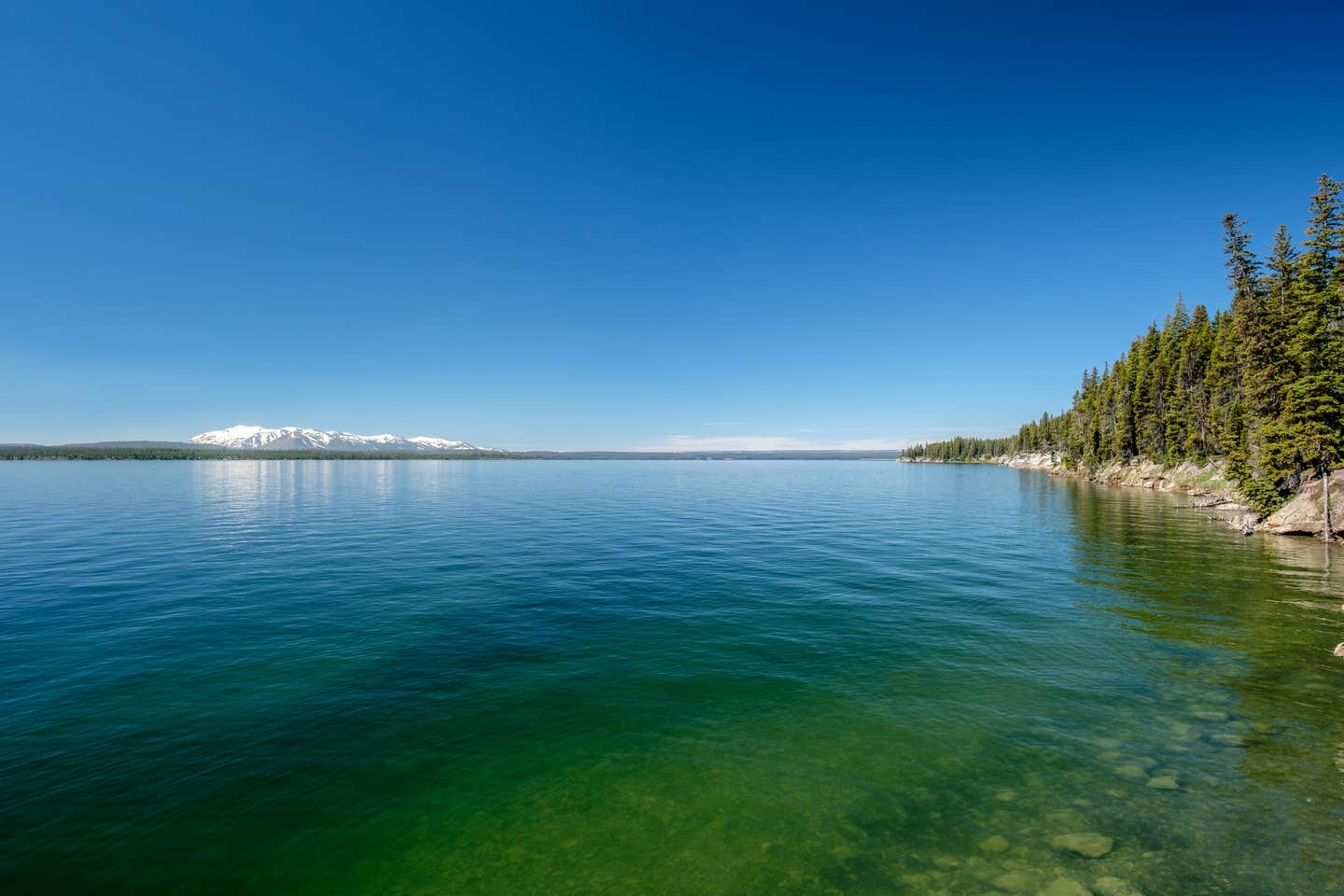
Montana State University-led research shows how lake mud records Yellowstone’s ancient fires, forests and geyser activity. (CREDIT: Shutterstock)
- Yellowstone lake mud preserves a 15,000-year record showing how drought, wildfire and underground heat changed the landscape.
- Lodgepole pine forests stayed surprisingly stable, while fires increased sharply during hotter, drier periods.
- Wetter conditions strengthened hydrothermal activity, suggesting future drying could affect geysers while increasing wildfire risk.
Yellowstone’s steaming geyser basins may look timeless, but lake mud tells a different story. A new study shows that climate, wildfire and underground heat have shaped the Yellowstone Plateau for 15,000 years.
The National Science Foundation-funded research was led by Cathy Whitlock, a Montana State University Regents Professor emerita of earth sciences.
By studying sediment cores from small lakes in Yellowstone National Park’s Lower Geyser Basin, scientists reconstructed the region’s long environmental history. The layers revealed changes in vegetation, fire, lake chemistry and hydrothermal activity since the last ice age.
A Landscape Written In Lake Mud
Whitlock has spent decades studying the Greater Yellowstone Ecosystem. Her work often begins with lake sediment, which stores tiny clues year after year.
Those clues can include pollen from ancient plants, charcoal from old fires and chemical traces from hot springs. They can also include diatoms, microscopic algae that reveal water depth and lake chemistry.
The new project began after Whitlock and co-author Chris Schiller collected sediment cores in 2020. The material looked different from lakebed sediments elsewhere in Yellowstone.
Around the same time, Whitlock read research suggesting Old Faithful stopped erupting for about 100 years in the early 13th century. A long drought may have reduced water in the geyser system.
“I thought, ‘Well, there have been long, dry periods in Yellowstone in the past, some of them lasting for several centuries. I wonder if we could document how periods of sustained drought affected ancient geyser activity,’” she said.
Lakes Born From Explosions
Lower Geyser Basin is Yellowstone’s largest geyser system. It contains geysers, hot springs, mudpots, fumaroles, thermal grasslands and lodgepole pine forest.
The research team studied small lakes of different ages in the basin. These lakes are closed, meaning streams do not flow into or out of them.
The scientists believe many formed in depressions left by hydrothermal explosions. These violent bursts likely happened when hot water, steam and pressure reshaped the ground.
Two lakes formed shortly after glaciers melted from the region. As ice disappeared, pressure lifted from the land. That change likely helped trigger lake-forming hydrothermal eruptions.
The study connects these lake origins to wet climate periods. More groundwater and snowmelt may have fed the heated underground systems that produced explosions.
Forests That Refused To Change
The sediment cores showed that after the ice retreated, grassy steppe spread across rhyolite volcanic soils. This open landscape included grasses, sagebrush and other non-tree plants.
Lodgepole pine then began to take over between 12,800 and 11,000 years ago. Once established, the forest changed surprisingly little in composition.
That stability stood out because climate did change. Yellowstone experienced long warm, dry periods and later cooler, wetter conditions.
“The persistence of lodgepole pine for thousands of years is explained by the infertile soils on the rhyolite volcanic plateau and lodgepole’s adaptation to fire. It’s been very hard for anything else to get established in that area given limited nutrients and well-drained substrates,” Whitlock said.
The finding suggests that lodgepole pine may continue to dominate the plateau as the climate warms. The trees have endured many changes before.
Fire Followed The Climate
Vegetation stayed fairly stable, but wildfire did not. Charcoal in the lake cores showed major shifts in fire activity through time.
“While the vegetation has been remarkably insensitive to past climate change, fire activity on the plateau has responded dramatically,” Whitlock said.
The team compared lake records with high-resolution paleoclimate model results for Yellowstone. The model showed that summers were warmer and drier than today between 12,000 and 6,000 years ago.
That matched the charcoal evidence. Fires became more common during those hot, dry centuries.
Diatoms also supported the same story. Their fossil remains showed lower lake levels during drier periods, giving scientists another line of evidence.
Lessons From The 1988 Fires
Whitlock said reconstructing ancient fire history requires careful groundwork. Her team built much of that foundation after the massive Yellowstone fires of 1988.
“As soon as the fires were over, we started studying charcoal deposition into lakes to determine how far charcoal particles traveled during a fire, how long they took to get buried in the mud, that kind of thing,” she said.
That work helped scientists understand how lake mud records wildfire. It also gave the team tools to interpret much older charcoal layers.
“The charcoal analytical techniques we developed for Yellowstone are now used in fire history studies on every continent. We have a much better understanding of fire as a global phenomenon because of the work we did following the 1988 fires,” Whitlock said.
In this new study, those techniques helped reveal how fire responded to long-term climate shifts.
Heat, Water And Chemistry
The lake records also showed changes in Yellowstone’s hydrothermal systems. Chemical traces such as arsenic and cesium gave clues about thermal water reaching the lakes.
These elements are common in Yellowstone’s hot waters. Higher concentrations in sediment can point to stronger hydrothermal input.
The study found that hydrothermal systems were more active during wetter periods. During drier times, thermal activity appeared to weaken.
That pattern matters because geysers depend on water. Heat alone does not make eruptions. A geyser also needs enough groundwater to build pressure and discharge.
The finding suggests future warming and drying may reduce some hydrothermal activity. It may also increase wildfire incidence across the plateau.
A Future Shaped By Past Clues
Research geophysicist Michael Poland, scientist-in-charge of the USGS Yellowstone Volcano Observatory, said these changes may not appear quickly.
“This study and ones like it help to give us a sense of what might be expected in the future for hydrothermal activity given current trends in climate,” he said.
He said the work could help scientists understand possible near-term changes in geyser timing, force and frequency.
“That’s always been a key aspect of geology, and these sorts of studies show the past is the key to the present, which is then the key to the future. The more we understand past conditions and what drove them, the more we understand what’s likely to occur in the future,” Poland said.
For Yellowstone, the past shows a restless balance. Water feeds geysers, dry heat feeds fire and poor volcanic soils hold forests in place.
A Team Across Disciplines
Whitlock’s question required help from many fields. The project included MSU professor of earth sciences Dave McWethy, postdoctoral researchers, students and scientists from several institutions.
Collaborators came from the U.S. Geological Survey, Oregon State University, Manchester University and Colorado State University.
Together, they used radiocarbon dating, volcanic ash layers, pollen, charcoal, diatoms and sediment chemistry. Each method added a different piece of the story.
The result is a fuller portrait of Yellowstone as a connected system. Climate affects snowpack and water. Water affects geysers and lakes. Fire affects forests. Geology shapes what plants can grow.
Practical Implications Of The Research
This research gives scientists and park managers a deeper baseline for understanding Yellowstone’s future. The study shows that geyser basins are not fixed features. They respond to water supply, climate, fire and underground heat.
The findings suggest that warmer, drier conditions could reduce hydrothermal activity while increasing wildfire risk. Snowpack may become especially important to monitor because melting snow helps recharge geyser systems.
The work also improves how researchers interpret fire history around the world. Techniques developed after Yellowstone’s 1988 fires now help scientists read ancient charcoal records on every continent.
For humanity, the study shows why long-term environmental records matter. A single human lifetime cannot reveal how landscapes respond across centuries. Lake sediments can. In Yellowstone, those records help people understand how treasured natural systems may change in a warmer future.
Dig deeper into Yellowstone’s geysers, wildfire and climate history
These resources explore how water, climate, fire and geological processes interact across Yellowstone, placing its long environmental record in a broader scientific context.
Travertine records climate-induced transformations of the Yellowstone hydrothermal system from the late Pleistocene to the present
Researchers used ancient travertine deposits to trace changes in Yellowstone’s hydrothermal system over roughly 15,000 years, finding that periods of deposition corresponded with wetter climatic conditions and shifts in thermal-water chemistry. (GSA Bulletin, 2024)
Forecasting Eruptions at Steamboat Geyser: Time Scales and Physical Processes
This work examines the physical processes and timescales that govern eruptions at Yellowstone’s Steamboat Geyser, helping clarify why geyser behavior varies and how subsurface water and heat influence eruption patterns. (JGR: Machine Learning and Computation, 2025)
Yellowstone's Old Faithful Geyser Shut Down by a Severe Thirteenth Century Drought
Evidence from mineralized lodgepole pine around Old Faithful indicates the geyser stopped erupting for decades during severe 13th-century droughts, directly linking prolonged water shortages with hydrothermal behavior. (Geophysical Research Letters, 2020)
The Dynamic Floor of Yellowstone Lake over the Past 14,000 Years
USGS scientists describe sediment-core evidence for 16 hydrothermal explosions spanning about 13,000 years, showing how earthquakes, lake-level changes and different types of hydrothermal fluids have reshaped Yellowstone Lake. (U.S. Geological Survey, 2022)
Simulated postfire tree regeneration suggests reorganization of subalpine forests in the Greater Yellowstone Ecosystem under future climate
Modeling of future forest recovery suggests hotter and drier conditions could alter postfire regeneration across the Greater Yellowstone Ecosystem, including declines in lodgepole pine regeneration under the warmest, driest scenarios. (Ecosphere, 2025)
Research findings are available online in the journal Proceedings of the National Academy of Sciences.
The original story "Yellowstone lake mud reveals 15,000 years of fire, forest and geyser change" is published in The Brighter Side of News.
Related Stories
- The hidden mantle flow shaping Yellowstone’s supervolcano
- Striking new images reveal the hidden magma network beneath Yellowstone
- Water seeping into Earth’s mantle 3.1 billion years ago fueled early volcanic activity and plate tectonics
Like these kind of feel good stories? Get The Brighter Side of News' newsletter.
Joshua Shavit
Writer and Editor
Joshua Shavit is a NorCal-based science and technology writer with a passion for exploring the breakthroughs shaping the future. As a co-founder of The Brighter Side of News, he focuses on positive and transformative advancements in technology, physics, engineering, robotics, and astronomy. Having published articles on AOL.com, MSN, Yahoo News, and Ground News, Joshua's work highlights the innovators behind the ideas, bringing readers closer to the people driving progress.