Blocking ANO6 protein slows pancreatic tumor growth and reduces immune suppression
Researchers linked ANO6 to lipid transfer that feeds pancreatic tumors and weakens T cells, identifying a potential treatment target in cell and mouse studies.
 Temple University Writer: Emily Storz

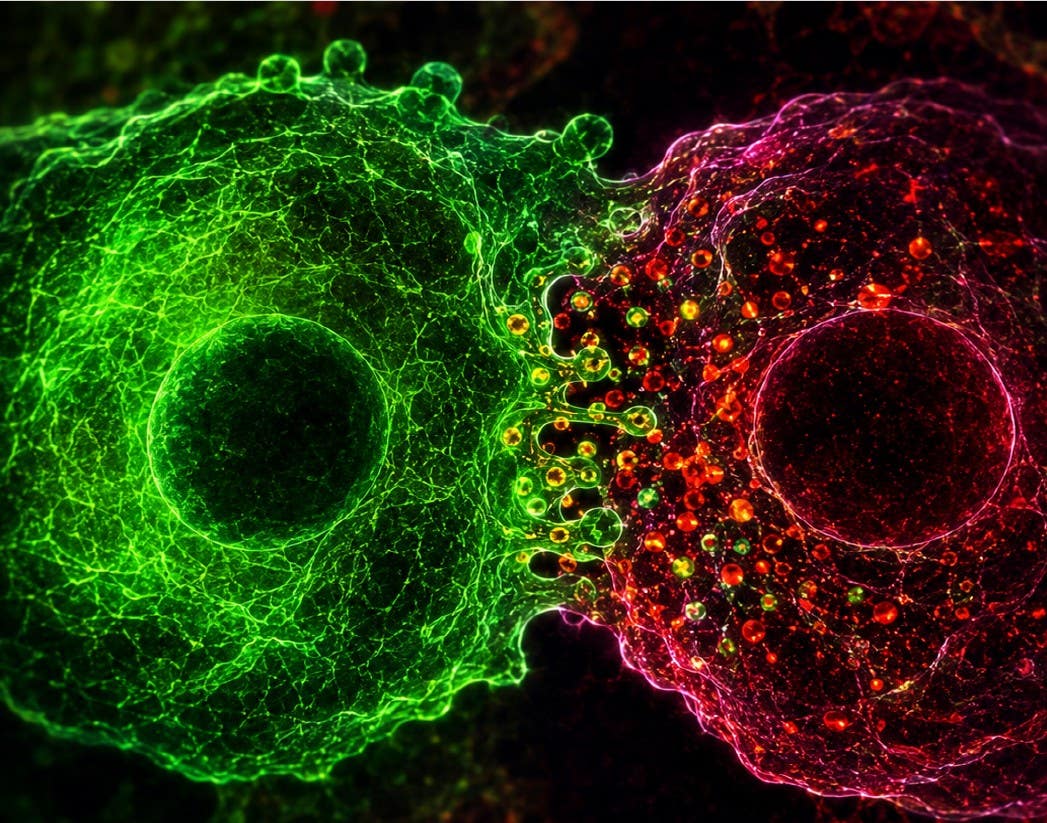
Blocking ANO6 reduced pancreatic tumor growth in mice and disrupted lipid transfer linked to cancer nutrition and T-cell dysfunction. (CREDIT: Fox Chase Cancer Center)
- Pancreatic cancer cells acquire cholesterol by taking membrane fragments from nearby fibroblasts, a process that depends on the protein ANO6.
- Cell and mouse experiments linked the same membrane exchange to weakened cancer-fighting T cells, identifying two potentially connected therapeutic opportunities.
- Genetic disruption and drug treatment reduced tumor growth in preclinical models, but selective ANO6 treatment has not been established in patients.
Pancreatic cancer cells can obtain nutrients by taking small bites from neighboring cells. Those exchanges help feed tumors while a related interaction can weaken the immune cells meant to attack them. Blocking a protein involved in both processes slowed tumor growth in mouse experiments, suggesting a potential way to disrupt pancreatic cancer’s defenses.
The findings, published in Nature Cancer, come from research involving Fox Chase Cancer Center and collaborators. Fox Chase professors Igor Astsaturov and Edna Cukierman were co-senior authors. The work focused on anoctamin 6, or ANO6, and cancer-associated fibroblasts, supportive cells that occupy much of a pancreatic tumor’s surroundings.
The study combines observations of human tissue with laboratory and animal experiments. Its treatment findings are preclinical, so they do not demonstrate benefit in patients. They instead identify a mechanism that researchers could investigate with more selective drugs and further testing.
Following cholesterol through the tumor
Pancreatic ductal adenocarcinoma, the most common pancreatic cancer, develops within unusually dense connective tissue. Fibroblasts and the collagen-rich matrix they produce can help compress blood vessels. That creates a puzzle: how do cancer cells obtain cholesterol and other lipids when direct access to circulating nutrients is limited? Producing new lipids also consumes energy and oxygen, giving cancer cells an incentive to obtain these molecules from outside sources.
To follow the supply route, researchers injected mice with fluorescently labeled low-density lipoprotein, or LDL, which carries cholesterol. They used microscopy to track where the label traveled. At one hour, the signal appeared mainly in fibroblasts, rather than in cancer cells.
By five hours, labeled cholesterol was moving into cancer cells, particularly where they touched fibroblasts. Around 18 hours, fibroblast labeling had fallen toward background while cancer cells remained strongly fluorescent. The pattern suggested that surrounding cells acted as an intermediate delivery station for blood-derived lipids.
Cancer cells take pieces of their neighbors
The team tested that interpretation by growing pancreatic cancer cells alongside labeled fibroblasts. Cancer cells acquired fibroblast membrane material when physical contact was possible. Separating the populations with a barrier largely prevented transfer, showing that nearby cells could not provide the same support simply by sharing culture fluid.
This membrane-nibbling process is called trogocytosis. Imaging showed prolonged contact sites where cancer cells acquired protrusions from fibroblast membranes. Human and mouse pancreatic cancer cell lines took up the labeled material within four to 12 hours.
“Cancer-associated fibroblasts are not passive bystanders. They actively support tumor growth by transferring lipids to cancer cells,” Astsaturov said. The findings place this cell-to-cell exchange within the broader question of how tumors maintain their nutrient supply.
ANO6 prepares the membrane for transfer
ANO6 functions as a lipid scramblase, a protein that moves certain lipids between the two layers of a cell membrane. Its activity exposes phosphatidylserine on the outer surface. That lipid can serve as an “eat me” signal, helping make membrane fragments available to recipient cells. The mechanism gives researchers a concrete link between cell contact, membrane chemistry and lipid metabolism, connecting the behavior of neighboring cells with cancer’s nutritional needs.
Reducing ANO6 in fibroblasts sharply limited membrane transfer and weakened their ability to sustain cholesterol-dependent cancer cells in nutrient-poor laboratory conditions. Restoring functional ANO6 restored support, whereas an inactive version did not provide the same rescue. These genetic experiments strengthened the case that the protein itself mattered. Both CRISPR interference and a separate RNA-based method reduced ANO6 expression, helping the team test the mechanism through independent genetic approaches.
In one mouse implantation experiment, ANO6-producing fibroblasts doubled the growth of the tested pancreatic tumors compared with cancer cells implanted alone. Fibroblasts lacking functional ANO6 did not produce that effect. The experiment used six tumors in each fibroblast-containing group and three in the cancer-cell-only comparison.
The researchers also examined 101 surgically removed human pancreatic cancers. Higher ANO6 staining in the surrounding tissue was associated with more poorly differentiated cancers and activated stromal signatures. That human association supports further investigation, but does not establish that inhibiting ANO6 improves patient outcomes.
The same exchange can undermine T cells
Fibroblasts also formed contacts with cytotoxic T lymphocytes, or CTLs, immune cells capable of killing cancer cells. During those encounters, T cells acquired fibroblast membrane material and cholesterol. Excessive cholesterol uptake in this setting was linked to dysfunction that can weaken antitumor immunity.
In tumor-bearing mice, clofazimine treatment lowered cholesterol accumulation in tumor-infiltrating T cells. Those cells showed increased markers of activity and reduced markers associated with exhaustion. Comparable changes did not appear in T cells from the spleen, suggesting that the effects depended on the local tumor environment.
Laboratory experiments provided another test. T cells exposed to fibroblasts with reduced ANO6 accumulated less cholesterol, produced more interferon-gamma and killed target cancer cells more effectively. Those experiments used four biological replicates, supporting the proposed connection between fibroblast membrane transfer and impaired T-cell function.
Two drugs reduced tumor growth in mice
The team investigated niclosamide and clofazimine, antimicrobial drugs that inhibited ANO6-dependent activity in its experiments. Both reduced tumor weight in mice bearing pancreatic tumor grafts. The tumor-weight comparisons included 19 tumors per group for niclosamide and five per group for clofazimine.
Niclosamide also reduced the accumulation of labeled cholesterol inside pancreatic cancer cells. Separately, tumors grew more slowly in mice genetically lacking Ano6 than in comparison animals. Together, the pharmacological and genetic results link the proposed target with tumor growth and nutrient delivery.
However, neither drug acts exclusively on ANO6. Their effects on other targets could contribute to the tumor and immune findings. This is an important distinction when interpreting experimental immune-restoring drugs: reduced tumor growth does not, by itself, reveal every mechanism responsible.
What a selective treatment would need to establish
ANO6 loss did more than limit lipid transfer. It also reduced fibroblast activation and altered the extracellular matrix they produced. Because these changes occurred together, the experiments could not cleanly separate the contribution of disrupted nutrient delivery from the broader changes in fibroblast behavior.
Trogocytosis is also only one route through which pancreatic cancer cells obtain lipids. They can take up other extracellular material and lipoproteins or synthesize lipids themselves. Dependence on fibroblast membrane transfer may vary among tumor subtypes, making a universal response unlikely to follow automatically from these results.
Cholesterol itself remains necessary for normal cell and T-cell function. The findings concern excessive transfer within a particular tumor setting, not a general argument that lowering cholesterol will treat pancreatic cancer. Progress toward clinical testing would require establishing which tumors depend on ANO6, how selectively it can be inhibited and whether normal tissues tolerate that inhibition.
Astsaturov and colleagues see a potential advantage in interrupting nutrient support and immune suppression together. University of Pennsylvania professor Serge Fuchs contributed to the investigation of the immune mechanism. The next challenge is determining whether a selective ANO6 intervention can reproduce both effects without relying on the additional actions of the drugs tested here.
Dig deeper into pancreatic cancer and the tumor microenvironment
These resources cover the biology behind the finding and where pancreatic cancer treatment currently stands.
Pancreatic Cancer Treatment
A plain-language overview of how pancreatic cancer is staged and treated, useful for judging where an experimental target would fit. (National Cancer Institute, July 2026)
Trogocytosis at the crossroad of cancer and immunity: mechanisms, implications and therapeutic perspectives
A review of the membrane-nibbling process itself, including how it works in both directions between tumor cells and immune cells. (Frontiers in Cell and Developmental Biology, October 2025)
Domestication and feedback: bidirectional hijacking in pancreatic ductal adenocarcinoma microenvironment
Background on how pancreatic tumors and their surrounding fibroblasts shape each other, and why that tissue is so hard to treat. (Frontiers in Immunology, August 2025)
Deciphering T-cell exhaustion in the tumor microenvironment: paving the way for innovative solid tumor therapies
An account of how tumor-infiltrating T cells lose their killing ability, the state this study links to excess cholesterol. (Frontiers in Immunology, April 2025)
Functional significance of cholesterol metabolism in cancer: from threat to treatment
A survey of how tumors obtain and use cholesterol, giving context for why cutting off one supply route may not be enough. (Experimental & Molecular Medicine, September 2023)
Research findings are available online in the journal Nature Cancer.
The original story "Blocking ANO6 protein slows pancreatic tumor growth and reduces immune suppression" is published in The Brighter Side of News.
Related Stories
- New blood test successfully detects 90% of early-stage pancreatic cancers
- New antibody restores immune system to fight pancreatic cancer
- New synthetic molecule targets and kills breast and pancreatic cancers in as few as three doses
Like these kind of feel good stories? Get The Brighter Side of News' newsletter.
Joshua Shavit
Writer and Editor
Joshua Shavit is a NorCal-based science and technology writer with a passion for exploring the breakthroughs shaping the future. As a co-founder of The Brighter Side of News, he focuses on positive and transformative advancements in technology, physics, engineering, robotics, and astronomy. Having published articles on AOL.com, MSN, Yahoo News, and Ground News, Joshua's work highlights the innovators behind the ideas, bringing readers closer to the people driving progress.