Deep Orange 17: Clemson University students build a car for BMW that generates more energy than it uses
Deep Orange 17 weighs just 1,212 pounds and can harvest enough sunlight to add an average 31 miles of surplus range.

 Edited By: Joshua Shavit

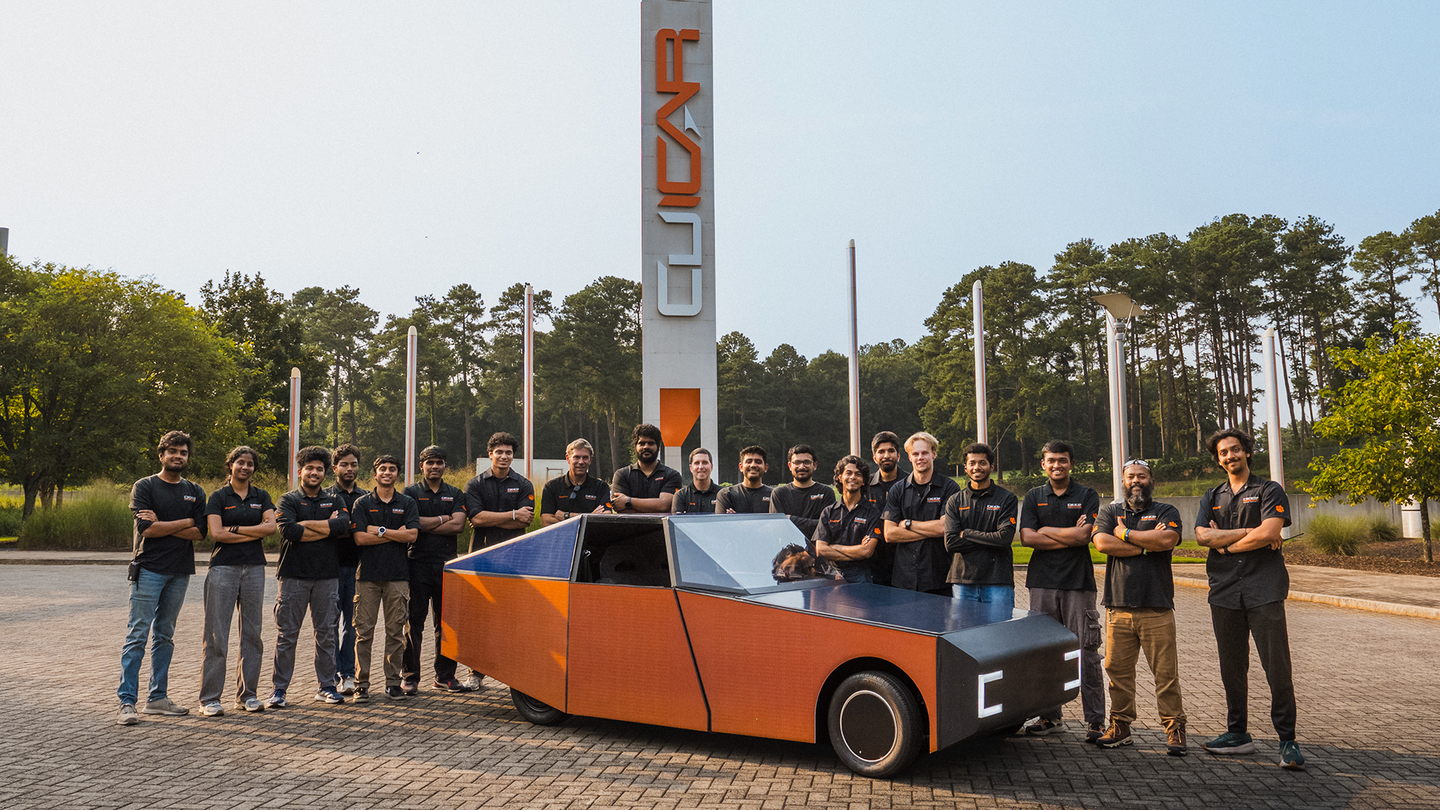
Clemson’s solar-powered electric vehicle generates surplus energy during a typical 12-mile commute using 1,700 solar cells. (CREDIT: Clemson University)
- Clemson’s Deep Orange 17 uses more than 1,700 solar cells and extreme weight reduction to produce more energy than it needs for a typical 12-mile city commute.
- The 1,212-pound electric coupe can collect sunlight while parked or driving, while regenerative braking and efficient drivetrain controls reduce how much energy it uses.
- Modeling across four cities showed enough surplus solar energy for an average 31 additional miles of range, though the vehicle remains a research prototype rather than a production car.
A solar-covered electric coupe built by Clemson University students is testing an unusual idea: a car that can finish a typical day with more energy than it used to travel.
The prototype, called Deep Orange 17 and nicknamed Luminetta, was developed with BMW’s research and development team. BMW challenged Clemson graduate students in fall 2024 to build an electric vehicle capable of becoming energy positive during normal urban use.
The students did not simply try to stretch battery range. Instead, they focused on a fact of everyday driving: passenger cars spend much of their time parked. That downtime could allow a vehicle covered in solar cells to collect energy for hours between trips.
Deep Orange 17 can also generate electricity while moving. Its body incorporates more than 1,700 photovoltaic cells, turning much of the exterior into a solar energy collector.
Sunlight becomes part of the drivetrain
Solar power is not treated as a small accessory on the Luminetta. It forms a central part of the vehicle’s energy strategy.
The solar panels were developed with the Fraunhofer Institute for Solar Energy Systems ISE. Their construction allows the system to keep producing power even when portions of the panels fall into shade. A durable outer film protects the cells and carries a distinctive color created through a laser manufacturing process.
Students modeled the car’s performance under environmental and sunlight conditions in Greenville, South Carolina; Frankfurt, Germany; Madrid, Spain; and Mumbai, India.
They assumed a daily commute of 12 miles, or 20 kilometers. Across those four locations, the prototype generated enough surplus solar energy to provide an average 31 miles, or 50 kilometers, of additional driving range.
That surplus is central to the energy-positive concept. Instead of merely reducing the electricity drawn from a charger, the car aims to collect more solar energy over a typical day than it consumes during the commute.
“This is a project we’ve wanted to pursue for years, so it’s incredibly rewarding to see this group of students come together over the last two years, overcome so many technical challenges and constraints, and bring an energy-positive vehicle to life,” said Stephan Augustin, Project Manager of Research and New Technologies at BMW.
A 1,212-pound answer to energy use
Solar cells alone could not meet BMW’s challenge. The students also had to cut the amount of energy needed to move the car.
Deep Orange 17 weighs 1,212 pounds, or 550 kilograms. Clemson says that is approximately one-fourth the weight of many similarly sized production vehicles.
Its chassis combines several materials rather than relying on one. Structural steel provides passenger protection, while aluminum components, carbon fiber structural members and 3D-printed metal joints help reduce mass.
The exterior takes aerodynamic inspiration from the boxfish. Its body shape allows the vehicle to reduce drag while preserving interior space, according to the project description.
The car also uses regenerative braking, intelligent torque distribution and optimized drivetrain controls. Together, those systems recover energy and manage how efficiently the vehicle uses available power.
Clemson has not provided horsepower or torque figures. The prototype instead emphasizes energy consumption, solar collection and efficiency rather than conventional performance measurements.
“This was an incredibly challenging project—not only to create a working energy-positive prototype, but to demonstrate how a vehicle can become increasingly energy independent through solar integration,” said Harsh Manghnani, Deep Orange team member and solar integration lead.“Seeing our initial research and design validated in a working prototype has been incredibly rewarding.”
BMW styling meets an efficiency experiment
BMW also wanted the project to show that extreme efficiency did not require abandoning vehicle design.
The result is a two-door coupe influenced by BMW’s design heritage but shaped around the demands of the solar system and lightweight construction. The Luminetta name refers to both its use of sunlight and its retro-modern styling.
Inside, a custom human-machine interface displays real-time vehicle information. Apple CarPlay and Android Auto are also integrated into the cabin.
The prototype grew out of Clemson’s Deep Orange program, which places graduate automotive engineering students through the complete vehicle development process. Students work on customer requirements, concepts, major engineering systems, component manufacturing and performance validation.
They also have to operate within budgets, schedules and technical constraints while working with industry engineers.
“It’s rare for a master’s student to have the opportunity to experience the complete process of developing a prototype vehicle,” said Anshul Karn, Deep Orange Project Manager. “Many engineering programs include courses in areas like digital modeling or marketing, but very few give students the opportunity to begin with a vision, work through the entire development process and ultimately deliver a fully functioning prototype. That experience is what makes Deep Orange so unique.”
Sixteen students developed Deep Orange 17 and graduated with Master of Science degrees in Automotive Engineering.
“I think once the project is complete and the students have had some time to reflect, they’ll truly appreciate what they’ve accomplished and how much they’ve grown—not only as engineers, but also as individuals and as a team over the past two years,” said Deep Orange Program Director Dr. Greg Mocko.
Practical implications of the research
Deep Orange 17 does not establish that every electric vehicle can operate as an energy-positive car. Its performance depends on an unusually low vehicle weight, integrated solar collection and an efficiency-focused design.
Still, the prototype offers a working platform for studying how those technologies can function together instead of as isolated improvements. Its modeling also examines solar performance under conditions spanning four geographically different cities.
Research will continue at the Clemson University International Center for Automotive Research in Greenville. The vehicle will remain there as a platform for further work in sustainable mobility.
Deep Orange 17 is also scheduled to appear at the 2027 Consumer Electronics Show in Las Vegas. The next stages of research can build on the prototype’s central experiment: whether solar collection, lightweight construction and careful energy management can reduce a vehicle’s dependence on external charging during everyday use.
The original story "Deep Orange 17: Clemson University students build a car for BMW that generates more energy than it uses" is published in The Brighter Side of News.
Related Stories
- Toyota's self-driving EV bubble car for kids turns heads in Japan
- Groundbreaking study links electric vehicle use to health and the environment
- Major battery innovation pushes electric vehicle range to over 3,000 miles
Like these kind of feel good stories? Get The Brighter Side of News' newsletter.
Joseph Shavit
Writer, Editor-At-Large and Publisher
Joseph Shavit, based in Los Angeles, is a seasoned science journalist, editor and co-founder of The Brighter Side of News, where he transforms complex discoveries into clear, engaging stories for general readers. With vast experience at major media companies like The Los Angeles Times, Times Mirror and Tribune Publishing, he writes with both authority and curiosity. His writing focuses on space science, planetary science, quantum mechanics, geology. Known for linking breakthroughs to real-world markets, he highlights how research transitions into products and industries that shape daily life.