NASA’s risky bid to save Swift telescope before solar drag pulls it into Earth’s atmosphere
NASA is trying to save Swift with a robotic tug, testing whether aging satellites can be rescued instead of abandoned.

 Edited By: Joshua Shavit

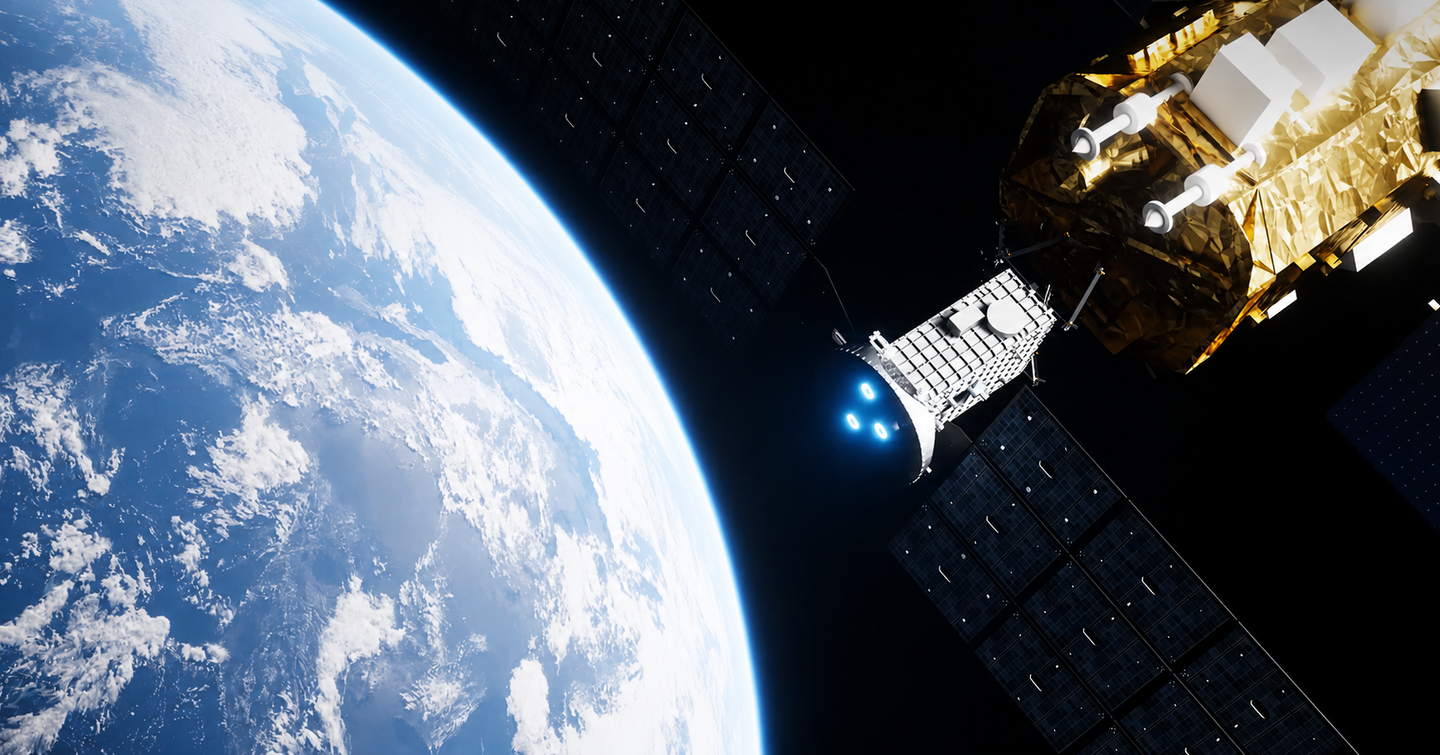
NASA and Katalyst are attempting a robotic rescue of the Swift telescope before solar drag pulls it into Earth’s atmosphere. (CREDIT: NASA)
NASA is preparing for a rescue that sounds more like a stunt than routine mission control: send a robot into orbit, find an aging telescope that was never built to be serviced, grab it with three mechanical arms, and drag it to safety before it falls back to Earth.
The telescope is the Neil Gehrels Swift Observatory, a spacecraft launched in 2004 to catch gamma-ray bursts, some of the most violent explosions in the universe. Swift was meant to last two years. More than two decades later, it is still valuable, still in demand, and now sinking.
A recent stretch of heightened solar activity has made the problem worse. As the sun becomes more active, Earth's upper atmosphere expands. That adds drag for satellites in low Earth orbit, pulling them down faster if they have no propulsion of their own. Swift, flying low enough to stay in steady contact with scientists on the ground, has been losing altitude under that pressure.
NASA could have let it go. Many aging missions end that way.
Instead, the agency chose to try something the United States has never done before with a science observatory like this: save it.
A rushed mission with little margin
NASA hired the Colorado startup Katalyst Space to attempt the rescue under a contract signed in September. The company had less than a year to design, build, test, and launch a servicing spacecraft called LINK. Its job is simple to describe and hard to imagine in practice.
LINK is expected to launch aboard a Northrop Grumman Pegasus XL rocket, which will not lift off from a traditional launchpad. The rocket will be released from a modified L-1011 aircraft called Stargazer after taking off from Kwajalein Atoll in the Marshall Islands.
Once in orbit, LINK will spend several weeks checking its propulsion, navigation, and sensor systems. Then it will begin a slow approach toward Swift, survey the observatory, latch on, and start raising its orbit over the course of months.
"Everything about this mission is so crazy," NASA astrophysicist Regina Caputo said with a laugh in an interview with AFP.
That reaction is not hard to understand. Swift was never designed to be repaired, refueled, or boosted. Engineers do not even have a clear picture of what the back of the telescope looks like, even though that is where LINK must grab it.
"This is a lot of firsts stacked on top of each other," said Shawn Domagal-Goldman, director of NASA's astrophysics division, during a recent call with reporters. "I'm just deeply thankful that we're even giving this a go."
The stakes are real. For the rescue to have its best chance, Swift needs to stay above about 185 miles, or roughly 298 kilometers. NASA said recent changes in spacecraft operations should keep it above that threshold until this fall. Earlier projections had suggested it could reach that danger point much sooner.
Why Swift is worth saving
Swift was built to detect gamma-ray bursts and quickly alert other observatories to follow up. That speed remains its defining strength. It can swing toward short-lived outbursts and help coordinate observations from space- and ground-based facilities.
"Swift is NASA's multitool when it comes to studying the cosmos," said S. Bradley Cenko, principal investigator for Swift at NASA's Goddard Space Flight Center. "It observes the sky using a wide range of light and rapidly points at short-lived outbursts, alerting other facilities in space and on the ground to help coordinate follow-up observations. For the last two decades, Swift has been a key player in NASA's efforts to understand how the universe works, and we're looking forward to getting back to that work after the boost is complete."
That flexibility has made Swift hard to replace. NASA officials said the agency does not have the budget to build another telescope with the same capabilities right away. Domagal-Goldman called Swift "special." Science mission chief Nicky Fox put it more plainly: "If we let Swift reenter, we would lose that telescope. We would lose a lot of capability."
The telescope's value may actually be rising. With the James Webb Space Telescope already operating and the Roman Space Telescope on the way, Swift could have even more work as a fast-moving follow-up observatory, what Domagal-Goldman described as "NASA's first responder."
NASA has already taken steps to buy time. Scientific observations stopped in February so operators could manage the spacecraft in ways that reduce drag. The team at Penn State's Eberly College of Science changed how Swift points, steering it into a more streamlined position and reducing power use so its large solar panels can sit in a more aerodynamic orientation.
A test case for a new kind of space business
The rescue mission is expected to cost about $30 million, far less than the roughly $250 million cost of the original observatory. Even so, nobody is pretending this is a safe bet.
With a laugh, Caputo put the odds at "maybe 50-50."
LINK itself is relatively compact, about 5 feet tall and weighing about 880 pounds, with nearly 20 feet of solar panels powering ion thrusters and three robotic arms. Those arms have small grippers designed to pinch and hold. Once attached, the servicing spacecraft will try to raise Swift from its current orbit to nearly 370 miles, or about 595 kilometers, close to its original altitude.
"This is a high-risk, high-reward mission," Domagal-Goldman said. He argued that the attempt makes sense not only because replacing Swift would be more expensive, but because the effort could help advance the U.S. satellite servicing industry.
Repositioning satellites
That may be the larger story. Katalyst says a successful mission would show that satellites never designed for maintenance can still be repositioned, repaired, refueled, repurposed, or upgraded. Company CEO Ghonhee Lee said that could become a model for future work in orbit, and company vice president Robert Lamontagne called it the possible "start of a new model."
Only China has attempted something similar by boosting a satellite into a higher graveyard orbit four years ago. Katalyst believes Swift could become the American proof of concept.
The company is already looking beyond this mission. Lee said a next-generation robot could one day help much larger spacecraft, including the Hubble Space Telescope, which is also losing altitude.
The original story "NASA’s risky bid to save Swift telescope before solar drag pulls it into Earth's atmosphere" is published in The Brighter Side of News.
Related Stories
- 1.7 million satellites and space mirrors may put the night sky at risk
- Researchers believe a satellite crash could happen in 5.5 days
- Space debris sensor promises safer future for satellites
Like these kind of feel good stories? Get The Brighter Side of News' newsletter.
Joseph Shavit
Writer, Editor-At-Large and Publisher
Joseph Shavit, based in Los Angeles, is a seasoned science journalist, editor and co-founder of The Brighter Side of News, where he transforms complex discoveries into clear, engaging stories for general readers. With vast experience at major media companies like The Los Angeles Times, Times Mirror and Tribune Publishing, he writes with both authority and curiosity. His writing focuses on space science, planetary science, quantum mechanics, geology. Known for linking breakthroughs to real-world markets, he highlights how research transitions into products and industries that shape daily life.