New optical shutter uses light and AI to see through dense fog and tissue
Rochester researchers combine ultrafast light gating and AI to improve near-infrared imaging through scattering materials.
 University of Rochester Writer: Luke Auburn


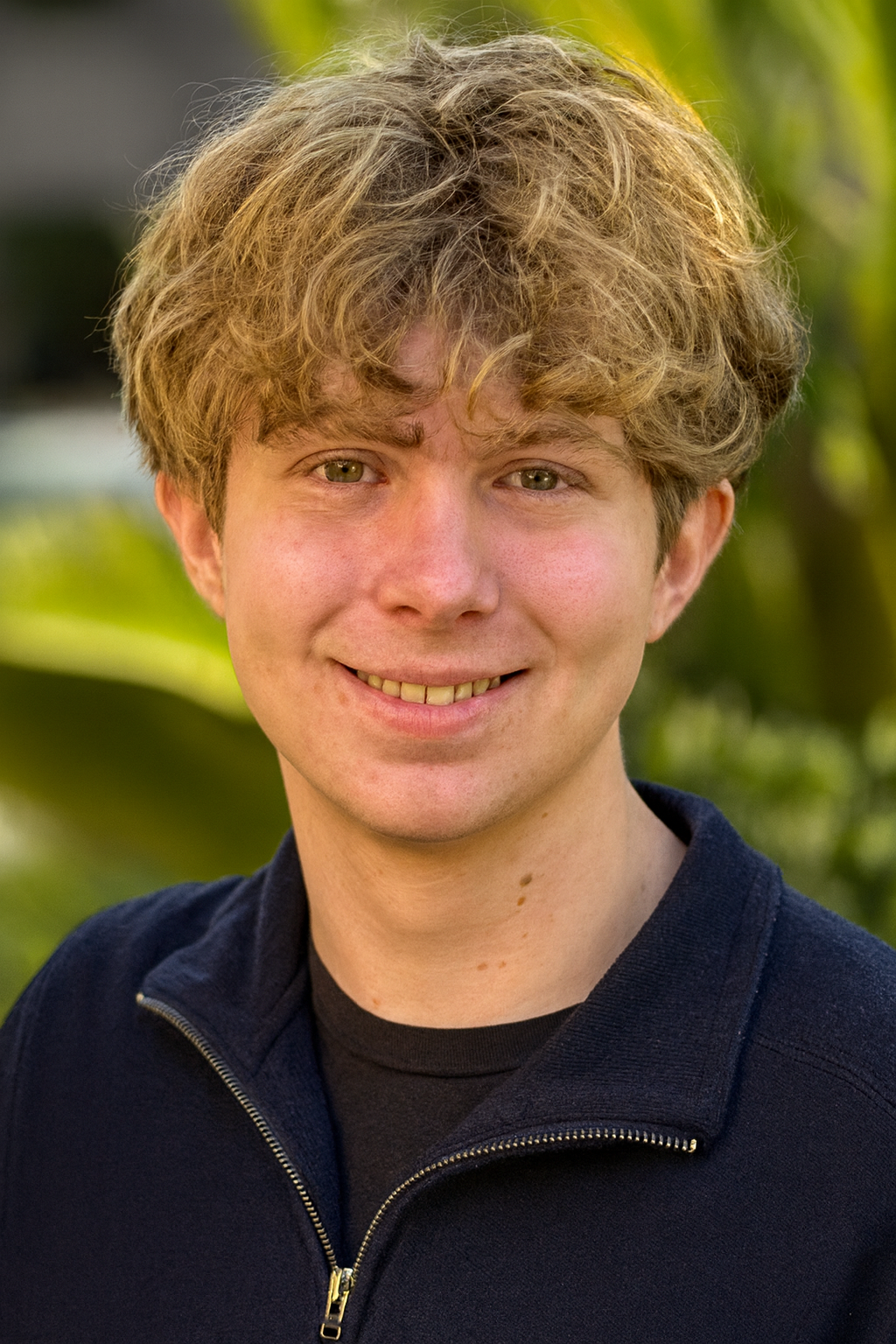
The lab of Robert Boyd, right, the William F. Krupke Distinguished Professor in Optics, has spent more than a decade refining the new imaging system, with contributions from PhD students including Yang Xu ’26 (PhD), center, and physics doctoral student Long Nguyen, left. (CREDIT: University of Rochester)
- University of Rochester researchers developed an ultrafast optical gate that converts near-infrared light into visible light while rejecting many photons scattered by tissue, fog and other cloudy materials.
- A companion AI system called DeepTimeGate expanded the usable field of view and improved reconstructed images, raising average peak signal-to-noise ratio by 124% and structural similarity by 231% in controlled scattering experiments.
- The approach could eventually support lower-cost biomedical imaging and LiDAR because it works with common silicon detectors, but the studies remain laboratory demonstrations and have not yet been validated in clinical tissue or real driving environments.
Near-infrared light helps doctors, scientists and self-driving cars see when ordinary visible light struggles. But when that light passes through deep tissue, fog or other cloudy materials, the picture can still fall apart.
Researchers at the University of Rochester have now developed a lower-cost imaging system that helps solve this problem. Their approach turns near-infrared light into visible light, rejects much of the scattered noise and uses artificial intelligence to rebuild clearer images.
The work appears across two recent studies, one in Nature Communications and another in Light: Science and Applications. Together, they show how fast optical gating and machine learning could improve imaging in medicine, transportation and sensing.
Seeing Through Scattering
Many modern imaging systems rely on near-infrared light because it can travel farther through some materials than visible light. That makes it useful for cancer detection, deep-tissue imaging and LiDAR systems used in autonomous vehicles.
But near-infrared light still has limits. In dense fog, biological tissue or cloudy media, photons can scatter from their path. When that happens, the image becomes blurred or distorted.
Existing near-infrared systems also often require special detectors made from costly materials. That can make them harder to use widely.
The Rochester team developed a system that uses less expensive silicon-based detectors. These detectors normally work best with visible light, so the system first converts near-infrared signals into visible light.
That conversion could make advanced imaging cheaper and more practical.
A Light-Based Shutter
The research builds on a technique called time-gating. Robert Boyd, the William F. Krupke Distinguished Professor in Optics, has worked on this approach for more than a decade.
“Time-gating essentially works like the shutter in a camera,” said Yang Xu, lead author of the Nature Communications paper. “In a traditional camera, the shutter is mechanical, when it opens, light comes in, and when it closes, light is rejected. In this case, we use light to control light.”
Instead of a moving shutter, the system uses ultrafast bursts of light. These bursts open the gate for only about a picosecond.
A picosecond is almost unimaginably short. It is the time light takes to travel about the width of a period at the end of a sentence.
That tiny time window lets the system favor photons that arrive cleanly. It rejects many photons that took longer, scattered paths.
Turning Infrared Into Visible Light
The optical gate uses a thin film made of indium tin oxide. Near-infrared photons that hit the film can be converted into visible light.
This conversion allows the system to produce a real-time image using common silicon-based cameras. It also helps preserve clearer information from difficult environments.
The team’s method uses a process called four-wave mixing. In simpler terms, different light waves interact inside the film and generate a new light signal.
That new signal carries useful image information in a form easier to detect. At the same time, the ultrafast gate helps filter out unwanted scattered light.
The result is a clearer image than ordinary near-infrared imaging can provide under the same conditions.
Why The Edges Matter
The time-gating method produced sharp images, but it had one important weakness. The field of view was limited.
That means the center of the image was clearer than the edges. In imaging, this edge fading is called vignetting.
For medicine or autonomous driving, losing the edges of an image can matter. A doctor may need to see the full tissue region. A vehicle may need to detect hazards across a wider scene.
“Before applying artificial intelligence, we could see only a limited field of view,” Xu said. “By adding our collaborators’ methods, we can essentially reconstruct a much larger target area, enlarging the field of view our ultrafast time-gating technique can capture.”
To solve that problem, the Rochester team worked with researchers at UCLA. They combined the optical system with machine learning.
The DeepTimeGate System
The AI-assisted framework is called DeepTimeGate. It combines the time-gated optical signal with a two-stage deep learning model.
The first stage uses a U-Net model, a neural network often used in biomedical image reconstruction. It learns to turn noisy scattering images into cleaner infrared mask images.
This stage recovers the general shape and layout of the target. But it can still leave speckles, broken edges or weak areas near the image borders.
The second stage uses a Deep Image Prior module. This part refines each image by using the structure already present in the image itself.
It does not need extra labeled training data for each sample. Instead, it makes small corrections that improve smoothness, continuity and detail.
Testing In Cloudy Conditions
The researchers tested DeepTimeGate on structured optical patterns. Some were standard resolution charts used to judge image clarity.
Others were vortex-phase targets, which test more complex wavefront information. These patterns are harder to recover when scattering scrambles the light.
The team used polystyrene microsphere suspensions to create volume scattering. They also used optical diffusers to create phase distortions.
The full dataset included 2,068 labeled samples. The researchers split these into training, validation and testing groups.
Raw scattering images degraded badly as conditions became more difficult. Under the harshest tests, the original signals lost much of their useful structure.
Clearer Images From Weak Signals
DeepTimeGate sharply improved the results compared with raw scattering images. The system raised average peak signal-to-noise ratio by 124%.
It increased structural similarity by 231%. It also produced a 10-fold improvement in intersection-over-union, a measure of image overlap.
Those numbers show that the system did more than clean up noise. It helped rebuild meaningful structure from signals that were badly degraded.
Compared with a U-Net alone, DeepTimeGate often produced smaller numerical gains. But the visual improvements could still be important.
The second stage helped remove speckles, restore cleaner edges and repair broken line patterns. For a human observer, those details can make an image easier to trust.
A Cheaper Path For Advanced Imaging
The work matters because near-infrared imaging often depends on expensive detectors. Silicon detectors are cheaper and more common, but they cannot directly capture many near-infrared wavelengths well.
By converting near-infrared light into visible light, the Rochester system makes silicon detection more useful. That could reduce costs for future imaging tools.
The thin indium tin oxide film also supports compact optical designs. In the future, similar systems could fit into smaller devices, probes or sensors.
That possibility matters for biomedical imaging. Doctors and researchers often need tools that can see through tissue without large, costly equipment.
The same idea could help LiDAR systems. Fog, rain and other scattering conditions can limit how well autonomous vehicles see.
What Still Needs Work
The technology is promising, but it still needs more validation. The studies tested controlled scattering samples and optical patterns, not full clinical systems.
Future work must test real biological samples. These could include tissue sections, live-cell cultures or organoids.
Researchers also need to see how the system handles motion, absorption and complex tissue structures. Living systems create messier challenges than lab targets.
Machine learning models may also need adaptation for different environments. A model trained on one scattering condition may not work perfectly in another.
Still, the combined optical and AI approach gives researchers a flexible path forward. It treats imaging as both a physics problem and a computation problem.
Practical Implications Of The Research
This research could make advanced near-infrared imaging cheaper, clearer and more widely available. By converting near-infrared signals into visible light, the system can use lower-cost silicon-based detectors.
In medicine, the approach may improve imaging through tissue. That could help future tools for cancer detection, tissue analysis, endoscopy and biological research. More testing will be needed before clinical use.
In transportation, clearer imaging through fog or other scattering conditions could support better LiDAR systems. That may help autonomous vehicles detect objects more reliably in difficult weather.
For humanity, the larger benefit is better vision where sight is limited. Whether the goal is finding disease, studying cells or helping machines navigate safely, clearer images can lead to better decisions. This work shows how light and AI together can recover details that scattering would otherwise hide.
Dig deeper into imaging through scattering media
These resources explore recent advances in computational imaging, deep learning, wavefront control and near-infrared techniques for recovering information hidden by scattering.
Ultra‐Wide‐Field Noninvasive Imaging Through Scattering Media Via Physics‐Guided Deep Learning: Uses a physics-guided diffusion model to reconstruct objects across an exceptionally wide field of view through scattering media while reducing dependence on large experimental training datasets. (Advanced Science, 2026)
Physical mechanisms governing generalization and hallucination in deep learning for imaging through scattering media: Examines why neural networks succeed or fail when scattering conditions change and identifies how nonphysical image hallucinations can emerge during reconstruction. (Nature Communications, 2026)
An optical meta-image-processor for enhanced imaging through strongly scattering media: Demonstrates an optical device that suppresses scattering and noise before conventional post-processing, offering another hardware-based strategy for improving imaging through highly turbid environments. (Nature Communications, 2025)
Research findings are available online in the journals Light: Science & Applications and Nature Communications.
The original story "New optical shutter uses light and AI to see through dense fog and tissue" is published in The Brighter Side of News.
Related Stories
- MIT's self-organizing laser revolutionizes 3D imaging of the brain’s protective barrier
- New imaging tool reveals how cancer reshapes the body’s energy use
- New deep-UV pocket scope provides instant molecular imaging
Like these kind of feel good stories? Get The Brighter Side of News' newsletter.
Joshua Shavit
Writer and Editor
Joshua Shavit is a NorCal-based science and technology writer with a passion for exploring the breakthroughs shaping the future. As a co-founder of The Brighter Side of News, he focuses on positive and transformative advancements in technology, physics, engineering, robotics, and astronomy. Having published articles on AOL.com, MSN, Yahoo News, and Ground News, Joshua's work highlights the innovators behind the ideas, bringing readers closer to the people driving progress.