New tachyon theory could unlock the secrets of time travel and causality
Physicists propose a new tachyon framework that could preserve relativity while reopening questions about time and causality.

 Edited By: Joseph Shavit

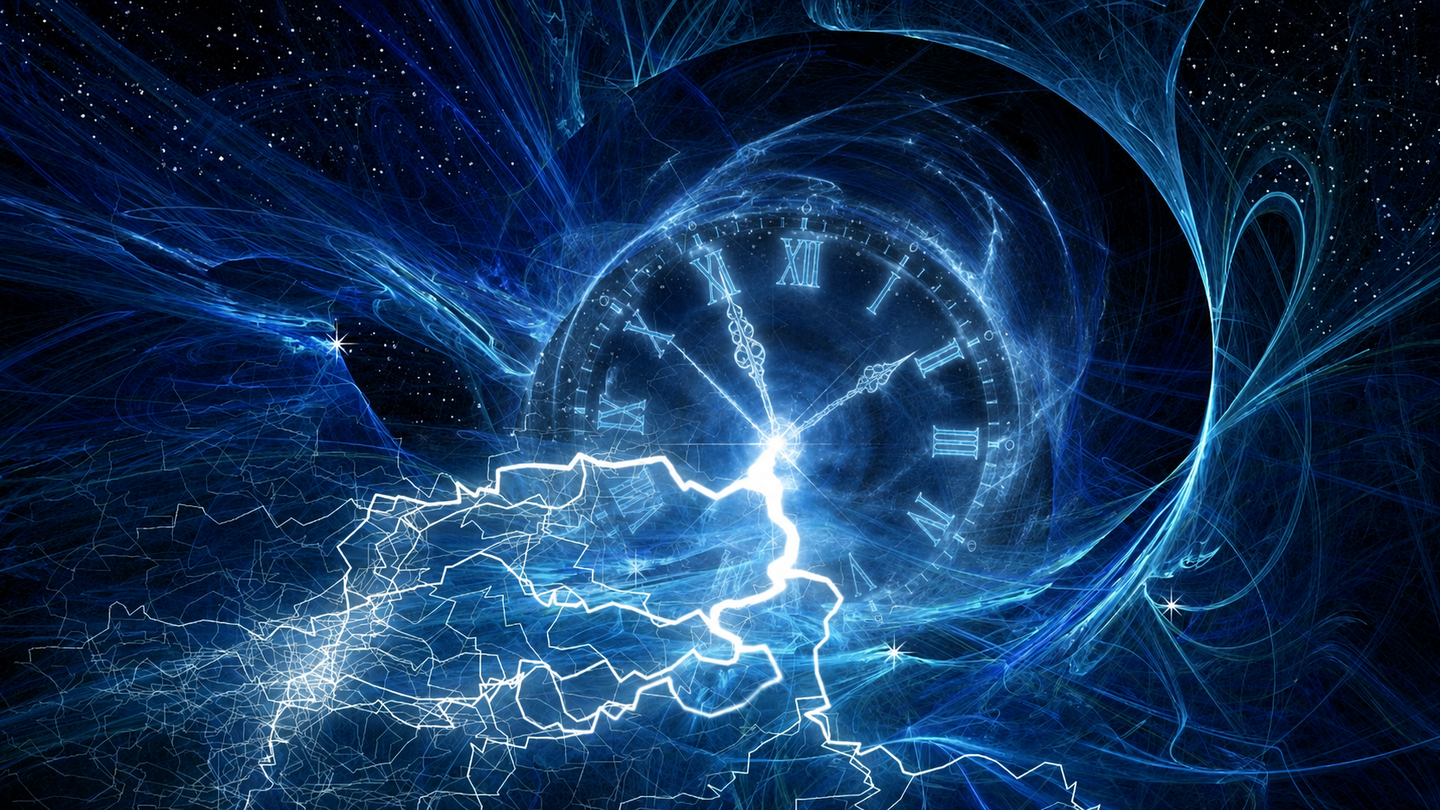
A new tachyon theory argues faster-than-light particles may fit within relativity without the old paradoxes about time and causality. (CREDIT: Wikimedia / CC BY-SA 4.0)
Faster-than-light particles have spent decades in physics as both temptation and warning. They offered a way to test the limits of Einstein’s relativity, but they also seemed to wreck the basic order of cause and effect. If something could outrun light, what would stop an effect from showing up before its cause?
That question has kept tachyons, the long-hypothetical particles that would always move faster than light, on the edge of serious physics for more than half a century.
A new paper from researchers at the University of Warsaw and the University of Oxford argues that the problem may not be the particles themselves, but the mathematical framework physicists have been using to describe them.
In work published in Physical Review D, the team lays out a revised quantum field theory for tachyons that they say avoids several of the contradictions that pushed the idea to the margins. The paper does not claim tachyons have been found in nature. It does argue that they may not be forbidden by special relativity in the way many physicists assumed.
A particle built from paradox
The idea goes back at least to the 1960s, when physicist Gerald Feinberg tried to give faster-than-light particles a formal place in theory. His proposal relied on “imaginary mass,” a mathematical device that let tachyons stay forever beyond light speed, never slowing enough to cross the light barrier that traps ordinary matter below it.
That move came with a price. If a tachyon could outrun light, then under some circumstances different observers could disagree about the order of events. A particle emitted in one frame of reference could look, in another, like it was absorbed before it was ever sent. That kind of reversal fed the old fear that tachyons would demolish causality itself.
Other problems piled on. Earlier attempts to quantize tachyon fields ran into unbounded energy spectra, unstable vacuum states, and equations that failed to stay consistent under Lorentz transformations, the symmetry operations at the heart of special relativity. In plain terms, the math stopped behaving properly when viewed from different inertial frames.
That history is why tachyons became less a prediction than a provocation, a useful stress test for theory, but not something most physicists expected to survive intact.
Rewriting the mathematical stage
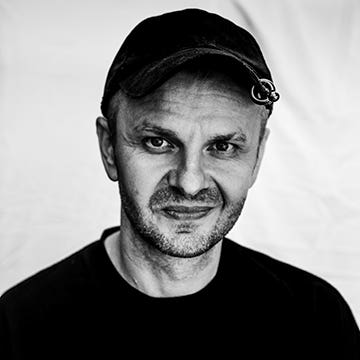
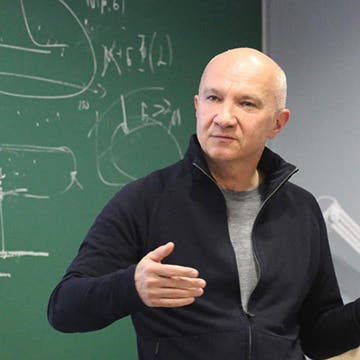
The new study, led by Andrzej Dragan and Artur Ekert with colleagues Jerzy Paczos, Kacper Dębski, Szymon Cedrowski, Szymon Charzyński, and Krzysztof Turzyński, takes aim at those old breakdowns directly.
Their central claim is that earlier failures came from using too small a mathematical space. Standard quantum field theory represents particles in a Fock space, a structure built to describe changing particle numbers while preserving the symmetries of ordinary, slower-than-light particles. For tachyons, the authors argue, that space is not enough.
Because a Lorentz boost can flip a tachyon from positive energy moving forward in time to negative energy moving backward in time, the distinction between incoming and outgoing states becomes frame-dependent. To handle that, the team extends the Hilbert space to what they call a twin space, combining input and output states in a single structure.
That enlargement, they argue, restores covariance, preserves the commutation relations, and keeps the vacuum stable and Lorentz-invariant. It also gives the theory a lower-bounded energy spectrum, addressing one of the oldest mathematical complaints about tachyons.
The paper puts it bluntly: “In this work, we show that these issues stem from the improper representation of the Lorentz group in a too-small Hilbert space.”
Time running both ways
What makes the proposal especially striking is how closely it lines up with the two-state formalism in quantum mechanics, first introduced by Yakir Aharonov, Peter Bergmann, and Joel Lebowitz. That approach describes quantum processes using both pre-selected states from the past and post-selected states from the future.
In ordinary discussions of quantum theory, that formalism has often been treated as unusual, even exotic. Here, the authors say something like it becomes necessary.
Dragan summed up the shift this way: “The idea that the future can influence the present rather than the present determining the future is not new in physics. However, until now, this kind of view has been at best an unorthodox interpretation of certain quantum phenomena, and this time we were forced to this conclusion by the theory itself.”
That does not mean the paper proves retrocausality is real in daily life. It means that if tachyons are described in a relativistically consistent quantum theory, then future and past states may have to be treated together as part of the formalism.
The authors also argue that superluminal particles need not produce logical contradictions after all. Instead of full-blown paradoxes, they point to “disturbances of causality” that resemble odd features already familiar from quantum theory.
Why tachyons still matter
Even without experimental evidence, tachyons have kept surfacing in theoretical physics. They have appeared in string theory as unwanted artifacts, in cosmology through tachyonic fields, in discussions of the Casimir effect, and in models of spontaneous symmetry breaking. The paper notes that fields with negative mass squared, often described as tachyonic fields, are already built into important areas of physics, including the Higgs mechanism.
That broader context helps explain why a cleaner mathematical treatment matters. A consistent theory of tachyons would not simply revive an old sci-fi favorite. It could sharpen how physicists think about time symmetry, Lorentz invariance, and the structure of quantum field theory itself.
The authors are careful not to oversell it. Their work does not settle the interpretational debates around the two-state vector formalism. It does not show that tachyons exist. It also leaves open whether ideas from the framework could help illuminate the Higgs phase transition, CP violation, or the baryon asymmetry of the universe.
Still, the paper pushes the discussion into territory many physicists had written off. Instead of treating faster-than-light particles as a dead end, it asks whether the dead end was partly built by the formalism.
Practical implications of the research
For now, the immediate impact is conceptual, not technological. The study gives theorists a new way to test whether tachyons can be handled without breaking relativity or destabilizing quantum field theory. If the framework holds up, it could influence how physicists think about time-reversal, vacuum stability, particle interactions, and symmetry breaking.
It also creates a more serious foundation for future work on whether tachyon-like behavior has any role in known physics, especially in areas already using tachyonic fields as mathematical tools.
The biggest practical value today is that it turns a long-dismissed idea into a problem that can be worked on with clearer rules.
Research findings are available online in the journal Physical Review D.
The original story "New tachyon theory could unlock the secrets of time travel and causality" is published in The Brighter Side of News.
Related Stories
- Physicists propose that our universe may contain three dimensions of time
- Sending short messages back in time may not break the laws of physics
- Physicists just debunked the idea that we’re living in a simulation
Like these kind of feel good stories? Get The Brighter Side of News' newsletter.
Joshua Shavit
Writer and Editor
Joshua Shavit is a NorCal-based science and technology writer with a passion for exploring the breakthroughs shaping the future. As a co-founder of The Brighter Side of News, he focuses on positive and transformative advancements in technology, physics, engineering, robotics, and astronomy. Having published articles on AOL.com, MSN, Yahoo News, and Ground News, Joshua's work highlights the innovators behind the ideas, bringing readers closer to the people driving progress.