Rutendo Shadaya wrote a fantasy book at age 9. Now she is one of Time’s Girls of the Year
A birthday gift became a writing career for Rutendo Shadaya, who turned rejection into books, readers and global recognition.

 Edited By: Joseph Shavit

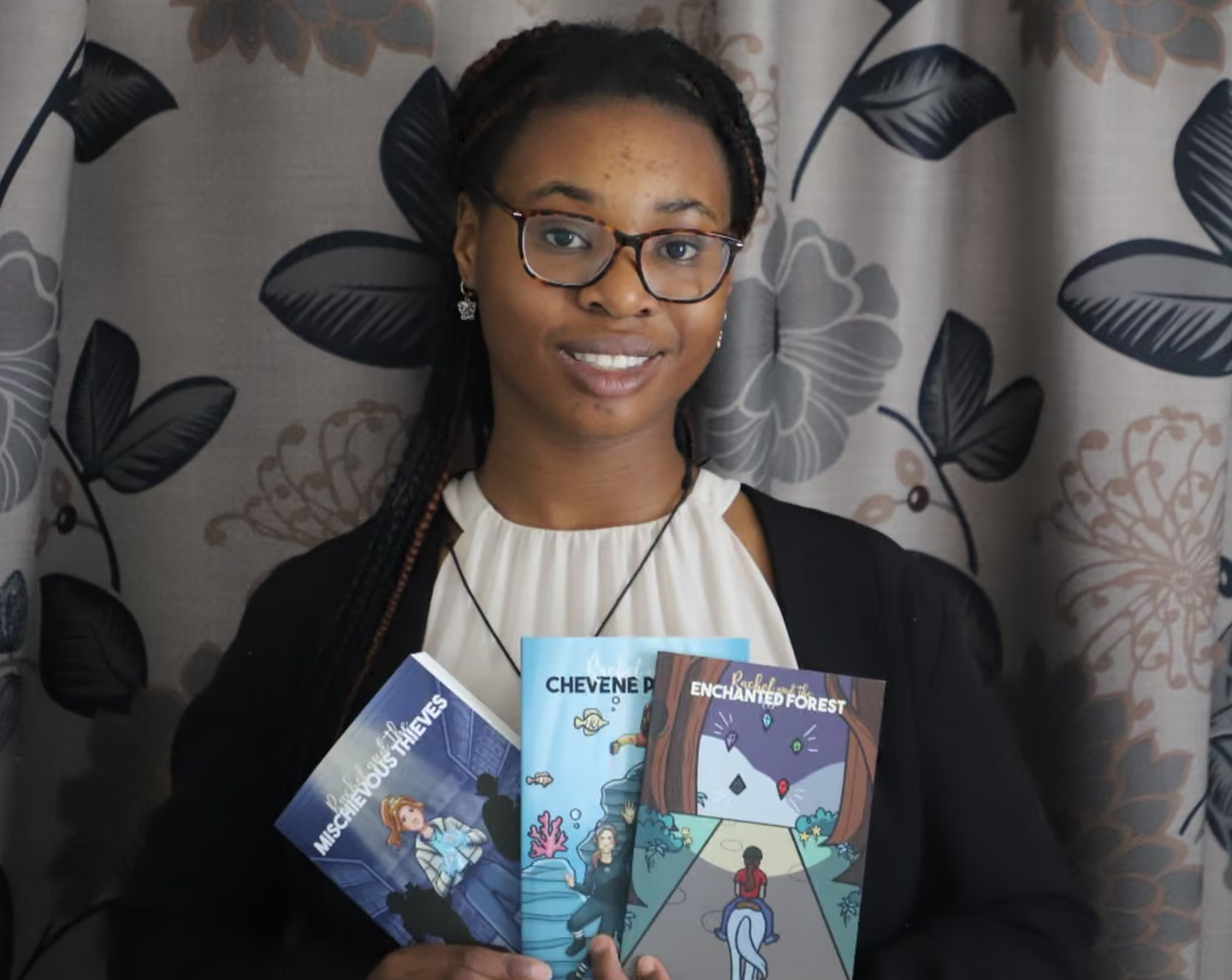
Rutendo Shadaya became a young author at nine and now inspires girls worldwide after earning recognition from Time magazine. (CREDIT: Rutendo Shadaya)
- Rutendo Shadaya began writing a fantasy book at age nine as a birthday gift for her best friend, then self-published after struggling to find a traditional publisher.
- Her Rachel series uses adventure, friendship and perseverance to encourage young readers, while Shadaya hopes to bring more of her Zimbabwean heritage into future stories.
- Now 17, Shadaya has been named one of Time magazine’s Girls of the Year and uses her growing platform to encourage other young writers, especially girls.
At nine years old, Rutendo Shadaya set out to make a birthday gift for her best friend. The idea was simple: write her a book. What followed turned into a years-long writing career, a self-publishing journey and international recognition from Time magazine.
Shadaya, who was born in New Zealand to Zimbabwean parents, lives in Tokoroa, a rural town on the country’s central North Island. She began writing after deciding that a fantasy story would suit a friend who loved reading.
“I was very good with gift giving, and I knew she liked reading … so I was like ‘Why don’t I write a book for her?’” Shadaya told the Guardian.
Two months later, she had completed Rachel and the Enchanted Forest. The project surprised even Shadaya, who said she had previously “despised” writing. Once she finished the story, however, she wanted to take the work further.
A rejection pushed her toward self-publishing
Shadaya threw herself into fantasy world-building, drawing on her friendships and her life as a Zimbabwean-New Zealander. She researched fantasy literature and built a story around Rachel, a young protagonist traveling through a magical forest.
Her parents were initially uncertain about the project, but they soon believed it deserved a wider audience. The family visited a traditional publisher about an hour outside their town. The response was discouraging: her manuscript was not considered good enough.
“I felt like that was a bit of a form of ageism, I guess?” Shadaya later reflected. “But then, realistically, what publishing agency would publish a nine-year-old?”
Instead of abandoning the book, her family chose another route. They self-published and marketed the work themselves. Rachel and the Enchanted Forest appeared in 2020, followed by Rachel and the Chevene Pirates in 2022. Her books found a young local audience, and she went on to sell hundreds of copies.
Rachel’s adventures carry a wider message
The Rachel series explores adventure, friendship, mental health and perseverance. Its central character faces difficult situations by leaving her comfort zone, using magical powers for good and relying on supportive friends.
Shadaya hopes teenage readers will recognize parts of themselves in those experiences. She also wants young girls to feel more confident after reading stories led by strong female characters.
Shadaya has taken that message beyond the page. Since publishing her work, she has spoken at youth conferences, community events and interviews across New Zealand. She has encouraged other young people, particularly girls, to write even when they lack resources or industry connections.
“I want to inspire people who have similar backgrounds … because when I started writing, I didn't have many resources, based in a small town.”
That question of who gets represented in books has become increasingly important to her. Shadaya now wants to draw more deeply from her Zimbabwean heritage in future writing, partly because she rarely encountered Black-centered books as a child.
“I didn't have many books that I read that were, like, predominantly Black,” she said. “I mostly started reading those books when I started hitting my tween and teenage years. And I wish I had that as it could have helped me formulate my writing a bit more in my early stages.”
Time recognition brought a global audience
Shadaya’s work eventually reached far beyond Tokoroa. At 17, she was named one of Time magazine’s Girls of the Year, a new list created in collaboration with the Lego Group to highlight the achievements of girls around the world.
She was one of 10 girls selected and the only honoree representing Oceania. Time recognized her for creating strong female leads and for using her platform to encourage other young writers.
The recognition came so unexpectedly that Shadaya initially thought the magazine’s email was fake and did not respond right away.
“What are the chances they would reach out to a 17-year-old in Tokoroa?”
As the announcement approached, the scale of the honor began to sink in.
“It’s surreal,” Shadaya said. “I’m being featured with these iconic young women and I feel like it’s such a privilege being honoured and [seeing] my hard work paying off.”
Other girls on the list included 13-year-old Scottish inventor Rebecca Young, 15-year-old Japanese Olympic skateboarder Coco Yoshizawa and 12-year-old U.S. organ donation advocate Naomi S DeBerry.
Time senior editor Dayana Sarkisova said the honorees show how young people can create change without waiting for adulthood.
“These girls are part of a generation that’s reshaping what leadership looks like today,” she said.
“Their generation understands that change doesn’t require waiting for adulthood – it starts with seeing problems and refusing to accept them as permanent.”
Making room for the next young writers
Shadaya has continued trying to create opportunities for children who want to write or make art. She recently ran a competition for writers and artists ages eight to 13, with winning work set to appear in an upcoming book.
Her interests also extend well beyond writing. She plays netball, volunteers as a student and serves as a YWCA young leader. She is considering dentistry as a future career while continuing to write.
Still, the path that began with a birthday present remains central to what she wants other young people to take from her story. A rejection from a publisher did not end the project, and growing up in a small town did not stop her from finding readers.
For Shadaya, that experience has become part of the message she now shares with young women and girls who may wonder whether their age or background limits what they can do.
“Never let your background or age define you,” she said. “You’ll always face a lot of challenges but those challenges are built on to your journey … take that risk, you won’t regret it in the end.”
The other 2025 Time girls of the year
- Rebecca Young, 12, designed a backpack to help people sleeping outside in Scotland
- Coco Yoshizawa, 15, an Olympic gold-medalist in Japan
- Valerie Chiu, 15, a global science educator in China
- Zoé Clauzure, 15, an anti-bullying campaigner in France
- Clara Proksch, 12, a scientist prioritizing child safety in Germany
- Ivanna Richards, 17, a racing driver breaking stereotypes in Mexico
- Kornelia Wieczorek, 17, a biotech innovator in Poland
- Defne Özcan, 17, a trailblazing pilot in Turkey
- Naomi S. DeBerry, 12, an organ donation advocate and children's book author in the United States
The original story "Rutendo Shadaya wrote a fantasy book at age 9. Now she is one of Time’s Girls of the Year" is published in The Brighter Side of News.
Related Stories
- 11-year-old girl finds fossil of largest marine reptile ever to swim Earth’s oceans
- 15-year-old graduates college and looks to empower and inspire other girls of color
- 12-year-old inventor’s solar-powered backpack is keeping Glasgow's homeless warm
Like these kind of feel good stories? Get The Brighter Side of News' newsletter.
Rebecca Shavit
Writer
Based in Los Angeles, Rebecca Shavit is a dedicated science and technology journalist who writes for The Brighter Side of News, an online publication committed to highlighting positive and transformative stories from around the world. Having published articles on MSN, AOL News, and Yahoo News, Rebecca's reporting spans a wide range of topics, from cutting-edge medical breakthroughs to historical discoveries and innovations. With a keen ability to translate complex concepts into engaging and accessible stories, she makes science and innovation relatable to a broad audience.