Americans can save 6.7 million gallons of fuel each day by doing this one small thing
Following speed limits could save 6.7 million gallons of fuel and $22 million daily, with under a minute added to commutes.

 Edited By: Joseph Shavit

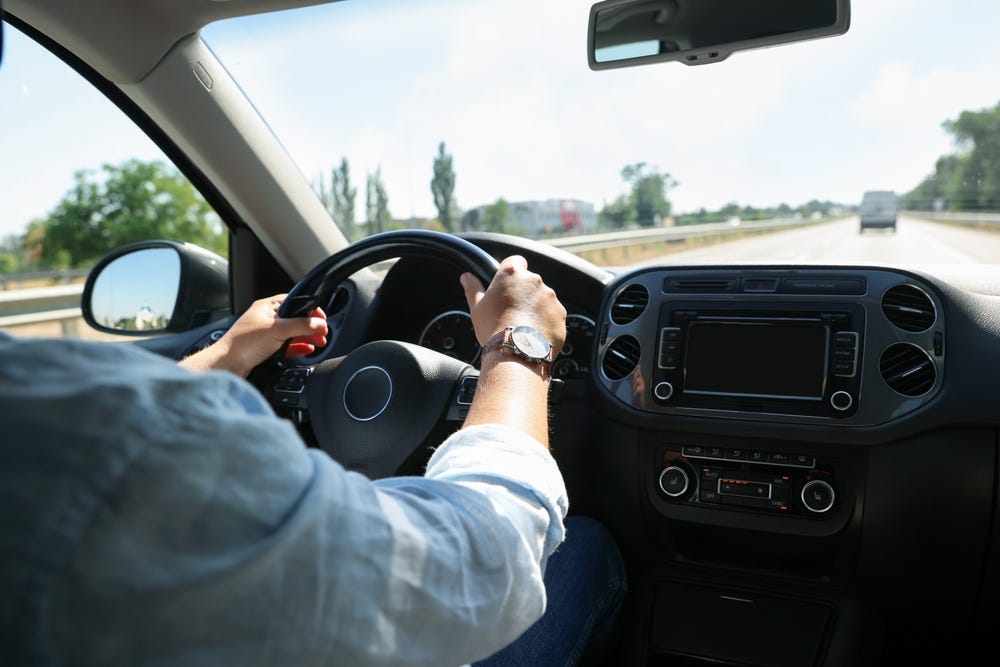
A nationwide study finds that obeying speed limits could save fuel, cut emissions and cost drivers less than a minute per day. (CREDIT: Shutterstock)
- U.S. drivers could save about 6.7 million gallons of fuel each day simply by following posted speed limits.
- The average driver would lose only about 54 seconds a day, while smoother driving could push fuel savings even higher.
- The approach requires no new vehicles or infrastructure, although researchers still need to study acceleration, braking and a wider range of roads.
A few miles per hour over the speed limit may feel like a small choice. You press the gas, pass a slower car and think you have saved time. A new nationwide study from the University of Minnesota Twin Cities suggests that choice costs far more than most drivers realize.
Researchers found that if U.S. drivers followed posted speed limits, the country could save about 6.7 million gallons of fuel each day. That would also cut 57,000 metric tons of carbon dioxide daily and save Americans about $22 million every day.
The time trade-off was tiny. The study estimated that obeying speed limits would add less than one minute to the average daily commute.
A National Look At Everyday Speeding
The study analyzed more than 120 million real-world vehicle trips across the United States. Researchers focused on light-duty vehicles, including passenger cars, pickup trucks, SUVs and vans.
These vehicles matter because engine-powered light-duty vehicles account for 14.6% of total U.S. energy consumption. Small changes across this fleet can create huge national effects.
“We already understand the physics of how speed affects fuel consumption, but quantifying the exact magnitude of those savings at a national scale gives us a clearer picture of the actual impact,” said Bharat Jayaprakash, a doctoral student in the Department of Mechanical Engineering at the University of Minnesota and lead author of the paper.
The study marks a major step beyond earlier transportation research. Past work often relied on smaller local samples or fuel estimates from laboratory tests.
Why Speed Uses More Fuel
Speeding burns more fuel because vehicles must push through air. The faster a car moves, the harder that resistance becomes.
At highway speeds, air drag rises sharply. A small increase in speed can demand a much larger increase in energy.
That is why fuel economy often drops at higher speeds. For many light-duty vehicles, the most efficient range sits well below aggressive highway speeds.
“While internal combustion engine-powered vehicles have become significantly more efficient in the past decades, they have also become much more powerful. Driving fast is easier than ever,” said William Northrop, University of Minnesota mechanical engineering professor and corresponding author on the paper.
That added power changes behavior. Modern vehicles can speed smoothly and quietly, making the energy cost feel invisible.
Building The Dataset
The researchers used real driving data from U.S. road networks. They combined that information with posted speed limits and elevation data from the U.S. Geological Survey.
They then calibrated vehicle-specific energy models using advanced vehicle dynamics software developed by the National Laboratory of the Rockies, formerly known as the National Renewable Energy Laboratory.
This allowed the team to estimate how much fuel each trip used. They also modeled what would happen if drivers obeyed posted limits.
The main scenario capped vehicle speed at the legal limit on highways and arterial roads. Another scenario added smoother driving, including gradual slowing rather than sudden braking.
Both approaches reduced energy use. The smoother-driving scenario produced even larger savings.
Millions Of Gallons Each Day
The headline finding is striking. Speed limit compliance alone could save about 6.7 million gallons of fuel each day for light-duty engine-powered vehicles.
That equals about $22 million in daily fuel savings. It also avoids roughly 57,000 metric tons of carbon dioxide each day.
A smoother-driving version could save even more, about 8.2 million gallons of fuel daily. That would mean about $27 million in savings and 69,000 metric tons less carbon dioxide.
The percentage savings may sound modest. But when applied across the national vehicle fleet, the totals become enormous.
A behavior that feels personal at the wheel becomes a national energy issue at scale.
Less Than A Minute Lost
The study also tested the most common reason people speed: saving time.
For the average driver, obeying posted speed limits would add about 54 seconds per day. Over a week, that is only a few minutes.
That small delay changes the way the trade-off looks. The nation spends millions of extra dollars daily for time savings that often vanish in traffic lights, ramps and congestion.
The researchers described driving slower as an obvious but difficult intervention. It does not require replacing cars, building chargers or changing fuels.
“Our study examines an obvious yet difficult-to-implement intervention for major fuel savings that can be achieved without replacing our cars: driving slower,” Northrop said.
Fuel Prices And Climate Pressure
The findings arrive at a time of volatile fuel prices and uncertainty around electric vehicle growth. Even as electric cars expand, millions of gasoline-powered vehicles will remain on roads for years.
That makes driver behavior an immediate tool. Speed compliance could reduce fuel use now, using existing cars and current roads.
The study also connects everyday driving to climate emissions. Carbon dioxide from transportation contributes to global warming. Cutting emissions from existing vehicles remains an important challenge.
Following speed limits will not solve climate change alone. But it offers a fast, low-cost way to reduce emissions while saving money.
Electric Vehicles Also Matter
The study also examined battery electric vehicles in California, where enough data were available for analysis. Electric vehicles do not burn gasoline, but they still use more energy at higher speeds.
High-speed driving drains batteries faster. It can reduce range and increase charging demand.
The researchers found that speed compliance could reduce electric vehicle energy use too. The total savings were smaller because the analysis covered only California electric vehicles.
Still, the results showed the same basic pattern. Faster driving costs energy, no matter the power source.
The Safety Context
Although the study focused on fuel and emissions, speeding also has serious safety consequences. Higher speeds increase crash risk and make collisions more deadly.
In 2023, 11,775 deaths in the United States were linked to speeding-related crashes, according to the study’s background discussion.
The researchers did not claim that full speed compliance would prevent every death. But the safety context adds weight to the fuel findings.
A driver may gain seconds by speeding. Communities may pay through higher fuel use, more emissions and greater crash risk.
What Researchers Still Need To Learn
The authors said more work is needed to understand the full effects of driving behavior. Speed is only one piece of the energy puzzle.
Aggressive acceleration also raises fuel use and emissions. Sudden braking wastes energy that smoother driving can avoid.
“Key remaining challenges of our research are to expand our framework to more diverse roadways and understand the impacts of aggressive accelerations on fuel use and emissions,” Northrop said. “Exploring both speed and acceleration reductions will give us an even more complete picture of real-world fuel savings potential.”
Future phases will use an instrumented electric vehicle with multi-sensor systems. Sponsored by the Minnesota Department of Transportation’s Local Road Research Board, that work will capture fine-scale driving behavior in real time.
Practical Implications Of The Research
This research gives policymakers and drivers a simple lesson with large consequences. Following posted speed limits can reduce fuel use, save money and cut emissions immediately. It does not require new technology or expensive infrastructure.
For households, the benefit could show up through lower fuel costs. For communities, slower driving may also support safer roads and cleaner air. For the climate, millions of gallons saved each day could reduce transportation emissions at a meaningful scale.
The findings can also guide future transportation planning. Agencies could use better speed management, roadway design and driver education to reduce wasted energy. Automakers and navigation tools may also build features that encourage efficient driving.
For researchers, the study creates a national framework for studying real-world driving behavior. Future work on acceleration, braking and electric vehicles could give an even clearer picture of how daily driving choices shape energy use.
Dig deeper into speed and efficient driving
These five resources expand on how driving speed, acceleration, traffic conditions and vehicle technology affect energy use, emissions and road safety.
- Eco-driving could cut intersection emissions by up to 22%
MIT researchers modeled traffic in three U.S. cities and found that dynamically adjusting vehicle speeds to reduce stopping and hard acceleration could cut intersection carbon emissions by 11% to 22%. (MIT Schwarzman College of Computing, 2025) - Real-world data sharpen predictions of electric vehicle energy use
Researchers studying a year of real-world electric vehicle driving found that speed, traffic, environmental conditions and driving behavior all influence energy consumption. (Scientific Reports, 2025) - New modeling improves estimates of EV energy consumption and range
A 2026 analysis tested several machine-learning models against real electric vehicle data, incorporating speed, acceleration, road slope and environmental conditions. (Scientific Reports, 2026) - Extreme temperatures can sharply reduce EV and hybrid efficiency
AAA testing found that EV efficiency fell 35.6% at 20°F and 10.4% at 95°F compared with moderate temperatures. (AAA Automotive Engineering and Research, 2026) - Latest U.S. data show speeding still contributes to thousands of deaths
NHTSA reported that speeding contributed to 11,288 U.S. traffic deaths in 2024, or 29% of all traffic fatalities. (National Highway Traffic Safety Administration, 2026)
Research findings are available online in the journal Communications Sustainability.
The original story "Americans can save 6.7 million gallons of fuel each day by doing this one small thing" is published in The Brighter Side of News.
Related Stories
- New artificial eyes could bring human-level vision to robotics and self-driving cars
- Why do self-driving cars crash? King’s College London researchers think they have the answer
- Breakthrough AI system helps self-driving cars remember the road
Like these kind of feel good stories? Get The Brighter Side of News' newsletter.
Shy Cohen
Writer