Scientists discover rare new monkey species in the Congo rainforest
Scientists discover a new monkey species in Congo, revealing hidden biodiversity and urgent conservation needs.
 CUNY Writer: Shawn Rhea

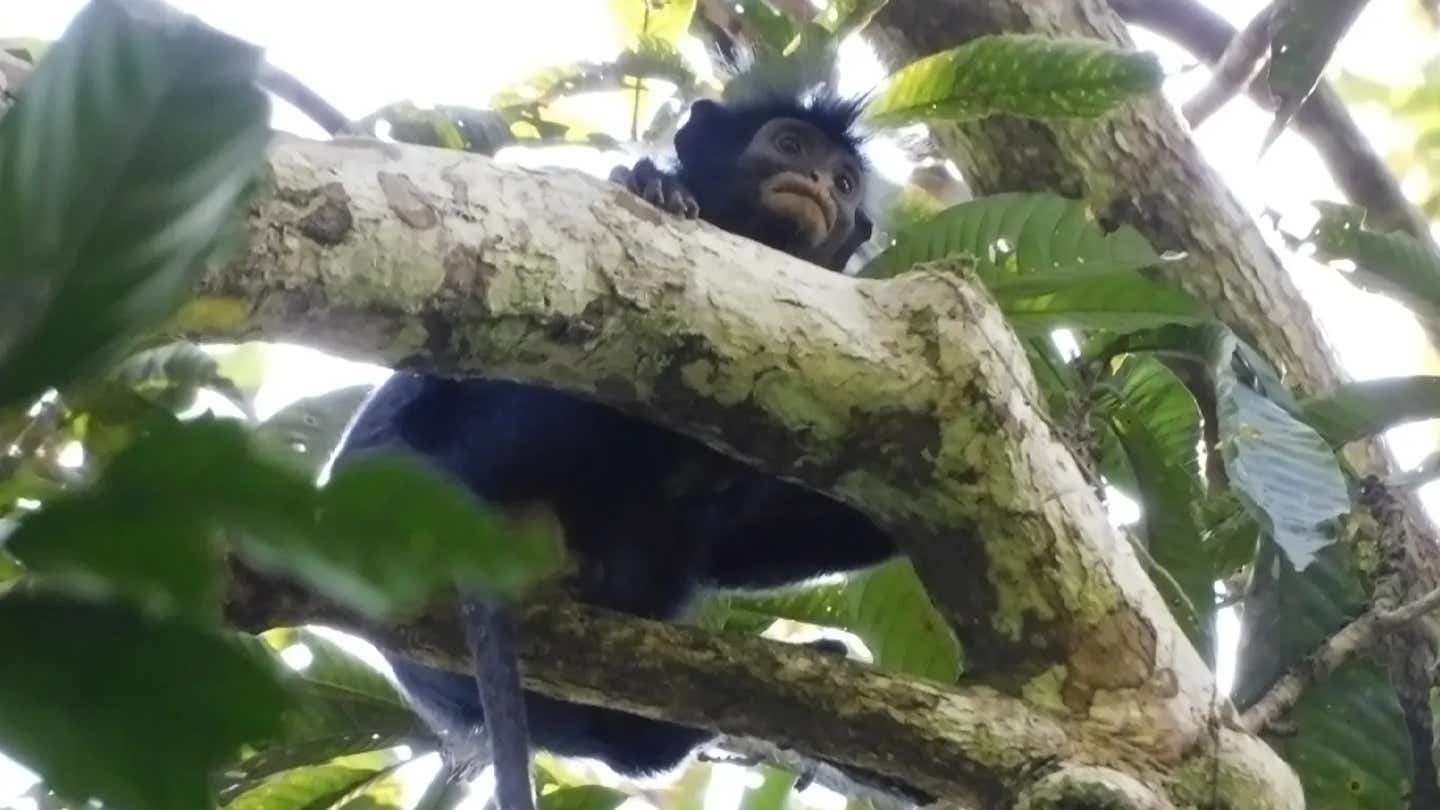
A newly identified monkey species in Congo’s rainforest reveals how much of Earth’s biodiversity remains unknown. (CREDIT: Hunter College)
- Scientists confirmed a new monkey species, Colobus congoensis, in the Democratic Republic of Congo after more than a decade of fieldwork, anatomical comparisons, genetic testing, and local collaboration.
- Known locally as the Likweli, the rare primate diverged from its closest relative about 4 to 5 million years ago and survives within a remote forest range of roughly 1,700 square kilometers.
- Researchers recommend listing the species as Endangered because habitat loss, agriculture, logging, settlement, and possible hunting threaten its limited population near Lomami National Park.
A rare primate hidden deep within Central Africa’s forests has stepped into scientific view, reshaping what is known about biodiversity in one of the planet’s least explored regions. Researchers have confirmed the discovery of a new monkey species in the Democratic Republic of Congo, a finding that highlights both the richness of life in the Congo Basin and the urgency of protecting it.
The species, named Colobus congoensis and known locally as the Likweli, is one of only five new monkey species identified in Africa over the past 75 years. The discovery represents more than a decade of work that combined field research, anatomical study, genetics, and local knowledge.
A Discovery Years In The Making
The story began quietly in 2008, when researchers captured a photograph of an unfamiliar monkey high in the forest canopy. The image raised questions but offered few answers. For years, the sighting remained unresolved.
Clarity came a decade later. Field teams working in Lomami National Park encountered a striking black monkey with pale markings around its face. Over time, additional sightings confirmed that this was not a known species.
The search soon expanded into a global effort. Scientists from institutions including the CUNY Graduate Center, Hunter College, Yale University, and conservation groups joined forces. Their goal was simple but demanding, prove beyond doubt that the monkey represented a new species.
Christopher Gilbert, a professor of anthropology at the CUNY Graduate Center, emphasized the standard required. “When a potential new species is discovered, the evidence has to be overwhelming,” he said.
Building The Case For A New Species
Researchers gathered physical specimens and compared them with known colobus monkeys. They examined skulls, bones, and fur patterns using extensive museum collections. These included materials from the Yale Peabody Museum and the American Museum of Natural History.
Detailed measurements revealed clear differences. The Likweli is smaller than its closest relatives and has unique features in its skull and teeth. Its glossy black coat, long cape-like fur, and orange-cream facial markings set it apart visually.
Julia Arenson, then a doctoral student, played a key role by compiling a large dataset of colobus anatomy. Her work helped confirm that the species could not be classified as any known monkey.
The anatomical evidence alone was strong. Still, the team sought confirmation through genetics.
Genetic Clues From The Past
DNA analysis placed the new monkey within the colobus group. It also revealed a deep evolutionary split. The species diverged from its closest known relative, Colobus satanas, about 4 to 5 million years ago.
This long separation confirms that the Likweli is not a recent variation. It represents a distinct lineage that evolved in isolation within the Congo Basin.
John A. Hart of the Lukuru Wildlife Research Foundation, who led the study, described the broader significance. “We continue to be reminded that the Congo Basin remains one of the world’s last great frontiers for mammal discovery,” he said.
Life In A Hidden Forest
The Likweli lives in a remote region between the Lomami and Congo rivers. This area is covered in dense rainforest and remains difficult to access. Even local communities have limited familiarity with the animal.
Field teams recorded only 114 sightings between 2018 and 2022. These observations suggest that the species occupies a range of about 1,700 square kilometers.
The monkeys tend to stay high in the forest canopy. They often move in small groups, sometimes alongside other primates. Researchers also documented their calls, which include loud roars with distinct patterns.
Despite years of surveys, the species remains hard to detect. This rarity adds to both its scientific value and its vulnerability.
Why The Discovery Matters
Finding a new monkey species in the modern era is rare. Large mammals are usually well documented, especially primates. This discovery shows that significant gaps still exist in scientific knowledge.
The Congo Basin stands out as one of the few places where such discoveries remain possible. Its vast forests support a wide range of species, many of which may still be unknown.
Junior Amboko, a co-author and National Geographic Explorer, reflected on the personal impact. “This discovery is both exciting and deeply personal, highlighting the extraordinary biodiversity of my homeland and how much remains undocumented,” he said.
The naming of the species also carries symbolic weight. It is believed to be the first primate named after the Democratic Republic of Congo itself.
Growing Conservation Concerns
The excitement of discovery comes with concern. The Likweli’s limited range places it at risk. Researchers recommend classifying the species as Endangered.
Most known populations lie within Lomami National Park. This protected area plays a critical role in the species’ survival. However, threats remain.
Habitat loss poses a major danger. Expanding agriculture, logging, and settlement activity are slowly encroaching on forest areas. Hunting could also become a concern as human activity increases.
The region’s population continues to grow, which adds pressure on land and wildlife. Protecting this species will require careful planning and strong local involvement.
The Role Of Local Knowledge
Local communities played a key role in identifying and understanding the species. In some villages, residents recognized the monkey and provided valuable insights into its behavior.
This collaboration highlights the importance of combining scientific methods with local experience. Conservation efforts are more likely to succeed when communities are involved.
Researchers stress that protecting the Likweli will depend on both formal conservation programs and local support.
A Reminder Of Nature’s Complexity
The discovery of Colobus congoensis offers more than a new entry in scientific records. It serves as a reminder that the natural world still holds surprises.
Even in regions studied for decades, new species can emerge. Each discovery adds to the understanding of evolution and ecosystems.
For scientists, the Likweli provides a new opportunity to study primate diversity. For conservationists, it underscores the need to act quickly before fragile habitats are lost.
Practical Implications Of The Research
This discovery has important implications for both science and conservation. It highlights how much biodiversity remains undocumented, especially in remote regions like the Congo Basin. Continued exploration could reveal additional species, improving understanding of evolution and ecological relationships.
For conservation efforts, the findings stress the urgency of protecting critical habitats. Safeguarding areas like Lomami National Park can preserve not only the Likweli but also countless other species. This approach supports ecosystem stability, which benefits local communities and global environmental health.
The research also shows the value of combining modern science with local knowledge. This model can guide future biodiversity studies and conservation programs. By involving local populations, researchers can gather better data and build stronger protection strategies.
In the long term, discoveries like this can influence policy decisions, funding priorities, and global awareness. Protecting biodiversity helps maintain ecosystem services, supports climate stability, and preserves natural heritage for future generations.
Research findings are available online in the journal PLOS One.
The original story "Scientists discover rare new monkey species in the Congo rainforest" is published in The Brighter Side of News.
Related Stories
- Scientists discover a new monkey species (Likweli) hidden in the Congo rainforest
- Given enough time, can monkeys actually write the complete works of Shakespeare?
- Researchers discover that monkeys refer to each other by name
Like these kind of feel good stories? Get The Brighter Side of News' newsletter.
Hannah Shavit-Weiner
Medical & Health Writer
Hannah Shavit-Weiner is a Los Angeles–based medical and health journalist for The Brighter Side of News, an online publication focused on uplifting, transformative stories from around the globe. Having published articles on AOL.com, MSN and Yahoo News, Hannah covers a broad spectrum of topics—from medical breakthroughs and health information to animal science. With a talent for making complex science clear and compelling, she connects readers to the advancements shaping a brighter, more hopeful future.