Smelling chocolate before lifting weights could make your workout easier
Sniffing dark chocolate between sets quietly added 18 repetitions to fasted weightlifting workouts, with no increase in perceived effort.

 Edited By: Joseph Shavit

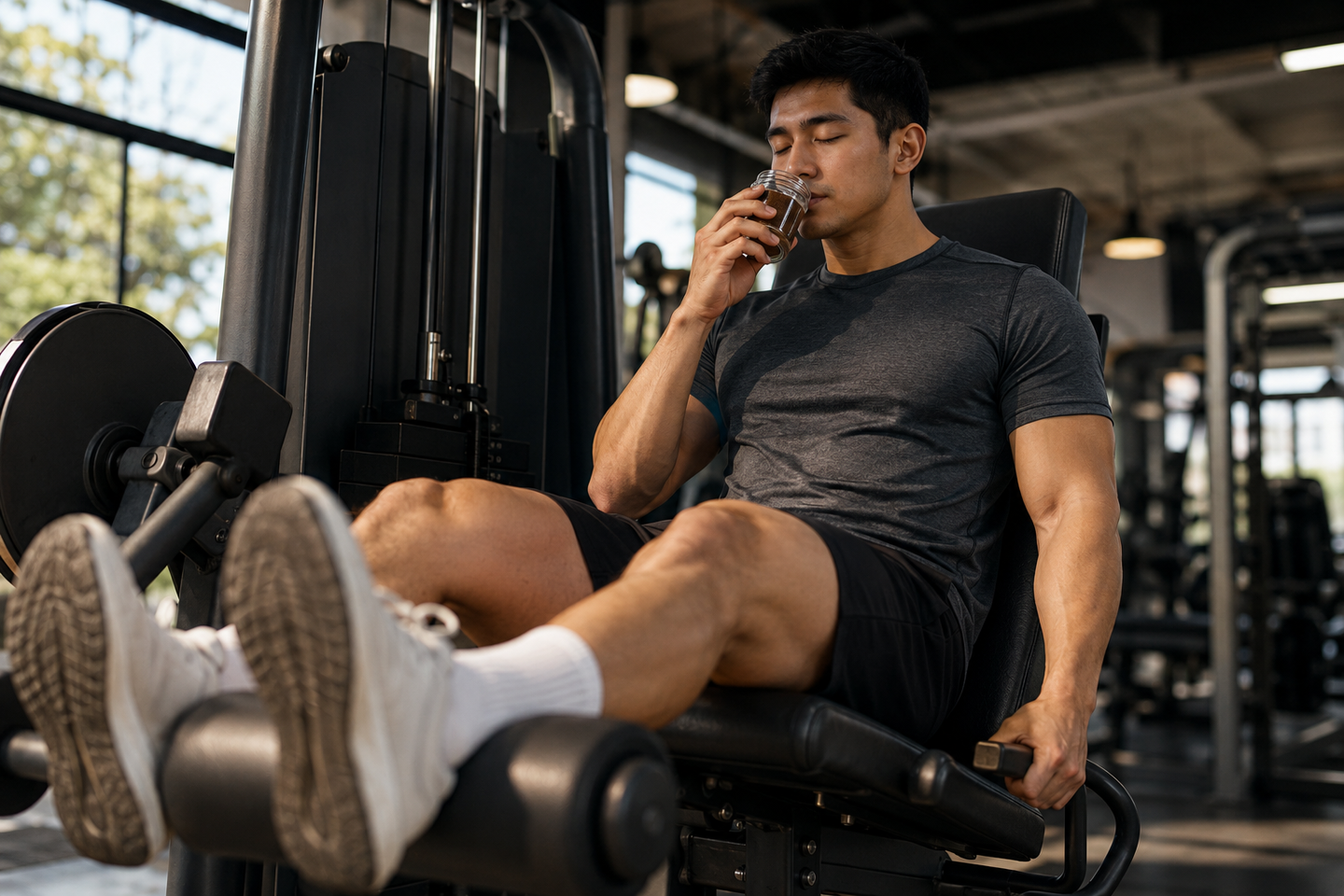
Sniffing chocolate before and between sets of weightlifting quietly added reps without making the effort feel harder. (CREDIT: Wikimedia / AI-Generated / CC BY-SA 4.0)
Nobody told the participants they were supposed to lift more. They just did.
In a study from the University of Malaya, 23 men completed leg workouts after fasting overnight, stopping between sets to sniff one of three samples: 90 percent dark chocolate, 60 percent milk chocolate, or plain water. Those who smelled dark chocolate completed about 18 more total repetitions than the water group. Milk chocolate added around 9. Perceived effort, measured after each set, did not budge in either direction.
More work, same suffering. That combination is not easy to explain.
Two Chocolates, Two Different Tricks
The first thing the study makes clear is that dark and milk chocolate did not work the same way. They produced similar improvements in performance but through what appear to be completely different psychological routes.
Dark chocolate suppressed appetite. Participants who sniffed the 90 percent cocoa sample before and during their workout reported less hunger, reduced desire to eat, and a greater sense of fullness, even though they had not eaten a thing. Milk chocolate did none of that. What it did instead was rate consistently higher on pleasantness. People found the smell more enjoyable, and they lifted more, but they were no less hungry for it.
"The dark chocolate scent serves as a learned cue for a rich, bitter, and highly satiating food, which essentially tricks the system into an anticipatory state of fullness," said Dr. Mohamed Nashrudin bin Naharudin, the study's senior author and an assistant professor at the Faculty of Sports and Exercise Science at the University of Malaya. "Conversely, the sweeter milk chocolate scent acts more like a hedonic reward cue, enhancing training volume by creating a highly pleasant sensory environment rather than by shifting basic metabolic hunger signals."
When Smelling Stands In for Eating
The underlying concept here is not entirely new, but this study applied it in an unusual direction. The olfactory system connects directly into brain regions that regulate appetite, emotion, and reward. Food smells do not just signal what is nearby; they can prime the body for what is about to happen.
Researchers suspect that familiar food odors, especially those associated with filling or satisfying meals, can trigger what are called cephalic-phase responses: anticipatory physiological shifts that normally precede eating. Saliva production, changes in gut hormones, subtle adjustments in how hungry a person feels. The brain, in effect, starts preparing for a meal that never comes.
For participants who had been fasting for at least 10 hours before their workout, arriving in a state of elevated hunger, that shift may have mattered. Hunger is not just discomfort; it competes for attention and could interfere with the focus and willingness to push through a difficult set. Blunting it, even partially and artificially, might have cleared some of that interference.
"Seeing a substantial increase in repetitions without the athletes feeling like they were exerting themselves any harder is a fascinating psychobiological outcome," Nashrudin Naharudin said.
What the Numbers Actually Showed
The design was tightly controlled. Participants completed the same leg extension protocol across three separate sessions, each under a different odor condition, in randomized order. They were blinded to which sample they were receiving, and blinding held adequately for both chocolate conditions.
The gap in total repetitions between dark chocolate and water, 18 reps, was statistically robust. The milk chocolate advantage over water, 9 reps, was also clear. Dark chocolate also resulted in one additional set completed compared to both water and milk chocolate. Milk chocolate did not produce more sets than water, only more repetitions within sets.
Despite those performance differences, ratings of perceived exertion climbed steadily across all three conditions at the same rate. The smell of chocolate did not make the exercise feel easier. It just appeared to let people do more before stopping.
The researchers were careful to note that their proposed mechanisms remain inferential. No hormone levels were measured, no brain imaging was conducted, and the mediation analyses that tested whether hunger or pleasantness statistically explained the performance gains did not reach significance. The appetite correlations pointed in the right direction but fell short of confirmation.
What This Is and Is Not
The study used a narrow slice of the population: young men, moderately trained, working a single joint movement in a fasted state. Leg extensions are not squats or deadlifts. The protocol does not translate directly to a full training session or to women, older athletes, or people who have eaten recently.
The control condition was odorless water, which turned out to be easily identifiable by participants, raising the possibility that some performance differences near the control group reflected expectancy effects as much as olfactory ones. An odorized neutral control would have been tighter.
Still, the effect size for dark chocolate was large enough to be difficult to dismiss. The researchers acknowledged these gaps and framed the findings as proof-of-concept, an opening for more rigorous follow-up rather than a finished answer.
Whether other strongly satiating food smells would produce similar results remains untested. Coffee, for instance, carries heavy associations with alertness and fullness for many people. Bread, savory foods, foods with intense cultural associations could all theoretically function through the same learned-cue pathway. The researchers do not think chocolate is uniquely special, only that it happens to carry exceptionally strong and widely shared reward associations.
"A person likely needs to find the odor familiar and appealing, or at least not repulsive, to trigger the psychological shift in appetite that's needed to see a performance boost," Nashrudin Naharudin said.
Practical Implications of the Research
For athletes who train fasted, whether by choice, during competition preparation, or because of religious or intermittent fasting protocols, managing hunger perception without eating is genuinely useful. A scent intervention costs nothing, requires no digestion, carries no caloric load, and takes about 30 seconds between sets. If the effect holds across more diverse populations and exercise types, it could become a practical and accessible adjunct to fasted training.
The findings also point toward a broader question about how much of exercise performance is psychobiological rather than strictly physiological. If what you smell before lifting changes how much you lift, the brain's interpretation of internal hunger signals may be shaping effort tolerance in ways that traditional sports science has not fully accounted for.
Future research with hormone panels, neuroimaging, and more varied exercise modalities could help clarify how deep that connection runs.
Research findings are available online in the journal Frontiers in Physiology.
The original story "Smelling chocolate before lifting weights could make your workout easier" is published in The Brighter Side of News.
Related Stories
- You don’t need exhausting workouts to build strength and health, study finds
- A single workout can rewire your brain’s memory circuits
- Dark chocolate and children's health: Surprising new findings
Like these kind of feel good stories? Get The Brighter Side of News' newsletter.