Solar desalination breakthrough converts ocean water into clean, waste-free, water
New solar desalination system produces fresh water without brine and extracts valuable minerals like lithium from seawater.

 Edited By: Joseph Shavit

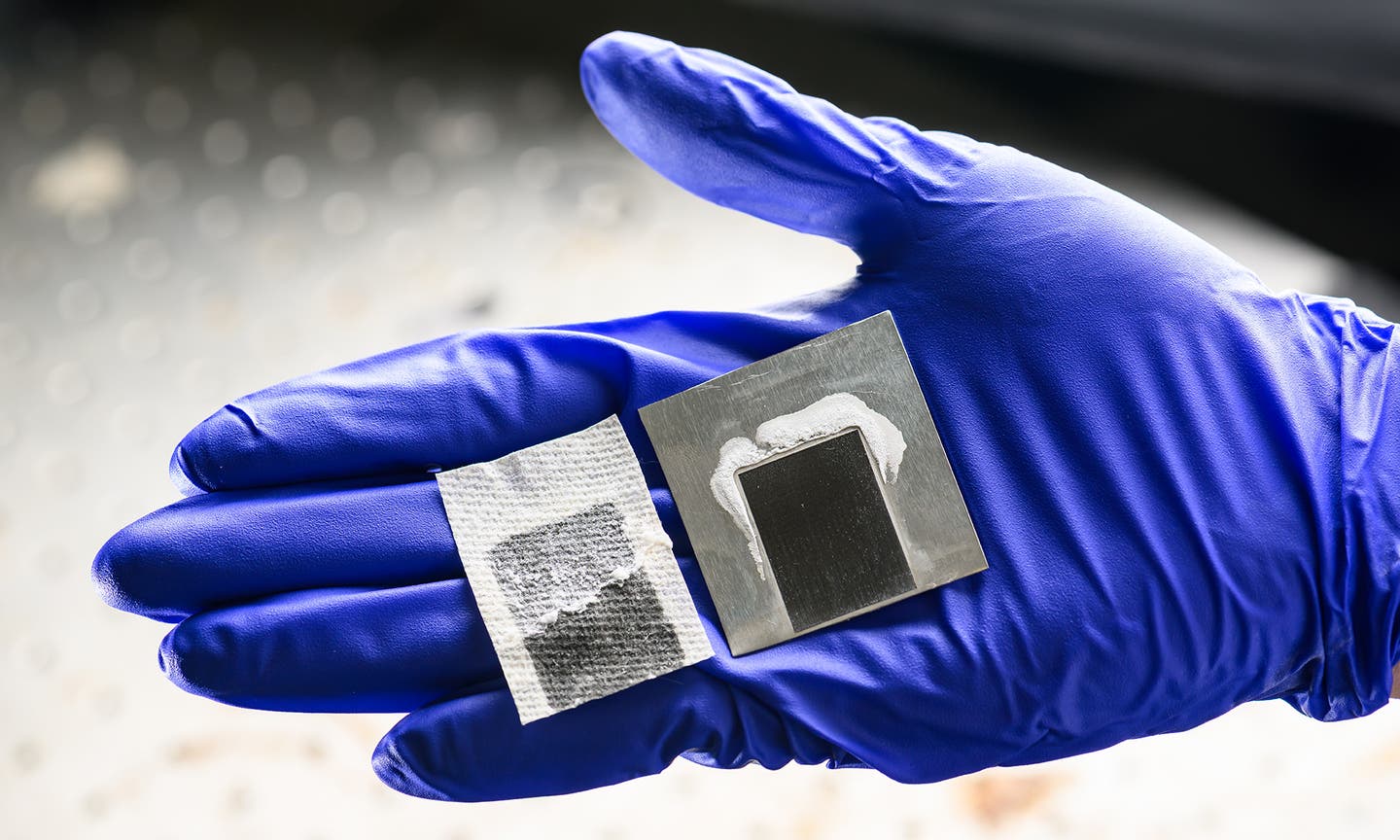
Researchers developed a solar-powered desalination device featuring laser-etched superwicking black metal (right). Unlike existing solar desalination systems (left), Professor Chunlei Guo’s design prevents salt and mineral buildup from clogging the surface. (CREDIT: J. Adam Fenster / University of Rochester)
A growing global water crisis is forcing scientists to rethink how fresh water is produced. Across the world, billions of people still lack safe drinking water, according to the United Nations. In response, many regions have turned to desalination, the process of removing salt from ocean water. Yet current methods come with serious environmental and energy costs.
Now, researchers at University of Rochester have developed a new solar-powered system that could change how desalination works. Their approach uses sunlight, advanced materials, and natural physics to produce clean water without generating harmful waste.
The study introduces a technique that not only creates fresh water efficiently but also collects valuable minerals from the ocean.
The Limits Of Traditional Desalination
Modern desalination relies heavily on two methods, reverse osmosis and thermal distillation. Both can produce clean water, but they demand large amounts of energy. This makes them expensive and difficult to scale in many regions.
Another major issue is waste. These systems leave behind concentrated brine, a salty byproduct that is often dumped back into the ocean. This discharge raises salinity levels and reduces oxygen in the water, harming marine life.
In many cases, more than half of the processed water becomes waste. This inefficiency, combined with environmental risks, has pushed scientists to search for better solutions.
Turning To The Power Of Sunlight
Solar desalination offers a promising alternative. Instead of relying on electricity or fuel, it uses sunlight to evaporate water. The vapor then condenses into clean, drinkable liquid.
However, solar systems face a persistent challenge. As water evaporates, salt remains behind. Over time, this salt builds up on the surface, blocking water flow and reducing performance.
In laboratory tests, many designs worked well using simple saltwater mixtures. But real ocean water is far more complex. It contains minerals like magnesium and calcium, which form hard layers that clog the system.
This buildup can stop the process entirely, much like mineral deposits clog a household pipe.
A New Material With Remarkable Properties
The team led by Chunlei Guo, a professor of optics and physics, developed a new type of solar panel to solve this problem. The surface is made from black metal treated with ultrafast lasers.
This process creates a structure that is both highly absorbent and “superwicking.” In simple terms, it pulls water across its surface quickly and evenly.
The panel absorbs nearly all incoming sunlight, converting it into heat. At the same time, it spreads a thin layer of water across the surface, allowing efficient evaporation.
This combination makes the system highly effective at turning seawater into vapor.
Keeping The Surface Clean
What sets this design apart is how it handles salt. The panel is divided into two areas, an active region and a passive region.
The active region is where evaporation occurs. The passive region surrounds it and collects salt.
As water evaporates, dissolved minerals move outward. They settle in the passive region instead of building up on the active surface. This keeps the system running without interruption.
The design takes advantage of a familiar physical process known as the “coffee ring effect.” When liquid dries, particles move toward the edges, forming a ring. The system uses this effect to guide salt away from critical areas.
“If you drop coffee on a surface, eventually the water evaporates, and there’s a ring left at the outer edge that is the concentrated coffee particles,” Guo said. “We use that same principle to advance the salts to the passive region.”
Real-World Testing Across Oceans
To test the system, researchers used water from the Pacific, Atlantic, and Indian Oceans. These samples included a wide mix of salts and minerals.
The results showed consistent performance across all samples. The system produced fresh water while directing salts to the passive region.
Unlike earlier designs, the surface did not clog. It remained clean and effective over time.
The system also required no chemical additives. This makes it safer for both the environment and long-term use.
Eliminating Brine Waste
One of the most important breakthroughs is the elimination of brine. Instead of producing liquid waste, the system collects nearly all salts in solid form.
This creates a zero-liquid-discharge process. In other words, nothing harmful is released back into the environment.
The collected salt can be removed easily and reused. This turns a major waste problem into a potential resource.
Unlocking Valuable Minerals
Ocean water contains more than just salt. It also holds valuable elements, including lithium, which is used in batteries for electric vehicles and electronics.
In a related study published in the Journal of Materials Chemistry A, the team demonstrated how the same system could extract lithium.
By adding specialized nanoparticles to the surface, the system can separate lithium from other minerals. Tests using water from the Great Salt Lake showed that about half of the lithium could be recovered.
“Mining lithium from the earth has proven to be very taxing from an energy and environmental standpoint, so pulling lithium directly from saltwater could be a very important future route,” Guo said.
This approach could reduce the environmental impact of mining while creating new sources of critical materials.
A Flexible And Scalable Design
The system’s design also allows for flexibility. Because the surface pulls water across it, it can operate at different angles. This means it can track sunlight more effectively throughout the day.
Tests conducted outdoors showed strong performance. A small device produced both fresh water and solid salt over several hours of sunlight.
The system can also run continuously, even as conditions change. Its self-cleaning ability ensures stable operation without frequent maintenance.
Guo believes the technology can scale up to meet global needs. Larger systems could supply water to communities, industries, or remote areas.
A New Approach To Water Security
The innovation comes at a time when water scarcity is becoming a global concern. Climate change, population growth, and resource depletion are increasing pressure on existing water supplies.
Desalination has long been seen as a solution, but its drawbacks have limited its use. This new method addresses many of those challenges at once.
It reduces energy demand by using sunlight. It eliminates harmful waste. It also creates valuable byproducts that can support other industries.
Practical Implications Of The Research
This research could reshape how societies approach water shortages. By offering a clean and efficient desalination method, it provides a path toward more sustainable water systems.
Communities with limited infrastructure could benefit from solar-powered units that operate independently of electrical grids. This is especially important in developing regions and remote coastal areas.
The ability to eliminate brine waste also protects marine ecosystems. Reducing environmental damage can help preserve biodiversity and maintain healthy oceans.
In addition, the system’s capacity to recover valuable minerals creates new economic opportunities. Extracting lithium and other elements from seawater could support the growing demand for clean energy technologies.
For researchers, the study opens new directions in material science and environmental engineering. It shows how combining natural processes with advanced design can solve complex problems.
In the long term, this approach could contribute to a more resilient global water supply while supporting sustainable resource use.
Research findings are available online in the journal Light Science & Applications.
The original story "Solar desalination breakthrough converts ocean water into clean, waste-free, water" is published in The Brighter Side of News.
Related Stories
- New satellite technology could protect water quality around the world
- Jacket harvests up to 30 ounces of drinkable water a day out of thin air
- New type of stainless steel pulls hydrogen directly out of seawater
Like these kind of feel good stories? Get The Brighter Side of News' newsletter.
Shy Cohen
Writer