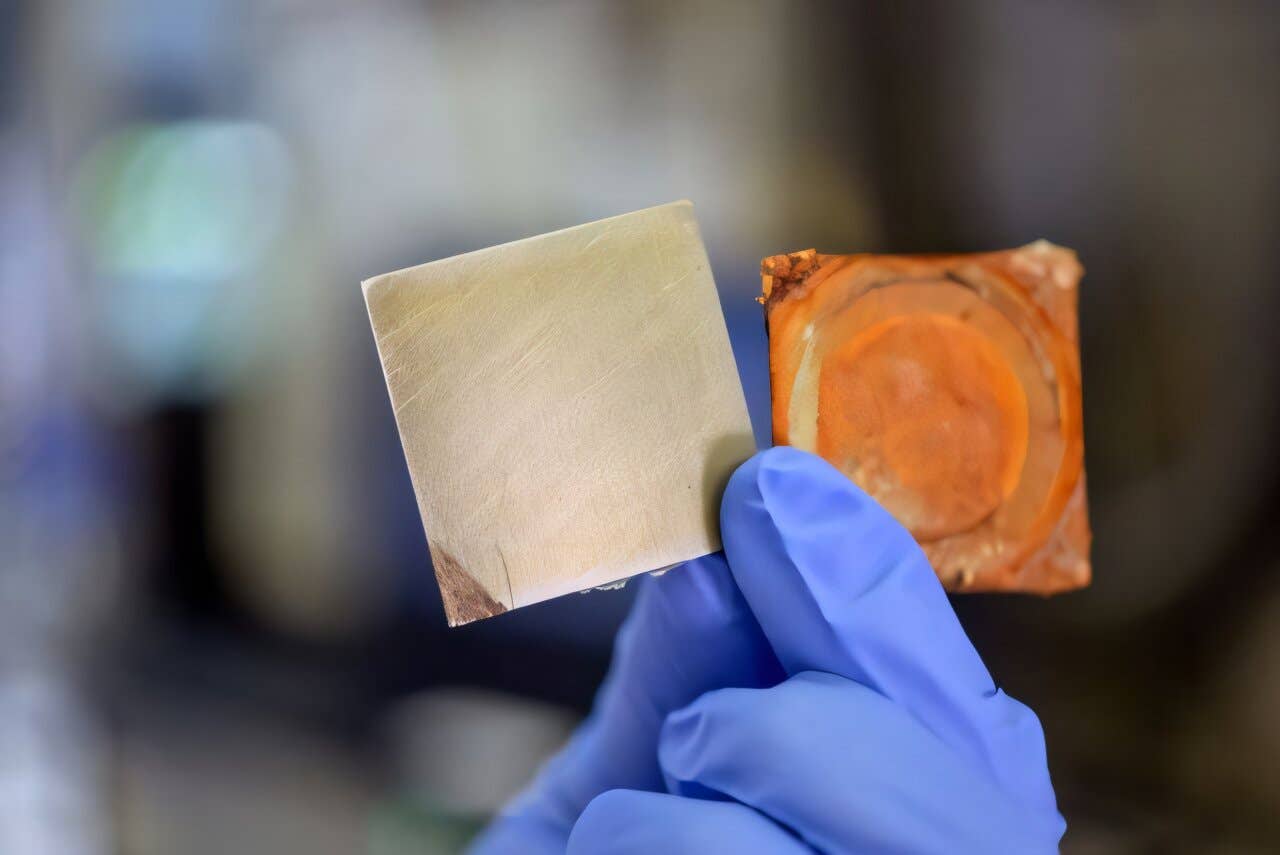
New ultra-black automotive coating uses carbon nanotubes to absorb 99.9% of visible light
Carbon black and nanotubes create a durable car coating with extreme darkness and practical manufacturing potential.

 Edited By: Joseph Shavit

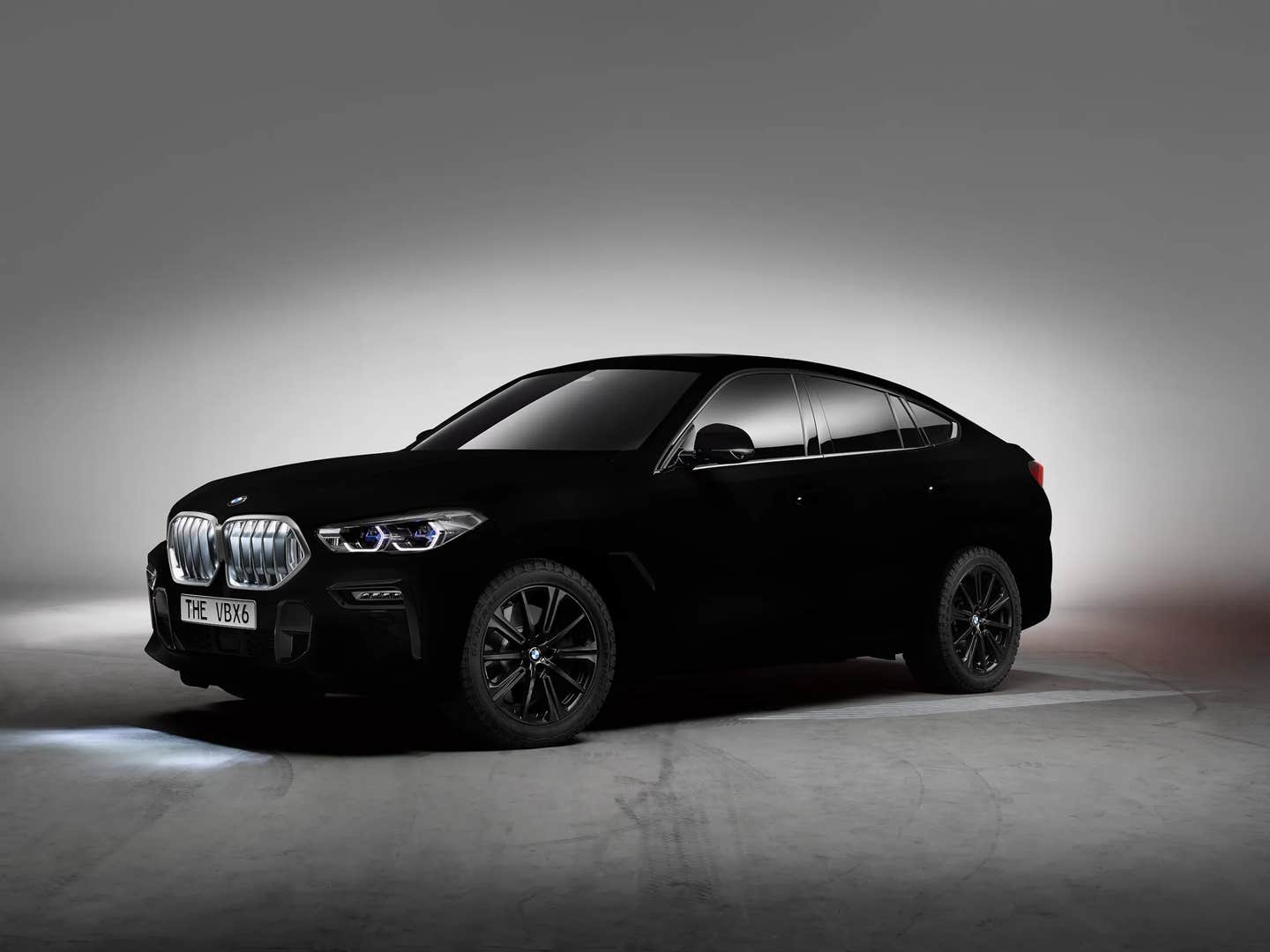
Carbon black and nanotubes create a durable car coating with extreme darkness and practical manufacturing potential. (CREDIT: BMW)
- Researchers created a sprayable, waterborne automotive coating that absorbs 99.9% of visible light, producing an ultra-black finish similar to specialized carbon nanotube materials.
- Carbon nanotubes organize carbon black particles into microscopic peaks and valleys that trap light, while also improving the coating’s jetness and perceived blackness.
- The coating survived storage, water, humidity, and adhesion tests, but manufacturers still need to prove it can be applied consistently to full-size vehicles at factory scale.
A car painted with this coating would reflect almost none of the visible light falling on it.
The surface absorbs an average of 99.9% of visible wavelengths. Its darkness approaches specialized carbon nanotube materials once limited to striking concept vehicles and laboratory demonstrations.
Yet this coating comes from a spray gun.
Scientists developed the waterborne material by combining nanoscale carbon black pigment with carbon nanotubes. They then placed the mixture inside a conventional automotive coating system and sprayed it onto a car model.
The result delivered an unusually deep black while surviving water and humidity tests.
A research chemist with Color Technology, Group Core R&D Shanghai at Nipsea Group, led the work.
“In China, car color has become a key selling point,” Liu said.
“Deep black finishes have long been the premium choice and signature color for luxury cars due to their elegant appearance, powerful visual impact, and luxurious undertone.”
A Black-Hole Look Meets Factory Demands
The automotive industry’s pursuit of ultra-black paint accelerated in 2019.
That year, BMW presented a concept car covered with a vertically aligned carbon nanotube array. The material absorbed nearly all incoming light, giving the vehicle a flattened, black-hole appearance.
The display also exposed a practical problem.
Carbon nanotube arrays can achieve extreme darkness, but they are difficult to manufacture as durable automotive paint. Commercial coatings must tolerate spraying, storage, weather, water, humidity, and physical handling.
Conventional black paint relies largely on carbon black pigment.
Carbon black already absorbs light well. However, its particles tend to gather into larger clumps, limiting how much darker the finished surface can become.
Liu’s team added carbon nanotubes to change the coating’s physical structure, not simply its pigment content. That shift created tiny spaces that trapped light.
The coating therefore combined two forms of absorption. Carbon black absorbed light through its material properties, while the microscopic surface structure kept reflected light from escaping.
Carbon Particles Connect Along Nanotubes
The researchers produced the coating through high-energy sand milling. They mixed carbon black, carbon nanotubes, water, dispersants, and other additives into a fine suspension.
Carbon black particles measured only 8 to 15 nanometers. Left alone, they could form clusters ranging from tens of nanometers to nearly one micrometer.
The nanotubes began much longer, measuring 20 to 50 micrometers, with diameters between 10 and 30 nanometers.
When combined, the carbon black particles arranged themselves along the nanotubes. Researchers described the resulting shape as a “connecting-the-dots” structure.
Instead of collecting in random clumps, the particles formed organized networks around the tubes. That reduced aggregation while producing an uneven microscopic surface.
Optical imaging found peaks and valleys between roughly 2 and 8 micrometers wide.
Light entering those features scattered repeatedly before the carbon materials absorbed it. The effect resembles light becoming trapped inside a landscape too irregular to offer an easy path outward.
Darkness Measured From Several Angles
The team placed the carbon black and nanotube dispersion into an automotive binder.
A rotary bell sprayer then applied the mixture as a basecoat. The dry coating contained only 5% pigment by weight. Its black base layer measured about 20 micrometers thick.
A transparent clearcoat added another 40 micrometers, matching the general structure of automotive paint systems.
Both the new coating and a conventional carbon black coating absorbed more than 99.8% of visible light. The difference became clearer through reflection measurements.
At a 15-degree viewing angle, conventional carbon black paint reflected about 0.11% of incoming light.
The new coating reflected only 0.05%.
Across the visible spectrum, its average reflectance reached about 0.08%, equal to more than 99.9% absorption. The coating also outperformed the conventional paint from every tested viewing angle.
It carried a slightly blue undertone, which made the black appear deeper to the eye.
Automotive Black Has its Own Scale
Vehicle coatings are not judged only by basic light absorption. The industry also uses measurements called jetness and blackness.
Jetness describes how deep and intense a black coating appears. Blackness measures its perceived darkness.
Waterborne automotive paints have struggled to reach a blackness value above 300 and a jetness value beyond 320. The standard carbon black coating reached a jetness value of about 304.3. Its blackness value reached 296.4.
The carbon black and nanotube coating moved well past both marks.
It recorded a jetness value of 328.7 and a blackness value of 315.0.
Depending on the viewing angle, jetness improved by 20.4 to 29.6 units. Blackness rose by 15.8 to 23.2 units.
Those differences came from structure as much as chemistry.
The carbon nanotubes did not merely darken the mixture. They organized the carbon pigment into shapes that kept light moving through the coating until little remained to reflect.
Seven Hours Stood in for Two Years
An ultra-black paint would have little industrial value if it separated during storage. Carbon nanotubes often clump together, creating serious processing problems.
The researchers tested the dispersion inside an analytical centrifuge spinning at 4,000 revolutions per minute.
That produced forces equal to about 2,325 times Earth’s gravity.
Seven hours in the machine simulated roughly two years of storage at room temperature. The suspension changed very little.
Its final instability index measured 0.027, indicating strong long-term stability. Mechanical tests also found a durable internal network within the liquid coating.
At 0.1% strain, its storage modulus reached 38.8 pascals. The loss modulus measured 11.8 pascals.
Even under strain reaching 100%, the internal structure remained largely intact.
That resistance matters during manufacturing, when pumping, mixing, transport, and spraying can break down unstable materials.
Water, Heat and Humidity Leave Little Damage
The finished film faced a separate set of tests.
Researchers stored coated panels for 14 days at 40 degrees Celsius and 95% humidity. Other panels spent 10 days in water heated to 40 degrees.
Neither test produced significant visible defects.
The team then used a standard cross-cut tape test to examine adhesion. No paint detached.
That result addressed one of the main weaknesses of coatings containing carbon nanotubes. Extreme optical performance means little if the film separates from the vehicle beneath it.
The new material preserved its bond after prolonged exposure to water and moisture. Still, the coating has not completed every validation required for commercial vehicles.
The researchers have finished a technical proof of concept for manufacturing. More testing must define the coating’s application window and confirm its full range of film properties.
Ultra-black production cars are not yet ready for the road.
More Nanotubes Create a Difficult Trade-Off
Adding more carbon nanotubes could make the coating darker. It could also make the material much harder to manufacture.
During development, a relatively modest nanotube increase caused viscosity to rise sharply. At one shear rate, it climbed from 538 to 5,440 millipascal-seconds.
At another, viscosity increased from 206 to 689 millipascal-seconds. Thicker mixtures can become difficult to mill, pump, and spray.
The team therefore chose a balance between darkness and processability.
“With the rapid development of dispersing technology and equipment, there is still room for improvements in practical processability of carbon-nanotube-containing nanomaterials,” Liu said.
Future versions may use multiple coating layers.
The researchers also envision a gradient refractive index that could reduce reflection where layers meet. That design might trap even more light without relying only on higher nanotube concentrations.
Practical Implications of the Research
The coating offers manufacturers a possible route to ultra-black vehicles using familiar spray processes.
Its waterborne formula could fit existing automotive coating systems more easily than vertically aligned nanotube arrays. The material also addresses several requirements at once.
It combines extreme light absorption, deep jetness, storage stability, water resistance, humidity resistance, and strong adhesion. Luxury brands could use the finish to create vehicles with sharper visual contrast and a more pronounced dark appearance.
Other industrial products may also benefit from durable coatings that minimize visible reflection, though the study focused on automotive use.
Manufacturing remains the central challenge. Companies must confirm that the coating performs consistently across full-size parts, production speeds, and normal factory conditions.
The balance between nanotube content and viscosity will shape those efforts.
For now, the research moves ultra-black paint away from a fragile visual experiment. It places the effect inside a coating built to behave more like something a factory could actually use.
Research findings are available online in the journal Matter & Light.
The original story "New ultra-black automotive coating uses carbon nanotubes to absorb 99.9% of visible light" is published in The Brighter Side of News.
Related Stories
- New ultra-black, carbon and nanotube car paint absorbs 99.90% of visible light
- New artificial eyes could bring human-level vision to robotics and self-driving cars
- New, battery-like, device sucks carbon dioxide directly out of the air
Like these kind of feel good stories? Get The Brighter Side of News' newsletter.
Shy Cohen
Writer