Ant baits can drastically change colony behavior before ants die
UC Riverside researchers found ant baits can make Argentine ants roam or cluster before they die.

 Edited By: Joshua Shavit

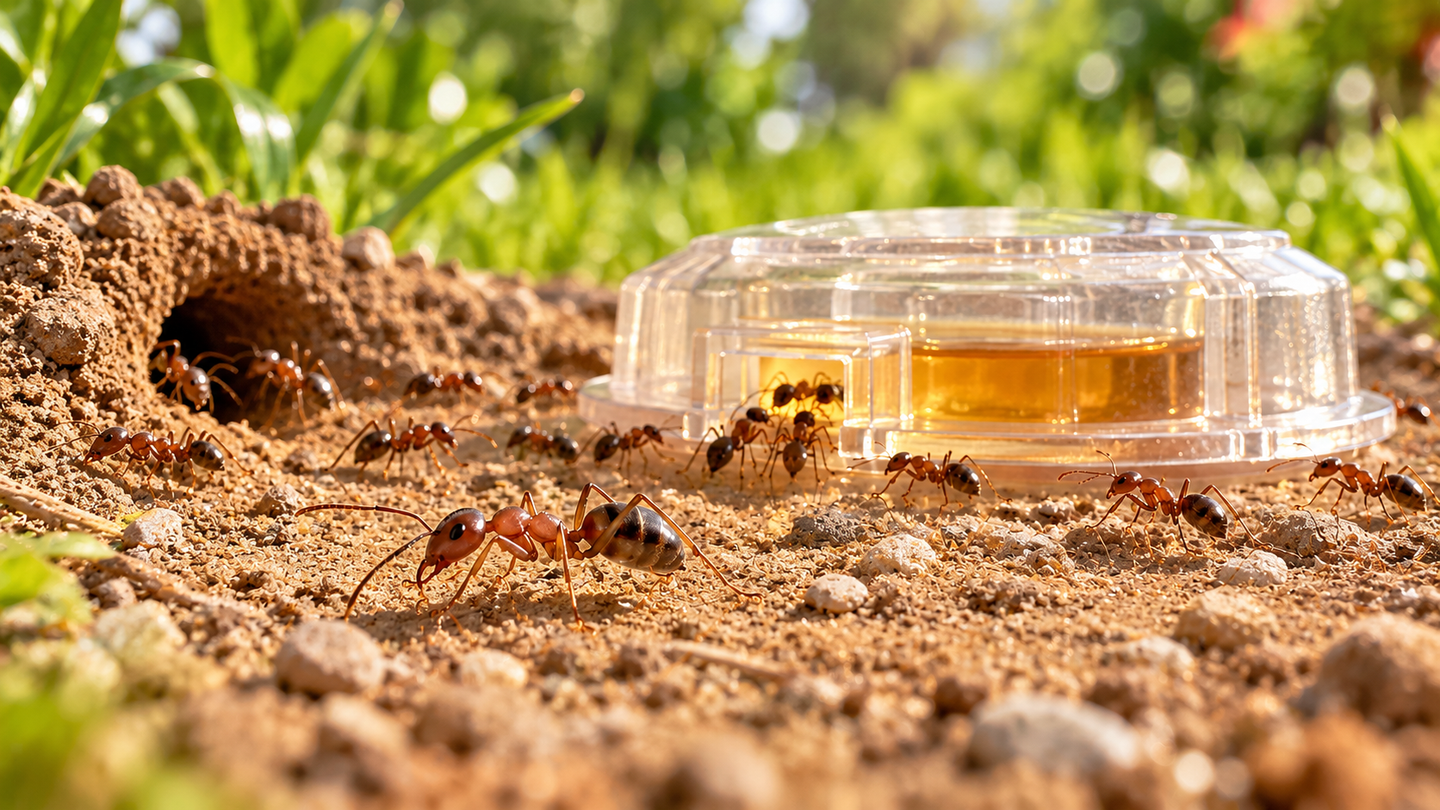
New UC Riverside research shows common ant bait chemicals can trigger very different behaviors in Argentine ant colonies. (CREDIT: Shutterstock)
- Low-dose ant baits changed where Argentine ants gathered before causing substantial worker deaths.
- Thiamethoxam increased the number outside the nest, while boric acid reduced outside activity and increased clustering inside.
- The three-day laboratory experiment measured behavior, so visible activity alone cannot establish whether a colony has been eliminated.
A sudden increase in ants after baiting does not always mean the treatment failed. New research from the University of California, Riverside shows that poisoned Argentine ants may act strangely before they die.
The study, from the lab of UCR entomology professor Dong Hwan Choe, examined how invasive Argentine ants respond to two common bait toxicants.
The team found that thiamethoxam and boric acid both kill many worker ants, but they change colony behavior in very different ways. One sends ants roaming outside the nest. The other drives them inward, where they cluster tightly.
A Pest That Is Hard To Control
Argentine ants are among the most common ants in Southern California homes and gardens. They are small, persistent and quick to invade kitchens, sinks, patios and walls.
They also cause ecological and agricultural problems. They can protect honeydew-producing pests, compete with native ants and disrupt other insects.
Because they share food throughout a colony, liquid baits can work well. A worker ant eats the bait, returns to the nest and passes food to nestmates.
But that same sharing can dilute the poison. If the dose becomes low enough, ants may live for days while showing unusual behavior.
This matters because people often judge bait success by what they see. The new study shows that visible ant activity can be misleading.
Two Chemicals, Two Timelines
The researchers studied boric acid and thiamethoxam. Both appear in ant bait products, but they affect insects differently.
Thiamethoxam is a neonicotinoid. It acts on the insect nervous system and can overstimulate nerve cells before paralysis and death.
In the study, thiamethoxam killed all worker ants within about seven days. Boric acid killed about 90% of workers within about two weeks.
Boric acid works more slowly and affects several body systems. It can damage the midgut, which helps with digestion and nutrient absorption.
In some ants, boric acid can also harm organs that help regulate water and remove waste.
Watching Colonies From The Inside
Choe and his students built transparent laboratory colonies so they could watch the ants closely. The setup allowed them to see behavior inside and outside the nest.
Healthy Argentine ant colonies spread themselves through nesting space. Most workers stay inside caring for queens, young ants and other colony members.
Other workers leave the nest to search for food. This balance helps the colony survive and grow.
“During a previous study, we saw the ants behaving strangely on the first or second day after introducing a thiamethoxam bait, and it made us wonder if the behavior was related to the toxic effects of the insecticide,” Choe said.
That question led the team to measure not only death, but also movement, clustering and foraging behavior.
Thiamethoxam Sent Ants Roaming
After exposure to thiamethoxam, many ants left the nest and became more active outside it. They wandered through the foraging area before eventually dying.
This behavior could make an infestation look worse for a short time. Ants may show up in visible places such as sinks, garages or windowsills.
Because thiamethoxam affects the nervous system, Choe suspects the roaming came from neurological disruption.
“It’s like they’re all high on nicotine,” Choe said. “Their nervous systems have been compromised by the insecticide.”
Thiamethoxam mimics some of nicotine’s effects in insects. It overstimulates the nervous system and eventually causes paralysis.
Boric Acid Drove Ants Inward
Boric acid produced almost the opposite response. Instead of roaming outside, exposed ants reduced foraging and gathered tightly inside the nest.
Many clustered near moisture sources. Choe said the reason remains uncertain, but the chemical’s body effects offer clues.
If boric acid damages digestion and water regulation, ants may seek moisture or conserve water. More research is needed to confirm that idea.
To someone watching at home, this could look like fast success. Fewer ants may appear outside the nest after baiting.
But that does not always mean the colony has been eliminated. Some surviving ants may later reappear, especially if the queen remains alive.
Why Behavior Matters After Baiting
The study helps explain a common frustration. Sometimes people set out bait and see more ants for a day or two.
With thiamethoxam, that temporary increase may mean the bait is affecting the ants, not failing. Poisoned workers may wander as their nervous systems break down.
With boric acid, the opposite problem can happen. Ants may stop foraging quickly, making the colony seem gone before it truly is.
“Though these treatments don’t work immediately, you can see by the ants’ behavior that they’re affected,” Choe said.
That message could help homeowners avoid giving up too soon. It could also help pest control professionals explain what customers may see.
A Closer Look At Low Doses
The laboratory study also examined sublethal exposure. That means the researchers used low doses that affected behavior before causing major death.
This is realistic because bait spreads through food sharing. As workers pass liquid food to nestmates, each ant may receive a diluted dose.
The researchers used 0.2% boric acid in 25% sucrose water. They also used 0.00005% thiamethoxam in 25% sucrose water.
A plain 25% sucrose water solution served as the control. Each colony received one bait treatment.
The team then photographed nest and foraging areas before treatment and daily for three days.
What The Numbers Showed
Boric acid increased ant density inside the nest. By day three, more ants had crowded into roughly the same nesting space.
The number of ants outside the nest dropped sharply. The study reported a 56.3% decline in out-nest activity.
Thiamethoxam created the reverse pattern. Nest density fell, while activity outside the nest rose dramatically.
The study reported an 862.3% increase in out-nest activity after thiamethoxam treatment. That helps explain why treated ants may suddenly appear everywhere.
The researchers also tested individual ants in light and dark areas. Thiamethoxam-treated ants spent more time in lighted spaces than control ants.
That could explain why poisoned ants may wander into visible places.
Queens Remain A Challenge
The study focused on worker ants, but colony survival depends heavily on queens. Baits may kill many workers without always killing queens.
If the queen survives, she can produce a new brood. That can lead to another wave of ants after temporary relief.
This is one reason Argentine ants are so difficult to manage. Their colonies can be large, mobile and persistent.
The findings also matter for bait design. If lower thiamethoxam doses prolong wandering, manufacturers may need to consider behavior, not just mortality.
Future studies could test other bait toxicants. They could also examine how long these behavioral changes last and whether ants recover.
Dig deeper into ant behavior and bait control
These resources explore bait avoidance, delivery methods and the broader challenges of managing Argentine ants.
Toxic bait abandonment by an invasive ant is driven by aversive memories: Examines how learning can contribute to Argentine ants abandoning a toxic food source. (Communications Biology, 2025)
Field evaluations of biodegradable boric acid hydrogel baits for the control of Argentine ants: Promising results in vineyards and citrus orchards: Tests a biodegradable delivery system under agricultural field conditions. (California Agriculture, 2024)
Laboratory evaluations of biodegradable boric acid hydrogel baits for the control of Argentine ant (Hymenoptera: Formicidae): Investigates boric acid delivered through calcium alginate hydrogels in laboratory colonies. (Journal of Economic Entomology, 2023)
Development and Demonstration of Low-Impact IPM Strategy to Control Argentine Ants (Hymenoptera: Formicidae) in Urban Residential Settings: Evaluates an integrated pest management approach combining targeted treatments and hydrogel bait delivery. (Journal of Economic Entomology, 2021)
Ants: Explains ant identification, colony biology and integrated management in homes and landscapes. (University of California Statewide Integrated Pest Management Program, 2024)
Research findings are available online in the journal Insects.
The original story "Ant baits can drastically change colony behavior before ants die" is published in The Brighter Side of News.
Related Stories
- Caterpillars use precise vibrational patterns to communicate with ants
- Dying for the nest: Sick ants choose the colony over life
- Asteroid that wiped out the dinosaurs turned ants into farmers 66 million years ago
Like these kind of feel good stories? Get The Brighter Side of News' newsletter.
Rebecca Shavit
Writer
Based in Los Angeles, Rebecca Shavit is a dedicated science and technology journalist who writes for The Brighter Side of News, an online publication committed to highlighting positive and transformative stories from around the world. Having published articles on MSN, AOL News, and Yahoo News, Rebecca's reporting spans a wide range of topics, from cutting-edge medical breakthroughs to historical discoveries and innovations. With a keen ability to translate complex concepts into engaging and accessible stories, she makes science and innovation relatable to a broad audience.